




NSTA Advocacy in Action — Federal, Local Efforts to Highlight the Dangers of Illegal Passing
Reducing the frequency of illegal passing incidents is the focus of this year’s NSTA message to legislators in Washington, D.C.
File photo
File photo
As some members of the National School Transportation Association (NSTA) prepare for their upcoming “Bus-In” meeting with legislators in Washington, D.C., on May 1, other contractor members will deliver this year’s message locally.
The news this past year was filled with stories about students injured or killed by drivers passing stopped school buses. While the National Highway Traffic Safety Administration maintains that school buses are still the safest form of highway transportation, experts agree that the “danger zone,” the area located immediately around the outside of the bus where students load and unload, is where they are most susceptible to injury. Reducing the frequency of illegal passing incidents is the focus of this year’s NSTA message to legislators in Washington, D.C.
As those in the industry know, the National Association of State Directors of Pupil Transportation Services performs an annual stop-arm violation survey that has found over the last several years that 70,000 to 80,000 motorists per day in the U.S. illegally pass school buses that had stopped to pick up or drop off students. NSTA hopes that attention to this issue will help reduce the frequency of student injuries caused by illegal passing.
And this year, NSTA hopes to drive that message home not only federally but locally as well, with the goal of increasing the grassroots participation of members across the country. Each year, there is great member participation in NSTA’s Capitol Hill Bus-In. Meanwhile, the association offers multiple resources to help members develop relationships with their local congressional representatives.
For beginners, NSTA’s Grassroots Advocacy Toolkit has a narrative guide and supplemental PowerPoint presentation that provides an orientation to the hierarchy and structure of government, and helps contractors identify the congressional representatives in their area. The toolkit then helps members construct their message and make contact with lawmakers.
For intermediate advocates, NSTA’s Advocacy E-Manual and Government Relations Toolkit are a member’s guide to working with their elected representatives and with the various government agencies that affect school bus contractors. The manual and toolkit provide more detail about the legislative and regulatory process, complete with strategies and suggestions for working with legislators and regulators.

Blake Krapf is the president of the National School Transportation Association.
In addition, NSTA’s advocacy team is available to answer more specific member questions. Experienced contractor advocates are available to mentor contractor members who are new to grassroots advocacy. The association also hosts webinars to keep members informed about evolving issues and to help them develop their advocacy skills.
NSTA also has a quarterly forum for working with the leaders of state school bus associations. The Connection Zone is designed for the executive directors and the leaders of state school bus associations who are also members of NSTA. Information to and from state school bus associations across the country is valuable to understanding how federal laws and regulations affect local school bus contractors. Comments filed by NSTA with federal regulators often start with information from the members of state school bus associations that is gathered through the Connection Zone.
The strength of school bus contractors amassed through the Connection Zone was a big factor in NSTA’s recent advocacy win on the UCR Fee Exemption for intrastate school buses. As the Connection Zone forum grows, more tools and resources for state school bus associations are being developed.
The value of NSTA membership continues to grow for its contractor and state school bus association members. Let NSTA help you begin local advocacy or join us in Washington, D.C., in May. With NSTA, you never travel alone.
To join NSTA or to learn more about school transportation advocacy and the 2019 Bus-In, call (703) 684-3200 or email info@yellowbuses.org.
More Management
How to Build a Better Driver Training Program
Ready to boost up your school bus instructor training? Here’s how to pick the right talent and improve recruitment, retention, and safety.
Read More →
CALSTART and Forth Combine to Form Catalyst Mobility
The new name represents a renewed vision for the nonprofit focused on advancing clean, equitable, and affordable transportation solutions that move people and goods.
Read More →
What Makes a Great School Bus Driver Trainer?
Choosing the right school bus driver trainer takes more than experience. Learn six keys to selecting and developing trainers and evaluating program effectiveness.
Read More →


School Bus Contractors Expand Through New Deals, Acquisitions & Partnerships
STA's Canadian division acquires Ontario-based G&L Stevenson Transport while Durham School Services adds a new district contract in California, First Student adds a New Jersey contract, and Minnesota Coaches acquires Halo Transportation.
Read More →
Logan Bus Company Rolls Out AI Phone System for NYC School Bus Families
A summer pilot found that AI agents could handle most routine calls, freeing up time for customer service staff to focus on emergencies and complex family concerns.
Read More →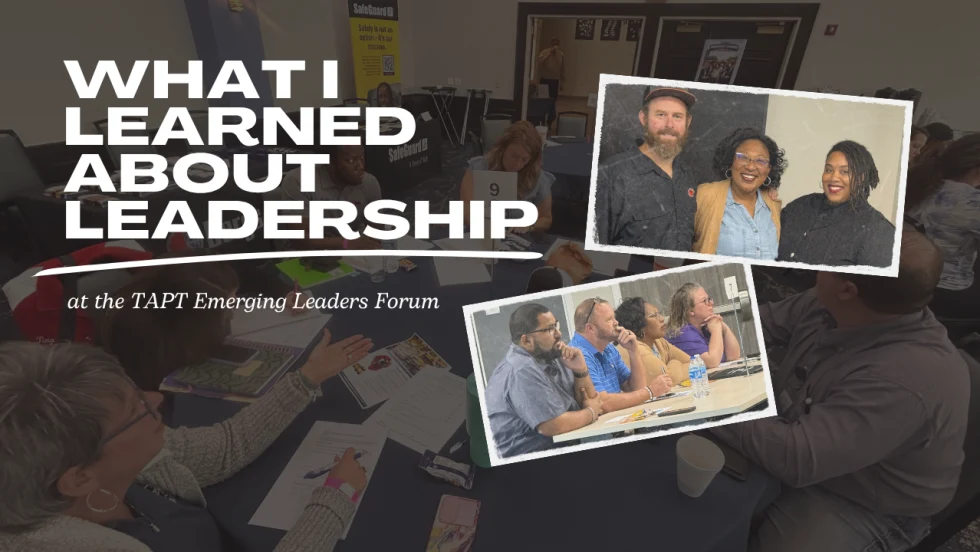
From Intent to Impact: What I Learned About Leadership from TAPT
A Texas transportation supervisor shares lessons on self-awareness, accountability, managing stress and building trust — and why investing in leadership development matters at every stage of your career.
Read More →
NAPT Names 2026 Award Recipients, Hall of Fame Inductee
Who earned national recognition for their work in student transportation? This year, NAPT named five recipients of its 2026 awards for service, safety, and leadership, plus its newest Hall of Famer.
Read More →
2026 State of Student Transportation Report
Driver shortages. Rising costs. Growing safety expectations. More data, but not enough time to act on it. The 2026 State of Student Transportation Report reveals what transportation leaders say is putting the most pressure on their operations—and where they’re investing next. See how your priorities compare.
Read More →
How to De-Escalate an Angry Person: 5 Steps for Handling Workplace Conflict
What makes emotions run high, and how should you handle an angry colleague or parent? Follow these steps for staying calm, listening, showing empathy, and resolving conflict.
Read More →
What Readiness Looks Like This School Year
Learn about the challenges shaping the 2026–2027 school year, from persistent driver shortages and budget pressure to technology and readiness gaps. See how school districts are responding and adapting in Zonar’s 2026 Back-to-School Readiness Report.
Read More →