




Meeting the Challenges of Transporting Special-Needs Students
Understanding Autistic Behaviors: Kent's Story
Dive into the complexities of autism — focusing on social interaction, communication, and behavior — and how a tailored, understanding approach led to a simple yet effective solution for one student.
by Jocelyn Taylor
November 1, 2002
Photo: Pexels/Polina Kovaleva
5 min to read
Kent, a high school student with autism, began regularly soiling himself on the school bus for no apparent reason. In addition, he began to smear his feces. This new behavior was very upsetting to everyone. Several interventions were attempted, including behavior modification and an intensified bathroom schedule, but none worked. In desperation, an autism specialist was consulted. In the end, a very simple solution was found. The thought process that led to this solution involved a thorough understanding of Kent and a clear understanding of autism.
From the perspective of the Individuals with Disabilities in Education Act of 1997, children with autism have difficulties in three main areas: social interaction, communication and behavior. Let's look at those three areas individually.
Social interaction
Children with autism often display impairment in appropriate non-verbal behaviors such as eye contact, facial expression, body postures and other social gestures. There is often a failure to develop peer relationships appropriate to developmental level. In addition, children with autism often lack spontaneous initiation to share interests, enjoyment or achievements with other people.
In Kent's case, he did not understand the social impact of his new bus behavior. He was unaware of the extreme stress he was causing others, yet he was delighted with the new, excited reaction he was eliciting from the adults and other students around him.
Communication
Children with autism may be nonverbal, some unable to communicate even through gesture or mime. Autistic children who can speak may be unable to initiate or sustain a conversation. Often, children with autism use stereotyped and repetitive or peculiar language. In addition, autistic children often don't play in a varied, spontaneous way or in a socially imitative way appropriate to their developmental level.
Kent was non-verbal. His picture exchange communication book that contained his entire vocabulary was safe at school on a shelf. So even if he wanted to communicate with anyone on the bus, he had no words at his disposal. He did know a lot of repetitive syllables that he vocalized when he was stressed. He used those frequently and very loudly on the bus.
Behavior patterns
Children with autism often display repetitive and stereotyped patterns of behavior, interests and activities. The intensity of their behavior is often atypical, such that a rigid adherence to non-functional routines or rituals interferes with functional behavior. Stereotyped and repetitive motor mannerisms are common, as is a persistent preoccupation with people, events or objects. Children with autism can have an unusual reaction to sensory input, and sometimes engage in behavior patterns that produce a sensory response, such as spinning or hand-flapping.
The people who knew Kent well reported that Kent seemed to appreciate the strong organic smell of his own bowel movement. It seemed to calm him. Kent was also interested in smelling feet, hands and pantyhose. When stressed, Kent would hit his head and repeat unique but meaningless vocal patterns.
Quadrant theory
In addition to these three main areas of difficulty, children with autism may exhibit some of the characteristics in the quadrant variables chart below. Children with autism are very complex and deal not only with the common challenges of socialization, communication and behavior, but also with the many variables associated with being verbal or non-verbal and having a low or a high IQ. Each child is different, but having a basic understanding of where each child is coming from will help you develop a system for communicating with him or her.
Kent's characteristics mainly fell in the Low IQ/Low Verbal quadrant. He knew the sign for "toilet," but neither the driver nor the bus aide knew what the sign meant. Kent did have a picture communication system and often used it to make requests at school. He was very rigid and routine-oriented and used the picture schedule board to help manage his day.
The solution
The solution was simple and magical. Inquiry revealed that Kent's new bus behavior started about the same time the bus route changed. A young girl had moved and the bus no longer needed to pick her up. It was clear that Kent did not understand this change, and he seemed stressed about it. A picture story about the little girl moving and what the new bus route looked like was written. Appropriate bus behaviors were included in the story. Kent's mother and teacher read it to him every day before he got on the bus. A visual schedule of the bus route was taped to the seat in front of Kent so he could follow the landmarks. The bus driver and aide learned Kent's signs and what they meant. A communication book with vocabulary specific to the bus route, appropriate bus behaviors and consequences for no "accidents" was made available to Kent for his bus ride.
An empty baby food jar with some strong smelling cheese in it was made available to Kent on the bus. He could open the jar and smell the cheese when he was feeling stressed. The option to smell the cheese when he was stressed was explained in his picture story. The result was dramatic.
The adults worked on eliminating their "getting excited" behaviors when Kent displayed inappropriate behaviors. Instead, a number of positive behavioral supports were put in place. The positive consequences of a bus trip without an accident were described in the picture story. The adults followed through on those consequences. (One of them was a turn to spin a wheel on a contraption created by the bus driver just before Kent got off the bus.)
When the adults working with Kent viewed the problems from Kent's perspective with an understanding of autism, they were able to help Kent. Understanding the reasons for his behavior and creating a coordinated plan allowed the adults to react to an extremely challenging behavior in a way that supported Kent's success.
| IQ | Verbal students may exhibit: | Non-verbal students may exhibit: |
|---|---|---|
| High | High functioning | High performance/low verbal — large gaps |
| High | Precocious reading skills | Hypersensitive to sound |
| High | Strong visual skills | Strong visual skills |
| High | Strong ritualistic tendencies; obsessive-compulsive traits | Aloof, silent, isolated |
| High | Passive or bizarre in social situations | Tunes out easily |
| High | High anxiety; aware of their differences | Manipulative and stubborn |
| Low | Difficult behaviors | Use of very few words or signs |
| Low | Screaming and yelling | Mute |
| Low | Aggressiveness | High interest in mechanical things |
| Low | Repetition of gestures, words or phrases | Hypersensitive to sound |
| Low | Non-meaningful speech | Self-stimulation may be socially inappropriate |
| Low | Self-stimulatory behaviors | Self-stimulation is often abusive |
| Low | Poor attention | Does not relate to people |
About the Author: Jocelyn Taylor is an education specialist for the Utah State Office of Education.
Subscribe to Our Newsletter
More Special Needs Transportation
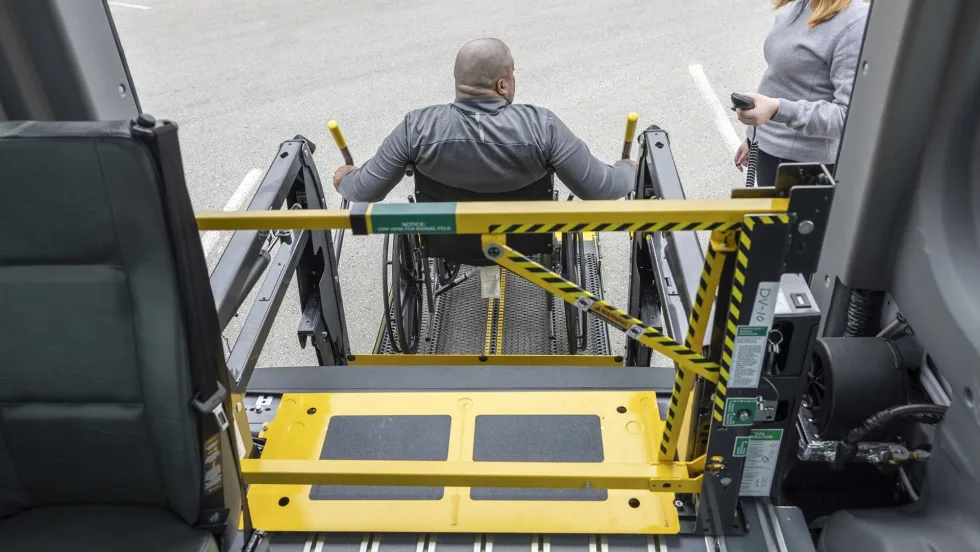
BraunAbility Introduces New Safety Barrier for Wheelchair Lifts
LiftSentinel is designed to add another layer of protection during wheelchair loading and unloading and can be retrofitted to many existing commercial lift installations.
Read More →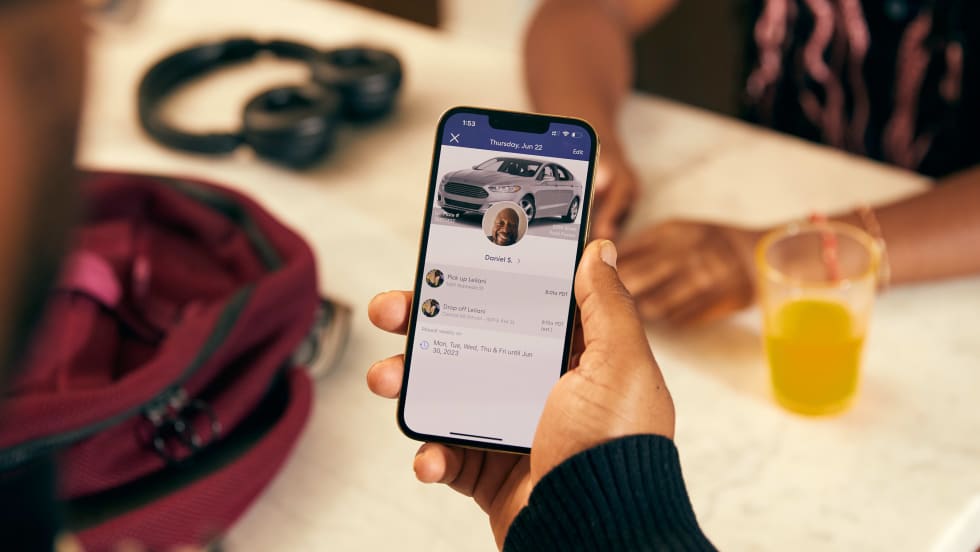
HopSkipDrive Launches New Safety, Driver Consistency Features for 2026-27 School Year
The company’s free ride recording, live ride tracking, and consistent driver assignments aim to improve safety and continuity for diverse student transportation needs.
Read More →
The Most Common Wheelchair Securement Mistakes on School Buses (and How to Fix Them)
Small missteps in wheelchair securement can have serious consequences. Here are 32 tips from experts to reduce risk and increase student safety on the bus.
Read More →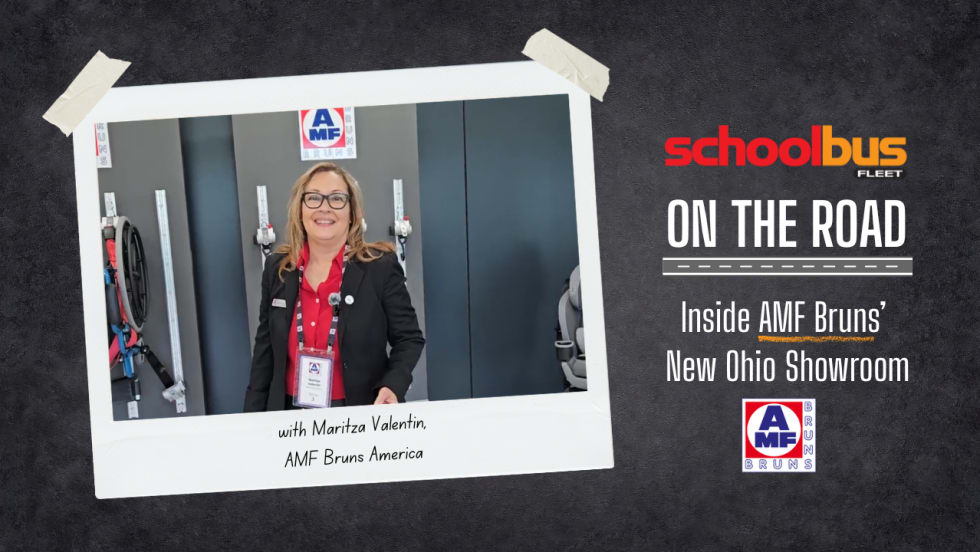
Inside AMF Bruns’ New Showroom: School Bus Securement Solutions Explained
Go inside AMF Bruns America’s new Ohio showroom with Maritza Valentin to see its FutureSafe technology, driver training tools, securement systems, and seating innovations.
Read More →
What AMF Bruns’ New Facility Means for Customers [Video]
Inside AMF Bruns’ new Stow, Ohio, operations: See how expanded space and innovation will enhance customer support and operations.
Read More →
AMF Bruns Expands in Ohio, Investing in Growth and Community
With expanded production space, local investment, and a growing workforce, AMF Bruns is scaling its U.S. presence. Here’s an exclusive first look inside the new Stow, Ohio, HQ.
Read More →
Inside AMF Bruns of America’s New Ohio Manufacturing Facility [Photos]
Take a behind-the-scenes look at AMF Bruns of America’s new 41,000-square-foot Stow, Ohio, headquarters, featuring advanced manufacturing, expanded space, and future-ready mobility solutions.
Read More →
First Student Boosts Student Support in Wichita & Texas
First Student and Wichita Public Schools are using behavioral support strategies to improve student ride experiences, while a separate initiative expands access to after-school programs through a bus donation.
Read More →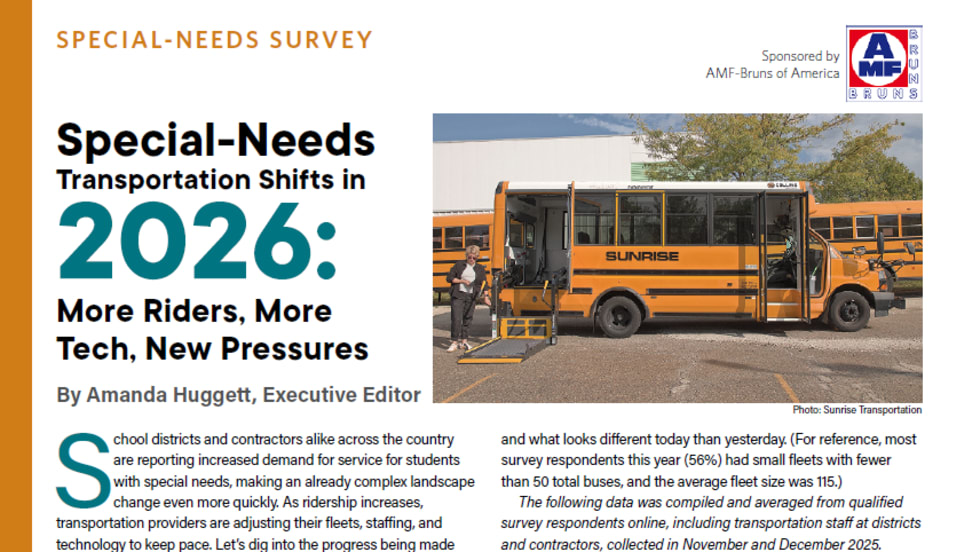
2026 Special-Needs Transportation Survey
What’s changing in special-needs transportation? This year, student transportation operators report a rising need, easing driver shortages, growing tech adoption, and evolving challenges. Sponsored by AMF Bruns of America.
Read More →
The Lived-Experience Gap in Mobility Tech: An Expert Take on Safe Student Transportation
Brianna Pauwee, a product application specialist at AMF Bruns of America and a wheelchair user, drops in to The Route to share practical securement and training insights, plus the story behind the new “Beyond Mobility” podcast. The Route is sponsored by IC Bus.
Read More →