




How to Drive Safely in Mountainous Terrain
Mountain driving. The term conjures images of a cruise through beautiful mountains and rich forests so rugged that only mountain men had set foot in t...
Mountain driving. The term conjures images of a cruise through beautiful mountains and rich forests so rugged that only mountain men had set foot in them.
Yes, mountains are beautiful and can be fun to drive in or they can be very tiring, terrifying and even deadly. So how can we ensure that we will be involved in the former and not the latter?
First, let’s look at the mountains themselves. We are not just talking about the 9,000- to 11,000-foot Colorado Rockies, or even the tamer mountains across the United States. Most states have quite beautiful mountains, no matter the elevation. The rest of the states have hills that reflect many of the same problems, such as long grades and sharp curves.
So, how can a school bus driver with 55 or more students onboard arrive safely at the football game on the other side of the mountain or hill?
Training builds skills
In Colorado, one session of our annual transportation workshop is Driver Trainer Level 4 for the mountain driver trainer. Here, we train the experienced trainers to go back to their districts, evaluate and upgrade their mountain driver training program and then teach their drivers mountain driving survival skills. This three-day session includes both classroom and behind-the-wheel work on mountainous terrain roads.
Some of the techniques taught during the session include:
Thorough pre-trip inspection. The pre-trip inspection must include the brake system as well as the other systems. This pre-trip also needs to include the physical and mental state of the driver. Road and weather reports need to be checked as well.
Grade descent hazards. Be alert for obstacles such as animals, stalled vehicles, construction, rocks on roadway, slow vehicles and tourists stopped in the middle of the roadway.
Grade descent speed control. Speed control is best obtained by use of the proper transmission gear selection that will use engine compression braking to slow the vehicle. This means gearing down at the top of the descent. On steep descents, you may need to be in a lower transmission gear than needed for going up. This method works even with an automatic transmission. The brakes should only be used to maintain the target speed.
We teach this concept of gearing down to be used for all vehicles, even small vehicles. Vehicle speed on many descents can be controlled just by this method without ever touching the service brakes.
In addition to gearing down, the best method for controlling speed is to have a school bus equipped with a retarded or a secondary braking system (see sidebar). A retarder slows the speed of the driveline so the service brakes can remain cold for emergency use. Keeping the brakes cool is very important. If the brakes overheat, they may glaze over, which will greatly reduce or even sacrifice all braking capability.
Handling curves. Most curves should be negotiated by staying in the proper gear, slowing before the curve by letting up on the accelerator and then slightly accelerating through the curve. This procedure maintains better control and traction.
Placement in lane. Focus should be on keeping the vehicle within the road lane and not encroaching into the oncoming lane. Generally, it is safer to ride to the right side of the road to set up cornering and to avoid oncoming vehicles that are encroaching into the bus lane. You should always shade to the right when traveling on two-lane highways.
Accident decisions. When traveling in areas with steep, rocky and timbered hillside terrain, it would be better to chance a head-on collision than leave the road and roll the vehicle.
Time. Make sure extra time is scheduled to travel in the mountains.
These are only some of the techniques for traveling in the mountains. By following these techniques, you will make it to the game on the other side of the mountain after enjoying a very scenic drive.
Have fun!
Retarders can reduce stress levels
Supplemental braking systems can greatly reduce stress on service brakes. The systems are designed to be just what their name suggests — slowing devices. Service brakes are still necessary to bring the bus to a complete stop. But when used correctly, retarders can increase safety, especially in mountain driving. Here are a few options:
The Jacobs Exhaust Brake allows safer speed control for driving in steep downhill descents as well as flatlands. The device mounts in the exhaust system of school buses and restricts exhaust flow when activated. The resulting backpressure creates retarding power that is proportional to engine RPM.
While in operation, Jacobs Exhaust Brake is virtually silent. The unit can reduce wear on the engine, tires, wheel ends and foundation braking system.
In late 2003, Jacobs will also launch its new bleeder brake product, which creates backpressure in the engine by bleeding off the compression in the cylinder during the various strokes. “It’s something for bus drivers and fleet owners to look for because it provides that much more additional performance, and therefore safety,” says Brian Mauriello, business development manager for Jacobs.
For more information, visit www.jakebrake.com.
PACBRAKE’s Exhaust Brakes help to slow down buses while saving wear and tear of the conventional brakes, especially on downward slopes. Attached to the exhaust system on diesel buses, the brake works by closing a valve across the exhaust pipe and creating backpressure to slow down the engine.
In addition to reducing the amount of brake relines, PACBRAKE’s exhaust brakes can give bus drivers added security when braking. The system is available as a stock item on most buses, or it can be retrofitted in about three hours.
“Obviously, where there are a lot of hills, like in Colorado, it makes sense,” says Ken Parker, director of sales and marketing for PACBRAKE. “But even in constant stop and go, you’ll find that you save considerably on brake relines by using an exhaust brake frequently.”
For more information, visit www.pacbrake.com.
The Smartbrake retarder creates the right amount of backpressure in the engine to help slow down the bus and save its service brakes. With its patented sliding gate design, the Smartbrake unit remains completely outside the exhaust flow when in the open position, preventing unwanted backpressure.
Smartbrake is available in Spring-Set and Air-Set models. The Spring-Set unit is fixed to always provide maximum retardation when activated. The Air-Set Smartbrake can be adjusted to a wide range of settings to match changing road conditions and terrain. This model can also be used to increase engine warm-up time in cold weather.
“The key thing is the safety end of it,” says David Phillips, vice president of worldwide operations. “Our brake will give constant braking horsepower right through the rev range.”
For more information, visit www.smartbrake.com.
More Safety
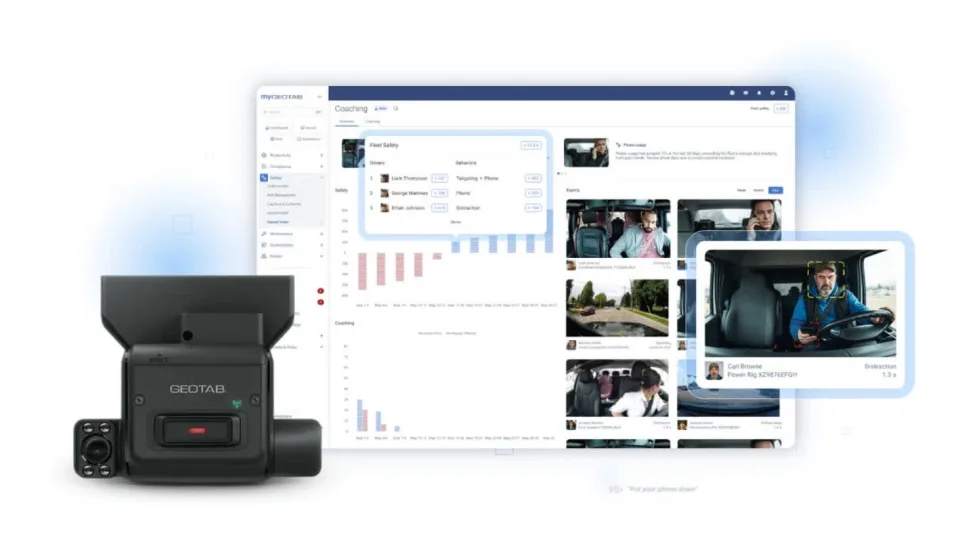
Geotab Expands Fleet Safety Tools With Video Coaching, Risk Insights
New safety and video capabilities aim to help fleet managers assess risk, support drivers, and take targeted action through video coaching, red-light violation detection, and more.
Read More →
How to Build a Better School Bus Driver Training Program
Is it time to strengthen your driver training? Here’s how to pick the right talent and improve recruitment, retention, and safety. This video is brought to you by IC Bus.
Read More →
Recent School Bus Accidents Leave 2 Dead, 2 Injured
Four school bus crashes in Florida, Illinois, and Georgia highlight risks in transportation lots, at bus stops, and during student loading and unloading.
Read More →

When Every Second Matters, Clarity Keeps Routes Moving
From routine delays to urgent incidents, strong communication practices help drivers, dispatchers, schools, and families respond with confidence.
Read More →
What Happens When a School Bus Catches Fire — and What Can Help
School bus fires are rare but can be devastating. Learn how advances in fire suppression and asset protection help fleets detect fires earlier, reduce damage, and improve safety.
Read More →
Geotab Launches Tool to Help Fleets Investigate Road Incidents
Geotab Investigations combines telematics data, video, documents, and other evidence to help fleets reconstruct incidents, resolve claims, and determine what happened.
Read More →
Texas Sixth Grader Wins 2026 National School Bus Safety Poster Contest
Sai Darshana Yekolu of Moseley Middle School in Prosper, Texas, was named the newest winner for her artwork, bringing the theme of “Safe Rides, Everyday Heroes” to life.
Read More →
Doing More With Less: How Transportation Directors Can Prioritize Safety Amid Budget Uncertainty
With diesel prices soaring and nearly one-third of transportation directors expecting budget cuts, maintaining student safety has never been more challenging. Download this guide to learn how leading districts are prioritizing risk, funding critical safety technology, and building stronger budget cases with data.
Read More →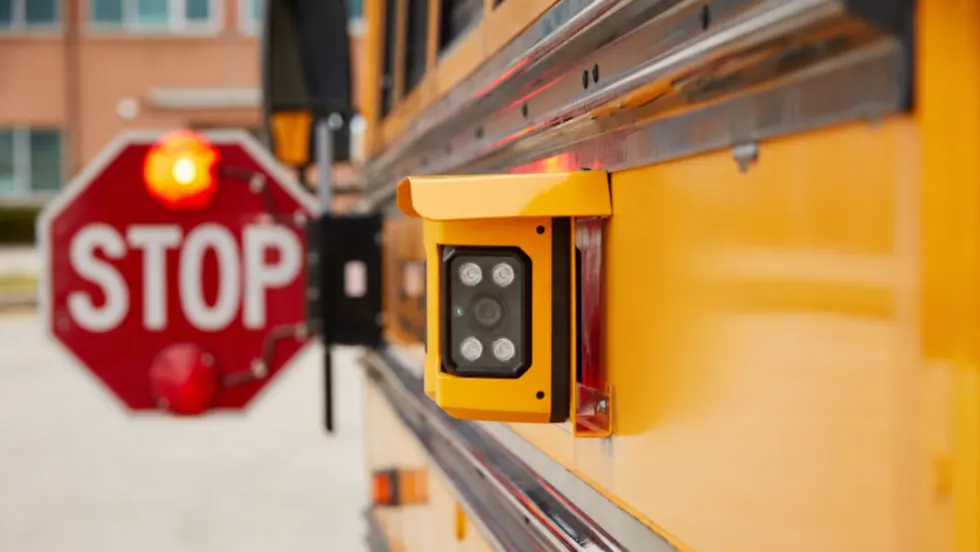
Walton County Schools Adds Gatekeeper Stop-Arm Enforcement System
The Florida district will deploy Gatekeeper’s updated Student Protector technology, which now incorporates AI to improve video evidence.
Read More →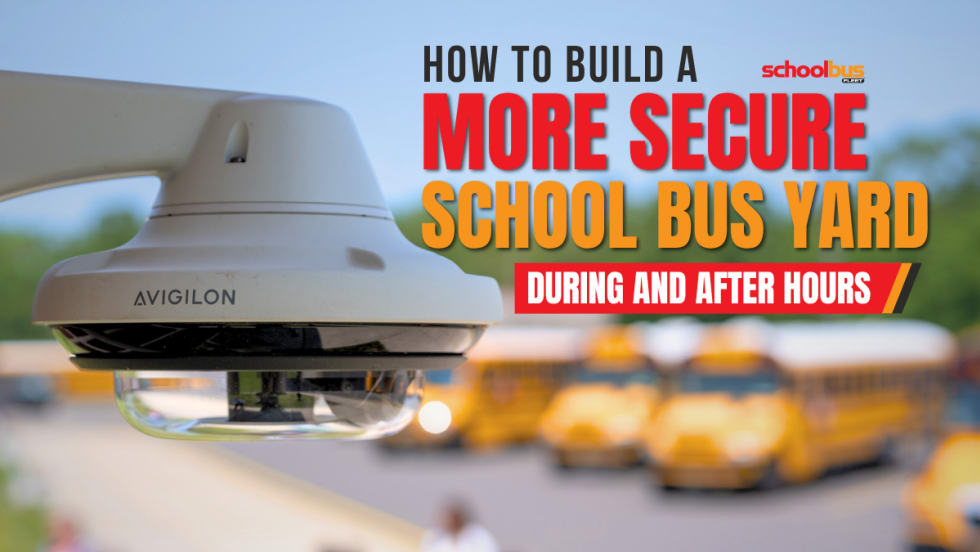
How To Build a More Secure School Bus Yard During and After Hours
As thefts and overnight security threats continue, school transportation leaders are combining stronger operational practices with AI-enabled surveillance to better protect buses, facilities, and staff.
Read More →