




Assessments, Investments Bolster School Bus Facility Security
Free facility assessments and training from the TransportationSecurity Administration, investing in secured onsite parking, andhiring a safety officer to implement facility enhancementsare some measures being taken to help employees stay safe on the job.

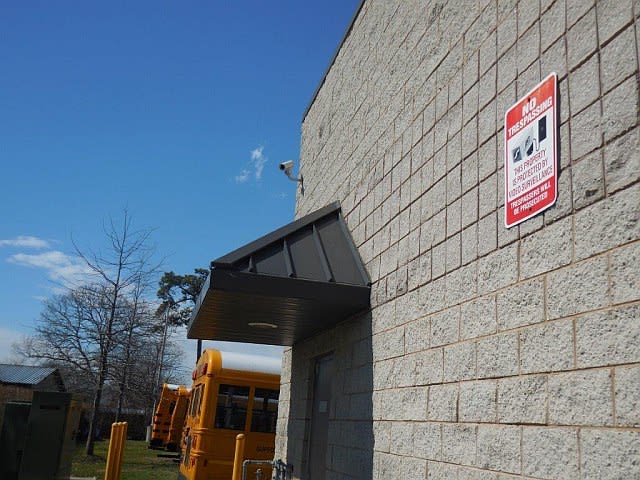
After a voluntary TSA assessment, Suffolk Transportation Service made a major property investment and installed lighting, fencing, barbed wire, and security
cameras, so it could park its buses onsite every evening.
After a voluntary TSA assessment, Suffolk Transportation Service made a major property investment and installed lighting, fencing, barbed wire, and security
cameras, so it could park its buses onsite every evening.
On Dec. 2, at approximately 11 a.m., William Weisberg, area general manager of the San Bernardino customer service center for Durham School Services, was about to join a conference call when one of his employees ran into his office and told him there was an active shooter incident unfolding nearby.
As School Bus Fleet previously reported, Weisberg locked up the building, which is located only half a mile from where the shooting took place, and his employees sprang into action, bringing all staff members inside, closing the garage bay doors, locking all the doors, and notifying all the drivers that were on route not to come back to the yard.
Although — thankfully — there was no threat to the facility or staff members, Weisberg’s quick thinking was crucial to keeping the facility and everyone in it secure.
Getting assistance on securing facilities from the Transportation Security Administration (TSA) through a free assessment, as well as security training, can help employees react quickly to stay safe, should they ever find themselves in such a situation. Additionally, some school transportation providers are employing preventive measures such as investing in onsite, secured parking; engaging law enforcement; and hiring a safety officer to implement facility enhancements to hopefully avoid these situations.
Free assessments, training
The TSA offers a number of opportunities for school transportation providers to enhance security at their facilities, says David Cooper, highway modal manager for the TSA.
The BASE tool, the TSA’s primary offering for school transportation providers, is a baseline assessment for security enhancement. The program is voluntary and free of charge. TSA surface inspectors visit school districts and school bus companies across the U.S. and go through a question-and-answer session with staff. About 30 days afterward, inspectors send a report on the facility’s strengths and recommendations for improvement. The BASE Tool is found within the Transportation Security Template and Assessment Review Toolkit (T-START).
School transportation providers can also conduct a self-assessment, Cooper says. The TSA provides the same questions and focus areas that are used for the in-person assessment: facility security, which covers topics such as facility access control and cybersecurity; management and accountability; personnel security; and vehicle security.
Staff members can determine what improvements are needed, and then develop security plans. However, the downside of that option is that the operator forfeits the opportunity to get the report that provides recommendations along with the assessment, Cooper points out.
The assessment uses a scoring system of 0 to 4 for each category, with 4 being the best score. For the overall score: 90% or higher indicates the facility is in good shape in terms of security, and is considered in the “green area.” The 70% -89% range falls in the "yellow area," which will prompt some recommendations for improving security. Sixty-nine percent or lower indicates quite a bit of work to be done.
If asked, the inspectors can tour the facilities and see if the safety practices they are being told about by the transportation department are actually being carried out, but that is voluntary, Cooper notes.
The TSA has completed a total of 452 BASE assessments in all highway and motor carrier modes (trucking, school bus, and over-the-road bus). School transportation providers who are interested in an assessment can email highwaysecurity@dhs.gov.
The TSA also offers a number of security training programs, including First Observer, which focuses on enhancing security across highway surface transportation modes, including school buses. First Observer is currently being updated and the new program will be available this summer, but the previous training modules are still available, Cooper says.
First Student, which has a strong relationship with the TSA, will be partnering with them on an emergency preparedness exercise later this year, says Mike Ennis, director of security at FirstGroup America.
Meanwhile, Mitigation Strategies for Highway Modes, a new security guidance document that addresses highway motor carrier sub-modes and covers insider threats, is now available. The document lists indicators that bus drivers and other school transportation personnel should look for in potentially violent employees or individuals radicalized to violent extremism, and active shooters in facilities and on a bus. The document also covers improvised explosive devices and bomb threats. School transportation providers can email highwaysecurity@dhs.gov for a copy.
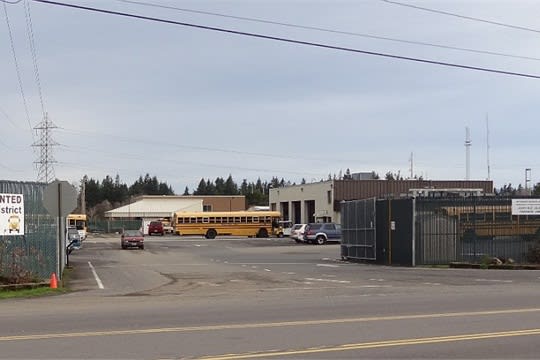
In addition to letting police fuel their vehicles at their facility, Reynolds School District’s transportation department also has an electronic gate that requires an ID for access to the parking lot.
Investing in property
Based on an assessment it completed with the TSA in 2010, Suffolk Transportation Service developed a quarterly facility audit process and invested in a substantial property makeover to boost facility security.
When the TSA asked the company if it wanted to participate in an assessment geared specifically to the school bus industry, Ray Grimaldi, vice president of operations for Suffolk Transportation Service, decided to take advantage of the opportunity.
“I felt it could only make us better,” he explains.
The assessment lasted a few months, and Suffolk scored a 95%. “They felt it was impressive, [but] the five points we lost was of concern to us,” Grimaldi says. “We understood where we were a little weak, and asked them to do it again. They said that no one had ever invited them back, and we were at risk of [having our score] go down.”
Suffolk had initially lost points for allowing drivers to park their buses overnight at their houses, which is considered a vulnerability by the TSA, Grimaldi explained. “As a business, it helped us, because we didn’t have enough parking spaces for all our buses.”
To address this, Suffolk made a major investment, buying several properties and developing them, installing drainage, asphalt, lighting, fencing, barbed wire, and security cameras, all of which took about two years. The company also worked with its union on a plan to bring all the buses back to the property every afternoon.
Four years later, Grimaldi invited the TSA inspectors back for another assessment. Suffolk’s score rose from 95% to 99% based on the improvements.
Suffolk’s quarterly security audit is based on that first assessment, and includes a form with about 20 categories for inspectors to check at each of the 10 properties it owns. Categories include lighting, presence of working video cameras, locks and proper hinges on all exterior doors, operable and lockable gates, ensuring no unauthorized vehicles are parked on the property, and documentation of fire drills being conducted on a regular basis.
The TSA selects some best practices from company assessments and references two from Suffolk in its BASE program best practices manual, Cooper says. Those are: all employee ID cards have information printed on the reverse side, detailing how to proceed in the event of a security incident; and all buses are inventoried each night using Zonar’s GPS tracking system.
“If you have a handle on equipment securement, you also have a handle on equipment vulnerability,” Grimaldi adds. “If you know where your equipment is every night and it’s in a protected area, that’s probably one of the most important things you could do to protect the general public, the ridership, and the drivers.”
Suffolk is currently going through another BASE assessment for its public transportation operations.
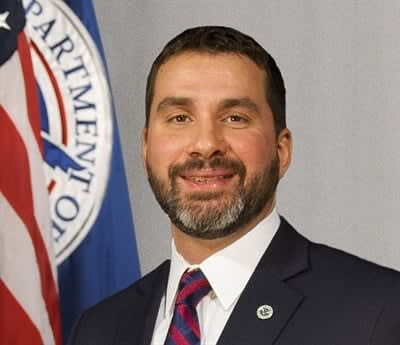
TSA surface inspectors can visit school districts and school bus companies across the U.S. and provide free facility security assessments. A self-assessment form is also available, says David Cooper, highway modal manager for the TSA.
Established protocols, training
Reynolds School District in Fairview, Oregon, had an onsite security plan in place well before a school shooting in June 2014, but the tragic event sparked even more enhanced measures.
A high school student had brought an AR-15 rifle in a guitar case on the school bus to the school and used it to kill another student, wound a teacher, and then take his own life, OregonLive reported.
One constant measure the district’s transportation department takes is allowing police in the cities within the district to fuel at its site. That provides a police presence throughout the day and night, says Kathy Houck, transportation coordinator at Reynolds School District.
The transportation department also has an electronic gate that requires an ID for access to the parking lot.
Additionally, staff members are told that if they see anyone onsite they don’t recognize, to approach them, if safe to do so, and ask, “Can I help you?” in a friendly way. If the person says they don’t need help, staff members are told to report the person to the office so supervisors can assess whether they should be in the lot.
“We have the eyes of our drivers as well as the rest of the staff looking out for people. If there is something that seems unusual, the administrator tries to deal with them, and if we feel that’s not safe, then we will call the police,” Houck explains.
The district’s transportation department also has had a plan in place for staff since just after 9/11 in case the school goes into lockdown. If the gates close during the day, that means the district is in lockdown in the buildings. For staff members who are on site, there is an emergency signal that they know means they should lock themselves into a building or a bus and hide. Then there is an all-clear signal and staff gather at a designated location. The department practices this procedure in drills held throughout the year.
Additionally, after the shooting in 2014, the district hired a safety officer, a new position for the district, to implement an updated and consistent security program district-wide. The need for the position was identified before the shooting occurred, but it had not yet been fully developed, Houck explains.
As part of a bond that passed last May, the program will include creating secure entrances at every school in the district, particularly those at which enrollment has grown considerably since they were built, leaving less room to accommodate all the buses needed to transport the students, Houck says. The district will also be building three new elementary schools, and design discussions include safe bus drop-off and clear line of site from the entrance to parking and loading areas, she adds.
More Safety

How to Build a Better School Bus Driver Training Program
Is it time to strengthen your driver training? Here’s how to pick the right talent and improve recruitment, retention, and safety. This video is brought to you by IC Bus.
Read More →
Recent School Bus Accidents Leave 2 Dead, 2 Injured
Four school bus crashes in Florida, Illinois, and Georgia highlight risks in transportation lots, at bus stops, and during student loading and unloading.
Read More →
When Every Second Matters, Clarity Keeps Routes Moving
From routine delays to urgent incidents, strong communication practices help drivers, dispatchers, schools, and families respond with confidence.
Read More →

What Happens When a School Bus Catches Fire — and What Can Help
School bus fires are rare but can be devastating. Learn how advances in fire suppression and asset protection help fleets detect fires earlier, reduce damage, and improve safety.
Read More →
Geotab Launches Tool to Help Fleets Investigate Road Incidents
Geotab Investigations combines telematics data, video, documents, and other evidence to help fleets reconstruct incidents, resolve claims, and determine what happened.
Read More →
Texas Sixth Grader Wins 2026 National School Bus Safety Poster Contest
Sai Darshana Yekolu of Moseley Middle School in Prosper, Texas, was named the newest winner for her artwork, bringing the theme of “Safe Rides, Everyday Heroes” to life.
Read More →
Doing More With Less: How Transportation Directors Can Prioritize Safety Amid Budget Uncertainty
With diesel prices soaring and nearly one-third of transportation directors expecting budget cuts, maintaining student safety has never been more challenging. Download this guide to learn how leading districts are prioritizing risk, funding critical safety technology, and building stronger budget cases with data.
Read More →
Walton County Schools Adds Gatekeeper Stop-Arm Enforcement System
The Florida district will deploy Gatekeeper’s updated Student Protector technology, which now incorporates AI to improve video evidence.
Read More →
How To Build a More Secure School Bus Yard During and After Hours
As thefts and overnight security threats continue, school transportation leaders are combining stronger operational practices with AI-enabled surveillance to better protect buses, facilities, and staff.
Read More →
FMCSA Names New Chief Safety Officer: What School Bus Operators Should Know
Steve Dowling is set to lead the federal agency's efforts to advance commercial motor vehicle safety and reduce crashes, fatalities, and injuries on the nation's roadways.
Read More →