




School bus sales continue to drop
The number of units sold in North America fell 8.1 percent in 2009, marking the third year of decline in a row.

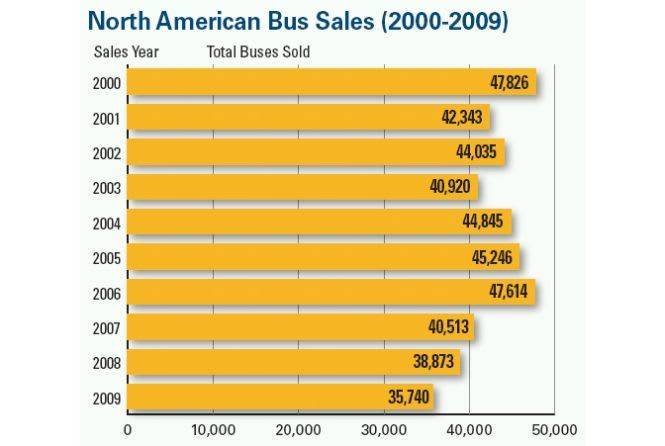
The number of school buses sold in North America fell 8.1 percent in 2009, marking the third year of decline in a row.
North American school bus sales dropped 8.1 percent in 2009, marking the third year of decline in a row.
There were 35,740 school buses sold in the U.S. and Canada in the 2009 sales year (Nov. 1, 2008, to Oct. 31, 2009), down from 38,873 in 2008.
Compared to the 2006 peak of 47,614 units sold, the 2009 total was down 25 percent.
School bus operations across the nation have been hit hard by budget cuts, prompting many to delay the purchase of new buses to replace aging models.
There had seemed to be the possibility of a jump in sales this year due to pre-buying ahead of the 2010 EPA emissions standards, which will raise the price of a school bus. Although there was a significant such sales increase in 2006, before the 2007 EPA standards, that trend did not materialize in 2009.
In SBF’s recent School District Survey, only 10 percent of respondents said they bought more buses this year than they normally would have due to the 2010 standards.
Despite the price increases next year, school bus manufacturers told SBF that they are projecting sales to be about the same.
A full breakdown of sales in 2009 as well as previous years will appear in SBF’s forthcoming 2010 Fact Book.
More Management
American Student Transportation Partners Acquires AJ Myers and Sons
A new deal brings a 75-year Pennsylvania student transportation provider into one of the nation’s largest private school bus contracting groups.
Read More →
What I Brought Home From SBFX: Relationships, Leadership, and Preparing What's Next
Who could lead your transportation operation tomorrow if you couldn't? Bernando Brown explores succession planning, mentorship, and preparing emerging leaders to step up.
Read More →
Inside School Bus Fleet ConneX 2026: Industry Leaders Connect in Scottsdale [Photos]
See highlights from SBFX 2026 in Arizona, where school bus operators and suppliers gathered for meetings, education, networking, awards, and more.
Read More →

School Transportation’s Biggest Pressures and Opportunities: SBFX Attendees Weigh In
School bus operators point to rising costs, staffing, and vehicle prices as immediate pressures while identifying technology, training, and routing as opportunities for growth.
Read More →
STA Acquires Sunrise Transportation
Student Transportation of America expands in Illinois and Connecticut through Sunrise's fleet of nearly 1,000 vehicles.
Read More →
EPA Opens $180M DERA Funding Round for Diesel Upgrades
The 2026 Diesel Emissions Reduction Act program seeks applications from eligible organizations to accelerate the retirement of legacy diesel vehicles.
Read More →
HopSkipDrive’s CareEngine Targets the ‘Exceptions’ in Student Transportation
The new platform works alongside districts’ existing transportation management systems to coordinate specialized rides, automate last-minute changes, and turn ride data into operational improvements.
Read More →
The Right Ride for Every Student: Navigating the New Student Transportation Ecosystem
How should districts blend school buses with small-vehicle transportation and other options? EverDriven CEO Mitch Bowling discusses safety, costs, partnerships, and strategy.
Read More →
Annette Brown Always Takes the Extra Time: Meet Our 2026 School Bus Driver Hero
For more than 30 years, the Wa-Nee Community Schools driver has treated students like family, combining safety, compassion, and servant leadership to make a lasting difference on and beyond the school bus.
Read More →
How to Build a Better Driver Training Program
Ready to boost up your school bus instructor training? Here’s how to pick the right talent and improve recruitment, retention, and safety.
Read More →