




Q’Straint launches new retractor at mobility conference
The company exhibits its QRT-360 wheelchair retractor tie-down system for the mobility market at the National Mobility Equipment Dealer’s Association Conference. Q’Straint officials say that the QRT-360 is the first retractor to meet the higher-strength requirements of the WC18 standards.

RENO, Nev. — Q’Straint is launching its new QRT-360 wheelchair retractor tie-down system for the mobility market at the National Mobility Equipment Dealer’s Association Conference.
The event is being held Feb. 5-7 in Reno.
Q’Straint officials said that the QRT-360 is the first retractor to meet the Rehabilitation Engineering Assistive Technology Society of North America’s higher-strength requirements of WC18 standards for effective wheelchair tie-down and occupant restraint systems — well in advance of when they take effect, in December 2015. At that time, compliance with WC18 standards will require wheelchair tie-down and occupant restraint systems to be stronger and capable of withstanding loads up to 60% higher.
The QRT-360 is a four-point, heavy duty, fully automatic retractable tie-down system that is built to perform successfully in a 30-mph frontal crash with a crash test wheelchair featuring an integrated lap belt, such as with the popular WC19 chairs, Q'Straint officials said. The QRT-360 is part of the QRT-3 Series and is compatible with most vehicles and chairs for such transportation applications as pupil transportation, personal mobility, paratransit, mass transit and taxi.
“In light of the VA’s [Veterans Affairs'] decision to specify the use of only WC19 wheelchairs, wheelchair OEMs are focusing on these types of chairs for use with their products," said Bob Joseph, Q’Straint's vice president of business development. "As WC19 wheelchairs become increasingly more popular, the need for compatible wheelchair tie-downs becomes more critical."
Joseph said that the QRT-360 retractor as well as Q'Straint's QLK150 product are WC18 and WC19 compliant, "specifically designed and built for today’s wheelchairs and tomorrow’s standards, well ahead of the deadline.”
For more information on the QRT-360, go here.
More Special Needs Transportation
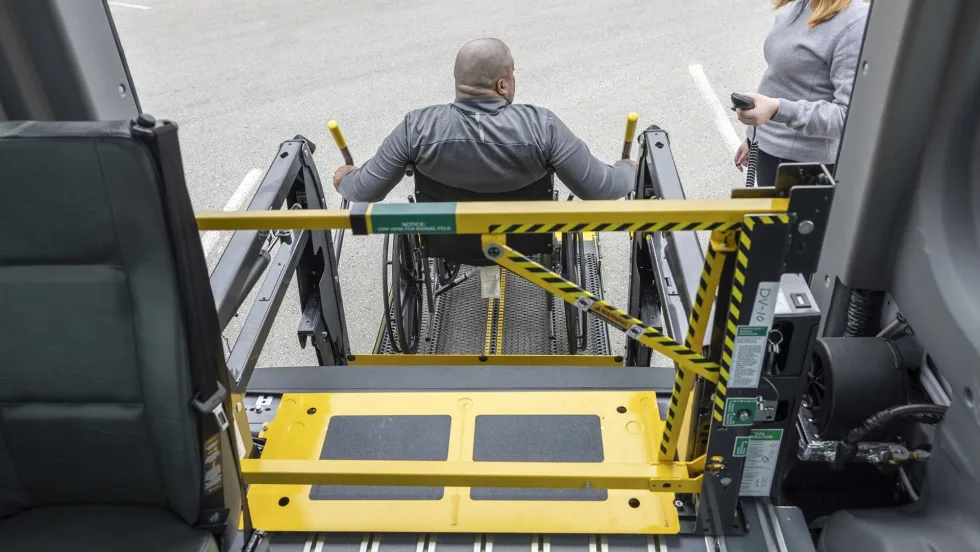
BraunAbility Introduces New Safety Barrier for Wheelchair Lifts
LiftSentinel is designed to add another layer of protection during wheelchair loading and unloading and can be retrofitted to many existing commercial lift installations.
Read More →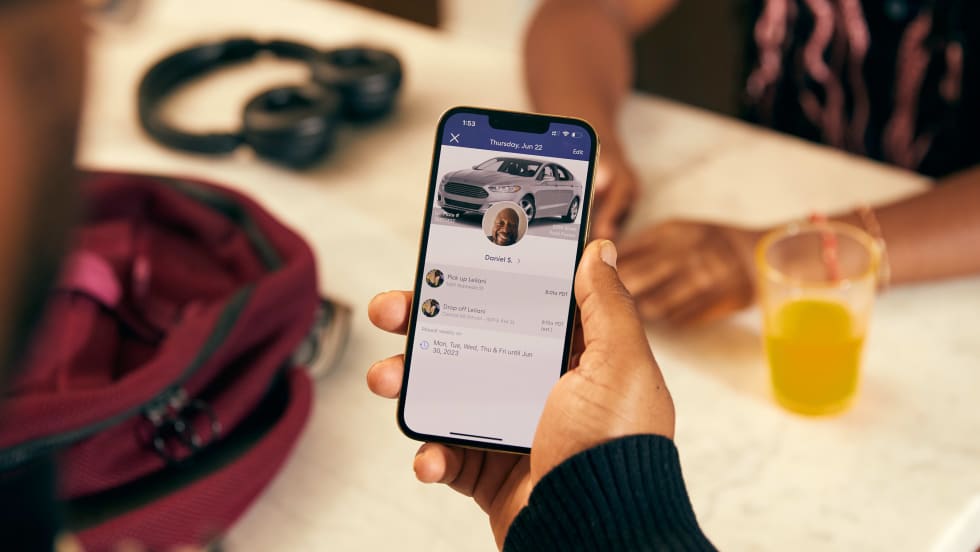
HopSkipDrive Launches New Safety, Driver Consistency Features for 2026-27 School Year
The company’s free ride recording, live ride tracking, and consistent driver assignments aim to improve safety and continuity for diverse student transportation needs.
Read More →
The Most Common Wheelchair Securement Mistakes on School Buses (and How to Fix Them)
Small missteps in wheelchair securement can have serious consequences. Here are 32 tips from experts to reduce risk and increase student safety on the bus.
Read More →
Inside AMF Bruns’ New Showroom: School Bus Securement Solutions Explained
Go inside AMF Bruns America’s new Ohio showroom with Maritza Valentin to see its FutureSafe technology, driver training tools, securement systems, and seating innovations.
Read More →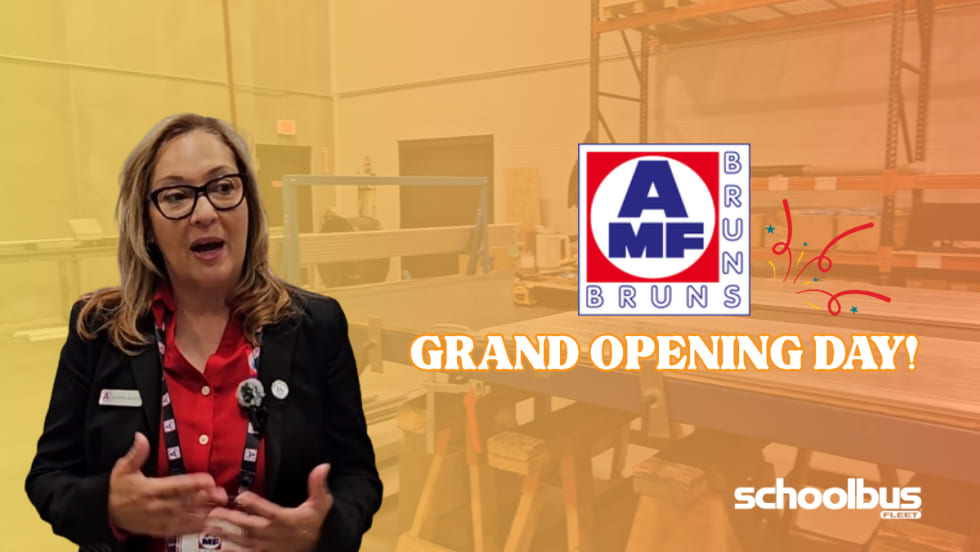
What AMF Bruns’ New Facility Means for Customers [Video]
Inside AMF Bruns’ new Stow, Ohio, operations: See how expanded space and innovation will enhance customer support and operations.
Read More →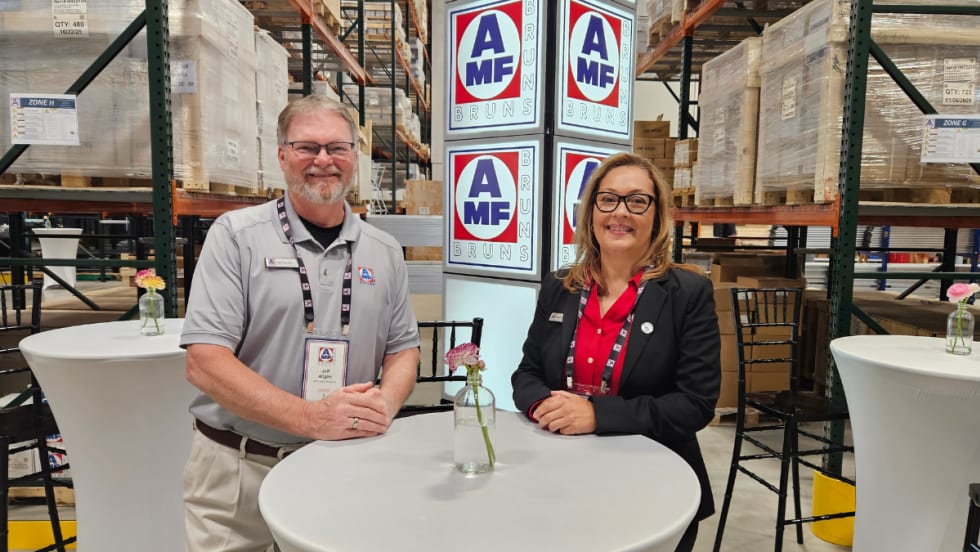
AMF Bruns Expands in Ohio, Investing in Growth and Community
With expanded production space, local investment, and a growing workforce, AMF Bruns is scaling its U.S. presence. Here’s an exclusive first look inside the new Stow, Ohio, HQ.
Read More →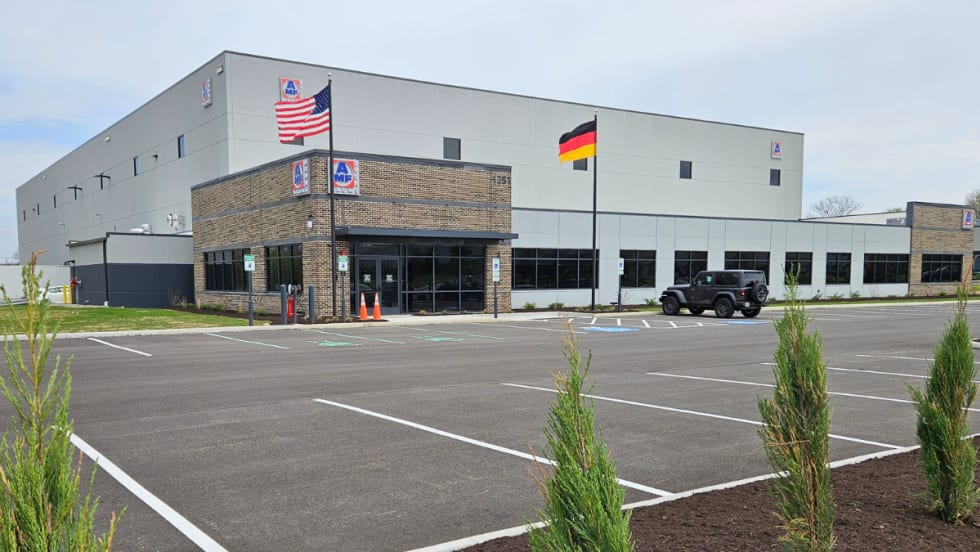
Inside AMF Bruns of America’s New Ohio Manufacturing Facility [Photos]
Take a behind-the-scenes look at AMF Bruns of America’s new 41,000-square-foot Stow, Ohio, headquarters, featuring advanced manufacturing, expanded space, and future-ready mobility solutions.
Read More →
First Student Boosts Student Support in Wichita & Texas
First Student and Wichita Public Schools are using behavioral support strategies to improve student ride experiences, while a separate initiative expands access to after-school programs through a bus donation.
Read More →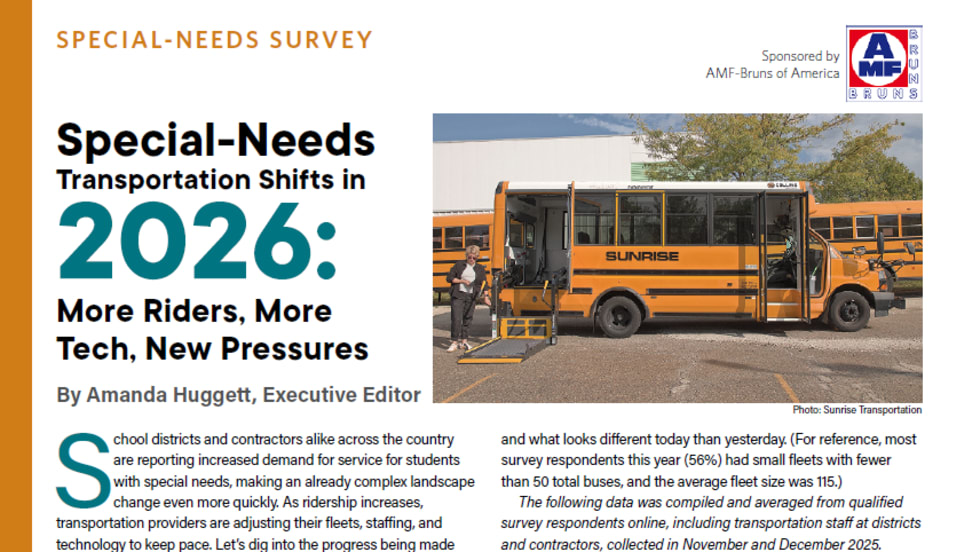
2026 Special-Needs Transportation Survey
What’s changing in special-needs transportation? This year, student transportation operators report a rising need, easing driver shortages, growing tech adoption, and evolving challenges. Sponsored by AMF Bruns of America.
Read More →
The Lived-Experience Gap in Mobility Tech: An Expert Take on Safe Student Transportation
Brianna Pauwee, a product application specialist at AMF Bruns of America and a wheelchair user, drops in to The Route to share practical securement and training insights, plus the story behind the new “Beyond Mobility” podcast. The Route is sponsored by IC Bus.
Read More →