




Propane Council Finds 10% Bump in Propane School Bus Operation, Expands Incentive Program
At the start of 2017, U.S. school districts were operating more than 12,000 propane buses, according to figures from the Propane Education & Research Council.

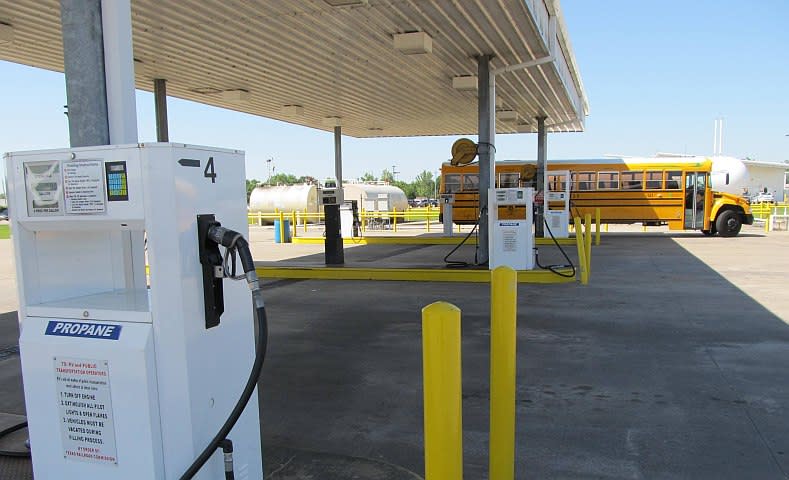
At the start of 2017, U.S. school districts were operating more than 12,000 propane buses, according to figures from the Propane Education & Research Council.
At the start of 2017, U.S. school districts were operating more than 12,000 propane buses, according to figures from the Propane Education & Research Council.
WASHINGTON, D.C. — At the start of 2017, school districts across the U.S. were operating more than 12,000 propane autogas school buses, an annual increase of approximately 10%, according to figures from the Propane Education & Research Council (PERC).
Propane buses now make up more than 45% of all non-diesel school buses used for pupil transportation, according to PERC.
“First-time adopters of propane school buses are converting entire fleets after they see for themselves the advantages propane can offer everyone involved, from the transportation directors to the bus drivers to the students riding the propane buses,” said Michael Taylor, PERC director of business development. “We expect more districts to turn to propane throughout 2017 and beyond as transportation directors learn of the lower total cost of ownership, cleaner and quieter operation, and better maintenance experience that a propane bus fleet can offer a district.”
According to data compiled by PERC from new vehicle registration figures, supplied by market research firm IHS Polk, propane school buses transport more than 700,000 students in 600 districts across 47 states.
The new data show that six states — California, Florida, Oregon, Pennsylvania, Texas, and Wisconsin — each have more than 500 propane buses in operation within their borders. Texas, with 2,600 propane buses in operation throughout the state, operates more than 20% of all propane buses in the country. New York boasts the highest number of districts operating propane, with more than 50 districts. Five other states — Illinois, Iowa, Michigan, Pennsylvania, and Texas — have more than 30 districts apiece using propane buses in fleets.
Meanwhile, PERC is expanding its Quick-Connect Nozzle Incentive Program availability to fleets and is doubling the incentive amounts for applicants.
Private fleets and public refueling stations are eligible to apply for the program, which will now provide $100 per tank-side connector and $1,000 per hose-end connector.
Quick-connect nozzles can be operated with one hand and do not require the user to wear protective eyewear or gloves, according to PERC.
Initially launched in November 2015, the incentive program had only been available to propane retailers. The new double incentives of $100 per tank-side connector and $1,000 per hose-end connector will continue to be available to propane retailers, but expanded for fleets looking to replace their current refueling technology until the end of June 2017.
To apply for the program, go here to complete the form.
More Alternative Fuels

CALSTART and Forth Combine to Form Catalyst Mobility
The new name represents a renewed vision for the nonprofit focused on advancing clean, equitable, and affordable transportation solutions that move people and goods.
Read More →
Alt-Fuel Moves: New Buses, Charging Hubs & Real-World EV Testing
Propane and electric school bus deployments continue to grow as districts add new vehicles, expand charging infrastructure, and gather more real-world operating data.
Read More →
Fewer Electric School Bus Models Reshape the U.S. Market
WRI’s latest buyer’s guide points to a consolidating electric school bus market, but fewer options may reflect a maturing industry rather than fewer meaningful choices for school bus operators.
Read More →
The Fuel Budget You Can Actually Predict: How Propane Autogas Keeps Money in the Classroom
Learn how propane autogas helps school districts manage fuel costs with predictable pricing, lower maintenance, and reduced emissions from former transportation director Joel Stutheit.
Read More →
Hendrickson, Driventic Introduce New Electric Powertrain for School Buses
ELECTRAAX, the electrified, lightweight drive axle offers integrated ePowertrain efficiency and modular flexibility for Class 6–7 school bus use.
Read More →
The Mobility House Joins PowerFlex in Fleet Electrification Deal
The acquisition combines intelligent charging software, bidirectional charging expertise, and fleet electrification services to support the growing adoption of electric school buses across North America.
Read More →
Alt-Fuel Moves: Electric School Bus Investments Hit the Road
See which districts across the U.S. are putting electric school buses into service, expanding charging infrastructure, and planning the next phase of fleet electrification.
Read More →
With Fuel Volatility Ahead, School Districts Turn to Propane
While diesel prices peaked above $5 this spring, districts with propane autogas-powered fleets paid under $2 per gallon, according to PERC.
Read More →
EPA Unveils Proposed Changes to 2027 Heavy-Duty Engine Rules
The federal agency has proposed changes to next year’s targets that would eliminate DEF derates, ease warranty requirements, and retain current NOx emissions standards.
Read More →
Alt-Fuel Moves: EV Charging & Infrastructure Projects Gain Momentum
The latest developments include new funding, charging infrastructure, utility investments, and fleet technologies designed to support the transition to electric school buses nationwide.
Read More →