




Joint school bus seating venture launched
Three Michigan-based companies have initiated a joint venture to produce seating for school buses.

MYRTLE BEACH, S.C. — Three Michigan-based companies have initiated a joint venture to produce seating for school buses.
M2K Seating Systems LLC, Tachi-S Engineering USA and Takata Safety Systems USA announced a joint venture at the school bus industry meetings held in Myrtle Beach this week.
The joint company, SynTec Seating Solutions, will be based in North Carolina and will be owned by M2K, Tachi-S and Takata.
M2K produces school bus seating with and without restraint systems. Tachi-S produces auto and truck seating, and Takata produces automotive safety systems.
M2K will be the majority shareholder of SynTec.
Several other companies are supporting the joint venture with engineering and production facilities throughout North America, including Irvin Automotive (seat upholstery), Woodbridge Group (seat foam) and BHM Technologies (seat frames).
Company officials said that by combining the capabilities of several large and well-established suppliers of seating components, the venture will be able to leverage technologies that are already developed and in high-volume production for the auto and truck industries throughout the world.
"For owners, operators and producers of school buses, this means access to new and improved technologies that provide lower costs, better quality, enhanced safety and lighter weights — a major factor in improving fuel efficiency and reducing overall operating expenses for buses," the companies said in a statement.
More Maintenance

International Adds E-Commerce Capabilities to Fleetrite.com
IC Bus customers can now browse, buy, and track shipments for more than 400,000 aftermarket parts online.
Read More →
The Most Expensive Thing You Do Before Selling a School Bus: Wait
When should you sell an aging school bus? Learn how maintenance, mileage, corrosion, specifications, and timing can affect resale value long before the auction.
Read More →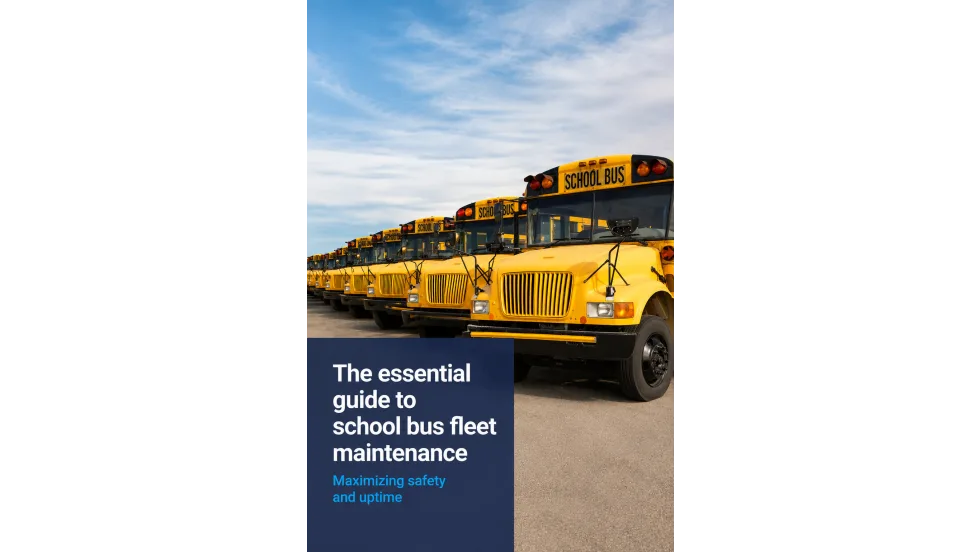
The essential guide to school bus maintenance and student safety
Reactive maintenance puts students at risk of breakdowns, delays and roadside emergencies. This guide gives transportation directors a data-driven framework to predict failures, extend bus lifespans and improve fleet reliability across every route.
Read More →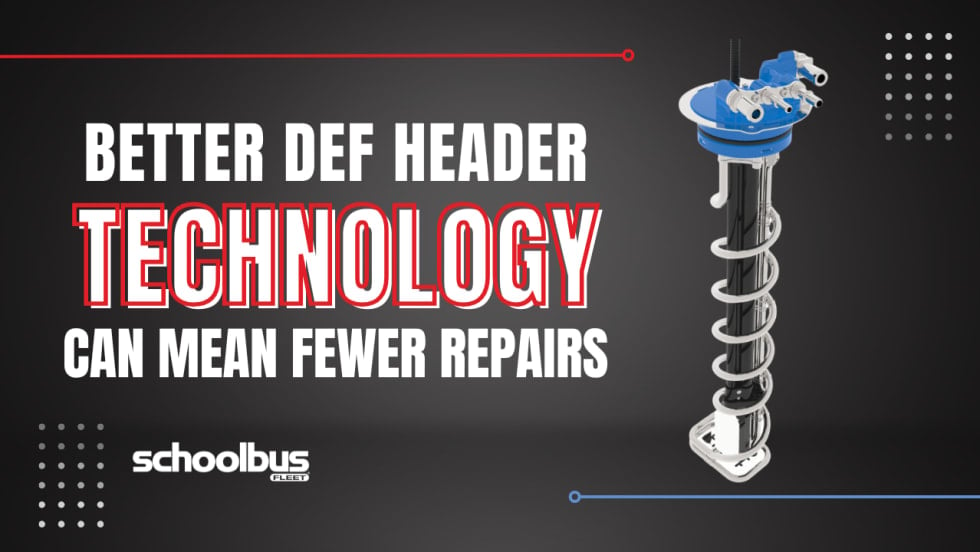
The Evolution of DEF Header Technology: What School Bus Operations Should Know at Replacement Time
See what school bus fleets should consider when replacing DEF headers to improve reliability, reduce repeat repairs, and control maintenance costs.
Read More →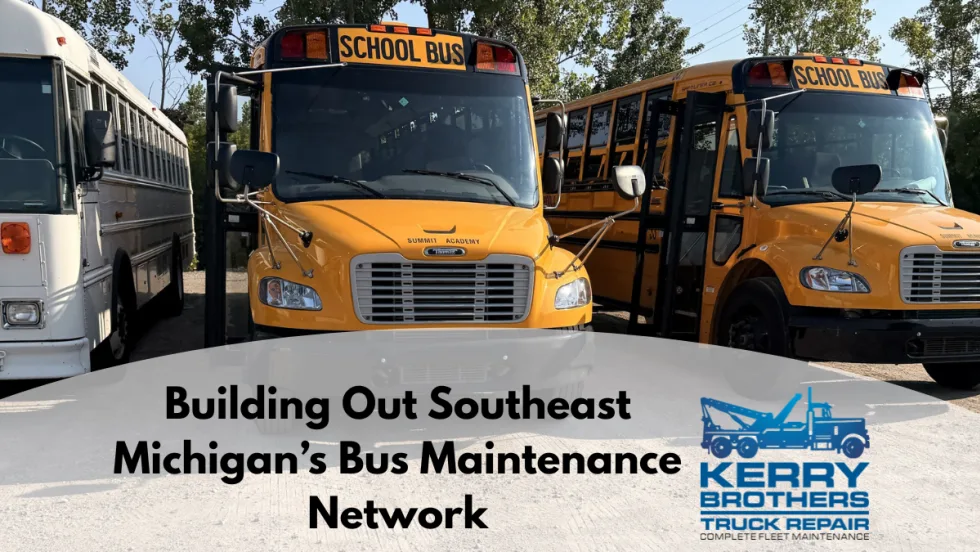
Kerry Brothers Grows Michigan School Bus Repair Network
The acquisition of Downriver Truck and Bus expands Kerry Brothers’ school bus maintenance footprint across southeast Michigan, adding repair capacity, diagnostic resources, and state inspection support.
Read More →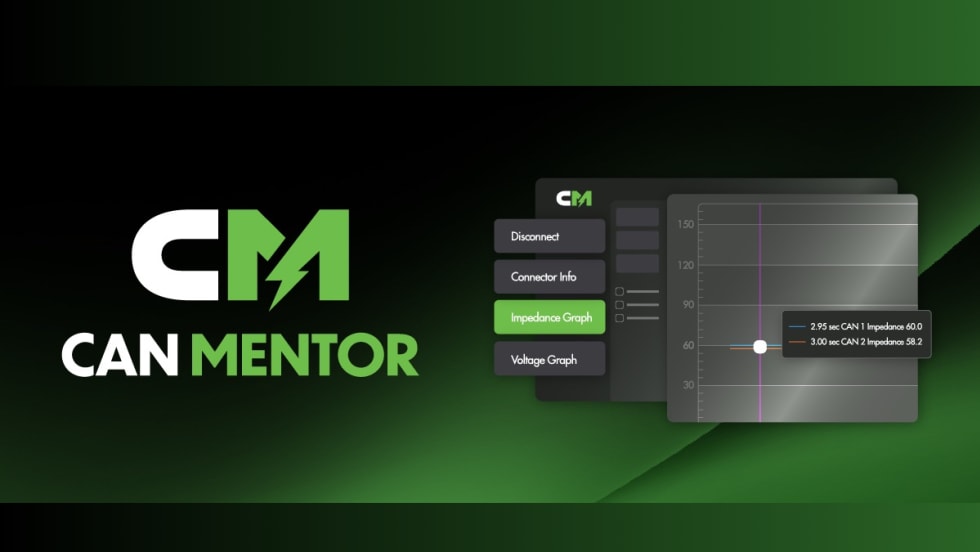
Noregon Introduces CAN Bus Diagnostic Tool, Expands JPRO Features
CAN Mentor and the latest JPRO update aim to simplify vehicle network diagnostics and improve repair efficiency for technicians of all experience levels.
Read More →
Cummins on Smarter, Simpler Engine Innovation
Cummins discusses its first-ever gasoline engine for school buses, EPA 2027, and why bus fleets still want durable, simpler internal combustion options.
Read More →
Report: 72% of Diesel School Buses Now Use Advanced Low-Emission Engines
New data shows advanced low-emission diesel technology continues expanding across school bus fleets, even as electric bus adoption gains momentum.
Read More →
Vampire Tools' CAIMAN 7.5-Inch Multi-Purpose Screw Extractor Long-Nose Pliers with Crimper
Vampire Tools introduced the VAMPLIERS Caiman 7.5-inch multi-purpose pliers, combining screw extraction, cutting, crimping, and gripping functions into a single tool designed for fleet maintenance professionals.
Read More →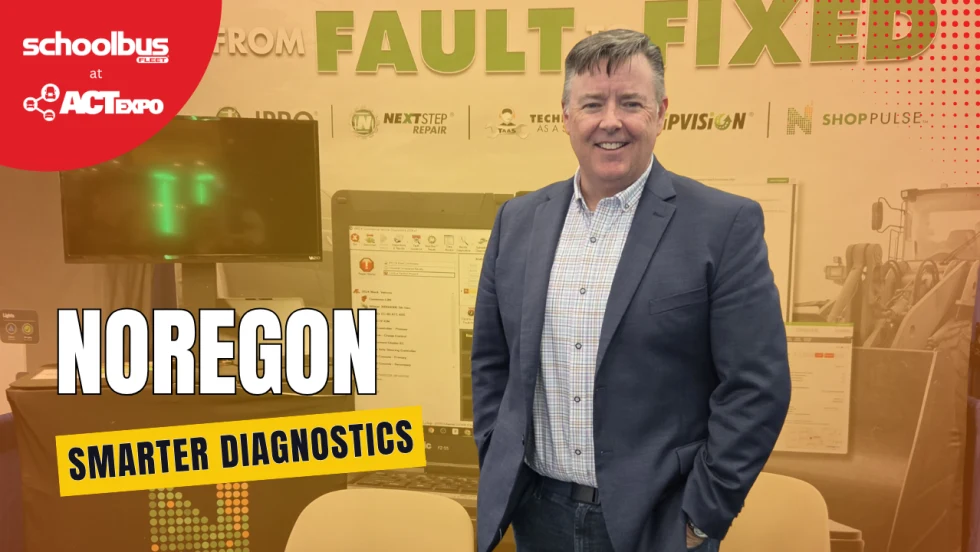
How Advanced Diagnostics Helps Bus Fleets Stay Ahead of Repairs
Chat with Noregon’s Kevin Smallhorn at ACT Expo about bus diagnostic tools, telematics integration, CNG maintenance support, and strategies to help reduce downtime and improve uptime.
Read More →