SBF 70 years logo
MenuMENU
SearchSEARCH

New standards target stronger wheelchair tie-downs, increased safety

New safety standards for wheelchairs and tie-downs promise to improve transportation safety for people who must use their wheelchair as the passenger seat when riding in a car, van or bus. Here’s an overview of the WC18 and WC19 standards and the enhanced testing they require.

December 2, 2013
New standards target stronger wheelchair tie-downs, increased safety

To comply with the new WC18 standard, wheelchair tie-downs or other securement devices must pass two different dynamic strength tests.

3 min to read


New safety standards for wheelchairs and tie-downs promise to improve transportation safety for people who must use their wheelchair as the passenger seat when riding in a car, van or bus.

Some of these new product design and crash test requirements have already gone into effect, while additional ones will not be in effect until December 2015. In advance of this deadline, innovators of wheelchair tie-down systems are already striving to implement upcoming safety improvements for today’s passengers.

Ad Loading...

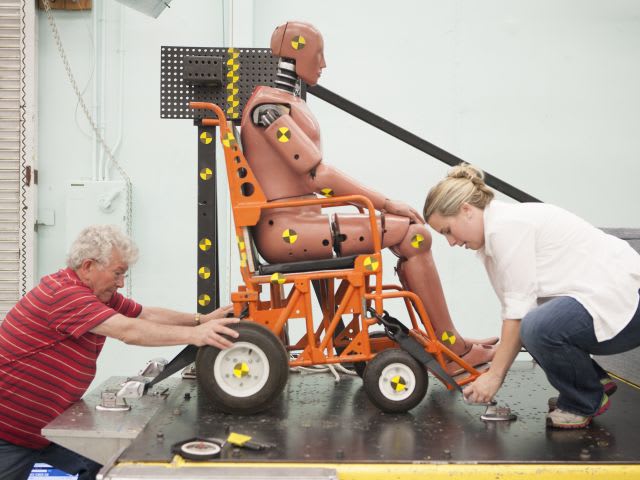
To comply with the new industry standards published in Wheelchairs and Transportation, Volume 4, of RESNA (Rehabilitation Engineering and Assistive Technology Society of North America) wheelchair standards — commonly referred to as WC18 — wheelchair tie-downs or other securement devices must pass two different dynamic strength tests.

Both of the impact sled tests subject the tie-downs to a 30 mph, 20-g crash using a “surrogate” wheelchair and average weight dummy. What differs between the first test requirements that are already in effect and those requirements coming in December 2015 is how the occupant belts are installed.

In the current WC18 requirement, the lap and shoulder belt is installed in such a way that the entire load of the occupant is applied to the vehicle during impact, effectively separating the wheelchair and occupant loads from each other.

The second test requirement, as stated in WC19, places the occupant’s lap belt onto the wheelchair frame itself, therefore transferring a majority of that force onto the tie-downs, thus providing additional safety to the passenger.

The previous standards were implemented in 2002, and RESNA’s recent changes to both the WC18 and WC19 standards reflect 10 years of real-world experience of passengers, wheelchairs and securement systems in both crash and non-crash events.

Ad Loading...

Building on the success of the previous requirements, the new standards will provide additional precautions based on today’s transportation environments to further ensure passenger safety. Lessons learned from the past 10 years have reinforced the need for an anchored lap belt for providing a safe and respectful transportation experience for the wheelchair-dependent passenger.

Among its many benefits, the wheelchair-anchored lap belt:

• Provides a better fit low on the passenger’s pelvis, the safest and most secure belt location;

• Eliminates interference from wheelchair components such as armrests, as can happen with a lap belt anchored to the vehicle floor;

• Reduces invasion of the passenger’s personal space by the vehicle operator or other attendant who would otherwise be securing straps around the passenger’s body because the passenger would already be wearing the belt;

Ad Loading...

• Reduces the time required to secure the lap-shoulder belt.

These benefits address not only improved passenger safety, but also a more efficient and independent securement process. Thus, manufacturers see real value for their customers, and riders and drivers alike are eager to see the new improvements implemented rapidly.

“The revised standards pose a design challenge; however, we recently announced our new QRT-360 retractor that is fully compliant with the WC18 standard and will be available early 2014,” said Bob Joseph, vice president of business development at Florida-based securement systems manufacturer Q’Straint. “Q’Straint is pleased to offer improved wheelchair restraint safety to passengers well ahead of the December 2015 deadline.”

This article was submitted by Q'Straint.

More Special Needs Transportation

School Bus Fleet “On the Road” graphic featuring Maritza Valentin of AMF Bruns America inside a mobility equipment showroom in Ohio, highlighting accessible bus solutions.

Inside AMF Bruns’ New Showroom: School Bus Securement Solutions Explained

Go inside AMF Bruns America’s new Ohio showroom with Maritza Valentin to see its FutureSafe technology, driver training tools, securement systems, and seating innovations.

Read More →
Thumbnail image of AMF Bruns grand opening video featuring Maritza Valentin speaking in a manufacturing space, with company logo and “Grand Opening Day!” text overlay

What AMF Bruns’ New Facility Means for Customers [Video]

Inside AMF Bruns’ new Stow, Ohio, operations: See how expanded space and innovation will enhance customer support and operations.

Read More →
zonar system image
SponsoredApril 20, 2026

2026 State of Student Transportation Report

Student transportation teams are being asked to do more with less, facing driver shortages, rising costs, and increasing safety expectations. This report uncovers how fleets are adapting, where technology is making the biggest impact, and why student ridership tracking is emerging as a top priority. Download the report to explore the key trends shaping 2026 and what they mean for your operation.

Read More →
Ad Loading...
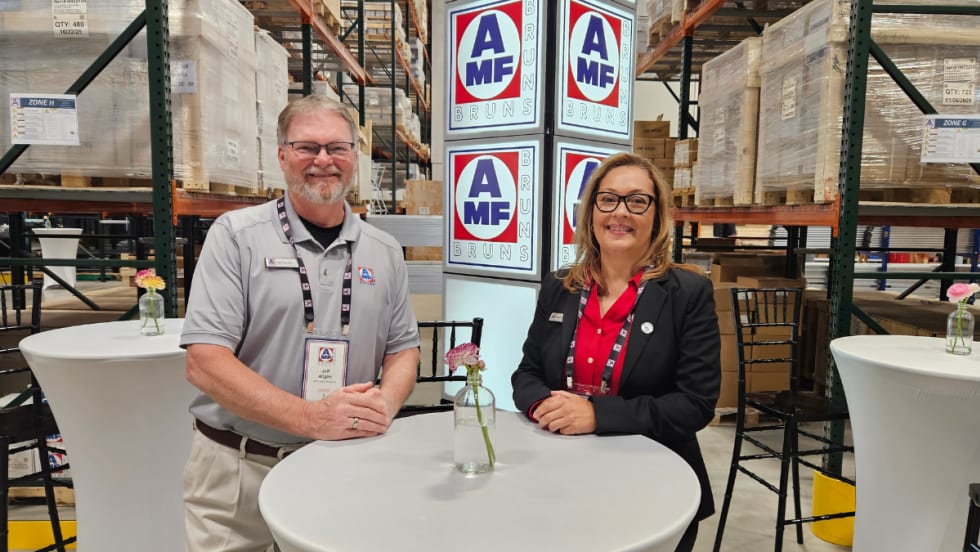
AMF Bruns national account managers Maritza Valentin and Jeff Algire at open house event

AMF Bruns Expands in Ohio, Investing in Growth and Community

With expanded production space, local investment, and a growing workforce, AMF Bruns is scaling its U.S. presence. Here’s an exclusive first look inside the new Stow, Ohio, HQ.

Read More →
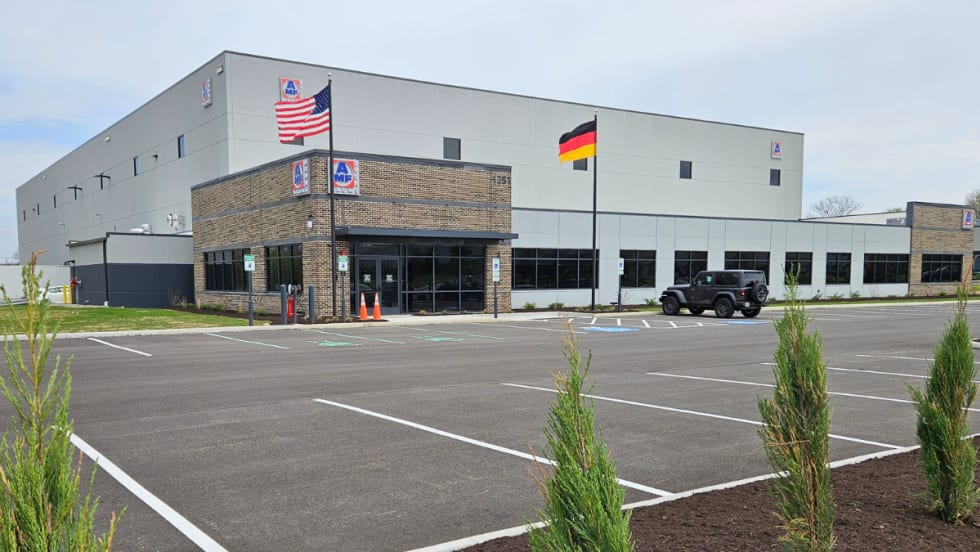
Exterior view of AMF Bruns of America’s new 41,000-square-foot facility in Stow, Ohio

Inside AMF Bruns of America’s New Ohio Manufacturing Facility [Photos]

Take a behind-the-scenes look at AMF Bruns of America’s new 41,000-square-foot Stow, Ohio, headquarters, featuring advanced manufacturing, expanded space, and future-ready mobility solutions.

Read More →
hopskipdrive whitepaper
SponsoredMarch 30, 2026

Boosting K-12 Attendance With Innovative Transportation Solutions

While the yellow school bus remains the backbone of student transit, 75% of administrators identify limited transportation access as a major driver of chronic absenteeism. This guide explores how districts are strengthening their fleets by integrating flexible, supplemental solutions to serve students with the most complex needs. Learn how a multimodal approach can bridge service gaps, restore attendance, and support your most vulnerable populations.

Read More →
Ad Loading...
Students walking away from a school bus with a driver in the background, representing efforts to improve student behavior support and safety in school transportation programs.

First Student Boosts Student Support in Wichita & Texas

First Student and Wichita Public Schools are using behavioral support strategies to improve student ride experiences, while a separate initiative expands access to after-school programs through a bus donation.

Read More →
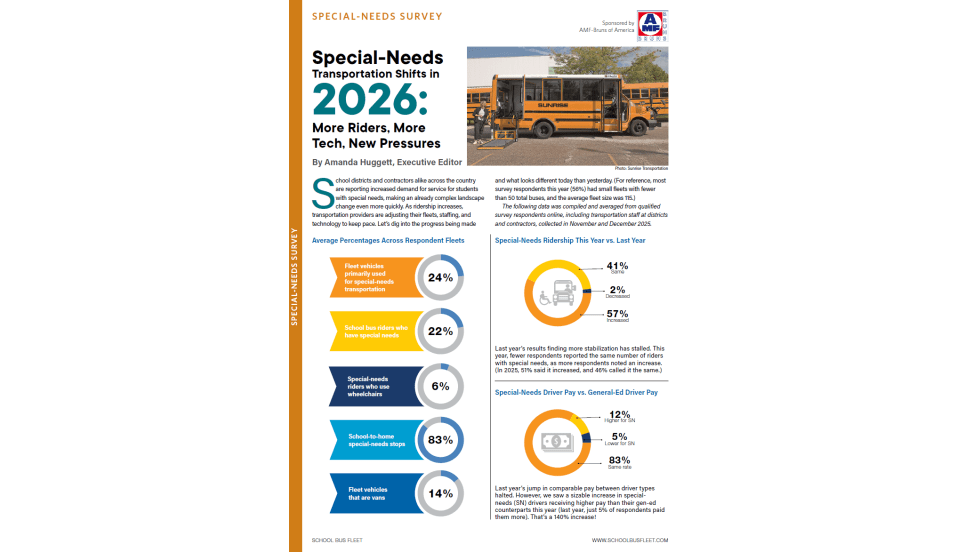
Infographic showing a yellow school bus with a wheelchair lift and charts highlighting 2026 special-needs transportation statistics, including ridership changes and driver pay comparisons.
SponsoredFebruary 27, 2026

2026 Special-Needs Transportation Survey

What’s changing in special-needs transportation? This year, student transportation operators report a rising need, easing driver shortages, growing tech adoption, and evolving challenges. Sponsored by AMF Bruns of America.

Read More →
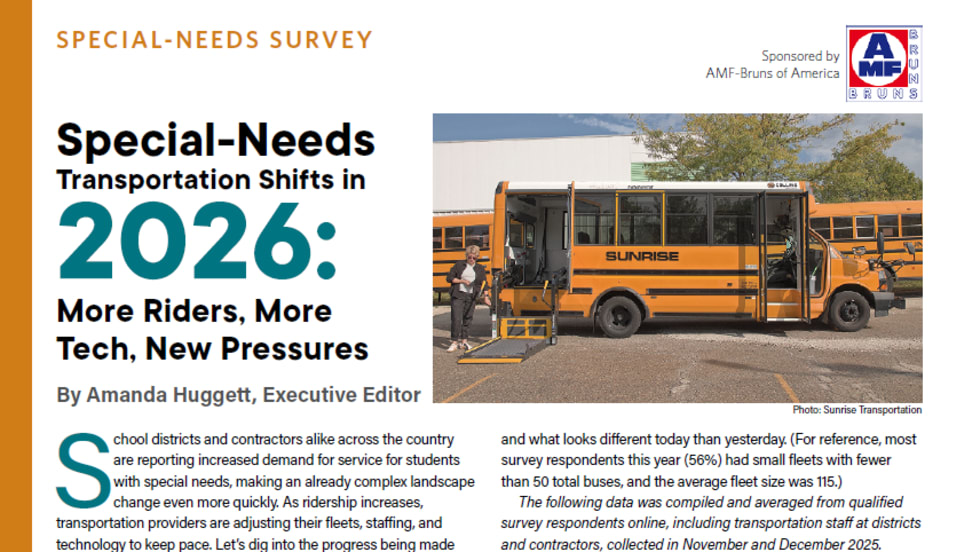
Infographic showing a yellow school bus with a wheelchair lift and charts highlighting 2026 special-needs transportation statistics, including ridership changes and driver pay comparisons.
Special Needs TransportationFebruary 27, 2026

2026 Special-Needs Transportation Survey

What’s changing in special-needs transportation? This year, student transportation operators report a rising need, easing driver shortages, growing tech adoption, and evolving challenges. Sponsored by AMF Bruns of America.

Read More →
Ad Loading...
the route thumbnail with the SBF logo and a photo of Brianna Pauwee
Sponsoredby Amanda HuggettFebruary 13, 2026

The Lived-Experience Gap in Mobility Tech: An Expert Take on Safe Student Transportation

Brianna Pauwee, a product application specialist at AMF Bruns of America and a wheelchair user, drops in to The Route to share practical securement and training insights, plus the story behind the new “Beyond Mobility” podcast. The Route is sponsored by IC Bus.

Read More →