




You call that a school bus, mate?
Dan and Julie Love are the owners of Love's School Bus Service in Cairns, a city in the north Australian state of Queensland. The Loves have been...
Dan and Julie Love are the owners of Love's School Bus Service in Cairns, a city in the north Australian state of Queensland.
The Loves have been in business for 15 years and currently transport about 3,000 students a day with 45 buses. They transport students within a 50-mile area.
To get a school bus license, drivers have to pass a written test, a road test by the state license department, a physical exam, a drug test and a full police background check. The license is good for five years, but drivers still must undergo annual physicals and driver's license checks, as well as a bi-annual police background check. The drug and alcohol tests have a zero tolerance.
In Cairns, the state sets no requirements for hours of training, so each school or contractor sets his own training program.
As in the U.S., drivers are hard to find in Cairns. Because of the Loves' excellent training program, people get certified, work a few times and then change jobs. Sound familiar? Trucking companies and public transit operators love it because they do not have to train new people.
There is no standard type of bus seat, and there are no seat belts for the students. Dan has been working with Queensland regulators to set up a standard, but with more than 3,000 buses operated in his state, it is an uphill fight to get things done.
When Julie visited the U.S. in 2004, she was amazed at how many women drove school buses. Loading the wheelchairs on the bus was also a surprise, because here in Cairns, school districts pay the parents for in-kind transportation.
Love's has mostly male drivers even though the jobs are all part time. They would like to have more women driving, but do not get many female applicants. In other states, a few women do drive buses, but, overall, numbers are low.
Since Julie's trip to the U.S., she and Dan have been thinking about implementing U.S.-style school buses. The next time they travel to the U.S., they would like to see some of our operations. Who knows, maybe the yellow school bus will catch on in Australia, just like it is now in England and Norway.
But, we all have the same problems with cars in the loading zones. We all wish that the loading zone would be for buses only.
The other thing we have in common is the behavior of the students. Since Australian buses can have standees, it is harder to see the students at times.
Since the school bus does not have red flashing lights, you can drive past the bus throughout Australia when they load and unload students. Motorists can pass the bus at 24 mph, but, of course, some people pass the bus a lot faster. If you get a ticket for passing the bus, it is a $200 fine and three points on your license.
In the rural areas, there are signs saying "School Bus Route" or a sign with a drawing of students that warns a driver that a school bus stop is ahead. The students must cross the road by themselves and wait on the loading side for the bus in the morning. In the afternoon, students must wait until the bus leaves the bus stop before they cross the street.
Because motorists do not have to stop for the bus, Dan routes the buses so that loading and unloading are only done on the student's side of the street. Dan says that so far, they have been very lucky that no student has been hit.
I have found that no matter where I travel in the U.S. or in other parts of the world looking at school bus operations, the people all have the same love for driving a school bus.
Dick Fischer is president of Trans-Consult, a pupil transportation consulting company, and disseminates industry news through his daily e-mail newsletter, "School Bus Safety News." He can be reached at dfischer@ix.netcom.com.
More Management

The Right Ride for Every Student: Navigating the New Student Transportation Ecosystem
How should districts blend school buses with small-vehicle transportation and other options? EverDriven CEO Mitch Bowling discusses safety, costs, partnerships, and strategy.
Read More →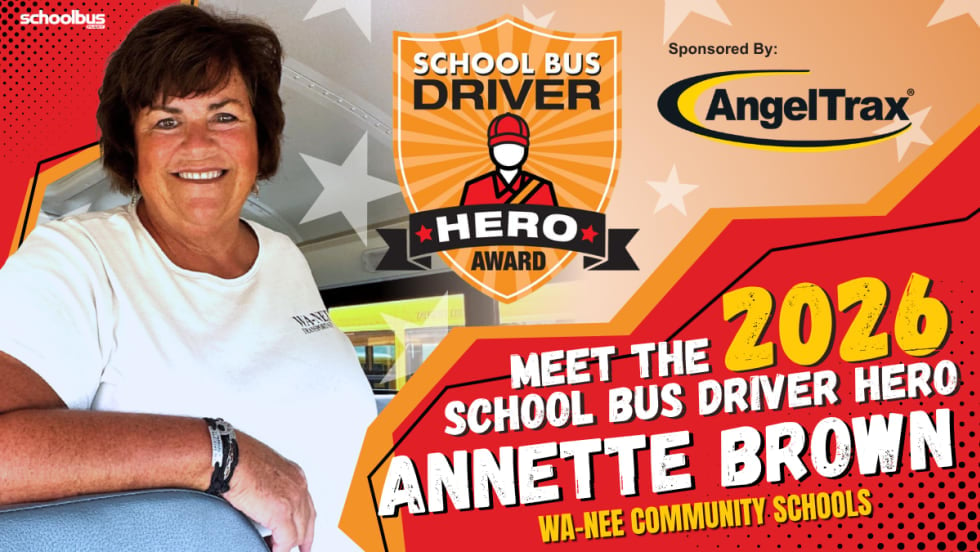
Annette Brown Always Takes the Extra Time: Meet Our 2026 School Bus Driver Hero
For more than 30 years, the Wa-Nee Community Schools driver has treated students like family, combining safety, compassion, and servant leadership to make a lasting difference on and beyond the school bus.
Read More →
How to Build a Better Driver Training Program
Ready to boost up your school bus instructor training? Here’s how to pick the right talent and improve recruitment, retention, and safety.
Read More →


CALSTART and Forth Combine to Form Catalyst Mobility
The new name represents a renewed vision for the nonprofit focused on advancing clean, equitable, and affordable transportation solutions that move people and goods.
Read More →
What Makes a Great School Bus Driver Trainer?
Choosing the right school bus driver trainer takes more than experience. Learn six keys to selecting and developing trainers and evaluating program effectiveness.
Read More →
School Bus Contractors Expand Through New Deals, Acquisitions & Partnerships
STA's Canadian division acquires Ontario-based G&L Stevenson Transport; Durham School Services adds a new district in California; First Student expands in New Jersey; and Minnesota Coaches rebrands and acquires Halo Transportation.
Read More →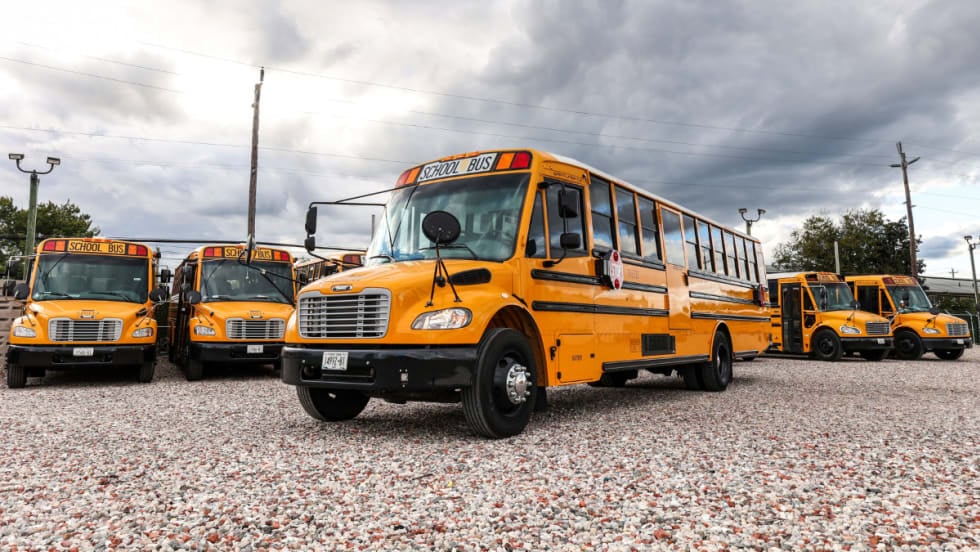
Logan Bus Company Rolls Out AI Phone System for NYC School Bus Families
A summer pilot found that AI agents could handle most routine calls, freeing up time for customer service staff to focus on emergencies and complex family concerns.
Read More →
From Intent to Impact: What I Learned About Leadership from TAPT
A Texas transportation supervisor shares lessons on self-awareness, accountability, managing stress and building trust — and why investing in leadership development matters at every stage of your career.
Read More →
NAPT Names 2026 Award Recipients, Hall of Fame Inductee
Who earned national recognition for their work in student transportation? This year, NAPT named five recipients of its 2026 awards for service, safety, and leadership, plus its newest Hall of Famer.
Read More →
2026 State of Student Transportation Report
Driver shortages. Rising costs. Growing safety expectations. More data, but not enough time to act on it. The 2026 State of Student Transportation Report reveals what transportation leaders say is putting the most pressure on their operations—and where they’re investing next. See how your priorities compare.
Read More →