




Turning waste into profit
With the high cost of fuel, districts and bus companies across the country are looking for ways to offset budget shortfalls.

With the high cost of fuel, districts and bus companies across the country are looking for ways to offset budget shortfalls.
Warwick (N.Y.) Valley Central School District has found a way to do just that. In addition to all the obvious ones — reducing idling, combining stops and reduction of trips — the district is now turning waste into profit. How they are doing this is simple: Their buses are running on a mixture of old deep-fryer oil and diesel.
As Director of Transportation Robert Zeller explained, it all started with his business official, Tom Gustainis, complaining about the lack of a way to dispose of the deep-fryer oil in the cafeteria. This got Zeller thinking. The diesel engine was designed originally to run on peanut oil. Keeping this in mind, he approached Leonard Bus Sales, the district’s dealer, to see if International Truck and Engine Corp. had any experience with this topic. Within minutes, the transportation department had a tech bulletin on its fax machine explaining just what mixture was acceptable.
When it started, Zeller was hopeful to get 100 gallons per month. Excited about this project, his office staff quickly exceeded this goal and found that local restaurants and delis were very eager to help. The district is currently processing 600 to 700 gallons a month. By calculating with the current price of fuel for 10 months, Zeller said the district is looking at a payback of $15,300 plus.
A regular pickup was established that takes about one hour a week for collection, and processing is about the same. When the oil comes in, it is dumped and screened into a large holding tank. From this tank, oil is blended to mix at 20 percent vegetable oil and 80 percent petroleum-based diesel fuel. Filtering is achieved when pumping into the tanks of the buses through an inline filter (25 microns), then through the normal filter on the bus.
To ensure that the fuel additive used in the fleet would give added results, Zeller contacted the district’s K100-D supplier. The supplier found that since the additive is a natural compound and the lubricity of vegetable oil is high, the additive becomes very compatible with vegetable oil and works well.
In monitoring of performance, the district found that the difference in power output was slight. As one driver put it, “I had to press a little more on the acceleration when climbing a hill.” But there have been no other complaints from the drivers. Many have actually found the fuel to have an inviting odor of French fries.
The community of Warwick has embraced the idea and has joined the project. Most restaurants would normally pay to dispose of the oil, so in the end, everyone saves or profits from it. One of the school board members suggested offering a dropoff for everyone in the community who has cooking oil from home.
What’s even better is that vegetable oil has cleaner emissions and is good for the engine. Compared to regular diesel, vegetable oil has massively less sulfur, so there’s less sulfur dioxide emitted. Sulfur dioxide is one of the pollutants that make kids wheezy, so this cuts the contribution to childhood asthma. The profits from the usage of vegetable oil are not limited to the amount of money saved.
Submitted by Robert Zeller
Director of Transportation Warwick Valley (N.Y.) Central School District
More Maintenance
The Essential Guide to School Bus Maintenance and Student Safety
Your district's buses carry students to school every day. This guide shows how predictive maintenance powered by fleet data helps keep buses reliable, drivers accountable and students safer from the first bell to the last stop.
Read More →
Kerry Brothers Grows Michigan School Bus Repair Network
The acquisition of Downriver Truck and Bus expands Kerry Brothers’ school bus maintenance footprint across southeast Michigan, adding repair capacity, diagnostic resources, and state inspection support.
Read More →
Noregon Introduces CAN Bus Diagnostic Tool, Expands JPRO Features
CAN Mentor and the latest JPRO update aim to simplify vehicle network diagnostics and improve repair efficiency for technicians of all experience levels.
Read More →
Cummins on Smarter, Simpler Engine Innovation
Cummins discusses its first-ever gasoline engine for school buses, EPA 2027, and why bus fleets still want durable, simpler internal combustion options.
Read More →
Report: 72% of Diesel School Buses Now Use Advanced Low-Emission Engines
New data shows advanced low-emission diesel technology continues expanding across school bus fleets, even as electric bus adoption gains momentum.
Read More →
Vampire Tools' CAIMAN 7.5-Inch Multi-Purpose Screw Extractor Long-Nose Pliers with Crimper
Vampire Tools introduced the VAMPLIERS Caiman 7.5-inch multi-purpose pliers, combining screw extraction, cutting, crimping, and gripping functions into a single tool designed for fleet maintenance professionals.
Read More →
How Advanced Diagnostics Helps Bus Fleets Stay Ahead of Repairs
Chat with Noregon’s Kevin Smallhorn at ACT Expo about bus diagnostic tools, telematics integration, CNG maintenance support, and strategies to help reduce downtime and improve uptime.
Read More →
How School Bus Fleets are Getting Ahead of Breakdowns
Don’t let bus downtime wear you down. Here’s how bus operators are shifting from manual processes to AI-powered, data-driven maintenance systems for improved reliability and safety.
Read More →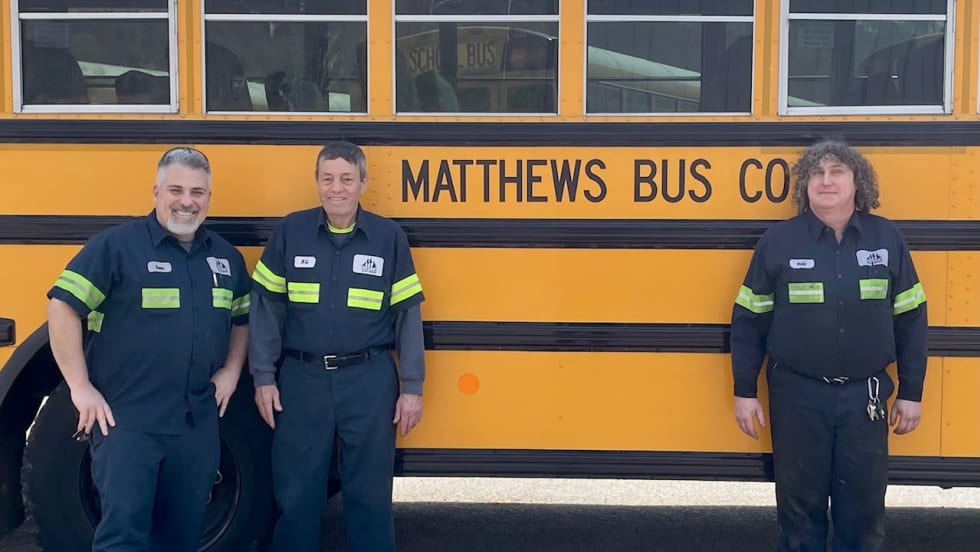
Pennsylvania School Bus Maintenance Team Praised for Dedication to Safety
Matthews Bus Company’s West Jefferson received a letter of commendation from the Pennsylvania State Police for their fleet inspections.
Read More →
From Chaos to Clarity: How School Districts Are Running Leaner Transportation Operations
Covering 38 routes on a Friday afternoon. Buses idling while routes overlap. Parents calling nonstop about late arrivals. Sound familiar? This whitepaper explores how district transportation leaders solved these exact problems — and what measurable results followed.
Read More →