





For more information on the workshop, Cross can be contacted at Grand Valley State University in Grand Rapids, Mich., at 616/771-6665. His e-mail address is crossr@river.it.gvsu.edu.
Test your knowledge with these 10 questions
The questions are drawn from the competency examination included in the "Train the Trainers Text - Transporting Individuals With Disabilities," written by Dr. Robert J. Cross and published by the National School Transportation Academy.
October 1, 1998
5 min to read
The following questions are drawn from the competency examination included in the "Train the Trainers Text - Transporting Individuals With Disabilities," written by Dr. Robert J. Cross and published by the National School Transportation Academy.
1. The Individualized Education Plan (IEP) decides if special-education transportation is needed.
2. Drivers should deal with a violent emotionally impaired student immediately in order to prevent the student from damaging the interior of the school bus.
3. Most hearing-impaired people will try to read your lips when you are speaking.
4. The first thing to do in an emergency is use your two-way radio to call for help.
5. Students evacuated from a bus should stay within 10 feet of the bus so the driver can keep track of them.
6. The best way to clean up vomit is to rinse it off with warm water.
7. Sometimes it is better to ignore a student who is doing such things as swearing, hollering or crying, if that student is not hurting himself or someone else.
8. The reauthorized Individuals with Disabilities Education Act requires training for school bus drivers on how to work with special-education students.
9. You should never attempt to lift someone who weighs more than half your weight.
10. A special-education student can be expelled from the bus for bad behavior, as long as the district notifies the parent the same day the expulsion occurs.
Keep scrolling for answers.
Answers
1. Under the Individuals with Disabilities Act, transportation is a "related service," which must be considered when developing the IEP for a special-education student. In order for a student to receive special-education transportation, the IEP must determine that the student needs this transportation in order to benefit from a special-education or regular-education program. Thus, it must be written on the IEP form as a "related service." Specific details, such as the need for a bus aide, restraint device or lift bus, should be included. True.
2. The most important concern should always be the safety of all students, including the violent student. Getting other students to a safe area away from the violent student is much more important than worrying about damage to the bus. False.
3. There are two common types of special-education programs for the hearing-impaired – the "oral approach" and the "total communication approach." Both approaches focus on teaching the hearing impaired to read lips and use oral language. The total communication approach also teaches the student to use sign language. True.
4. A driver must first be concerned with the safety of the passengers. This may first involve finding a safe place to park the bus, activating the emergency flasher, turning off the ignition and safely evacuating students from the vehicle. False.
5. In an evacuation, students should be moved at least 100 feet from the vehicle. This distance is necessary in order to protect students from possible fire, explosion or another vehicle striking the bus. False.
6. Because vomit is considered a bodily fluid that may contain hepatitis B or AIDS, proper "universal precautions" procedures should be followed. Proper cleanup includes the use of a bleach disinfectant on all contaminated surfaces as well as the use of gloves, apron and face shield by the person doing the cleanup. False.
7. These are often attention-getting behaviors. If the driver determines that the student is purposely trying to get his/her attention, then ignoring the behavior will send the message to the child that this behavior "doesn’t work." Instead, the driver needs to make sure to give these students extra attention for good behavior. Always apply SIRR steps when dealing with a student who is exhibiting a behavior problem. These steps are as follows:
Stop any behavior that is aggressive, demeaning, insulting, belittling, degrading, embarrassing, punishing or abusive.
Ignore any behavior that is not dangerous and is intended to get attention.
Redirect your attention toward the good things the student is doing.
Reward students who are doing good things by complimenting them, thanking them and encouraging them to keep up the good work. True.
8. The regulatory provisions in SS300.380 of the Federal Register requires that each state’s Comprehensive System of Personnel Development (CSPD) be consistent with Part B of the Act and the CSPD be designed to ensure an adequate supply of qualified special-education, regular-education and related services personnel (which includes transportation). This section also requires states to provide a plan to provide adequate pre-service and in-service preparation to "ensure that all personnel who work with children with disabilities (including both professional and paraprofessional personnel who provide special education, general education, related services or early intervention services) have skills and knowledge necessary to meet the needs of children with disabilities." True.
9. Attempting to lift someone who weighs more than half your weight could result in injury to yourself, the individual you’re attempting to lift or both. Make sure you know proper lifting procedures before attempting to lift, and always have another adult ready to assist or use a mechanical lift system if the individual weighs more than half your weight. Even repeated lifting or lifting from an improper stance could cause injury. The danger of dropping an individual must also be taken into consideration before you attempt a lift. True.
10. A suspension is defined by the courts as removal from the school program or service for no more than 10 school days in one school year. A long-term suspension or expulsion is defined as more than 10 school days in one school year. Special-education students may only be suspended from school or related services for a total of 10 school days each school year. If a long-term suspension or expulsion from the bus prohibits the special-education student from attending the educational portion of his or her program, then the bus suspension is tantamount to suspension from school. In such cases, an IEP meeting must be held to determine if the educational placement and related services are appropriate and what must be done to allow the student to successfully benefit from an educational program. Only an IEP meeting can determine that a special-education student should be removed from a program or related service that is necessary or part of the student’s special-education plan. False.
How do you rate?
Correct Answers Rating
10: Excellent
8-9: Good
7: Fair
6 or fewer: You may need further training
Topics:Special Needs Transportation
Subscribe to Our Newsletter
More Special Needs Transportation
Kelli Goterba Named 2026 Special-Needs School Bus Driver of the Year
Through building trust with students and strengthening her transportation team, Goterba exemplifies the impact special-needs drivers can make.
Read More →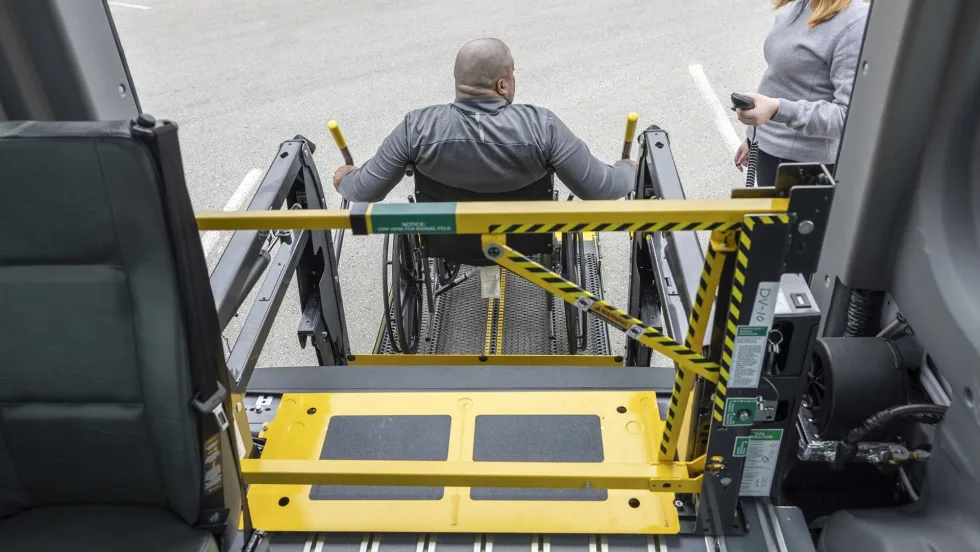
BraunAbility Introduces New Safety Barrier for Wheelchair Lifts
LiftSentinel is designed to add another layer of protection during wheelchair loading and unloading and can be retrofitted to many existing commercial lift installations.
Read More →
HopSkipDrive Launches New Safety, Driver Consistency Features for 2026-27 School Year
The company’s free ride recording, live ride tracking, and consistent driver assignments aim to improve safety and continuity for diverse student transportation needs.
Read More →
The Most Common Wheelchair Securement Mistakes on School Buses (and How to Fix Them)
Small missteps in wheelchair securement can have serious consequences. Here are 32 tips from experts to reduce risk and increase student safety on the bus.
Read More →
Inside AMF Bruns’ New Showroom: School Bus Securement Solutions Explained
Go inside AMF Bruns America’s new Ohio showroom with Maritza Valentin to see its FutureSafe technology, driver training tools, securement systems, and seating innovations.
Read More →
What AMF Bruns’ New Facility Means for Customers [Video]
Inside AMF Bruns’ new Stow, Ohio, operations: See how expanded space and innovation will enhance customer support and operations.
Read More →
AMF Bruns Expands in Ohio, Investing in Growth and Community
With expanded production space, local investment, and a growing workforce, AMF Bruns is scaling its U.S. presence. Here’s an exclusive first look inside the new Stow, Ohio, HQ.
Read More →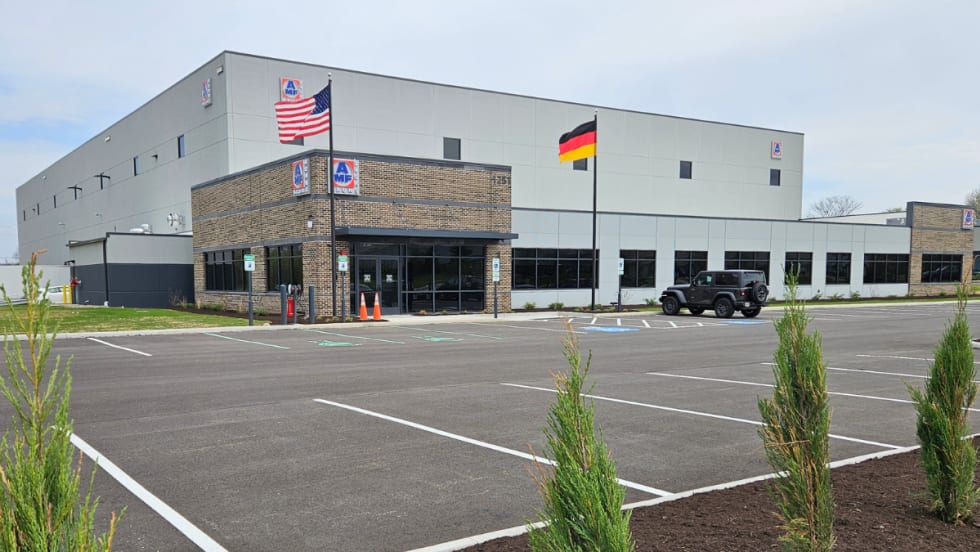
Inside AMF Bruns of America’s New Ohio Manufacturing Facility [Photos]
Take a behind-the-scenes look at AMF Bruns of America’s new 41,000-square-foot Stow, Ohio, headquarters, featuring advanced manufacturing, expanded space, and future-ready mobility solutions.
Read More →
First Student Boosts Student Support in Wichita & Texas
First Student and Wichita Public Schools are using behavioral support strategies to improve student ride experiences, while a separate initiative expands access to after-school programs through a bus donation.
Read More →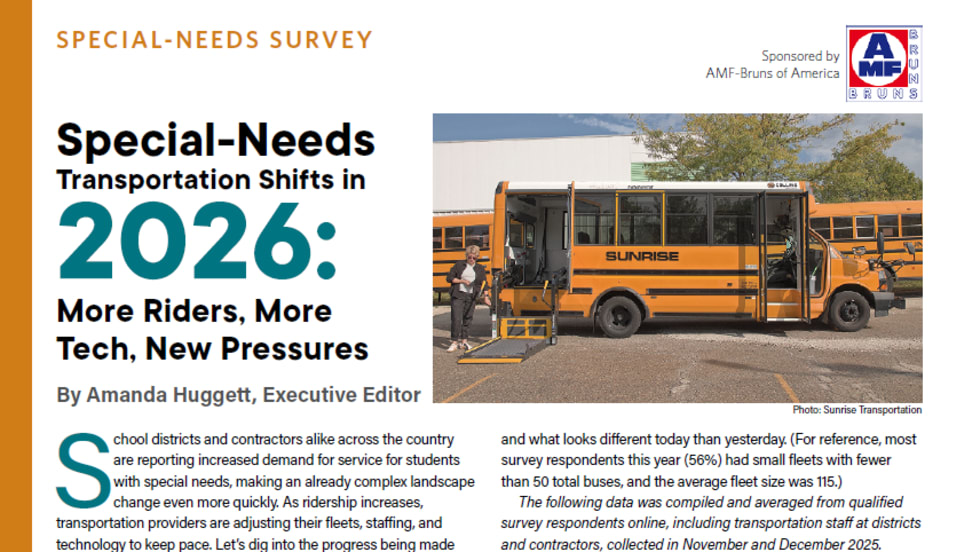
2026 Special-Needs Transportation Survey
What’s changing in special-needs transportation? This year, student transportation operators report a rising need, easing driver shortages, growing tech adoption, and evolving challenges. Sponsored by AMF Bruns of America.
Read More →