




South Carolina District Refines Special-Needs Bus Evacuation
Transportation personnel at Greenville (S.C.) County Schools have developed an innovative special-needs school bus evacuation program that include...
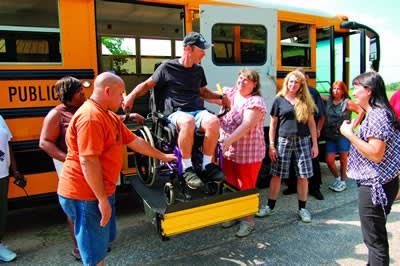
Transportation personnel at Greenville (S.C.) County Schools have developed an innovative special-needs school bus evacuation program that includes a color-coded system to help drivers and aides identify the degree of each student’s disability, resulting in a safer and more efficient evacuation.
Special-Education Bus Supervisors Teena Corwin and Judy Cox, along with Safety Officers/Trainers Melanie MacDonald and Sharon Evans, created the program as part of an effort to offer more training for the district’s bus drivers.
“We’ve been in the process of changing the way we do our training,” Corwin says. “In the past, our special-needs evacuation program was treated as regular ed, and we realized that it needed its own program.”
In the planning stages, Corwin, Cox, Mac- Donald and Evans determined that they wanted a program that would allow drivers and aides to have a plan in mind for evacuating students in an emergency.
“When we tried to figure out how we could do this, we had already categorized the students in our minds,” Corwin explains. “We knew that a certain set of students needed to be supervised at all times and that another group didn’t, and a color-coded system was the easiest way that we could categorize them.”
Corwin says the color-coded system is also more effective than basing the categorization on the students’ disabilities.
“If a bus was turned over and there were other people at the scene to help, it’s faster to say, ‘Grab a hold of the students in the red dot zone and stay with them at all times,’ rather than trying to describe their disability and saying that they’re not capable of helping themselves,” Corwin says.
School bus drivers and their supervisors work together to decide which color code (green, yellow or red) best describes each student’s disability. Green signifies that the child has a mild mental disability, such as attention-deficit/hyperactivity disorder, or is mildly physically disabled but can disembark the bus without supervision. The student may also help other students evacuate.
Yellow indicates that a student has a disability that necessitates some assistance in evacuating, such as being blind or deaf or having a mild case of Down syndrome.
Red signifies a student with a severe disability who requires constant supervision and assistance to evacuate the bus. Students with autism, substantial physical disabilities and severe behavioral disorders fall into this category.
Once the students have been categorized under one of these colors, red, yellow or green magnetic dots are placed above the windows next to each student’s seat. Each student’s name is written on a magnet with a dry-erase marker. If a student’s seat is moved, his or her dot must be transferred to the new seating location.
Pairing students with minor disabilities whenever possible during an emergency is encouraged to expedite the evacuation process. “If you have a child that is blind and another that isn’t, they could get off the bus together because they don’t need constant supervision,” Corwin explains. “They are capable of taking direction and following through with it.”
Corwin, Cox, MacDonald and Evans implemented their program on a trial basis at the South Carolina special- needs roadeo in January. Using it helped two Greenville County Schools’ driver and aide teams place in the top three.
Corwin and her colleagues are now implementing the program at the department. Training classes are being held for all of the special-needs school bus drivers and aides, where they are presented with the following scenario:
A school bus has been involved in a rear-end collision, and the vehicle under the back of the bus is on fire. The bus driver and aide have two minutes to evacuate the bus before a loss of life occurs. There is one wheelchair-bound student on the bus, one autistic student, a student who is blind and two students who have mild learning and behavioral disabilities.
Trainees act as these students during the instruction session. They board the bus, red, yellow or green dots are placed above them, and their disabilities are explained. The trainers then demonstrate an evacuation of the trainees.
During the demonstration, the driver secures the bus, calls in the emergency, hangs the radio out the window and shuts down the engine to hinder the spreading of the fire. Meanwhile, the aide releases the wheelchair tiedowns.
The driver then folds out the lift and readies it for a manual descent. While the aide puts the wheelchair on the lift and lowers it manually, the driver pairs and evacuates the other students, keeping in mind that students with a red dot cannot be left alone. After the evacuation is complete, the aide stays with the students and the driver checks the bus.
Based on the department’s success at the special-needs roadeo, Corwin believes this program will immensely benefit its drivers, aides and the 800 special-needs students they serve in a real situation that requires a bus evacuation.
“Until we came up with this program, we couldn’t make the two-minute window,” Corwin says. “When we did a bus evacuation for the state roadeo last year, we always lost someone. With this program, we’ve made the two-minute mark every time, so this is very good, life-saving training.”
In particular, Corwin says that determining which students can and cannot be left alone has been instrumental to the program’s effectiveness.
“Initially, we just focused on getting students off the bus, and we didn’t take into consideration those that we’ve now coded red,” she says. “When we took these students off the bus [during practice sessions], they ran away. Having a plan has allowed us to safely evacuate students within the two-minute window.”
More Special Needs Transportation
HopSkipDrive Launches New Safety, Driver Consistency Features for 2026-27 School Year
The company’s free ride recording, live ride tracking, and consistent driver assignments aim to improve safety and continuity for diverse student transportation needs.
Read More →
The Most Common Wheelchair Securement Mistakes on School Buses (and How to Fix Them)
Small missteps in wheelchair securement can have serious consequences. Here are 32 tips from experts to reduce risk and increase student safety on the bus.
Read More →
Inside AMF Bruns’ New Showroom: School Bus Securement Solutions Explained
Go inside AMF Bruns America’s new Ohio showroom with Maritza Valentin to see its FutureSafe technology, driver training tools, securement systems, and seating innovations.
Read More →
What AMF Bruns’ New Facility Means for Customers [Video]
Inside AMF Bruns’ new Stow, Ohio, operations: See how expanded space and innovation will enhance customer support and operations.
Read More →
AMF Bruns Expands in Ohio, Investing in Growth and Community
With expanded production space, local investment, and a growing workforce, AMF Bruns is scaling its U.S. presence. Here’s an exclusive first look inside the new Stow, Ohio, HQ.
Read More →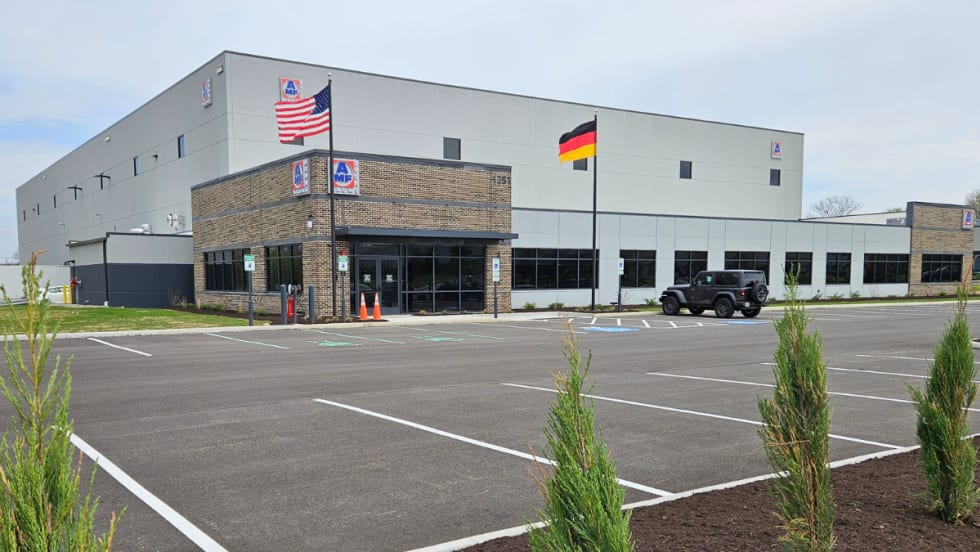
Inside AMF Bruns of America’s New Ohio Manufacturing Facility [Photos]
Take a behind-the-scenes look at AMF Bruns of America’s new 41,000-square-foot Stow, Ohio, headquarters, featuring advanced manufacturing, expanded space, and future-ready mobility solutions.
Read More →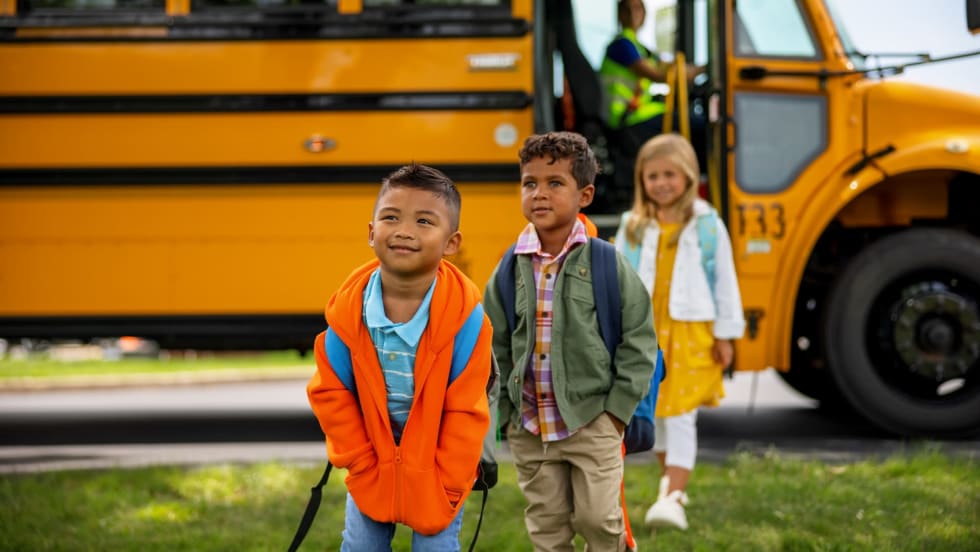
First Student Boosts Student Support in Wichita & Texas
First Student and Wichita Public Schools are using behavioral support strategies to improve student ride experiences, while a separate initiative expands access to after-school programs through a bus donation.
Read More →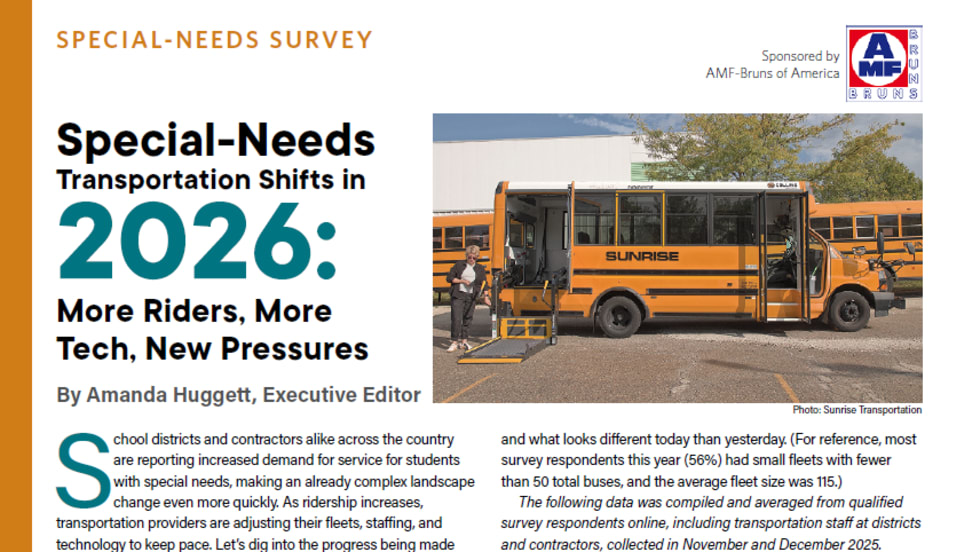
2026 Special-Needs Transportation Survey
What’s changing in special-needs transportation? This year, student transportation operators report a rising need, easing driver shortages, growing tech adoption, and evolving challenges. Sponsored by AMF Bruns of America.
Read More →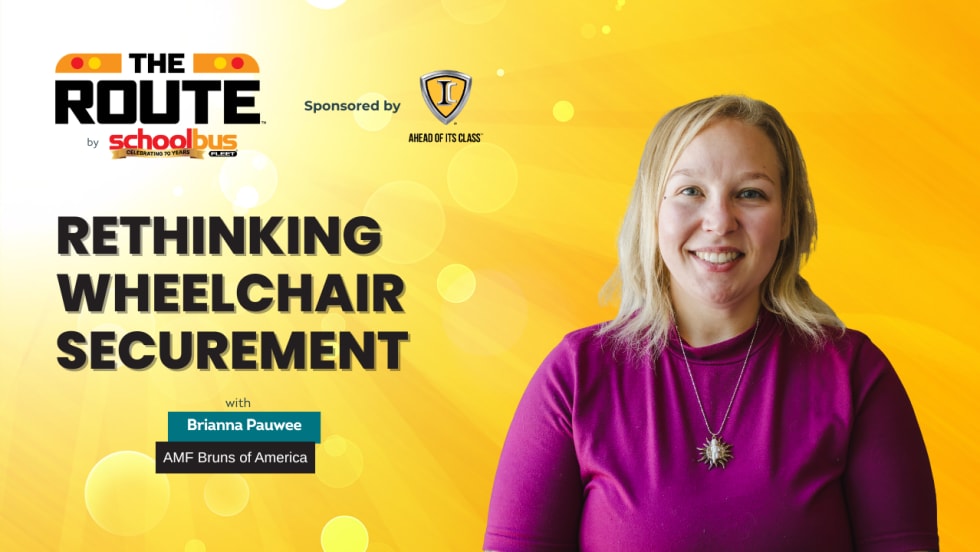
The Lived-Experience Gap in Mobility Tech: An Expert Take on Safe Student Transportation
Brianna Pauwee, a product application specialist at AMF Bruns of America and a wheelchair user, drops in to The Route to share practical securement and training insights, plus the story behind the new “Beyond Mobility” podcast. The Route is sponsored by IC Bus.
Read More →
What Transportation Gets Wrong About Wheelchair Securement (And How to Fix It)
Brianna Pauwee, product application specialist at AMF Bruns of America and a wheelchair user shares practical securement and training insights, plus why she launched the “Beyond Mobility” podcast. The Route is sponsored by IC Bus.
Read More →