




School Buses Give Communities a Lift
The ideal: A half-empty school bus pulls up. Waiting with a dozen schoolchildren are three women headed to their GED class, a first step toward gettin...
The ideal: A half-empty school bus pulls up. Waiting with a dozen schoolchildren are three women headed to their GED class, a first step toward getting off public assistance. The women board the bus and, several minutes later, unload only a block from one of the bus' regular stops. They walk the rest of the way to their class, while the children continue on to school. The reality: The half-empty school bus crosses town, passing social service agencies, job-training centers and medical facilities. Following the bus is a car carrying a teen mother and her boyfriend on their way to a parenting class; behind the car is an elderly woman going to the doctor in a dial-a-ride van; and on the sidewalk is a welfare-to-work mom, intent on saving her hard-earned money, walking three miles to her new job. What we have here is a scenario of wasted opportunity and resources. On a national scale, school buses have the potential to provide millions of non-student rides per year. However, the hurdles are proving difficult to clear. Resurgence of interest?
Coordinated transportation isn't a new idea, but interest in these programs seems to have peaked in the late 1970s and early '80s when rising fuel prices were taking ever larger bites out of public transportation budgets. Several studies examined the feasibility of utilizing school buses for transporting other passengers, but interest eventually waned, mainly due to the legislative, administrative and logistical barriers. Fast-forward to the '90s: budgets for mass transportation are again shrinking, and communities are trying to make their dollars go further. Hence, a reawakened interest in coordinated transportation. Designing and implementing a coordinated transportation program is time-consuming, and most pupil transportation directors are understandably immersed in meeting the needs of students. Coincidentally, the hours when school buses are filled with school- or home-bound students are the same hours when other groups are most likely to need those buses. Mixing the two groups - say, by allowing social service agency clients to occupy empty seats alongside students - raises a host of security concerns. Breaking barriers
Even when it is possible to coordinate schedules so that outside riders are not using the buses at the same time as pupils, a school bus simply may not be a suitable vehicle. In fact, one of the school bus industry's most highly touted safety features - compartmentalization - sometimes precludes adult riders who have trouble riding comfortably in the closely spaced seats. The lack of air conditioning on most school buses further limits their feasibility in certain climates. Moreover, the elderly may have difficulty negotiating the relatively high step heights on most school buses. These physical barriers are well-documented, and almost every effort to place adult riders on school buses faces them. But the administrative barriers can be just as daunting. That's because transportation officials tend to focus on the needs of their specific clients - such as disabled individuals, the elderly or schoolchildren - when designing a transportation system. Explains Donald Tudor, South Carolina's director of pupil transportation: "When the federal, state or local people write the laws, regulations, procedures and policies, it is directed at getting that program accomplished - it is not directed at creating a system that is friendly to other programs." South Carolina's state laws, for example, designate school buses solely for transporting students. Lawmakers, Tudor acknowledges, were "right the way they wrote it, but when you have opportunities for it not to cost the state any money and to benefit another program, we need to look for those opportunities." Simply put, coordinated transportation programs require a new mindset - one that views school buses as a community resource with potential benefits for everyone. "One of the things I've found is that the communities that use school buses for broader community transportation are very, very clear about the community benefits," says Raisa Lawrence, a transportation analyst with Cambridge, Mass.-based Multisystems Inc., which is preparing a report on coordinated transportation for the Transportation Research Board. Coordination efforts, Lawrence notes, are most often attempted in rural regions, where severe climates, poor road conditions, long distances and a lack of mass transportation often make travel difficult. Coordinated transportation in those communities, she says, is needed to cover economic distances as well, by providing transportation to citizens who cannot afford to own and maintain a car. "I really do hear a lot of the barriers and obstacles, a long laundry list of things they have to deal with," Lawrence says. "But we're seeing communities coming around to the view that this is a community resource." The art of the possible
Despite the aforementioned hurdles in using school buses for community transportation, some operators are defying the odds. Since 1979, Transportation Supervisor Don Nicolai and his staff at Lenawee (Mich.) Intermediate School District have provided the community with a range of transportation services, from fall "color tours" through the countryside to excursions to the state's oldest opera house to senior-citizen rides to medical facilities. The effort began in a somewhat roundabout fashion, as a cooperative maintenance agreement for the county's school buses. The maintenance aspect is still going strong, and the program has expanded and now provides transportation as well, much of it coordinated by Deb Wuethrich, Nicolai's transportation secretary-route coordinator. "I'm an ambitious person, a positive thinker, and when I see something that needs to be done, I just do it," Nicolai says. Their efforts are geared toward providing a service, not turning a profit. Transportation clients are charged only what it costs to operate the buses ($1.53 per mile), and the shop provides maintenance services for about half of what they would cost at a private garage. 443,000 rides in Florida
Legislation passed in the 1980s required Florida's school districts to participate in coordinated transportation programs before federal funds were released for school bus replacement. That requirement was repealed, and school boards now are required to report only the availability of buses for coordinated transportation. With the financial incentive gone, most of the actual participation disappeared. So the legislature created an alternative. Enter the Florida Commission for the Transportation Disadvantaged (FCTD), an umbrella organization that oversees coordinated transportation efforts. The commission acts as a sort of travel agent, pairing available services with the "transportation disadvantaged," defined by the FCTD as people who are dependent, for various reasons, upon others to obtain access to health care, employment, education, shopping, social activities or other life sustaining activities. As Florida's statute makes clear, coordinated transportation need not only be a response to life-or-death situations. With that in mind, the commission's network of local coordinators, scattered throughout the state's 67 counties, arranged for a phenomenal 32 million one-way rides this past year; more than 443,000 of those were on school buses. The focus is "to use what we've got," says FCTD Executive Director Jo Ann Hutchinson. "We want to tap into anything that has wheels and is safe, rather than creating another whole service." Most states don't have the centralized coordination provided by the FCTD, but even in Florida, less than half of the local coordinators utilize school buses for rides arranged by the commission. The reasons, according to a 1997 study of the FCTD's school bus utilization, are the same as those that have traditionally hampered pupil/public transportation coordination: comfort, availability and safety. Grant funds pilot project
In South Carolina, all the school buses are owned by the state, a throwback to the early days of mandatory school integration that ensured school districts would not undermine integration efforts by erecting transportation hurdles. The hurdle that Chesterfield County faced this past year when it decided to coordinate its transportation programs was modifying those laws to allow school buses some flexibility. In a fortunate confluence of events, a bill was already before the legislature that would allow parents, district employees and volunteers to ride to school with the children. That bill was passed into law. "This is all well and good, but what about everybody else who needs to get into town?" asks Margaret Plettinger Mitchell, the Chesterfield County Coordinating Committee's (CCCC) executive director. "We're trying to put adults who don't have any other way into town on the school buses during the regular school bus routes because our schools are all pretty much in town." The plan still requires some legislative fine-tuning, and a draft of the new legislation is circulating among the Department of Education, the school board and the Chesterfield County School District. Meanwhile, the CCCC, with a $53,000 grant from the state Department of Transportation, is designing a pilot project that will allow clients from more than 40 social service agencies to occupy empty seats on school buses. "I think we got the grant because we're not subsidizing anyone's ride, not using grant money to pay for rides, vehicles or routes," Mitchell says. "We want to make sure the changes stay in effect after the grant is over."
More Management
Annette Brown Always Takes the Extra Time: Meet Our 2026 School Bus Driver Hero
For more than 30 years, the Wa-Nee Community Schools driver has treated students like family, combining safety, compassion, and servant leadership to make a lasting difference on and beyond the school bus.
Read More →
How to Build a Better Driver Training Program
Ready to boost up your school bus instructor training? Here’s how to pick the right talent and improve recruitment, retention, and safety.
Read More →
CALSTART and Forth Combine to Form Catalyst Mobility
The new name represents a renewed vision for the nonprofit focused on advancing clean, equitable, and affordable transportation solutions that move people and goods.
Read More →
What Makes a Great School Bus Driver Trainer?
Choosing the right school bus driver trainer takes more than experience. Learn six keys to selecting and developing trainers and evaluating program effectiveness.
Read More →
School Bus Contractors Expand Through New Deals, Acquisitions & Partnerships
STA's Canadian division acquires Ontario-based G&L Stevenson Transport; Durham School Services adds a new district in California; First Student expands in New Jersey; and Minnesota Coaches rebrands and acquires Halo Transportation.
Read More →
Logan Bus Company Rolls Out AI Phone System for NYC School Bus Families
A summer pilot found that AI agents could handle most routine calls, freeing up time for customer service staff to focus on emergencies and complex family concerns.
Read More →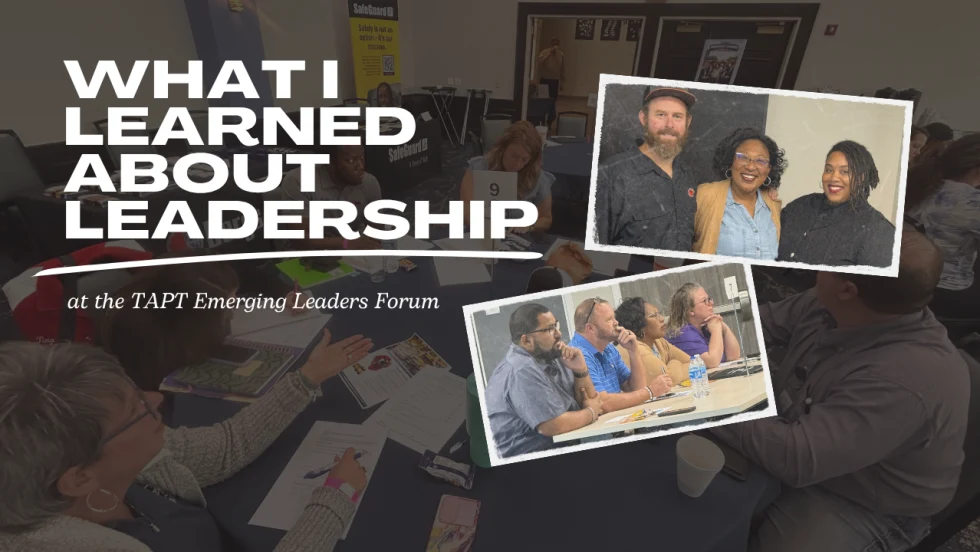
From Intent to Impact: What I Learned About Leadership from TAPT
A Texas transportation supervisor shares lessons on self-awareness, accountability, managing stress and building trust — and why investing in leadership development matters at every stage of your career.
Read More →
NAPT Names 2026 Award Recipients, Hall of Fame Inductee
Who earned national recognition for their work in student transportation? This year, NAPT named five recipients of its 2026 awards for service, safety, and leadership, plus its newest Hall of Famer.
Read More →
2026 State of Student Transportation Report
Driver shortages. Rising costs. Growing safety expectations. More data, but not enough time to act on it. The 2026 State of Student Transportation Report reveals what transportation leaders say is putting the most pressure on their operations—and where they’re investing next. See how your priorities compare.
Read More →
How to De-Escalate an Angry Person: 5 Steps for Handling Workplace Conflict
What makes emotions run high, and how should you handle an angry colleague or parent? Follow these steps for staying calm, listening, showing empathy, and resolving conflict.
Read More →