




School Bus LED Benefits Increase as Costs Decrease
The price gap between LEDs and incandescent lights has gotten smaller in recent years. With their longer life, higher light output and lower maintenance, LEDs are delivering a great return on investment for school bus operations.

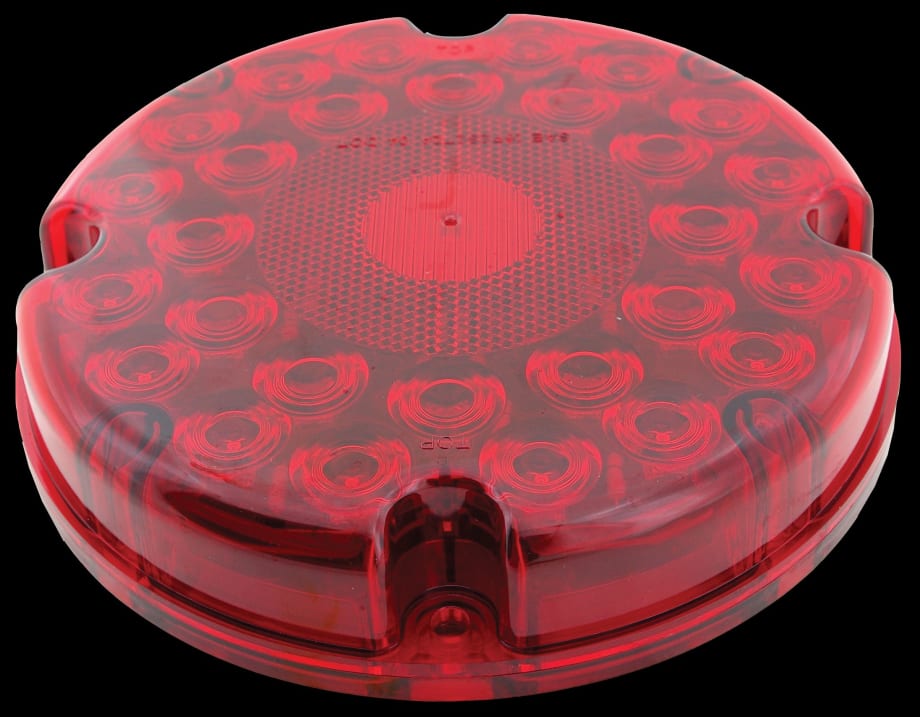
There has been a noticeable uptick in LED bus light sales recently, according to suppliers. Pictured is an LED unit from TRP Bus Parts.
Light-emitting diode (LED) technology is moving fast, and its momentum is yielding increasing benefits for school bus fleets.
Here’s how fast the technology is going: According to Haitz’s law, over a 10-year period, the cost per lumen (unit of light emitted) decreases by a factor of 10 (in other words, is divided by 10), and the amount of light generated per LED package increases by a factor of 20.
“What we’re seeing is the ability to get more and more light,” says Brandon Billingsley, president of Heavy Duty Bus Parts and its affiliated company UltraLED. “We’re seeing better price points and economies of scale … [and] more and more people are able to utilize the technology.”
The rapid pace of LED technology development also has implications for research and development (R&D).
“When we’re developing products, we plan ahead to what will be available to us in 12 or 24 months,” Billingsley says. “In essence, in our R&D we plan to intercept the technology curve, so when that product is completed, it has the latest technology available.”
Brightening trend
Suppliers say that LED lighting’s market penetration has been growing in OEM school bus builds.
“We are seeing an average increase of 1% to 4% per year, with approximately 28% to 31% of all new builds specifying LED,” says Marc Riccio, national sales manager for SoundOff Commercial Vehicle Products.
At Weldon, the largest LED growth that the company has seen is in interior dome lamps.
“The percentage is still relatively small compared to incandescent lamps,” notes Tom Barnett, director of lighting products at Weldon. “But, as more buses utilize LED interior lighting, we expect the trend to grow.”
Dale Puhrmann, national sales manager for TRP Bus Parts, concurs that there has been a noticeable uptick in LED bus light sales recently. He says that the bulk of the market activity is replacing incandescent stop-arm lights and rear bus lighting with LEDs.
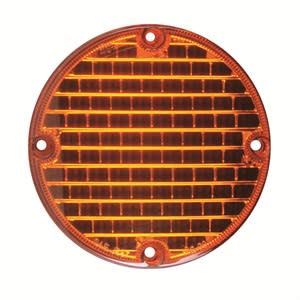
Research has found that driver reaction time to LEDs is significantly faster than to incandescent lights. Pictured is SoundOff’s 7-inch LED amber warning light.
Visibility advantages
One of the key reasons for that switch is to increase the visibility of the bus. This may help to prevent some instances of illegal passing of school buses, which is a top safety challenge for the industry.
Riccio cites a University of Michigan Traffic Research Institute study that concluded that the reaction time for an average driver was 250 milliseconds faster when viewing LED versus incandescent brake lights. At 55 mph, those 250 milliseconds translate to 20 feet of stopping distance.
“This is a very substantial margin of safety to prevent rear-end collisions and further protect the occupants of the bus,” Riccio says.
LEDs can better attract people’s attention particularly because of their rapid turn-on time. Scott Riesebosch, chief technology officer for CRS Electronics, says that while a normal incandescent bulb takes about 100 milliseconds to illuminate, LEDs turn on essentially instantaneously.
“In our periphery, we perceive change much better,” Riesebosch says. “So when something changes rapidly in our peripheral vision, we can see that quickly.”
In addition to the quicker turn-on time, LEDs tend to be brighter than incandescents, so they are more visible, even in the daytime, according to TRP Development Manager Jeff Hughes. Also, he adds, LEDs’ “lower power draw means that your hazard lights can flash longer if your vehicle becomes disabled.”
Less energy needed
More efficient use of energy is another selling point for LEDs. They use a fraction of the power that an incandescent light of a similar size uses, Hughes says.
According to Riccio, 1157 incandescent and H3 halogen bulbs typically used in traditional school bus lighting applications draw 2.1 to 2.9 amps, while LED lights draw 0.01 to 1.5 amps, depending on the application.
“LED lights also offer substantially less voltage consumption than their traditional counterparts,” Riccio says, “which translates into less wear and tear on bus electrical systems (i.e., replacing expensive batteries, alternators and switches with less frequency).”
[PAGEBREAK]
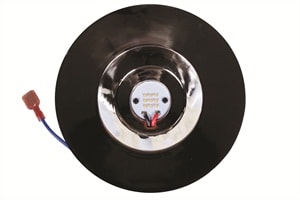
UltraLED’s new H3X LED takes the place of an H3 halogen bulb, common to school bus eight-way warning lights.
LED retrofitting
Some operations are opting to switch from incandescent to LED bulbs on their existing buses. Billingsley of UltraLED says that the retrofitting activity is facilitated by the fact that there are “so many products now that work with existing technology and make it so easy to upgrade to LED.”
An example is UltraLED’s new H3X LED upgrade for school bus warning lights. The halogen-to-LED warning light upgrade uses the same concept as the company’s stop-arm LED upgrade bulb, using the existing fixture for a direct interchange.
The H3X takes the place of an H3 halogen bulb, which is common to school bus eight-way warning lights. It employs the inner reflector as a built-in component for heat dissipation with a circuit board/driver potted into the rear of the unit to further simplify installation.
The H3X fixture contains nine surface mount display (SMD) LEDs on a single circuit, which, according to UltraLED, addresses out-of-service criteria and provides an LED warning light with a service life of up to 50,000 hours of product life — compared to 300 hours for the halogen counterpart.
Maintenance benefits
Billingsley says that the longer service life for LED lights reduces bus downtime and labor costs, which is especially vital for shops whose bus-to-technician ratios have increased and whose number of spare buses has decreased in recent years.
“Any of the labor utilization that can be allocated to preventive maintenance and large jobs — and not to changing bulbs — it’s a greater use of [the technicians’] time,” he says. “The savings is found in the labor and not needing to have their technicians replace the same bulb two or three times within the same school year.”
Doug Campbell, OEM account manager for Safe Fleet’s Specialty Manufacturing (also known as SMI), notes that in addition to the longer life of LEDs compared to incandescents, LEDs typically have fewer parts to replace. For example, with Specialty’s new roof-mounted LED strobe light, the LED tower and circuit board are replaceable as a single unit. Also, according to the company, the potted circuit board requires no maintenance.
Another maintenance-related advantage of LEDs, Riesebosch of CRS says, is that they are generally built to a higher level of ingress protection than incandescent bulbs — meaning that the LEDs are less susceptible to the intrusion of dust.
Life-cycle advantage
When fleets consider the total cost of ownership for their buses, suppliers say that LEDs can help reduce that cost by avoiding the direct and indirect costs of frequent incandescent bulb replacement.
“Generally, school bus maintenance managers have conducted their own life-cycle cost analysis that has led them to conclude LED lighting increases up-time and reduces cost over the life of the bus,” TRP’s Puhrmann says.
Riccio of SoundOff says that the typical rated life of an LED varies from about 50,000 to 100,000 hours, depending on the manufacturer and the application type.
Weldon’s Barnett puts it this way: “When the lamp fixture is engineered properly, LED lighting should last the life of the vehicle.”
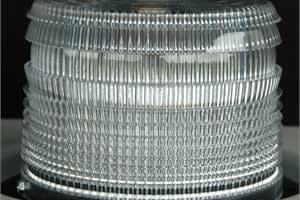
Specialty Manufacturing’s new roof-mounted LED strobe exceeds the SAE J845 Class II rating, according to the company.
LED standard update eyed for NCST
Standards for LED lighting is a topic that may be addressed at next year’s National Congress on School Transportation (NCST).
Safe Fleet’s Specialty Manufacturing has submitted new, performance-based language for LEDs to the NCST committee to consider adoption for the 2015 school bus standards.
Corbin West, senior reliability and design engineer for Safe Fleet’s bus division, explains that there is a need for updates in how LEDs are measured and categorized.
To illustrate that point, West says that the flash tubes that have traditionally been used in roof-mounted strobes are categorized in terms of joules, which is a measurement of how much energy the light unit uses. When it comes to LED strobes, however, categorizing by joules doesn’t work, because LEDs are able to provide more light output with much lower power consumption.
West gives an example: “An LED strobe that consumes 1 joule of energy can be significantly brighter than a flash tube strobe using 10 or 15 joules.”
The proposal that Specialty submitted to NCST seeks to clearly define LED strobe lamp specifications utilizing the current SAE J845 specification. Specialty’s new roof-mounted LED strobe exceeds the SAE J845 Class II rating, according to the company.
More Maintenance
The Essential Guide to School Bus Maintenance and Student Safety
Your district's buses carry students to school every day. This guide shows how predictive maintenance powered by fleet data helps keep buses reliable, drivers accountable and students safer from the first bell to the last stop.
Read More →
Kerry Brothers Grows Michigan School Bus Repair Network
The acquisition of Downriver Truck and Bus expands Kerry Brothers’ school bus maintenance footprint across southeast Michigan, adding repair capacity, diagnostic resources, and state inspection support.
Read More →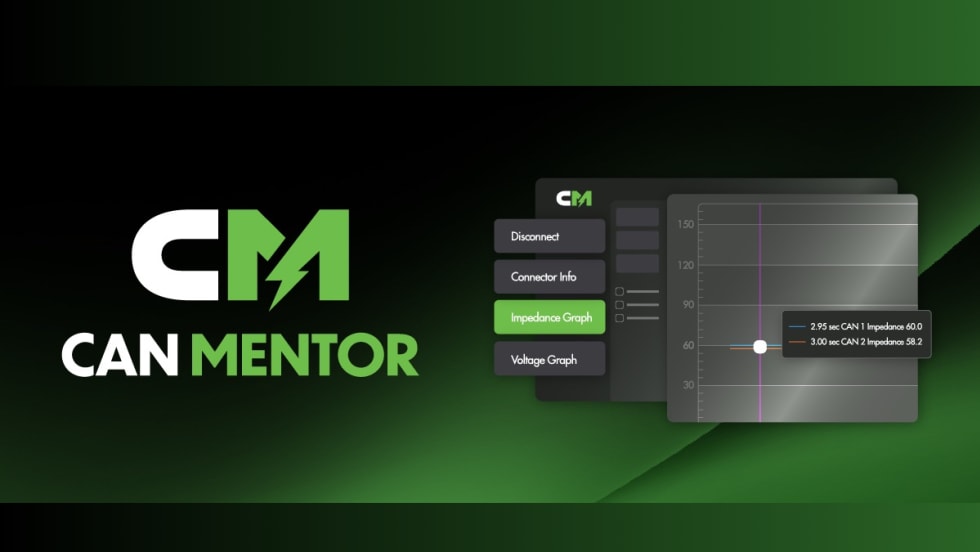
Noregon Introduces CAN Bus Diagnostic Tool, Expands JPRO Features
CAN Mentor and the latest JPRO update aim to simplify vehicle network diagnostics and improve repair efficiency for technicians of all experience levels.
Read More →
Cummins on Smarter, Simpler Engine Innovation
Cummins discusses its first-ever gasoline engine for school buses, EPA 2027, and why bus fleets still want durable, simpler internal combustion options.
Read More →
Report: 72% of Diesel School Buses Now Use Advanced Low-Emission Engines
New data shows advanced low-emission diesel technology continues expanding across school bus fleets, even as electric bus adoption gains momentum.
Read More →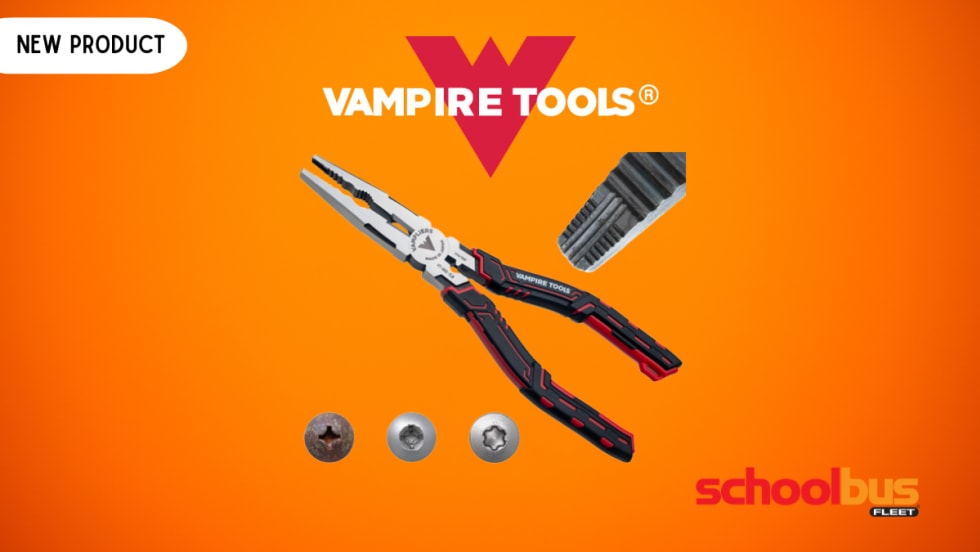
Vampire Tools' CAIMAN 7.5-Inch Multi-Purpose Screw Extractor Long-Nose Pliers with Crimper
Vampire Tools introduced the VAMPLIERS Caiman 7.5-inch multi-purpose pliers, combining screw extraction, cutting, crimping, and gripping functions into a single tool designed for fleet maintenance professionals.
Read More →
How Advanced Diagnostics Helps Bus Fleets Stay Ahead of Repairs
Chat with Noregon’s Kevin Smallhorn at ACT Expo about bus diagnostic tools, telematics integration, CNG maintenance support, and strategies to help reduce downtime and improve uptime.
Read More →
How School Bus Fleets are Getting Ahead of Breakdowns
Don’t let bus downtime wear you down. Here’s how bus operators are shifting from manual processes to AI-powered, data-driven maintenance systems for improved reliability and safety.
Read More →
Pennsylvania School Bus Maintenance Team Praised for Dedication to Safety
Matthews Bus Company’s West Jefferson received a letter of commendation from the Pennsylvania State Police for their fleet inspections.
Read More →
From Chaos to Clarity: How School Districts Are Running Leaner Transportation Operations
Covering 38 routes on a Friday afternoon. Buses idling while routes overlap. Parents calling nonstop about late arrivals. Sound familiar? This whitepaper explores how district transportation leaders solved these exact problems — and what measurable results followed.
Read More →