




Q&A: Still Secure After 25 Years
As Q’Straint hits a milestone, President Jean-Marc Girardin discusses the company’s continuing quest to bolster the safety of passengers who use wheelchairs.


For 25 years now, Q’Straint has focused on the safety of passengers who use wheelchairs in school buses, transit buses and other vehicles.
In the 1970s, a team of students and specialists at Queen’s University in Ontario began exploring how wheelchair passengers could be safely secured while being transported. What they came up with was the first fully integrated four-point wheelchair passenger securement system. Q’Straint was then formed in 1984 to introduce the system to the transportation industry.
In a testament to Q’Straint’s reputation, the National Highway Traffic Safety Administration asked the company in 1991 to contribute its expertise, testing and real-world experiences to the development of wheelchair transportation regulations related to the Americans with Disability Act.
Q’Straint President Jean-Marc Girardin discussed with SBF how the company and its securement technologies have evolved over the past decade and a half — and what challenges have appeared along the way.
SBF: Tell us about how Q’Straint was started.
JEAN-MARC GIRARDIN: The company was founded in 1984 as a result of acquiring the rights to an idea of the Queen’s University Mechanical Engineering Department. It was originally tried and used in Kingston, Ontario, on a fleet of paratransit vehicles for wheelchair passengers. From there, it was refined and introduced to the rest of Canada and into the U.S. market.
What have been some highlights in the company’s history?
One of our first big highlights was that we were the first securement company to apply sled crash testing to a wheelchair securement system. To date, we have independently tested over 300 different wheelchairs and mobility devices.
How have the company’s securement systems changed over the years?
There have been a lot of changes to securement technology over the years; we are proud to have led the way from the industry using a manual belt system to our revolutionary fully automatic retractors that are self-tensioning and knobless. With these, drivers no longer need to bend down and turn knobs, making their jobs much easier and reducing the possibility for back injuries.
How has the company itself changed over the years?
As the company has grown, our systems and processes have evolved and adapted to continually meet our customers’ needs. There have also been significant improvements in the use of technology, and enhancements to all aspects of our operations, quality systems and testing. However, the things that have not changed are our people’s commitments to continually improve our company and to keeping our customers happy. We always strive to do the right thing.
What would you say are the key innovations that Q’Straint has made?
We are proud of many things we have been fortunate to be the first to introduce. Some of those firsts that come to mind are: a fully integrated wheelchair and occupant restraint system, compartmentalized floor pockets instead of L-track, serialized kits, a comprehensive training program and training certificate, automatic and self-tensioning retractors (as mentioned earlier), the positive lock indicator on our L-track fitting, and first national training seminar, which is one of a kind. We are also currently collaborating with 4One to introduce the first ever wheelchair securement station for the transit industry, called the Q’Pod. Already customers have stated that this is the most significant innovation our industry has seen in at least a decade and it will become the new standard in wheelchair passenger safety and simplicity.
How have wheelchairs changed in terms of safety since Q’Straint was founded?
Wheelchair design has been a big concern in our industry from the beginning. Wheelchair manufacturers have historically taken an ostrich approach to wheelchair transportation: buried their heads in the sand by stating that their wheelchairs were not designed to be transported. The reality is that all of the wheelchairs today are transported in some form, so it makes it very difficult to design wheelchair securements without the collaboration of the companies designing those wheelchairs.
Also, electric wheelchairs have now become the most popular style of wheelchair, but have been designed with little to no attachment points for the wheelchair restraints, making it extremely difficult for drivers to secure them.
However, we see this starting to change, as many wheelchair manufacturers are getting involved with standards like WC-19, which addresses designing wheelchairs to make them more transportable. This standard is not well known, but we hope it will be widely used in the near future to improve the safety of wheelchair passenger transportation.
What would you say is the biggest challenge facing the school bus industry?
Funding without a doubt. Retrofitting existing vehicle fleets to use state-of-the-art wheelchair and occupant securements is becoming more of a reality. It’s an upfront investment, but in the long run, we’ve demonstrated that using the latest technology will not only improve the efficiency and effectiveness of securing wheelchair passengers, it will save the agencies money by reducing driver injuries, system maintenance and the liability created by the use of older, defective systems. So getting adequate funding to address this — safe, easy, universalized securement on all buses in a fleet — would be a major step toward reducing the current issues. Q’Straint is also introducing a special program specifically designed to help with this, and we look forward to partnering and sharing it with the school bus industry.
Q’Straint has been providing free training seminars each year for school bus professionals. Tell us about why the company does that.
Improper use of our wheelchair securement systems is one of the biggest challenges we face today. We believe proper training is absolutely critical and the most effective way to address this. Any company can say this, but we decided to put our money where our mouth is and made sure lack of funding was never a barrier. So each fall we host three two-day seminars where transit, paratransit and school bus agencies can send their key training personnel to be trained by us directly for free. In addition to this, we also provide onsite training by request and have a full line of comprehensive training programs for all our systems.
What is the company’s greatest strength?
Our customers and our people; they have made Q’Straint what it is today and continue to be the key to our success. We would not be here without our customers, and our people understand that. So everyone is committed to making our customers and their needs our No. 1 priority.
Is there anything else you’d like to discuss?
Since this year is our 25th anniversary, I want to take this opportunity to personally thank all of our customers for their support, and to all of our people for their loyalty to Q’Straint. I am also very proud that Q’Straint will continue to be a family-operated company for many years to come, as my three children, Julie, Eric and Patrick, are actively involved in Q’Straint and are committed to continuing to serve our customers.
More Special Needs Transportation
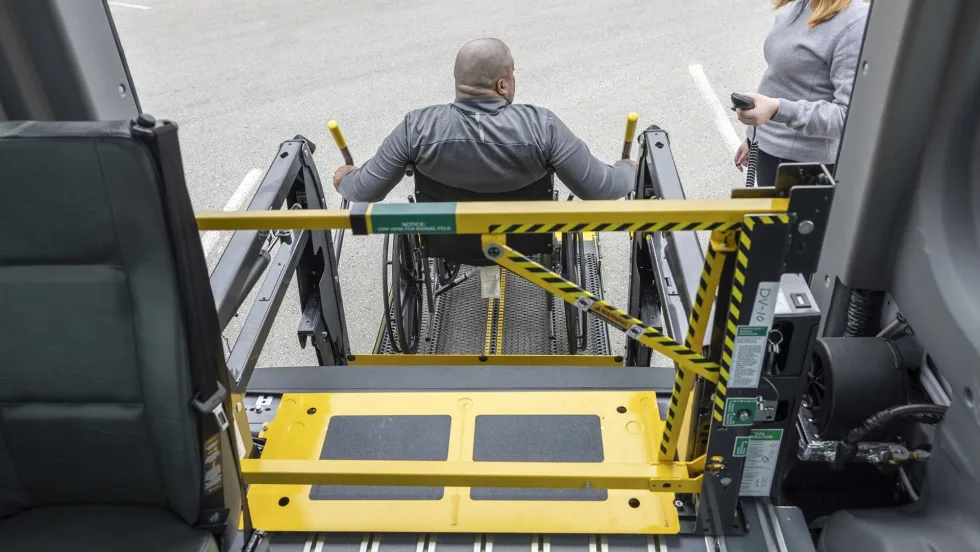
BraunAbility Introduces New Safety Barrier for Wheelchair Lifts
LiftSentinel is designed to add another layer of protection during wheelchair loading and unloading and can be retrofitted to many existing commercial lift installations.
Read More →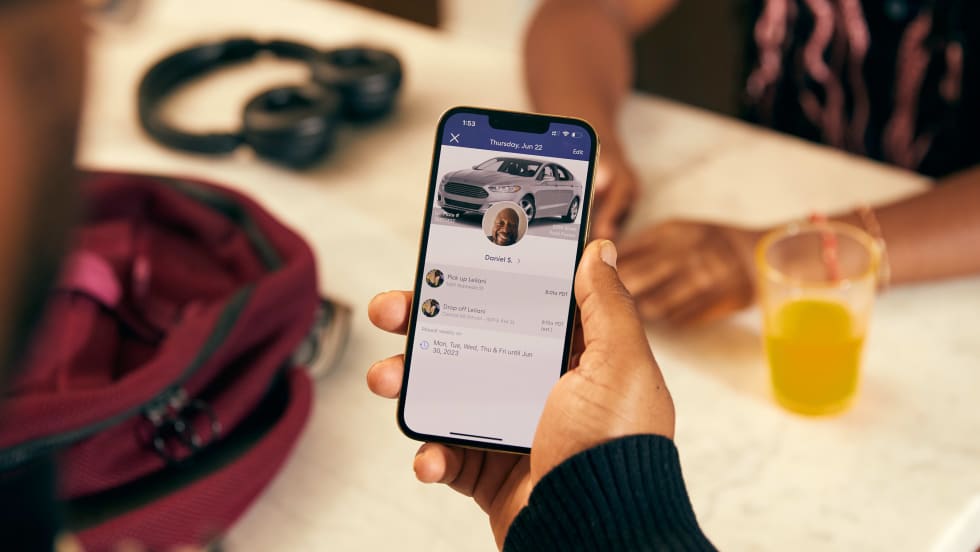
HopSkipDrive Launches New Safety, Driver Consistency Features for 2026-27 School Year
The company’s free ride recording, live ride tracking, and consistent driver assignments aim to improve safety and continuity for diverse student transportation needs.
Read More →
The Most Common Wheelchair Securement Mistakes on School Buses (and How to Fix Them)
Small missteps in wheelchair securement can have serious consequences. Here are 32 tips from experts to reduce risk and increase student safety on the bus.
Read More →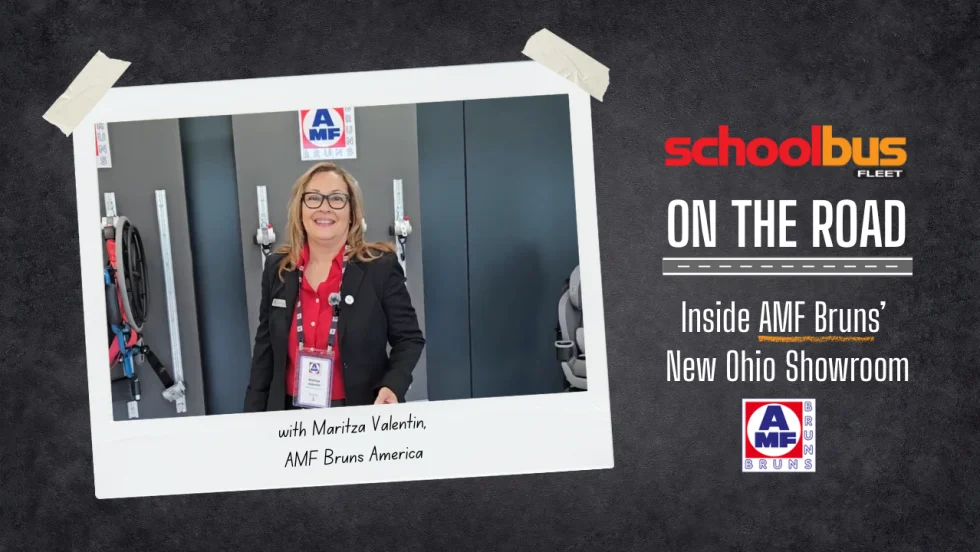
Inside AMF Bruns’ New Showroom: School Bus Securement Solutions Explained
Go inside AMF Bruns America’s new Ohio showroom with Maritza Valentin to see its FutureSafe technology, driver training tools, securement systems, and seating innovations.
Read More →
What AMF Bruns’ New Facility Means for Customers [Video]
Inside AMF Bruns’ new Stow, Ohio, operations: See how expanded space and innovation will enhance customer support and operations.
Read More →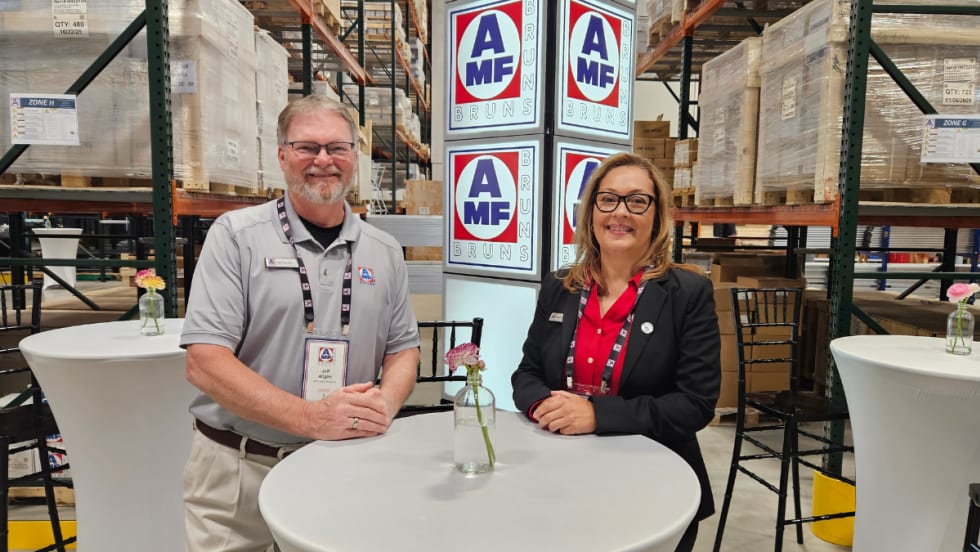
AMF Bruns Expands in Ohio, Investing in Growth and Community
With expanded production space, local investment, and a growing workforce, AMF Bruns is scaling its U.S. presence. Here’s an exclusive first look inside the new Stow, Ohio, HQ.
Read More →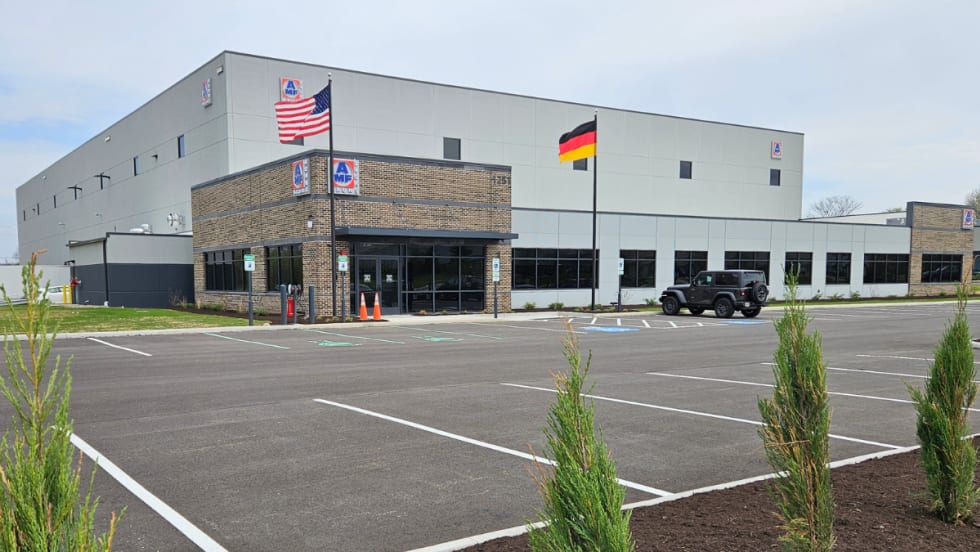
Inside AMF Bruns of America’s New Ohio Manufacturing Facility [Photos]
Take a behind-the-scenes look at AMF Bruns of America’s new 41,000-square-foot Stow, Ohio, headquarters, featuring advanced manufacturing, expanded space, and future-ready mobility solutions.
Read More →
First Student Boosts Student Support in Wichita & Texas
First Student and Wichita Public Schools are using behavioral support strategies to improve student ride experiences, while a separate initiative expands access to after-school programs through a bus donation.
Read More →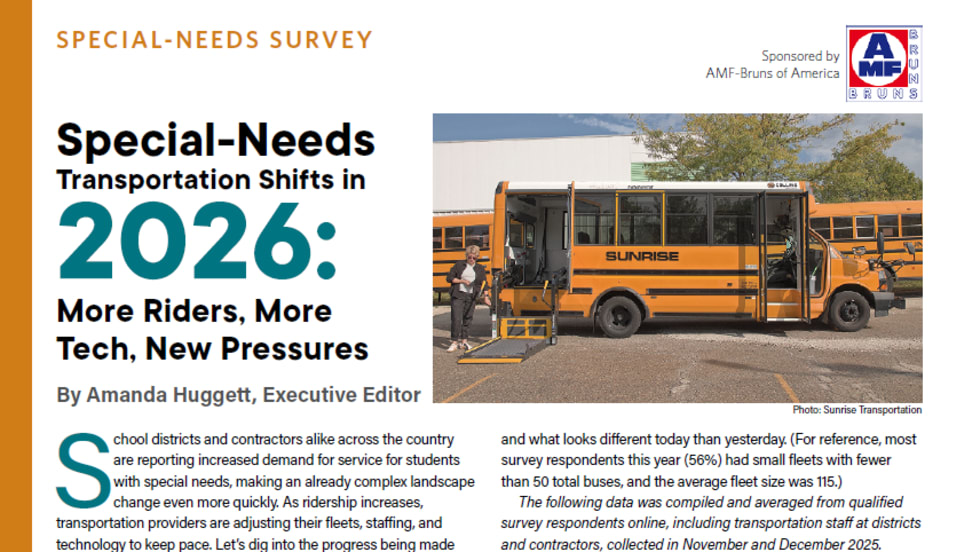
2026 Special-Needs Transportation Survey
What’s changing in special-needs transportation? This year, student transportation operators report a rising need, easing driver shortages, growing tech adoption, and evolving challenges. Sponsored by AMF Bruns of America.
Read More →
The Lived-Experience Gap in Mobility Tech: An Expert Take on Safe Student Transportation
Brianna Pauwee, a product application specialist at AMF Bruns of America and a wheelchair user, drops in to The Route to share practical securement and training insights, plus the story behind the new “Beyond Mobility” podcast. The Route is sponsored by IC Bus.
Read More →