


Recommended garage safety inspection checklist
- Fire hazards
- Oil and fluid spills
- Trip hazards
- Proper PPE use
- Tool and equipment condition
- Clearly labeled fluid containers
- Grinder and welding safeguards
- Lighting and visibility
 MENU
MENU SEARCH
Improve school bus garage safety in four weeks with practical steps for safety inspections, equipment upgrades, technician training, and a stronger safety culture.

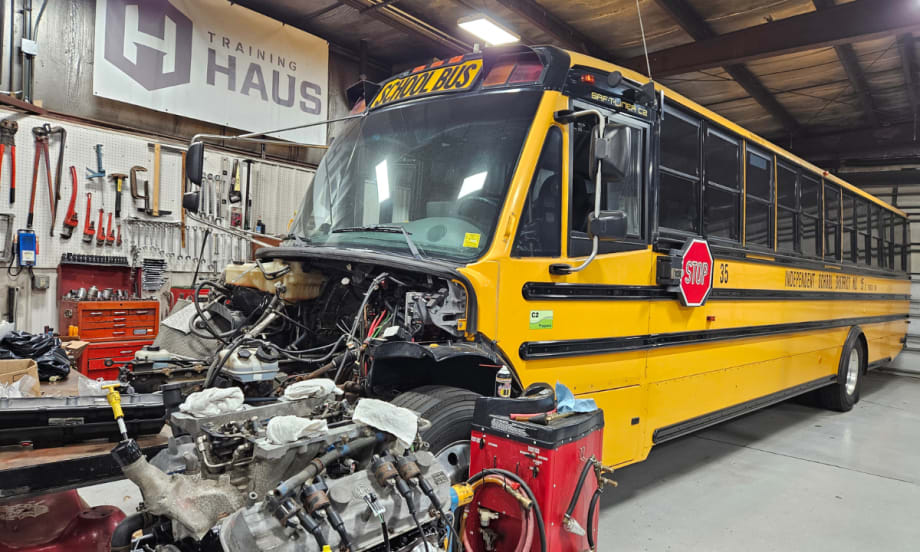
Creating a culture of safety in the garage requires planning, training, and follow-through. Pictured here is the garage at St. Francis Area School District in Minnesota, taken in 2025.
Amanda Huggett
*Summarized by AI
Improving school bus garage safety doesn’t necessarily require a major overhaul. From routine inspections and technician training to better equipment and housekeeping, fleet managers can make practical improvements that reduce hazards and create a stronger safety culture.
By dedicating just one month to updating garage safety and focusing on one aspect each week, you can take it to the next level. Here's a roadmap, ready to follow.
The key to improving garage safety is making time to address issues as they arise and maintaining ongoing safety practices. To help make safety a regular topic of discussion, form a safety committee that meets monthly.
At the School District of Manatee County in Bradenton, Florida, Associate Director of Vehicle Maintenance Don Ross says his shop’s committee is made up of office staff, mechanics, the shop manager, and a safety chair. Committee membership rotates, but the chair position is permanent.
The committee conducts a monthly shop inspection and then holds a review meeting to go over items of concern. During the inspection, the committee reviews all departments in the garage using a detailed checklist that covers fire safety, trip hazards, and personal protective equipment (PPE). “If the committee finds an item that can be taken care of during inspection, corrective measures are noted. If not, then a safety work order is generated and remains open until repaired or removed,” he explained.
Using a checklist also allows staff to document the last time equipment was checked or tested, according to Michael Bower, assistant fleet maintenance manager for the Cleveland Metropolitan School District.
However, inspections and safety meetings are handled differently across operations. Instead of implementing a safety committee, Kevin Boyd, maintenance manager at Michael’s Transportation Service in Vallejo, California, serves as the company’s designated safety and compliance officer. In that role, he coordinates training and rates each employee daily on their safety practices.
At Bay District Schools in Panama City, Florida, General Foreman Pete Smith holds a weekly shop meeting with the mechanics to discuss safety conditions in the garage.
In addition to keeping a close watch on the garage's safety needs, the safety committee or officer can help administrators identify outdated equipment.
You may not be able to give your garage a complete makeover within a month’s time, but you can take a comprehensive look at the garage's physical layout and equipment and make a prioritized list of what needs to be repaired or replaced to optimize safety and efficiency.
For Steve Andreorio, director of fleet operations at Academy School District 20 in Colorado Springs, Colorado, installing new lighting throughout the bus bays has improved safety.
Maintenance Fleet Supervisor Bill Svoboda at Red Lion Bus Co./EDW in Red Lion, Pennsylvania, found a solution to optimize interior space in his garage. To accommodate paint touch-up jobs needed during the winter, the company turned a partially walled-off wash bay in the shop into a fully enclosed paint booth, complete with explosion-proof lights and fans.
According to Rahway Bus Co. President Timothy Wallace, part of improving safety at the Colonia, N.J.-based shop comes from investing in newer, better quality tools. Newer tools that function properly reduce the risk of injury among mechanics, and new equipment technologies may help them get the job done faster as well.
Next, identify any “hot spots” in your garage where accidents are likely to occur. Many maintenance administrators report oil or fluid spills as a frequent danger in the garage. Cleaning up spills as soon as they happen is one of the top rules in the garage at Shasta Union High School District in Redding, California, says Tom Carroll, director of transportation.
Boyd targets the welding area, work benches, areas around vehicles, and the tire repair area as his hot spots and gives them special attention during training.
Bower recommends posting signs throughout the shop to warn techs of the most common dangers, so they are constantly kept in mind. He has posted signs reminding staff that fluid containers must be marked and shields must be used on grinders.
By the end of week two, you should have a written prioritized list of items to upgrade in the garage. Add to it as needed throughout the year.
During week three, look to both in-house and outside resources to enhance staff training. Insurance providers can usually assist with safety training as part of the coverage offered to pupil transportation operations.
Wallace has invited safety representatives from his company’s insurance provider to give seminars for shop staff.
Boyd said he uses materials from a safety consulting firm for training on tire safety and environmental regulations, among other topics. “We do it every six months unless new information comes out [before then],” he said.
Many operations also incorporate training into regular shop meetings. “We have a monthly ‘toolbox shop talk’ presented by our director,” Ross said. Topics for discussion are determined by recent shop activities or safety issues, providing timely, relevant information for garage staff. Ross also maintains a book of maintenance topics, including photos and detailed descriptions of breakdown causes and repair procedures. “This book covers all topics of interest from equipment repairs to the inspection process,” he explained. “Every employee must read and sign off monthly on new topics.”
Maintenance supervisors recommend putting safety topics in writing, not only to emphasize their importance but also for mechanics to keep on hand as a reference. Andreorio distributes comprehensive maintenance guidance materials to all drivers at the beginning of each school year.
In Week Four, make plans to educate staff on your revitalized safety program. Maintenance administrators suggest incorporating safety into new-employee training from day one to emphasize its importance.
“Make it a priority from the first day you bring in a new employee, so it’s part of the culture,” Carroll recommends.
“Everyone shares the responsibility for safety in the shop,” Andreorio said. If all employees understand this message, they will be more likely to follow through with the everyday “housekeeping” duties that keep work areas safe and orderly.
But how to motivate mechanics to keep up with these duties? “I use a point system that goes along with bonuses at year's end,” Boyd explained. He rates shop staff daily on whether they completed paperwork, cleaning duties, and properly stored equipment from the previous workday. The accumulated points for safety and cleanliness then help Boyd determine each employee’s bonus at the end of the year.
Svoboda rewards techs with a quarterly safety bonus of $50 for each period that ends without accidents. In addition, employees are appraised at each interval, and safety and neatness make up about 11% of the rating. “Any time I’m out in the shop, I’m constantly monitoring safety,” he said. “If a mechanic is not following proper procedure, I tell him about it immediately, and I make note of it so I can include it in his performance appraisal.”
Smith agrees with monitoring safety conditions daily. “Never take for granted that all of your office personnel and mechanics will do the correct thing daily to promote safety,” he cautions. “One should spot check safety conditions all through the day.”
Lastly, maintenance administrators explain that high safety standards come from good leadership. “Safety has to come from the top down as a way of life,” Carroll said. “Lead by example and lend a hand when necessary.”
Editor's Note: This article was originally published on August 1, 2008, and was updated on January 28, 2026, and August 13, 2026, for stylistic edits and continued relevancy on safety and efficiency practices in school bus maintenance.
Safety is crucial in school bus operations to protect the well-being of students, drivers, and staff, and to ensure compliance with regulatory standards.
*Summarized by AI
Your district's buses carry students to school every day. This guide shows how predictive maintenance powered by fleet data helps keep buses reliable, drivers accountable and students safer from the first bell to the last stop.
Read More →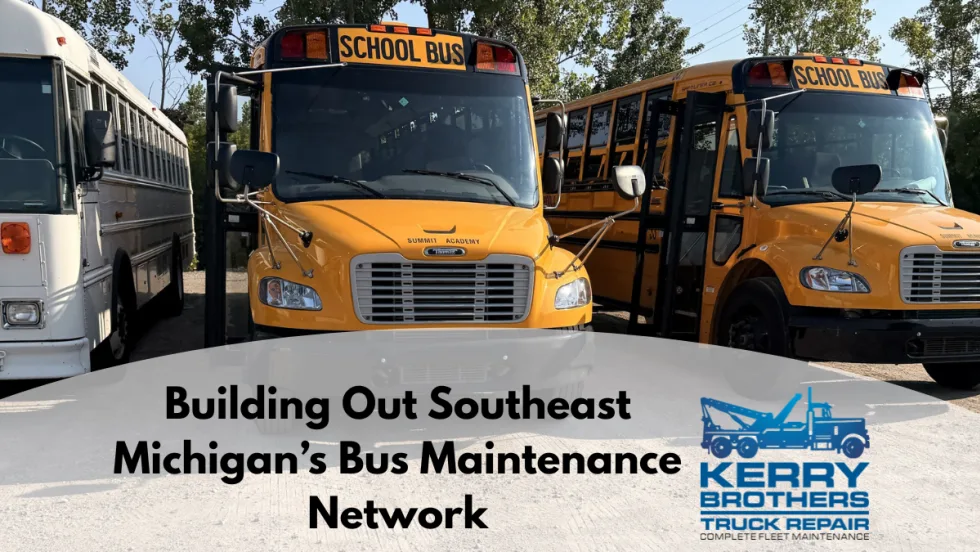
The acquisition of Downriver Truck and Bus expands Kerry Brothers’ school bus maintenance footprint across southeast Michigan, adding repair capacity, diagnostic resources, and state inspection support.
Read More →
CAN Mentor and the latest JPRO update aim to simplify vehicle network diagnostics and improve repair efficiency for technicians of all experience levels.
Read More →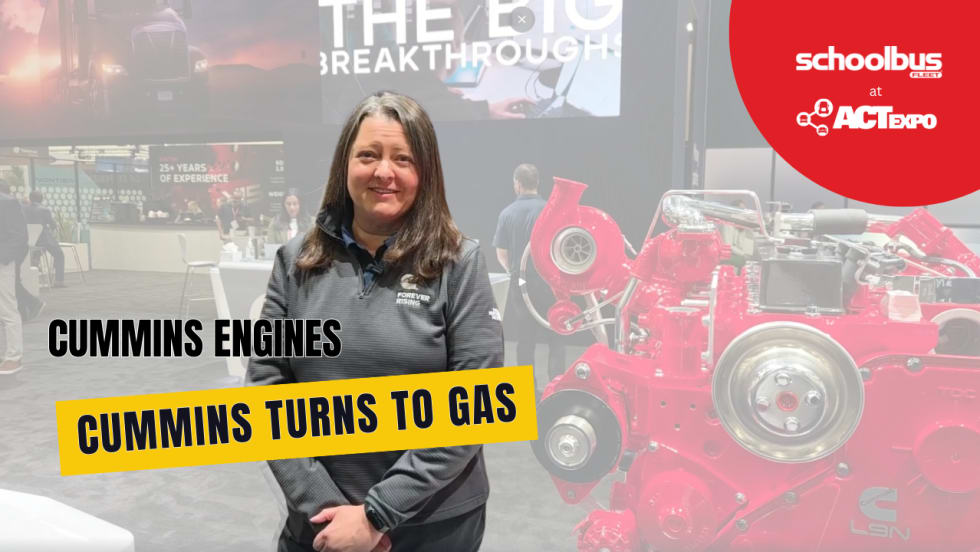
Cummins discusses its first-ever gasoline engine for school buses, EPA 2027, and why bus fleets still want durable, simpler internal combustion options.
Read More →
New data shows advanced low-emission diesel technology continues expanding across school bus fleets, even as electric bus adoption gains momentum.
Read More →
Vampire Tools introduced the VAMPLIERS Caiman 7.5-inch multi-purpose pliers, combining screw extraction, cutting, crimping, and gripping functions into a single tool designed for fleet maintenance professionals.
Read More →
Chat with Noregon’s Kevin Smallhorn at ACT Expo about bus diagnostic tools, telematics integration, CNG maintenance support, and strategies to help reduce downtime and improve uptime.
Read More →
Don’t let bus downtime wear you down. Here’s how bus operators are shifting from manual processes to AI-powered, data-driven maintenance systems for improved reliability and safety.
Read More →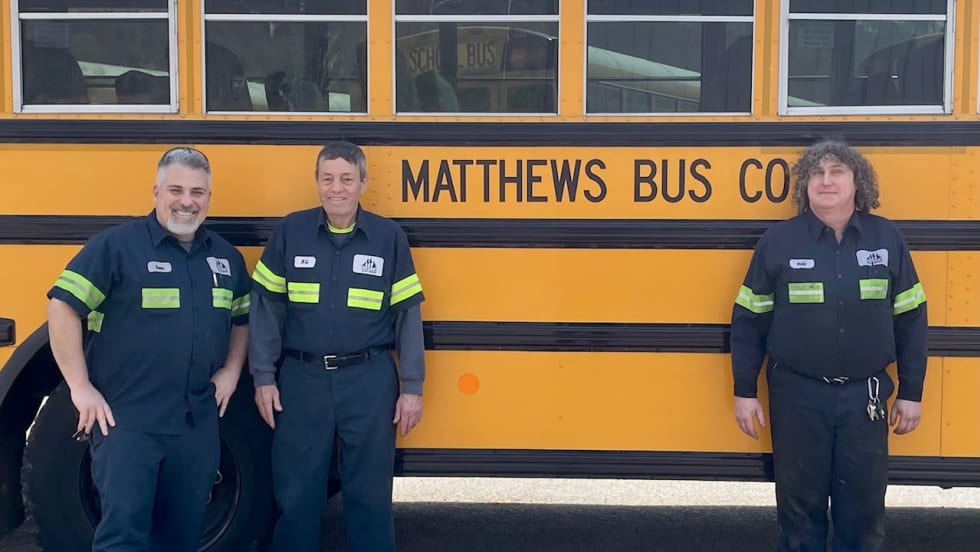
Matthews Bus Company’s West Jefferson received a letter of commendation from the Pennsylvania State Police for their fleet inspections.
Read More →
Covering 38 routes on a Friday afternoon. Buses idling while routes overlap. Parents calling nonstop about late arrivals. Sound familiar? This whitepaper explores how district transportation leaders solved these exact problems — and what measurable results followed.
Read More →