




New to Electric School Bus Adoption? Experienced Operators Share 6 Tips
Navigating the Shift to Electric Bus Air-Conditioning, Heating in 4 Steps
Differences between electric and internal combustion engine buses also apply to heating and cooling. Choosing the appropriate compressor and communications protocol, determining the heating method, and knowing battery pack voltage are crucial.
by Richard Demirjian
April 20, 2021
File photo
4 min to read
School bus fleet electrification is getting a lot of attention, and rightfully so. The way school buses are used — for short periods of time with gaps in activity that are perfect for charging — makes them a prime market for electrification.
After the initial up-front investment in electric capabilities, there is less cost around maintenance and fuel, and the vehicles are quieter and more environmentally friendly. As School Bus Fleet has noted, there are maintenance similarities and differences between electric buses and combustion-engine buses. While some components under the hood, such as hoses and coolant, are the same, differences include the need to disable batteries during repairs, a noise generator, and significantly fewer parts in an electric motor.
Moreover, differences apply not just to how the bus is propelled but also to heating, ventilation, and air conditioning.
So, how exactly should fleet operators go about navigating these changes? Here are four recommended steps.
1. Select the Right Compressor.
First, figure out whether a single or dual compressor — or multiple compressors — is most appropriate for your situation. A lot of school buses today are set up with dual compressors — one for the driver and dash area (for defrosting and defogging) and another for cooling the passenger compartment — unlike single-compressor systems that are more appropriate for driver-only vehicles. The number of passengers is a key difference that makes school buses more complex than heavy-duty trucking, off-road, and other markets.
One advantage of the dual- or multiple-compressor solution is the avoidance of long lines from the under-hood compartment to a rooftop unit. The compressor can be co-located with its HVAC components. This will prevent oil traps that are typically seen on belt-driven long line configurations.
Another consideration is battery and electric powertrain cooling. Due to the different evaporating temperatures needed for the battery versus the cabin, it is sometimes favorable to use separate refrigerant loops to cool them.
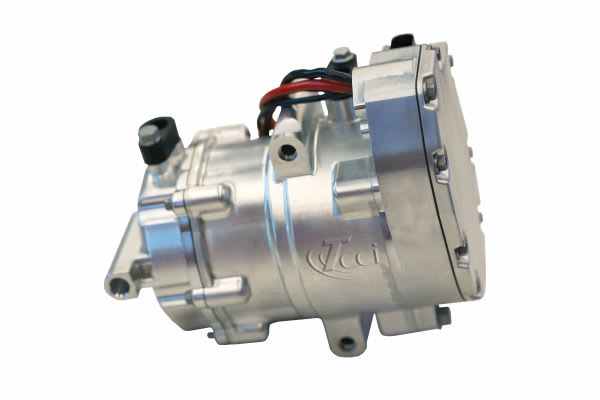
The first step operators must take when looking at heating and cooling in an electric bus is determining whether a single or dual compressor — or multiple compressors — is most appropriate for a fleet.
Photo courtesy T/CCI Manufacturing
2. Determine Heating Method.
How will the bus be heated? Will a heat pump be used to extend driving range? This is an important distinction as it informs the compressor selection and system design. Without an internal combustion engine or fuel-fired heater, an electric bus must use electricity to create heat. Heat pumps utilize the refrigerant system to provide heat in cold weather, using less energy than resistive heaters, resulting in more driving range.
Due to the high expense of batteries, heat pumps are becoming a popular technology for electric vehicles. The concept of the heat pump is simply a reversal of the cycle in which heat energy is absorbed at the condenser from the ambient and then rejected at the evaporator to provide interior heating. It is based on the same exact principle of moving energy from the evaporator to the condenser during air-conditioning operation. It takes a robustly designed electric scroll compressor to operate at these unique conditions, as oil return is low due to the loss of refrigerant mass flow at lower operating conditions.
Additionally, since you are operating at higher-pressure ratios, having a more robust scroll coating to protect in these extreme conditions is critical. Further, there is a point climatically in which the heat pump cannot efficiently transfer enough energy from very cold ambient to meet heating demand. This is where auxiliary resistance heat becomes necessary to continue to provide a boost and achieve full comfort in the bus.
3. Know the Battery Pack Voltage.
What voltage is your battery pack? The electric compressor must be able to operate across the battery operating range. As a rule, the voltage should be lower for hybrids and higher for full-electric vehicles. Batteries with maximum voltages between 400V and 850V are typically used on school buses, heavy-duty trucks, transport refrigeration vehicles, and automotive applications. The higher the voltage, the faster large battery packs can be charged. This allows buses to go back to the bus facilities after morning runs and be ready to go by the afternoon.

Richard Demirjian is president of T/CCI Manufacturing, a supplier of compressor technology to the trucking, off-highway, specialty vehicle, and transport refrigeration markets.
Photo courtesy T/CCI Manufacturing
4. Choose Communication Protocol.
Which communication protocol should be chosen for the bus? When considering compressors for electrification, it is important to understand the differences between vehicle communication networks: Controller Area Network (CAN) and Local Interconnect Network (LIN). LIN networks use a centralized design that has each module talking to the main controller. CAN networks have all modules able to communicate with each other. Due to its higher data speeds, CAN networking is often used for the most critical and complex modules, some of which have communication to the outside world. Because of this, CAN networks are more susceptible to hacking and have important cybersecurity considerations, which is a disadvantage.
The shift to electrification is already taking place in the school bus market. India and other parts of Asia will be areas to watch as they are leading the transition in terms of school buses and public transit buses. Now is the time to educate and prepare.
Richard Demirjian is the president of T/CCI Manufacturing, a supplier of compressor technology to the trucking, off-highway, specialty vehicle, and transport refrigeration markets with a global footprint that includes manufacturing operations in China, Argentina, India, and the U.S.
Subscribe to Our Newsletter
More Maintenance
Sponsored•September 8, 2026
The Essential Guide to School Bus Maintenance and Student Safety
Your district's buses carry students to school every day. This guide shows how predictive maintenance powered by fleet data helps keep buses reliable, drivers accountable and students safer from the first bell to the last stop.
Read More →
Kerry Brothers Grows Michigan School Bus Repair Network
The acquisition of Downriver Truck and Bus expands Kerry Brothers’ school bus maintenance footprint across southeast Michigan, adding repair capacity, diagnostic resources, and state inspection support.
Read More →
Noregon Introduces CAN Bus Diagnostic Tool, Expands JPRO Features
CAN Mentor and the latest JPRO update aim to simplify vehicle network diagnostics and improve repair efficiency for technicians of all experience levels.
Read More →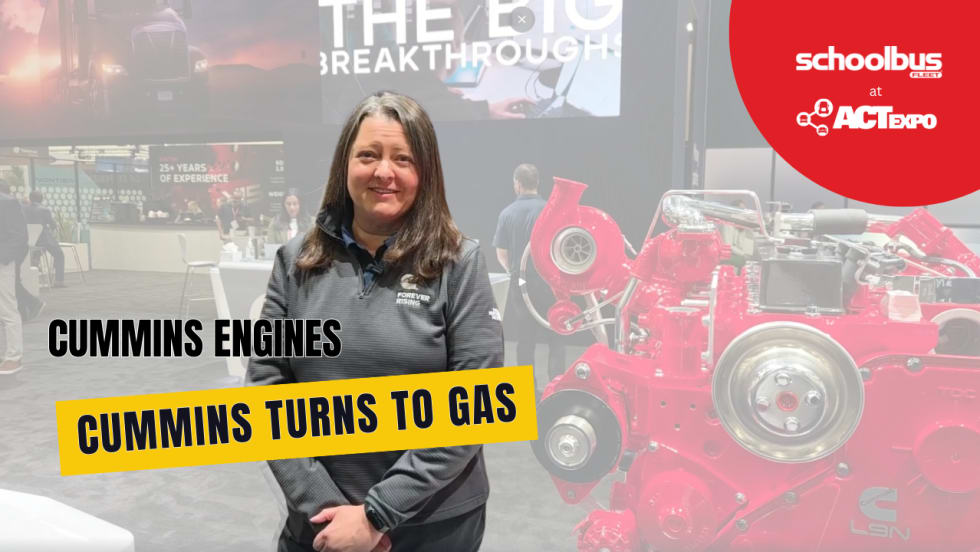
Cummins on Smarter, Simpler Engine Innovation
Cummins discusses its first-ever gasoline engine for school buses, EPA 2027, and why bus fleets still want durable, simpler internal combustion options.
Read More →
Report: 72% of Diesel School Buses Now Use Advanced Low-Emission Engines
New data shows advanced low-emission diesel technology continues expanding across school bus fleets, even as electric bus adoption gains momentum.
Read More →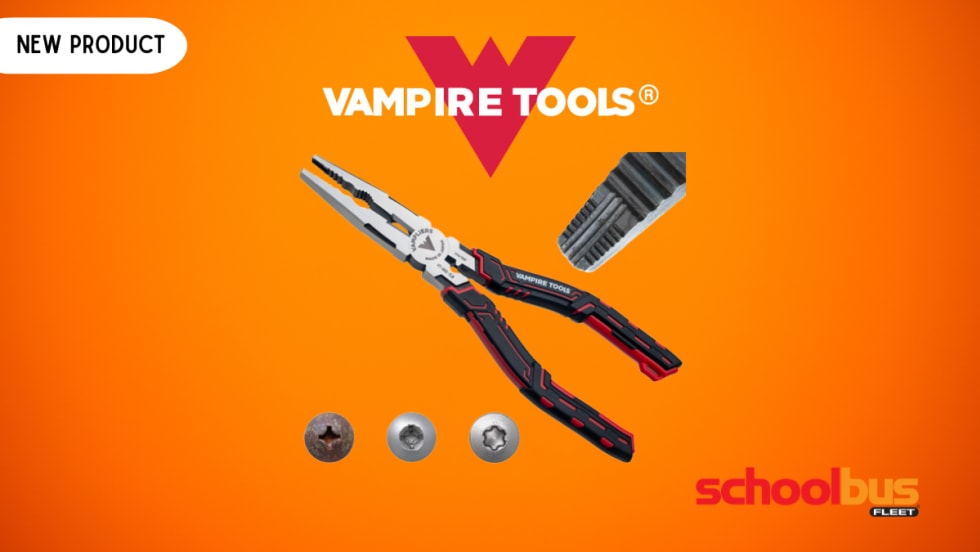
Vampire Tools' CAIMAN 7.5-Inch Multi-Purpose Screw Extractor Long-Nose Pliers with Crimper
Vampire Tools introduced the VAMPLIERS Caiman 7.5-inch multi-purpose pliers, combining screw extraction, cutting, crimping, and gripping functions into a single tool designed for fleet maintenance professionals.
Read More →
How Advanced Diagnostics Helps Bus Fleets Stay Ahead of Repairs
Chat with Noregon’s Kevin Smallhorn at ACT Expo about bus diagnostic tools, telematics integration, CNG maintenance support, and strategies to help reduce downtime and improve uptime.
Read More →
How School Bus Fleets are Getting Ahead of Breakdowns
Don’t let bus downtime wear you down. Here’s how bus operators are shifting from manual processes to AI-powered, data-driven maintenance systems for improved reliability and safety.
Read More →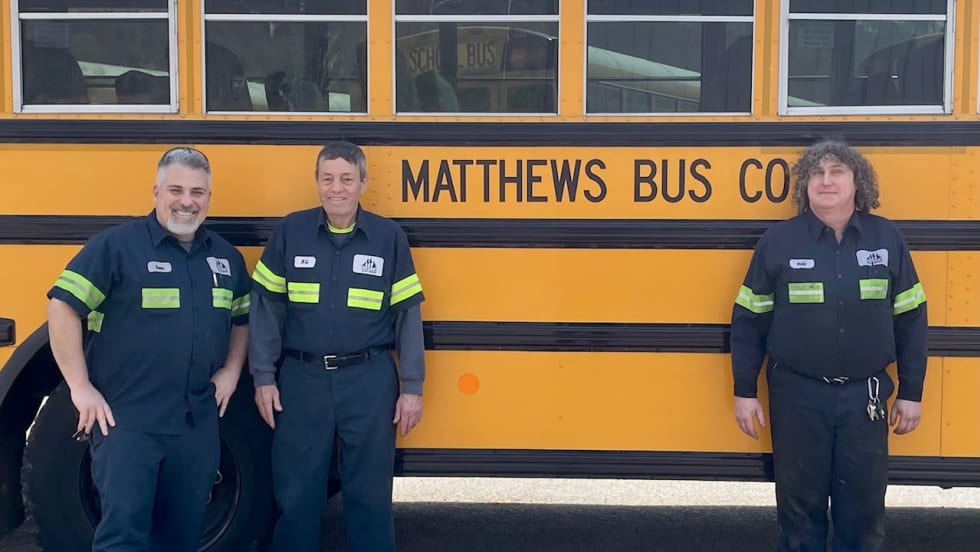
Pennsylvania School Bus Maintenance Team Praised for Dedication to Safety
Matthews Bus Company’s West Jefferson received a letter of commendation from the Pennsylvania State Police for their fleet inspections.
Read More →
Sponsored•April 16, 2026
From Chaos to Clarity: How School Districts Are Running Leaner Transportation Operations
Covering 38 routes on a Friday afternoon. Buses idling while routes overlap. Parents calling nonstop about late arrivals. Sound familiar? This whitepaper explores how district transportation leaders solved these exact problems — and what measurable results followed.
Read More →