




Mutual respect strengthens driver-technician relations
Clear communication is also essential to a solid working relationship between these groups of employees. In-service or safety meetings provide an opportunity for growth in these areas by allowing drivers to learn about their buses and ask the techs questions. Drivers must also be proactive in reporting maintenance concerns.

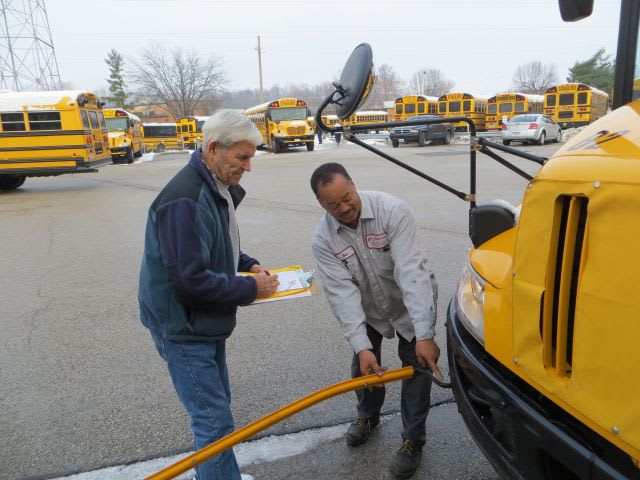
Parkway School District bus driver Chuck Deem (left) and technician Ben Thompson inspect a crossing arm. Will Rosa, director of transportation for the Missouri district, says that drivers and technicians at his operation have been successful at not buying into the notion that each group doesn’t do their job thoroughly or correctly, and they “channel their energy toward the problem, not the person.”
Maintaining a harmonious relationship among employees can be difficult in any industry. Different personalities and opinions, individuals’ work habits, pressures of the job and many other factors can contribute to a tense work environment if team members don’t have respect for one another and an effective way to communicate.
Pupil transportation managers face a unique challenge, in that they often oversee (among others) two groups of employees: school bus drivers and technicians. Both groups are dedicated to their mission of transporting students safely, but getting them to work as a team to accomplish this mission is not always easy.
Officials say that a lack of communication and mutual respect are the biggest obstacles that prevent bus drivers and technicians from working together well, and it can be destructive.
As an example, “Technicians think drivers don’t do thorough pre-trips or catch/report obvious mechanical issues, and drivers think technicians don’t always fix things correctly,” says Will Rosa, director of transportation at Parkway School District in Chesterfield, Mo.
Robert Matheny, director of maintenance, operations and transportation, at Goleta (Calif.) Union School District, adds that two of the biggest challenges his operation has faced have been getting both groups to understand that each driver or technician knows what his or her job is, and getting everyone to communicate on a level that both drivers and technicians can understand.
Create opportunities for respectful communication
Regular meetings with these employees can go a long way in developing and maintaining positive driver-technician relations. Matheny says that along with this, he practices an open-door policy.
“I will listen to both sides and get each side to understand the other’s level of knowledge on the issue,” he explains. “I also always find a way for everyone to walk away without feeling as though they lost, and I keep the communication lines open about each problem until it is solved.”
Matheny adds that it’s important for everyone involved to remember that no one is always right or wrong.
“Each driver or technician has to respect the other — if this doesn’t happen, you will have no confidence in the driver or technician being able to accomplish his or her tasks, and you will be putting out fires all the time,” he says. “Be the boss and guide people to do the responsible thing and learn to respect each other. Also, give accurate answers and reliable information to keep the confidence level high.”
Rosa agrees that mutual respect is crucial. He also says that the drivers and technicians at his operation have been successful at not buying into the notion that each group doesn’t do their job thoroughly or correctly, and they “channel their energy toward the problem, not the person.”
At Prince William County Public Schools in Manassas, Va., recurring maintenance issues are routinely identified and discussed in driver in-service meetings twice each year. In addition, the operation has implemented measures that have helped in clarifying information shared from drivers to technicians about their school buses, and have strengthened techs’ ability to diagnose problems.
Director of Transportation Services Ed Bishop says that sometimes, the user of a vehicle (in this case, a school bus driver) may be unable to accurately describe the vehicle’s faults or concerns he or she has, and the technician may have difficulty diagnosing the cause of the fault, which can cause frustration and friction between the two individuals.
“The school district pays for automotive technicians to get Automotive Service Excellence certifications and re-certifications so they are better able to diagnose issues with school buses,” Bishop says. “Service writers have been assigned to each maintenance facility with the primary duty of improving and maintaining communications with bus drivers. Service writers also relieve technicians from administrative duties, which allows them to concentrate fully on diagnosing and effecting repairs.”
David Anderson, director of transportation and fleet services at Adams 12 Five Star Schools in Thornton, Colo., kept communication between drivers and technicians in mind when he was designing the operation’s new transportation facility.
“I put in a drive-through lane so that drivers/buses can pull in the shop and get what repairs they need while they wait,” he explains, noting that this provides “ultimate customer service,” and he found that “by doing this, the time for repairs on preventive maintenance inspections dramatically dropped, as drivers feel encouraged to seek repairs and not delay them.”
In addition, every six months, the operation holds in-service meetings, and the technicians set up stations in the shop where drivers can go to learn about their bus. The stations cover topics such as air brakes, suspension and retarders.
“It seems to bring the level of knowledge for the drivers up, and the technicians seem to enjoy sharing the knowledge — essentially a win-win!” Anderson says of the stations/instruction.[PAGEBREAK]
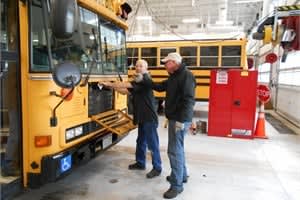
At Adams 12 Five Star Schools in Thornton, Colo., the transportation facility features a drive-through lane so that drivers/buses can pull in the shop and get what repairs they need while they wait, and also discuss concerns with the technicians. Pictured are technician Don Hough (left) and driver Les Shannon.
Drivers should be proactive in reporting concerns
Officials say that drivers can help keep relations with technicians positive and smooth by properly pre-tripping their school bus and promptly reporting maintenance issues or concerns they have with the vehicle.
Rosa’s drivers are reminded throughout the school year about the importance of a proper pre-trip inspection. Also, bus maintenance and operation are covered in safety meetings, on driver trainer ride-alongs and through electronic bulletin board messaging.
“When drivers understand how the bus operates and why it is important for the safety of children, they are more inclined to not only work with but proactively support our technicians,” he says.
At both Goleta Union School District and Prince William County Public Schools, drivers are asked to complete a work order when there is a problem with their bus, and there is follow-up with or by the technicians.
At Goleta, drivers fill out the work order and then communicate the problem verbally to the technician.
“The technicians have been told to listen to complaints and work order needs, to not pre-judge what they are being told and to find the common ground so that the problem can be fixed in a timely manner,” Matheny says.
Prince William County Public Schools’ technicians keep drivers fully apprised of repairs made to their buses by recording the faults they found and what was corrected on maintenance report forms they receive.
How the operation benefits
There are multiple benefits when bus drivers and technicians work together and communicate respectfully and clearly.
As Anderson indicated earlier, the time for preventive maintenance repairs at Adams 12 Five Star Schools has been reduced, which suggests that workflow can improve. He also says that driver satisfaction has increased.
Rosa says that teamwork builds bonds among staff members and ultimately leads to resolving issues more quickly — key components to a professional operation.
It’s important to remember, however, that solid driver-technician relationships are often a work in progress. Rosa says his operation is “not perfect,” but his employees have gotten “much better at not playing the ‘blame game.’”
Bishop says that “the result we seek is to reduce driver frustration, reduce vehicle down time and maximize instructional time in the classroom for our students. To these ends we have been moderately successful, but we are nowhere near perfect.”
More Maintenance
The essential guide to school bus maintenance and student safety
Reactive maintenance puts students at risk of breakdowns, delays and roadside emergencies. This guide gives transportation directors a data-driven framework to predict failures, extend bus lifespans and improve fleet reliability across every route.
Read More →
The Evolution of DEF Header Technology: What School Bus Operations Should Know at Replacement Time
See what school bus fleets should consider when replacing DEF headers to improve reliability, reduce repeat repairs, and control maintenance costs.
Read More →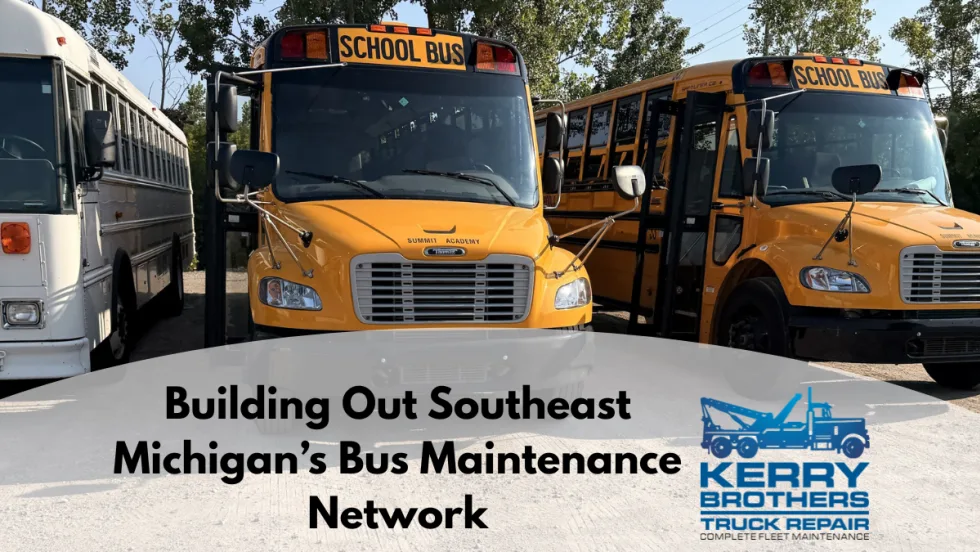
Kerry Brothers Grows Michigan School Bus Repair Network
The acquisition of Downriver Truck and Bus expands Kerry Brothers’ school bus maintenance footprint across southeast Michigan, adding repair capacity, diagnostic resources, and state inspection support.
Read More →
Noregon Introduces CAN Bus Diagnostic Tool, Expands JPRO Features
CAN Mentor and the latest JPRO update aim to simplify vehicle network diagnostics and improve repair efficiency for technicians of all experience levels.
Read More →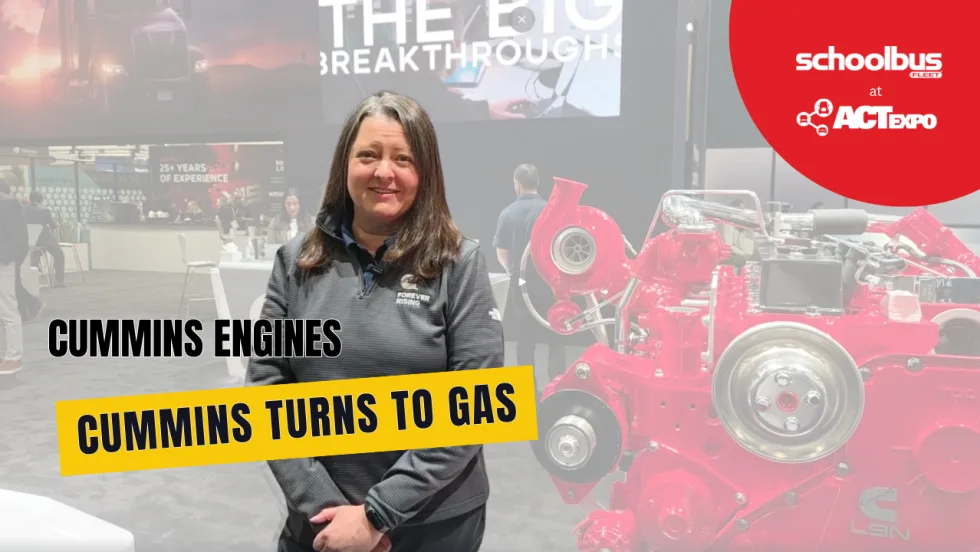
Cummins on Smarter, Simpler Engine Innovation
Cummins discusses its first-ever gasoline engine for school buses, EPA 2027, and why bus fleets still want durable, simpler internal combustion options.
Read More →
Report: 72% of Diesel School Buses Now Use Advanced Low-Emission Engines
New data shows advanced low-emission diesel technology continues expanding across school bus fleets, even as electric bus adoption gains momentum.
Read More →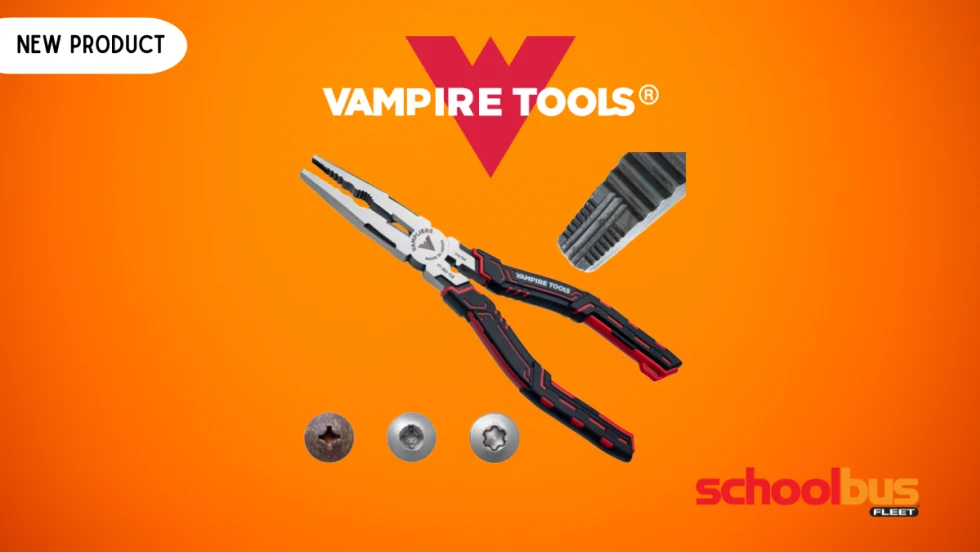
Vampire Tools' CAIMAN 7.5-Inch Multi-Purpose Screw Extractor Long-Nose Pliers with Crimper
Vampire Tools introduced the VAMPLIERS Caiman 7.5-inch multi-purpose pliers, combining screw extraction, cutting, crimping, and gripping functions into a single tool designed for fleet maintenance professionals.
Read More →
How Advanced Diagnostics Helps Bus Fleets Stay Ahead of Repairs
Chat with Noregon’s Kevin Smallhorn at ACT Expo about bus diagnostic tools, telematics integration, CNG maintenance support, and strategies to help reduce downtime and improve uptime.
Read More →
How School Bus Fleets are Getting Ahead of Breakdowns
Don’t let bus downtime wear you down. Here’s how bus operators are shifting from manual processes to AI-powered, data-driven maintenance systems for improved reliability and safety.
Read More →
Pennsylvania School Bus Maintenance Team Praised for Dedication to Safety
Matthews Bus Company’s West Jefferson received a letter of commendation from the Pennsylvania State Police for their fleet inspections.
Read More →