




Money-saving tips from maintenance managers
In SBF’s 2003 exclusive school bus maintenance survey, shop managers were asked if they had done anything recently to improve performance while...

In SBF’s 2003 exclusive school bus maintenance survey, shop managers were asked if they had done anything recently to improve performance while lowering maintenance costs. Answers varied widely, but reprinted here are a few of the more descriptive, and potentially insightful, answers given by respondents.
We started using higher quality brake lining.
Instead of selling old buses, we take the engine, transmissions, glass and other parts off and give the bus shell to a junkyard. We save thousands of dollars in spare parts and still have parts left over that can be sold if not used.
We did a better job of keeping the same drivers in the same buses because they get to know the sounds of each bus, helping us identify problems.
Locking down on a price based on the future’s market, we bought fuel for a full year, which averages out to almost half of the current price of fuel at pumps on the street.
We chartered out field trips that travel more than 100 miles, increasing revenue.
We started repairing seat damage instead of replacing seats and seat covers.
We started taking advantage of warranty recovery opportunities.
We purchased an easier-to-use vehicle lift, which saved us a lot of money.
Driver training and education has been improved, and the condition of our buses reflects it.
We moved to a larger maintenance facility.
We improved our bus to mechanic ratio.
We cut idling time on all bus routes, cutting down the wear and tear on vehicles.
We set up a centralized purchasing department and streamlined equipment procurement expenses.
We converted all manual transmissions to automatic and all standard brakes to air brakes.
We started measuring the value of repairs by comparing the cost of repair with bus age and cost.
We started giving the technicians more of a say in purchasing decisions because they work more directly with the equipment.
We started a fuel additive/treatment program.
We improved our maintenance record-keeping.
We began tracking overtime hours more carefully.
An assistant supervisor was put in the shop to help keep things moving.
We resealed rear window glass and water leaks to slow down the onset of body rust.
We put stainless steel screens on light mountings to protect them.
We improved our radiator and coolant monitoring procedures.
We began replacing torque converters instead of the entire transmissions when they quit moving or broke down.
We installed road speed governors on all of our engines.
Drivers who damage equipment are now reprimanded. If they do so twice, they are terminated.
We implemented a bulk purchasing program for maintenance parts.
We started an oil analysis program.
All of our garage operations are now computerized.
We changed our lubricant and grease to a less expensive brand.
We began standardizing our entire fleet to improve cost efficiency on parts ordering and repairs.
We started talking to our drivers more to have them share concerns with us since they know the buses best.
We replaced all of our unproductive mechanics with hard workers.
We went to a more aggressive tire maintenance program.
We replaced all of our rear-engine buses, which were having trouble with salt and calcium corrosion in extreme weather conditions.
We now run retreads on the rear axle to cut down on tire costs.
More Maintenance
The essential guide to school bus maintenance and student safety
Reactive maintenance puts students at risk of breakdowns, delays and roadside emergencies. This guide gives transportation directors a data-driven framework to predict failures, extend bus lifespans and improve fleet reliability across every route.
Read More →
The Evolution of DEF Header Technology: What School Bus Operations Should Know at Replacement Time
See what school bus fleets should consider when replacing DEF headers to improve reliability, reduce repeat repairs, and control maintenance costs.
Read More →
Kerry Brothers Grows Michigan School Bus Repair Network
The acquisition of Downriver Truck and Bus expands Kerry Brothers’ school bus maintenance footprint across southeast Michigan, adding repair capacity, diagnostic resources, and state inspection support.
Read More →
Noregon Introduces CAN Bus Diagnostic Tool, Expands JPRO Features
CAN Mentor and the latest JPRO update aim to simplify vehicle network diagnostics and improve repair efficiency for technicians of all experience levels.
Read More →
Cummins on Smarter, Simpler Engine Innovation
Cummins discusses its first-ever gasoline engine for school buses, EPA 2027, and why bus fleets still want durable, simpler internal combustion options.
Read More →
Report: 72% of Diesel School Buses Now Use Advanced Low-Emission Engines
New data shows advanced low-emission diesel technology continues expanding across school bus fleets, even as electric bus adoption gains momentum.
Read More →
Vampire Tools' CAIMAN 7.5-Inch Multi-Purpose Screw Extractor Long-Nose Pliers with Crimper
Vampire Tools introduced the VAMPLIERS Caiman 7.5-inch multi-purpose pliers, combining screw extraction, cutting, crimping, and gripping functions into a single tool designed for fleet maintenance professionals.
Read More →
How Advanced Diagnostics Helps Bus Fleets Stay Ahead of Repairs
Chat with Noregon’s Kevin Smallhorn at ACT Expo about bus diagnostic tools, telematics integration, CNG maintenance support, and strategies to help reduce downtime and improve uptime.
Read More →
How School Bus Fleets are Getting Ahead of Breakdowns
Don’t let bus downtime wear you down. Here’s how bus operators are shifting from manual processes to AI-powered, data-driven maintenance systems for improved reliability and safety.
Read More →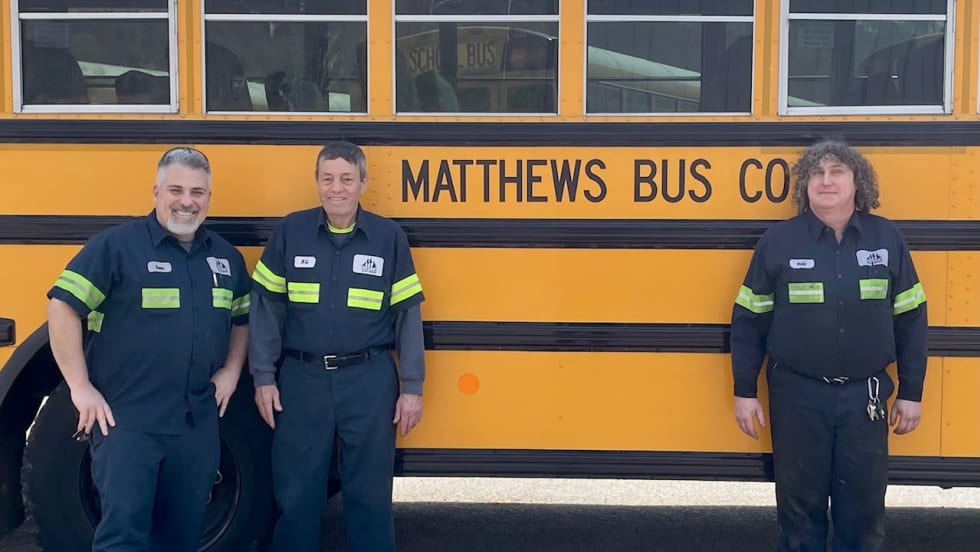
Pennsylvania School Bus Maintenance Team Praised for Dedication to Safety
Matthews Bus Company’s West Jefferson received a letter of commendation from the Pennsylvania State Police for their fleet inspections.
Read More →