




Mechanically inclined
They may not know why engines need lubrication. They may not know the difference between gasoline or diesel, or care about that difference. But it’s clear that bus drivers are an essential part of your maintenance program.
They may not know why engines need lubrication. They may not know the difference between gasoline or diesel, or care about that difference. They may not even know how to turn a wrench in the proper direction. But it’s clear that bus drivers are an essential part of your maintenance program.
Many of the school districts and contractors profiled in this year’s “Top 10 Maintenance Programs” report mentioned the critical role that drivers play in ensuring that buses are properly maintained.
Here is how one maintenance supervisor phrased it: “Drivers are in the buses every day. They know when something changes or when there’s a noise that was not there yesterday. We depend on them to make sure the buses are safe.”
Normally, driver safety is equated with proper procedures for student loading and unloading, behavior management, rail crossings, emergency evacuation and the like. Their ability to recognize a minor or serious mechanical problem with their buses should be added to that list.
Complaints are a good thing
Drivers are the front-line customer of the shop. If something’s amiss, it’s up to them to report the problem. Many of these problems are easy to identify — a light that’s gone out, a crossing gate that gets stuck or a tire that’s obviously low on air. Those types of problems are reported right away. But if it’s a small shake, a persistent rattle or a subtle roll, drivers will often ignore it rather than bring it to the attention of the garage. Why? Because they’ve had their complaints dismissed in the past.
Whether the problem is real isn’t important. The shop needs to take every complaint seriously and to treat the driver with respect. It could turn out that the “problem” isn’t anything that can be fixed or needs to be fixed. But it could also turn out that the driver’s report of an occasional “whine” coming from the engine or a “slight loss” of braking power is an indicator of a serious problem.
Too many drivers ignore an apparent problem because they don’t want to deal with the garage staff. They believe that their write-up will be greeted with skepticism, neglect and perhaps even ridicule. That’s a sorry situation — and a dangerous one, too.
Help them understand
You could have the most highly skilled school bus technicians in the country, but if your drivers aren’t attuned to their buses and don’t understand what constitutes a real problem, the talents of your shop staff could be wasted.
All transportation programs should offer driver training courses in the mechanical workings of the bus. They should bring in garage supervisors to explain how engines, brakes and suspension systems operate. They should give drivers a tour of the garage and introduce them to the shop staff.
Many of you already adhere to this practice. And I’ll bet you’ve seen the benefits when drivers are trying to describe a problem. Yes, occasionally, a little knowledge can be dangerous. But in general, it’s a good thing.
When a problem is reported, garage staff should take the time to explain their handling of the complaint, whether it’s a short note attached to the steering wheel or an oral explanation that helps enlighten the driver about the problem.
If drivers are kept in the loop and educated on the nuts and bolts of their mechanical concerns, they will be much less likely to file unwarranted problem reports, and everyone will be better served.
It’s important that the transportation department operate as a team, even if the players aren’t all wearing the same uniforms.
More Maintenance
The essential guide to school bus maintenance and student safety
Reactive maintenance puts students at risk of breakdowns, delays and roadside emergencies. This guide gives transportation directors a data-driven framework to predict failures, extend bus lifespans and improve fleet reliability across every route.
Read More →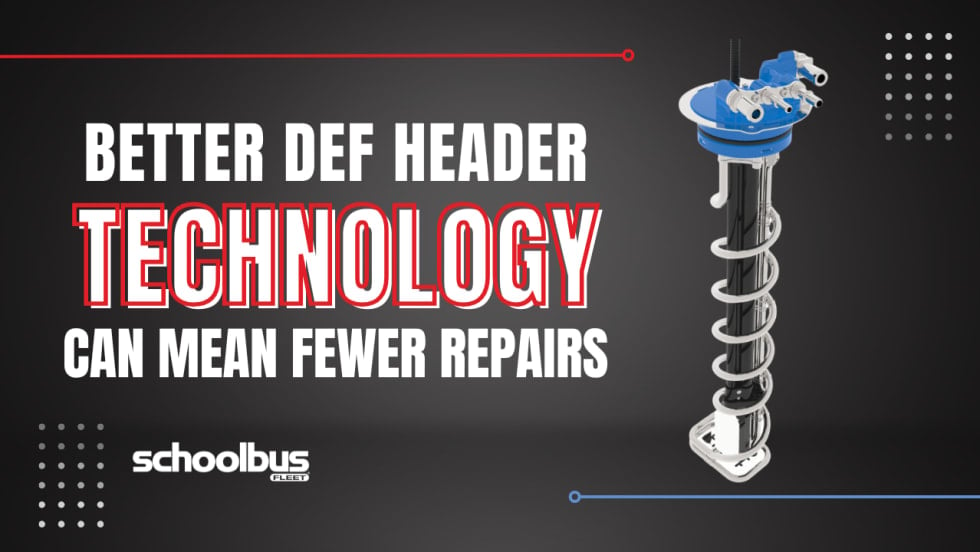
The Evolution of DEF Header Technology: What School Bus Operations Should Know at Replacement Time
See what school bus fleets should consider when replacing DEF headers to improve reliability, reduce repeat repairs, and control maintenance costs.
Read More →
Kerry Brothers Grows Michigan School Bus Repair Network
The acquisition of Downriver Truck and Bus expands Kerry Brothers’ school bus maintenance footprint across southeast Michigan, adding repair capacity, diagnostic resources, and state inspection support.
Read More →
Noregon Introduces CAN Bus Diagnostic Tool, Expands JPRO Features
CAN Mentor and the latest JPRO update aim to simplify vehicle network diagnostics and improve repair efficiency for technicians of all experience levels.
Read More →
Cummins on Smarter, Simpler Engine Innovation
Cummins discusses its first-ever gasoline engine for school buses, EPA 2027, and why bus fleets still want durable, simpler internal combustion options.
Read More →
Report: 72% of Diesel School Buses Now Use Advanced Low-Emission Engines
New data shows advanced low-emission diesel technology continues expanding across school bus fleets, even as electric bus adoption gains momentum.
Read More →
Vampire Tools' CAIMAN 7.5-Inch Multi-Purpose Screw Extractor Long-Nose Pliers with Crimper
Vampire Tools introduced the VAMPLIERS Caiman 7.5-inch multi-purpose pliers, combining screw extraction, cutting, crimping, and gripping functions into a single tool designed for fleet maintenance professionals.
Read More →
How Advanced Diagnostics Helps Bus Fleets Stay Ahead of Repairs
Chat with Noregon’s Kevin Smallhorn at ACT Expo about bus diagnostic tools, telematics integration, CNG maintenance support, and strategies to help reduce downtime and improve uptime.
Read More →
How School Bus Fleets are Getting Ahead of Breakdowns
Don’t let bus downtime wear you down. Here’s how bus operators are shifting from manual processes to AI-powered, data-driven maintenance systems for improved reliability and safety.
Read More →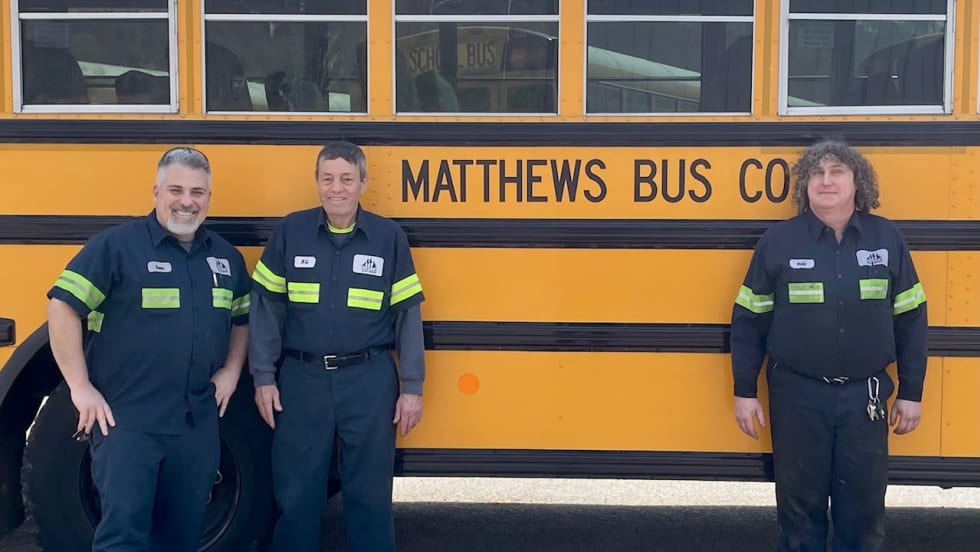
Pennsylvania School Bus Maintenance Team Praised for Dedication to Safety
Matthews Bus Company’s West Jefferson received a letter of commendation from the Pennsylvania State Police for their fleet inspections.
Read More →