




Inspiration point
One of the things that I like to do in my free time is play tennis. It’s a great way to pry myself away from my everyday concerns, although I occasion...
One of the things that I like to do in my free time is play tennis. It’s a great way to pry myself away from my everyday concerns, although I occasionally allow a stray thought about an unfinished article to creep into my mind during a critical second serve. It’s a wonder that I don’t double-fault more often.
I play nearly every weekend, often in adult league matches. I used to play in tournaments, but I got tired of having to play two matches in a day, sometimes with only a 30- or 45-minute break. Of course, if I lost the first match, I didn’t have to play a second one, which was never much of a consolation.
I also like to watch tennis, both in person and on television. During the Wimbledon championships this past summer, I bought an access pass to tennis coverage on the Internet. For $25, I was able to watch dozens of matches, both live and on demand. This included singles matches between top-seeded men and women, but also many of the men’s, women’s and mixed doubles matches, the juniors and seniors events, and even some of the wheelchair competition.
Levels of the game
If you’ve never seen world-class wheelchair tennis players in competition, you will be awe-struck at how skilled they are. They can cover the court with incredible speed and precision, anticipating where their opponent’s shots are going and spinning their chairs into position so they can whack the ball back into their opponent’s court, usually with heavy topspin both on the forehand and backhand. They can also serve with impressive spin and pace, despite the fact that they’re disadvantaged by their seated position and low angle of attack.
Imagine how difficult it would be to learn to play tennis in a wheelchair. Even if you were a fairly proficient, able-bodied player at one time, learning the adaptations to play in a wheelchair would be discouraging and, for many, overwhelming. And yet the four gentlemen that I watched in the men’s wheelchair doubles finals had made that transition.
It’s also important to note that these competitors were just that, competitive. Just because they were seated in wheelchairs didn’t mean that they were any less prone to screams of frustration and bouts of line-call questioning than their able-bodied counterparts. If John McEnroe had been a world-class wheelchair tennis player, I’m certain he would have been just as abusive and disrespectful to line judges and chair umpires.
Aim as high as you can
What I took away from watching these talented men is that we all have untapped capabilities. If I had the desire, I could be a much better tennis player or writer or father or husband or, well, you get the picture. And you could certainly do the same, extending yourselves, for example, to become more committed school transportation professionals.
Do you really have all the knowledge you need to manage your staff with maximum efficiency? Or do your drivers have all the training they need to operate their vehicles with maximum safety? Do your technicians know everything they need to know to get the most out of your fleet?
I watched the wheelchair doubles final again recently because it inspires me to be a better tennis player and, perhaps, a better person. It’s so easy to become satisfied with the way things are that we need a reminder that it can be better. I guess we all find inspiration in different ways, don’t we? The key is just finding it.
More Management

The Most Expensive Thing You Do Before Selling a School Bus: Wait
When should you sell an aging school bus? Learn how maintenance, mileage, corrosion, specifications, and timing can affect resale value long before the auction.
Read More →
American Student Transportation Partners Acquires AJ Myers and Sons
A new deal brings a 75-year Pennsylvania student transportation provider into one of the nation’s largest private school bus contracting groups.
Read More →
What I Brought Home From SBFX: Relationships, Leadership, and Preparing What's Next
Who could lead your transportation operation tomorrow if you couldn't? Bernando Brown explores succession planning, mentorship, and preparing emerging leaders to step up.
Read More →

Inside School Bus Fleet ConneX 2026: Industry Leaders Connect in Scottsdale [Photos]
See highlights from SBFX 2026 in Arizona, where school bus operators and suppliers gathered for meetings, education, networking, awards, and more.
Read More →
School Transportation’s Biggest Pressures and Opportunities: SBFX Attendees Weigh In
School bus operators point to rising costs, staffing, and vehicle prices as immediate pressures while identifying technology, training, and routing as opportunities for growth.
Read More →
STA Acquires Sunrise Transportation
Student Transportation of America expands in Illinois and Connecticut through Sunrise's fleet of nearly 1,000 vehicles.
Read More →
EPA Opens $180M DERA Funding Round for Diesel Upgrades
The 2026 Diesel Emissions Reduction Act program seeks applications from eligible organizations to accelerate the retirement of legacy diesel vehicles.
Read More →
HopSkipDrive’s CareEngine Targets the ‘Exceptions’ in Student Transportation
The new platform works alongside districts’ existing transportation management systems to coordinate specialized rides, automate last-minute changes, and turn ride data into operational improvements.
Read More →
The Right Ride for Every Student: Navigating the New Student Transportation Ecosystem
How should districts blend school buses with small-vehicle transportation and other options? EverDriven CEO Mitch Bowling discusses safety, costs, partnerships, and strategy.
Read More →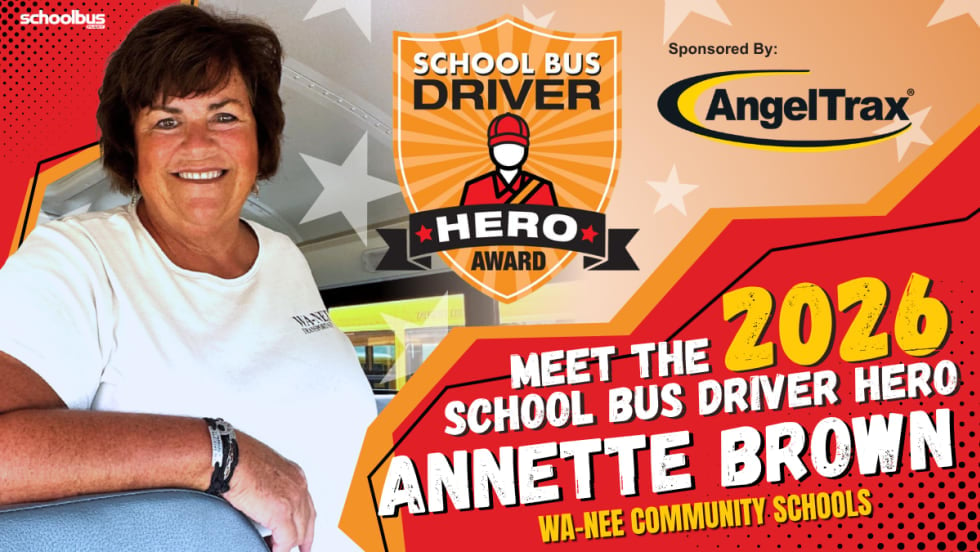
Annette Brown Always Takes the Extra Time: Meet Our 2026 School Bus Driver Hero
For more than 30 years, the Wa-Nee Community Schools driver has treated students like family, combining safety, compassion, and servant leadership to make a lasting difference on and beyond the school bus.
Read More →