




How school transportation compares in the U.K.
The U.K.’s lack of a standard yellow bus is a prominent difference between the British and American school transportation systems, but the two have more similarities than you might expect.

James Blue is general manager of School Bus Fleet.
I gave you a brief introduction of myself in my first editorial last month, but there’s one pertinent personal detail I didn’t mention: I’m British.
My family and I moved to the U.S. about two years ago. Naturally, I didn’t grow up riding an American school bus, but I can tell you that even “across the pond,” the big, yellow bus is recognized as an icon of the American education system.
Since joining SBF, I’ve been learning a great deal about school bus transportation, especially its remarkable safety record and its vital role in students’ education.
I thought it would be interesting to compare the American pupil transportation system to that of the U.K., and I got a handle on that via an encounter at the National Association for Pupil Transportation (NAPT) Summit in Kansas City, Missouri, last fall.
At the Summit, I met many people from the U.S. and Canada who are involved in pupil transportation: district-level directors, state directors, school bus and equipment manufacturers, etc. What I didn’t expect was that I would meet someone from my original corner of the world.
Sian Thornthwaite is a U.K.-based school transportation consultant, but she is also well-versed — and well-known — in the U.S. industry. I had a nice chat with Sian, and I later asked for her insight on school transportation in the U.K. and how it compares to the U.S.
How Do U.K. & U.S. School Bus Fleets Differ?
Probably the most widely recognized vehicle in the U.K. is the iconic double-decker red bus. But, you may be asking, do the Brits have school buses?
While buses in the U.K. aren’t usually yellow, there is, in fact, a school transportation system. More than a million children in the nation use school transport provided by transit buses, contracted coaches, mini-buses and taxis each day.
The U.K.’s lack of a standard yellow bus is a prominent difference between the British and American school transportation systems, but the two have more similarities than you might expect.
As in the U.S., British school transportation varies by state. Sian explains that rules as to who qualifies for transportation are slightly different in the U.K.’s constituent countries: Scotland, England, Wales and Northern Ireland. Local education authorities can also provide additional services.
In the U.K., as in the U.S., school-age children usually qualify for free school transport if they live more than a certain distance from their nearest school (typically 2 or 3 miles) or if they have special needs.
Across Europe, bus and coach transportation is tightly regulated. Drivers undergo vetting and extensive training. Vehicle testing and standards — including a requirement for lap-shoulder seat belts for all children — have fostered an excellent safety record for school transport in the U.K.
Pupil transportation managers in the U.S. also have much in common with their British counterparts, Sian points out. All face pressure to reduce budgets, meet parents’ expectations, manage bullying and behavior on buses, and respond to students’ changing needs.
There is one fundamental difference for pupil transporters on the U.K. side of the pond: they drive on the left. But I wouldn’t recommend trying that here in the U.S.
Have anything to add about the differences? Comment below!
More Management

STA Acquires Sunrise Transportation
Student Transportation of America expands in Illinois and Connecticut through Sunrise's fleet of nearly 1,000 vehicles.
Read More →
EPA Opens $180M DERA Funding Round for Diesel Upgrades
The 2026 Diesel Emissions Reduction Act program seeks applications from eligible organizations to accelerate the retirement of legacy diesel vehicles.
Read More →
HopSkipDrive’s CareEngine Targets the ‘Exceptions’ in Student Transportation
The new platform works alongside districts’ existing transportation management systems to coordinate specialized rides, automate last-minute changes, and turn ride data into operational improvements.
Read More →


The Right Ride for Every Student: Navigating the New Student Transportation Ecosystem
How should districts blend school buses with small-vehicle transportation and other options? EverDriven CEO Mitch Bowling discusses safety, costs, partnerships, and strategy.
Read More →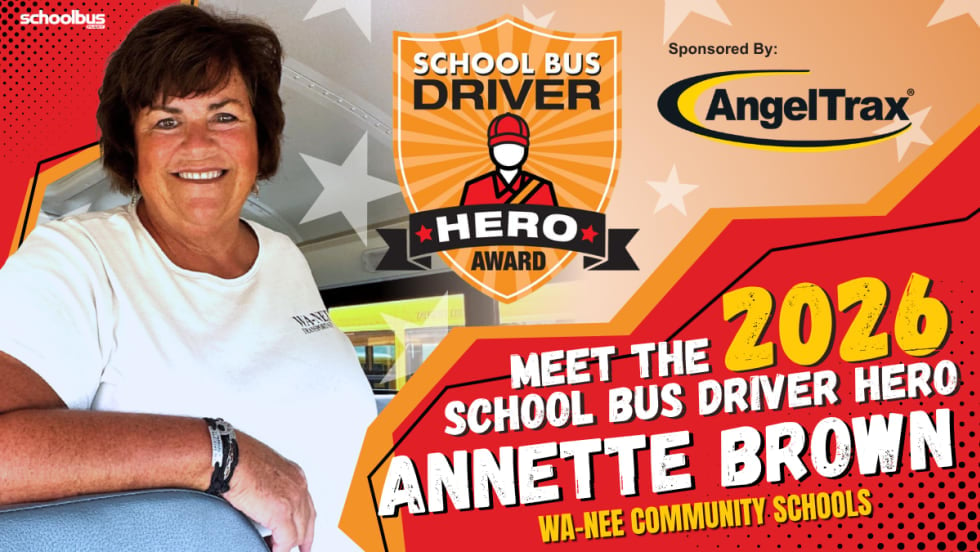
Annette Brown Always Takes the Extra Time: Meet Our 2026 School Bus Driver Hero
For more than 30 years, the Wa-Nee Community Schools driver has treated students like family, combining safety, compassion, and servant leadership to make a lasting difference on and beyond the school bus.
Read More →
How to Build a Better Driver Training Program
Ready to boost up your school bus instructor training? Here’s how to pick the right talent and improve recruitment, retention, and safety.
Read More →
CALSTART and Forth Combine to Form Catalyst Mobility
The new name represents a renewed vision for the nonprofit focused on advancing clean, equitable, and affordable transportation solutions that move people and goods.
Read More →
What Makes a Great School Bus Driver Trainer?
Choosing the right school bus driver trainer takes more than experience. Learn six keys to selecting and developing trainers and evaluating program effectiveness.
Read More →
School Bus Contractors Expand Through New Deals, Acquisitions & Partnerships
STA's Canadian division acquires Ontario-based G&L Stevenson Transport; Durham School Services adds a new district in California; First Student expands in New Jersey; and Minnesota Coaches rebrands and acquires Halo Transportation.
Read More →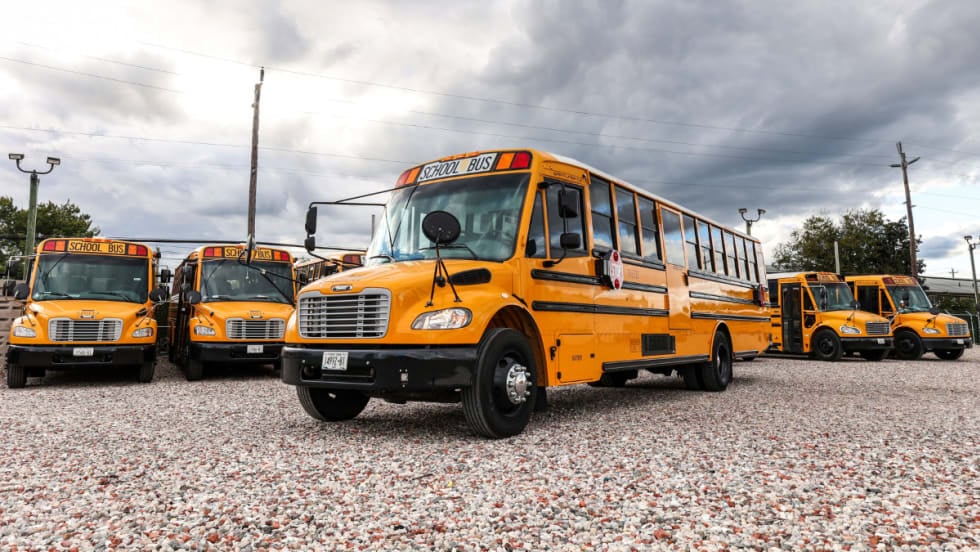
Logan Bus Company Rolls Out AI Phone System for NYC School Bus Families
A summer pilot found that AI agents could handle most routine calls, freeing up time for customer service staff to focus on emergencies and complex family concerns.
Read More →