



District Shop Controls
With all maintenance under direct control of the school district, more efficient school bus operation, with substantial savings, are achieved.
While local commercial garages generally provided satisfactory maintenance work on the 53 school buses owned by the Penn-Harris-Madison School Corporation, Mishawaka, Indiana, they were not equipped nor did they have the authority to set up a preventive maintenance program for each vehicle.
Even though the buses were corporation-owned, maintenance was turned over to local garages until the majority of vehicles began to require numerous trips to the local garages before they were in proper condition to pass the state police inspection, according to Jack M. Jones, director of building, grounds and transportation for the Penn-Harris-Madison School Corporation.
After the corporation set up its own shop and worked out a preventive maintenance program for each vehicle, rejects at state inspections were greatly minimized and, more importantly, all vehicles now provided safer year-around transportation for the pupils in the district.
“Safety comes first in any segment of our transportation program. We enroll our drivers in the education program of the National Safety Council to develop safe driving habits. Therefore,” Jones stated, “It was only natural that we place added emphasis on the care of our equipment. By operating our own maintenance facilities we are able to maintain our buses in better running condition and at less cost than when the maintenance and repair work was done by commercial shops.”
Limited Authority
The main reasons the commercial shops could not set up a preventive maintenance program were: 1) A bus was not always taken to the same garage, and 2) Authorization was given only for a specific repair job when a bus was taken to a garage.
In the corporation’s present system, the bus drivers give daily reports of all repairs and emergency needs to the transportation office. Work orders are then prepared for the mechanics, and major problems are reported to the director of transportation. Thus a constant check of major problems are part of the procedure, and minor repairs and service are taken care of without upsetting the entire transportation program.
All personnel, including drivers, mechanics and the department secretary have been instructed to report any unsafe situation. Spare buses are available and alternate plans are devised to meet emergencies. “This is how we are able to control safety and the budget. We have mechanics available to do work we need at our bidding. We don’t have to wait until they finish some other work they might have promised another customer,” Jones commented.
The corporation-owned shop has a definite advantage over the commercial shop and is justified, Jones believes, in the interest of safety, economy, control and availability.
In centralizing the maintenance operations, the corporation realized savings not only by purchasing parts in volume but also in labor costs.
Substantial Savings Realized
Jones noted these six ways in which the school corporation experienced savings by operating its own maintenance shop:
Ordering from suppliers for fleet or better prices—savings of up to 60% have boon realized.
Volume purchases of frequently used parts,
Through priority delivery service extended by suppliers now interested in the new business.
By using quality merchandise.
In labor costs, since major repairs are now completed by company mechanics. Expenses of labor have been reduced to almost half, of what they previously were on major repairs.
In the over all effectiveness of the preventive maintenance program which now corrects small problems and keeps them from becoming major repair problems.
These listings are some of the more obvious factors in relation to shop economy. There are other areas. For example, if a major repair is needed, the corporation controls the mechanic’s time so he is immediately available to do the work. His advice and counsel are most important in making the best decision for authorizing repairs. In this way, the transportation director obtains an evaluation as to the extent of work needed and may decide in favor of taking extra steps to avoid a second occurrence in a short time. “It may be better to put a short block in a bus rather than overhaul an engine. A penny saved is not always a penny made,” Jones advised.
On the other side of the ledger, records show that some phases of the maintenance program still can be done more economically by outsiders. Radiator repairs fall into this group. Usually these are minor in nature and a good local source is available with quick service and reasonable prices. Another area is in servicing tire repairs on the road. Road service by a local firm is superior to sending out personnel who should be available in the shop for emergencies. Seldom is any other type of work “farmed out.”
Transition to District Shop
The transition from the commercial to the corporation-owned shop was based on the experiences and records of three neighboring townships who consolidated their maintenance utilities into one corporation. In that particular situation, spare buses were not available for emergency use. A driver would sometimes make a run with a bus that should not have been on the road simply because he had no recourse. Responsibility for making appointments with a particular garage or service station for needed repairs was given to the drivers. The school officials in charge of transportation did not always know of this problem and really did not have the organization to follow up on the repair problem. Obviously, the school official had difficulty in controlling his transportation budget as well as the safety standards of the equipment.
At the beginning of the Penn-Harris-Madison School Corporation’s reorganization, records were set up for each vehicle. These records indicate type, model, tire sizes, service and repair schedules, etc. Thus, a lull record is kept on each bus for the lifetime of that particular vehicle. These records give a running evaluation which can be used in making decisions on future trades and budget preparation. It is expected that within a few years the records keeping system will reveal a pattern that will aid the corporation in selecting types of equipment.
Shop on School Grounds
The shop itself is located on the high school site and is used for auto shop classes during the school hours. The mechanics work on the buses at night. Consideration is being given to setting up a separate shop and maintenance building.
“We transport approximately 93 percent of our total pupil enrollment and are faced with an annual transportation budget of a quarter million dollars. It is imperative that we have the best possible transportation program. Progress is being made but constant evaluation is a necessity,” Jones emphasized.
“Key to our system is based on organization of facilities and personnel. Organization must include all persons who are concerned in any way with the transportation program. Most important is good record keeping and periodic review of the records as a means toward improvement.”
Jones recommended that spare buses be part of any transportation system with ten or more buses, allowing one spare bus for each group of ten buses.
More Maintenance

Noregon Introduces CAN Bus Diagnostic Tool, Expands JPRO Features
CAN Mentor and the latest JPRO update aim to simplify vehicle network diagnostics and improve repair efficiency for technicians of all experience levels.
Read More →
Cummins on Smarter, Simpler Engine Innovation
Cummins discusses its first-ever gasoline engine for school buses, EPA 2027, and why bus fleets still want durable, simpler internal combustion options.
Read More →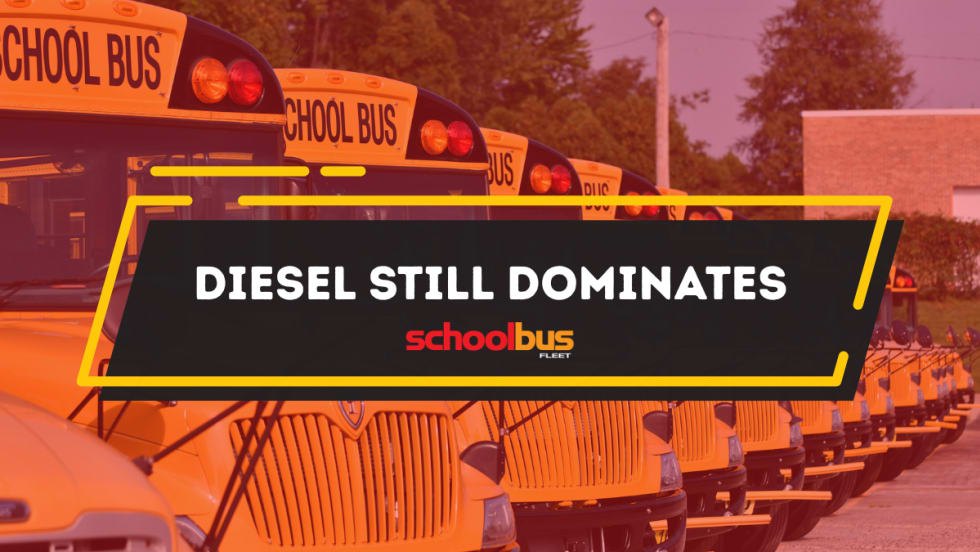
Report: 72% of Diesel School Buses Now Use Advanced Low-Emission Engines
New data shows advanced low-emission diesel technology continues expanding across school bus fleets, even as electric bus adoption gains momentum.
Read More →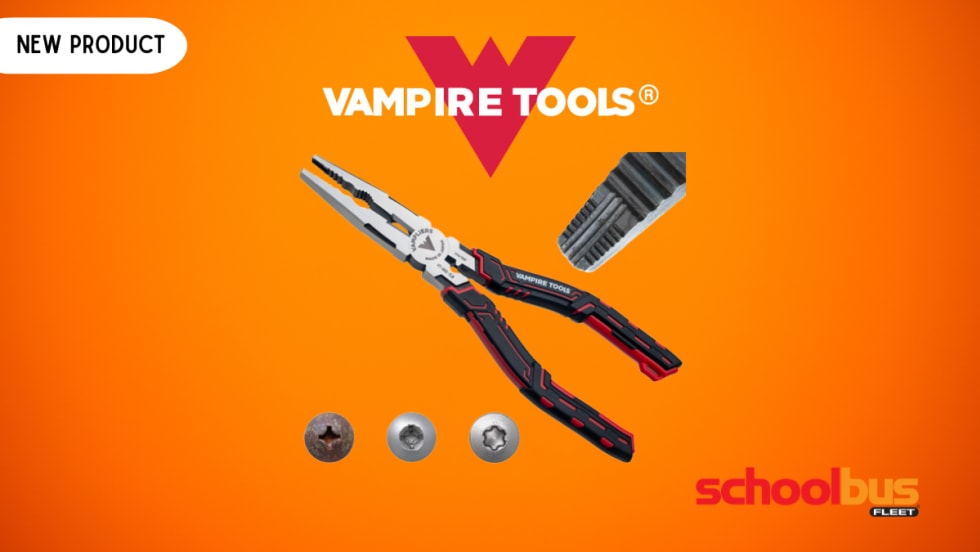
Vampire Tools' CAIMAN 7.5-Inch Multi-Purpose Screw Extractor Long-Nose Pliers with Crimper
Vampire Tools introduced the VAMPLIERS Caiman 7.5-inch multi-purpose pliers, combining screw extraction, cutting, crimping, and gripping functions into a single tool designed for fleet maintenance professionals.
Read More →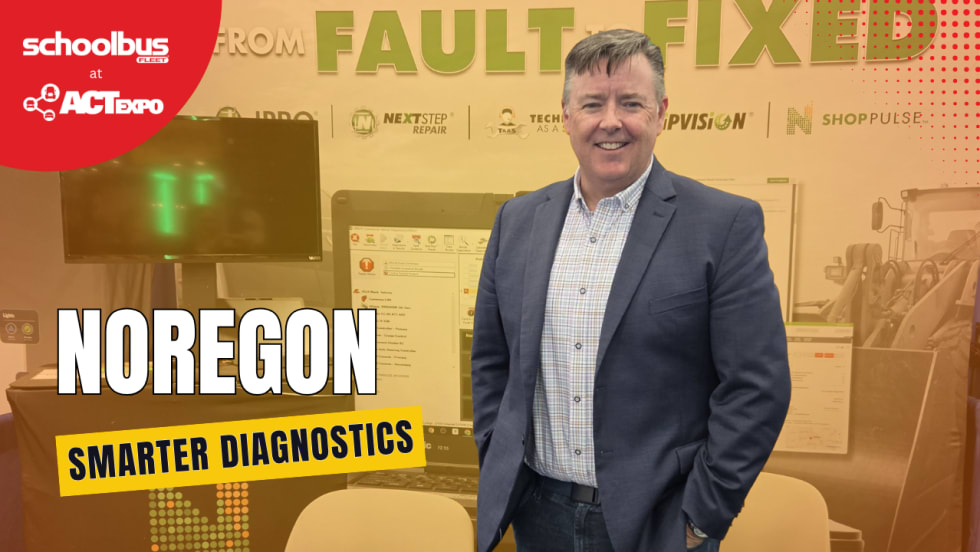
How Advanced Diagnostics Helps Bus Fleets Stay Ahead of Repairs
Chat with Noregon’s Kevin Smallhorn at ACT Expo about bus diagnostic tools, telematics integration, CNG maintenance support, and strategies to help reduce downtime and improve uptime.
Read More →
How School Bus Fleets are Getting Ahead of Breakdowns
Don’t let bus downtime wear you down. Here’s how bus operators are shifting from manual processes to AI-powered, data-driven maintenance systems for improved reliability and safety.
Read More →
Pennsylvania School Bus Maintenance Team Praised for Dedication to Safety
Matthews Bus Company’s West Jefferson received a letter of commendation from the Pennsylvania State Police for their fleet inspections.
Read More →
From Chaos to Clarity: How School Districts Are Running Leaner Transportation Operations
Covering 38 routes on a Friday afternoon. Buses idling while routes overlap. Parents calling nonstop about late arrivals. Sound familiar? This whitepaper explores how district transportation leaders solved these exact problems — and what measurable results followed.
Read More →
2026 School Bus Fleet Vendor Directory & Buyer's Guide
Searching for the right equipment, technology, or services for your school transportation program? This industry guide brings together manufacturers and suppliers across the entire school bus market, all in one place. Download it to find the partners who can help move your operation forward.
Read More →
2026 School Bus Maintenance Survey
What top challenges are school bus maintenance teams facing in 2026? Explore new trends from School Bus Fleet’s annual maintenance survey covering fleet composition and age, fuel types, used vs. new purchasing patterns, technician pay and certifications, and the impact of the driver shortage. Survey sponsor: Dayton Parts.
Read More →