




Diesel is the New Alternative Fuel
With advances in engine technology and fuel formulations, diesel fuel is now just as clean – if not cleaner at the tailpipe – than any other alternative fuel. Today, clean diesel is now the new "alternative fuel."
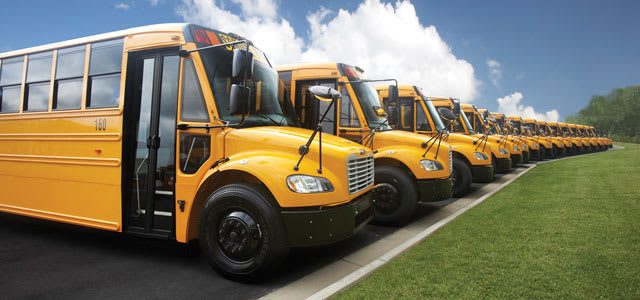
The dominance of diesel fuel has not waned in the school bus industry. Nearly 93 percent of all school buses purchased in the United States and Canada still operate on diesel fuel, despite a higher-than-ever focus on alternative fuel. New lower-emissions diesel engines gearing up for launch in just a few months are expected to further cement diesel’s position as the industry's fuel of choice.
"We are hearing a lot about alternative fuel in the industry right now," said Caley Edgerly, president and CEO of Thomas Built Buses. "However, instead of focusing on the alternative fuel trends, school districts should be talking about which school bus operates efficiently, is better for the environment and saves money on fuel costs. It's always great to have options, but when it comes to fuel choice, diesel remains the best fuel option for fleets today."
Looking back 10, 15, even 20 years ago, it would be unheard-of to call diesel a clean fuel, let alone claim that diesel is just as clean – if not cleaner – at the tailpipe than any other alternative fuel. From a certification standpoint, clean-diesel emissions are ninety percent cleaner at the tailpipe than they were 10 years ago, and today can stand up and even surpass the emission standards of all other alternative fuels. This in part is due to an overall cleaner fuel type and to new advances in engine technology, as well.
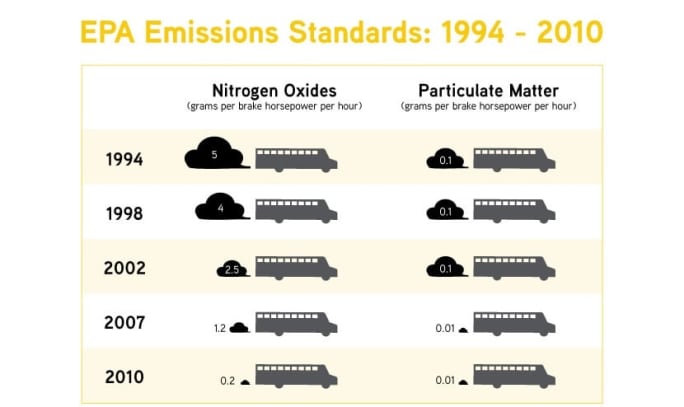
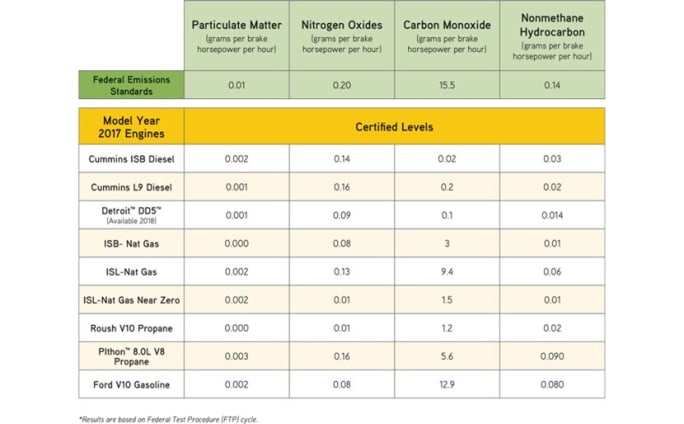
Driven by tougher EPA emissions standards, today's diesel is composed of an ultra-low sulfur formula, which became standard in the United States in 2010. This new diesel formula is estimated to remove 2.6 million tons of nitrogen oxide from the air per year and reduce soot and particulate matter by 110,000 tons per year. Breaking this down to a per-bus standard, diesel today now emits no more than .2 grams per brake horsepower per hour of nitrogen oxides and .01 grams per brake horsepower per hour of particulate matter, which is a dramatic decrease from years past. (Figure 1.1)
From an engine standpoint, the long-awaited Detroit™ DD5™ is set to launch in 2018. This new engine will be revolutionizing the industry with state-of-the-art technology that not only greatly minimizes emissions, but also reduces the headache of aftertreatment maintenance and regen issues that have haunted technicians for years.
"What this means for districts is that they no longer have to seek alternative fuel sources in order to run a more efficient and cleaner fleet," continues Edgerly. "Today's clean-diesel engines, like the Cummins ISB 6.7L and the anticipated Detroit™ DD5™, provide lower emissions and best-in-class fuel efficiency, power, proven performance and reliability, as well as the lowest total cost of ownership. Districts can now feel confident with diesel as their fuel of choice without having to invest in the time and resources needed to switch to a new fuel type."
With new engine specs and a cleaner fuel, the remarkable cleanliness of diesel is in the numbers. As you can see in the table below, which is based on the most recent EPA engine certifications, diesel engines are certified well below EPA emission ratings and perform on par with, if not better than, other alternative fuels. (Figure 2.1)
"When it comes to green fuel, the future is here," concludes Edgerly. "And with new technology paving the way, districts no longer have to give up on the fuel that they prefer to provider cleaner air for their passengers and for the environment. Diesel has definitely become not only a contender in the field of alternative fuel, but today it is leading the pack and remains the fuel of choice."
More Alternative Fuels
Alt-Fuel Moves: Electric Bus Rollouts, Bidirectional Charging & Propane Growth
See which fleets are adding electric and propane school buses as districts and operators invest in charging infrastructure, bidirectional technology, and alternative-fuel expansion.
Read More →
Nobody Told Diesel Prices They Were Supposed to Come Down
With diesel prices surging, school bus fleets have new reason to stress-test fuel costs, consider diversification, and calculate what each route really costs to operate.
Read More →
Why Gasoline School Buses Are Making a Comeback
Gasoline is gaining ground in full-size school buses. See how today’s options stack up against diesel on cost, maintenance, emissions, performance, and more.
Read More →
EPA Opens $180M DERA Funding Round for Diesel Upgrades
The 2026 Diesel Emissions Reduction Act program seeks applications from eligible organizations to accelerate the retirement of legacy diesel vehicles.
Read More →
The Secret Life of an Electric School Bus Battery
Batteries change throughout years of daily routes, but degradation doesn’t necessarily mean the end. Here’s what operators should know about performance, safety, and second life.
Read More →
CALSTART and Forth Combine to Form Catalyst Mobility
The new name represents a renewed vision for the nonprofit focused on advancing clean, equitable, and affordable transportation solutions that move people and goods.
Read More →
Alt-Fuel Moves: New Buses, Charging Hubs & Real-World EV Testing
Propane and electric school bus deployments continue to grow as districts add new vehicles, expand charging infrastructure, and gather more real-world operating data.
Read More →
Fewer Electric School Bus Models Reshape the U.S. Market
WRI’s latest buyer’s guide points to a consolidating electric school bus market, but fewer options may reflect a maturing industry rather than fewer meaningful choices for school bus operators.
Read More →
The Fuel Budget You Can Actually Predict: How Propane Autogas Keeps Money in the Classroom
Learn how propane autogas helps school districts manage fuel costs with predictable pricing, lower maintenance, and reduced emissions from former transportation director Joel Stutheit.
Read More →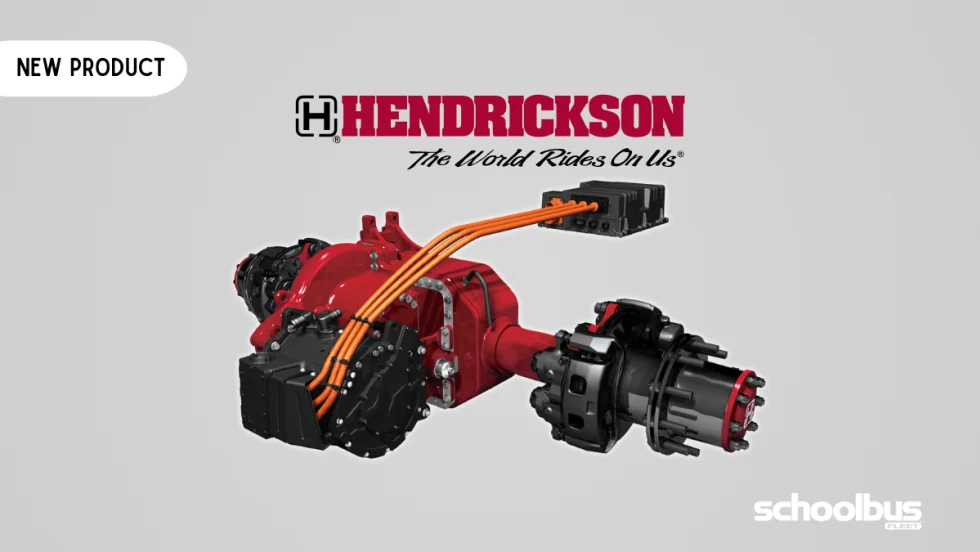
Hendrickson, Driventic Introduce New Electric Powertrain for School Buses
ELECTRAAX, the electrified, lightweight drive axle offers integrated ePowertrain efficiency and modular flexibility for Class 6–7 school bus use.
Read More →