




China Faces Challenges in Bolstering School Bus Safety
A fatal school van crash in China in 2011 confirmed the need for stronger safety measures in transporting students. Industry veterans from the U.S. are sharing their expertise with Chinese counterparts, but the country’s vast population, extreme traffic congestion and other factors present obstacles to implementing an American-style yellow bus system.
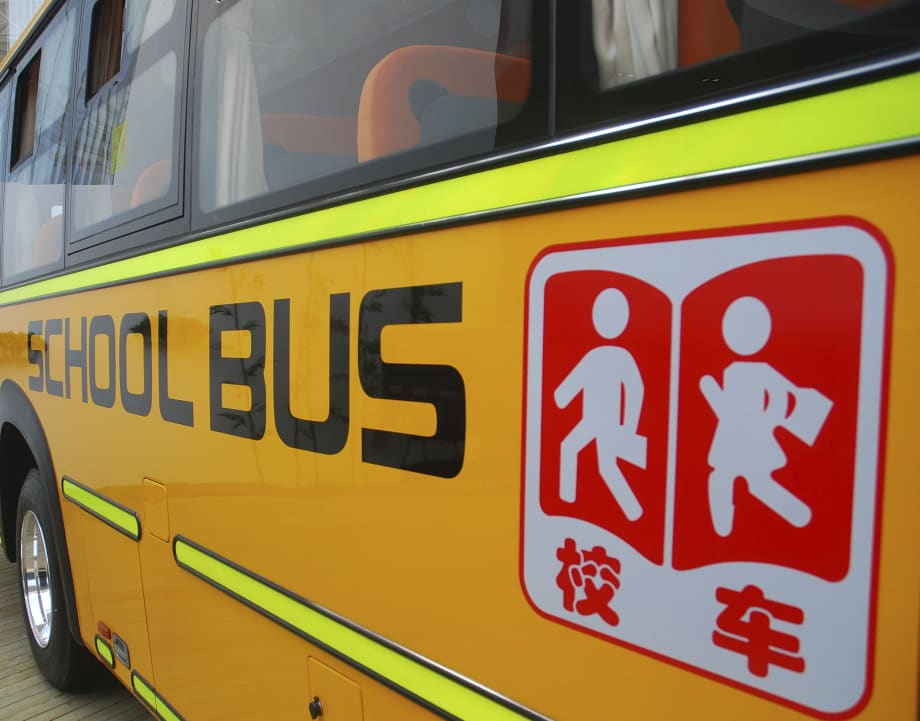
A tragic school van accident in China in 2011 has spurred the country to make changes to increase school transportation safety.
The accident involved a van rated for nine passengers. In this case, the vehicle was loaded with 62 kindergarten students, the driver and a teacher. The van hit a dump truck head-on; 19 students, the driver and the teacher were killed. The person responsible for the safety of the school vehicle received seven years in the Chinese penitentiary.
At the end of the 2013-14 school year, Dr. James Wang from the Chongqing Jiaotong University invited us to present school bus safety information programs to university students and government representatives in Chongqing, the “Mountain City” of China.
The meeting was part of their Production Safety Activities Month, which focused on ways to improve safety for their yellow school buses.
Extreme growth
China is in the unique position of experiencing a transportation boom that is difficult to visualize. In the U.S., we have approximately 480,000 school buses, and China needs to build 1.2 million total school buses. By 2015, they plan to build 50,000 school buses and create improved rules and regulations (focusing on school bus operations, driver training, vehicle maintenance, etc.) for their 34 provinces.
Looking back on U.S. history, our school bus founding fathers must have struggled in 1938 when organizing the 1939 national standards conference. Trying to organize a transportation system in its infancy must have been a formidable challenge within the U.S. with a population of approximately 130.9 million people at the time.
Now imagine about 1.1 billion more people in China (approximate population of 1.2 billion) assembling representatives across their 34 provinces to discuss school bus standards, trying to come to a consensus. Some may have never seen a yellow school bus in person before.
Moving forward
During our trip to China, we spoke at a conference on school bus safety and presented school bus information to local law enforcement officials, Chinese education officials and students who were studying civil engineering at Chongqing Jiaotong University.
We discussed school bus transportation in the U.S., school bus regulations, Federal Motor Vehicle Safety Standards, school bus procedures, and school bus driver and student safety training, highlighting how it can reduce injuries and fatalities.
Dr. James Wang, his professors and his students were gracious hosts and engaged in discussions about the differences between our transportation systems and Chinese school buses. As an example, in China every school bus is required to have a teacher ride the bus to ensure that discipline is maintained. It is hard to imagine this happening in the U.S. for every one of our approximately 480,000 school buses.
This is a best practice that China uses and that operations in the U.S. should consider. While certain school districts, like Buffalo Public Schools in New York state, have a similar situation with a monitor/attendant on every regular-education bus, this is not common in most places within our country. Driving a school bus is a demanding job, and having another adult on the bus (teacher or monitor/attendant) appears to be much safer, as the driver can focus on the most dangerous mile, the one ahead, instead of balancing attention between highway challenges and passenger distractions.
[PAGEBREAK]

This summer, Peter Lawrence (center) and Dick Fischer (right) traveled to China to present school bus safety information. At left, Dr. Lu Baichuan interprets.
U.S. model doesn’t fit all
While China is learning the benefits of using a yellow school bus from the U.S., our eight-way flashing lights that control traffic will not work in their country due to extreme traffic congestion. However, the concept of using yellow as a unified color does make sense, along with increasing bus safety standards.
China has experienced unprecedented growth in automobile traffic. For example, in the 1970s most people in China traveled by bicycle, motor scooter or motorbike. There were approximately 5,000 automobiles, all owned by the Chinese government.
Fast-forward to this year. China has about 260 million automobiles on its roads; nearly 55,000 vehicles are registered per day, adding to the congestion on the nation’s highways.

Peter Lawrence is director of transportation at Fairport (N.Y.) Central School District.
China’s road infrastructure system cannot accommodate the traffic, and they cannot build thoroughfares quickly enough to meet their needs. Even if they could build bridges, overpasses and highways at warp speed, consumer demand has exceeded their construction capabilities due to the sheer number of Chinese people who own cars now and those who will own cars in the future.
The number of new drivers adds to China’s transportation challenges. Driver inexperience, along with adding new regulations in a large country, makes normal driving a challenge. Imagine trying to persuade motorists in an already congested traffic pattern to stop for a yellow bus with its lights flashing to pick up or drop off students. This would be similar to stopping on a six- or eight-lane highway and expecting motorists to stop for the school bus.

Dick Fischer is the owner and president of pupil transportation consulting firm Trans-Consult.
Better routing practices and safety awareness of the yellow school bus are warranted. However, to fit the country’s unique circumstances, China might need to look to nations like New Zealand, where motorists are required to slow down to 20 kilometers per hour (12 miles per hour) when approaching a school bus loading students. Istanbul, Turkey, utilizes a best practice in which students do not cross the street and a hostess (attendant/monitor) walks the students to and from the bus.
It is easy for us as Americans to adopt the paradigm that our way is the best way to achieve success. Certainly, we have an effective model within our country. However, it is not easily replicated in other countries due to different cultural factors.
We feel it is necessary to offer colleagues in other countries our best safety practices, with hopes that they will implement them to protect their passengers. Any bus accident involving students is tragic and reflects poorly on all of us. We are optimistic that working collaboratively can make school transportation safe for all children.
More Management

Zum Reaches 19 States With New York Expansion
The addition of the Empire State to the student transportation company's roster marks a growing expansion in the Northeast as it scales its tech and school bus services.
Read More →
First Student Updates Its Parent App
First View connects both yellow bus and alternative transportation, giving families one platform to track student trips for the new school year, with 15 languages supported.
Read More →
The Back-to-School Checklist Every Director Should Complete Before the First Bell
Help your transportation team start the school year strong with these tips for contingency planning, communication, fleet visibility, technology, and trip management.
Read More →
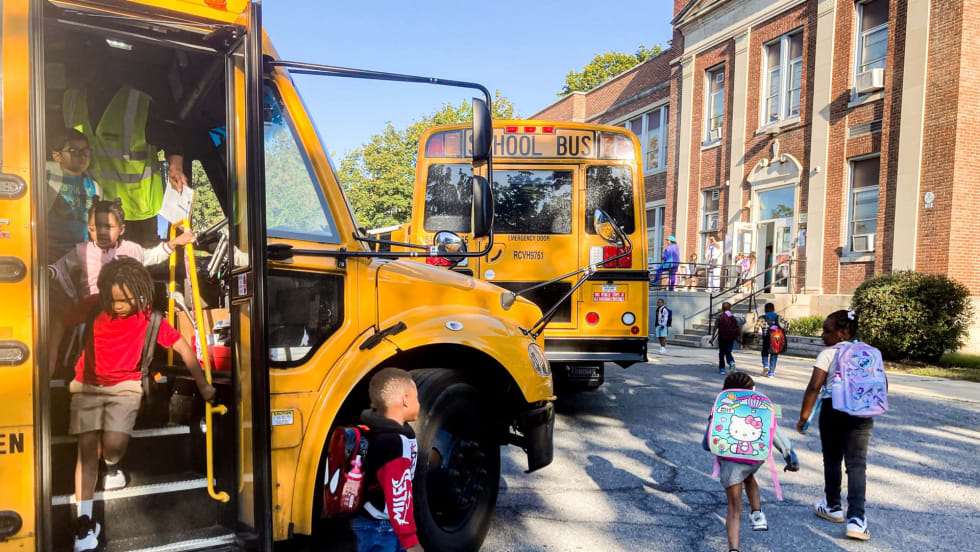
How a New York District Cut Nearly $1M in Transportation Costs While Expanding Bus Access
A data-driven overhaul with BusRight reduced Poughkeepsie City School District's planned routes from 26 to 17 while extending school bus service to about 1,200 additional students.
Read More →
Budgets Down, Enrollment Shifting: What the Data Says Districts Should Watch
School transportation departments face two converging challenges this year: tightening budgets and shifting enrollment. Most districts still address these issues separately, but the assumption that either trend will simplify operations is proving incorrect.
Read More →
These 8 School Transportation Companies Made the 2026 Inc. 5000 List
Find out which school transportation contractors, technology providers, and suppliers ranked among America’s fastest-growing private companies.
Read More →
The Link Between Emotional Intelligence and School Bus Safety
How can emotional intelligence help transportation pros navigate stress, manage change, and build stronger relationships? Listen to find out.
Read More →
What Emotional Intelligence Has to Do With School Bus Safety
In this video, discover how emotional intelligence can help transportation leaders and drivers navigate stress, manage change, and build stronger relationships. The Route is sponsored by IC Bus.
Read More →
Beyond Two-Way Radios: School Bus Communications Evolve With Push-to-Talk Over Cellular
PRYME Radio and PositionPTT join forces to advance hands-free radio use and reduce distracted driving. See how PoC compares with traditional radios on range, cost, safety, and connectivity.
Read More →
Have School Districts Adapted to Bus Driver Shortages or Simply Accepted Less Service?
According to a recent report from HopSkipDrive, many districts appear to have recalibrated what "normal" transportation service looks like.
Read More →