




Beyond Clearing the Air: Emissions Reduction Devices Can Help Extend Bus Life
In addition to helping school buses run more cleanly and efficiently, many retrofit products on the market are designed for easy installation and to reduce engine wear.
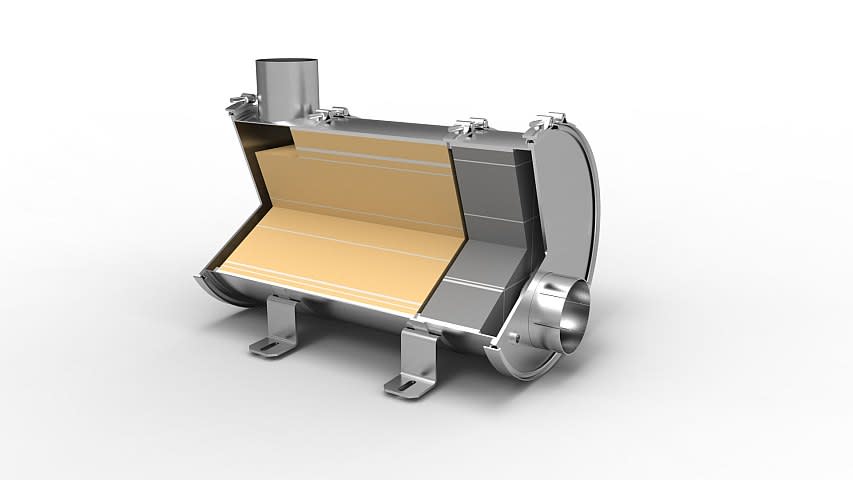
Hug Engineering’s DPF systems are used around the world to reduce harmful emissions.
Hug Engineering’s DPF systems are used around the world to reduce harmful emissions.
Each school bus takes an estimated 36 cars off of the road, reducing traffic and its environmental impact. However, old diesel buses also have a significant impact because of their higher emissions.
The EPA’s Clean School Bus program has been working to protect children’s health across the country by funding projects to reduce emissions. Since many school districts are limited by budget constraints and cannot afford to replace aging buses, installing diesel particulate filters on school buses can be a more budget-friendly option for cutting emissions.
A variety of retrofit products are designed to reduce harmful exhaust from diesel engines in older school buses. These products do more than help the environment; they are also designed to put less wear and tear on the engine, which can help extend the life of the bus.
Here are some emissions control products that are available for school buses.
Hug Engineering
Hug Engineering Inc. develops, manufactures, and engineers emissions control systems to meet the demand for cleaner air. The Swiss company produces diesel particulate filter (DPF) products on a massive scale, with thousands of systems in use worldwide.
The supplier creates products for commercial and municipal trucks, school buses and transit buses, and on- and off-road heavy-duty diesel equipment. With a market share of over 50%, every second retrofit DPF that is sold comes from Hug, says Matt Kilyik, head of sales unit OE applications/retrofit at Hug Engineering.
Newer school buses in the U.S. already have DPF systems installed by the original equipment manufacturer. For pupil transporters that can’t afford to replace their entire fleet, Hug Engineering offers a retrofit DPF for older school buses that do not have the OEM system installed. It is an economic and easily installed retrofit system, with thousands of units already installed in the U.S., according to the company.
Simple maintenance is required for the DPF. Since no combustion is 100% complete, ash residual accumulates in the filter, which needs to be cleaned out periodically. This is accomplished by removing the filter and cleaning the unit, using a cleaning machine that is available at many truck and bus centers nationwide.
For more information, visit www.hug-engineering.com.
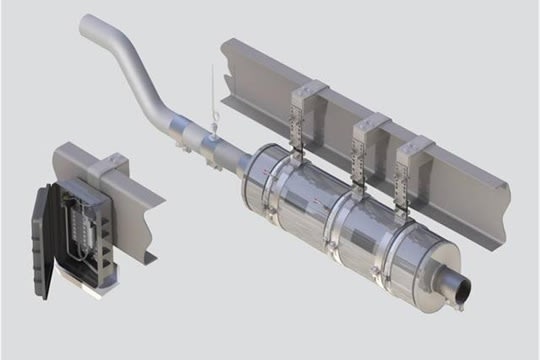
The ThermaCat-e’s filter regeneration takes place in real-time engine operation.
ESW Group
ESW offers three California Air Resources Board (CARB) verified diesel emissions control devices, which are tailored to span the entire school bus duty cycle: the ThermaCat-e, the LongMile-s, and the Horizon diesel particulate filters.
“The North American school bus market is very important to us,” says Adam Gross, director of sales at ESW Group. “Tens of millions of children are transported to school by bus every day and are exposed to very harmful particulate matter emissions.” To effectively capture these pollutants, ESW offers the ThermaCat-e, an active Level 3+ CARB-verified diesel engine retrofit device utilizing exothermic (flameless) technology. It is specifically designed to perform safely with an automatic, electronically controlled filter regeneration, without affecting the engine’s overall performance.
The filter regeneration takes place in real-time engine operation, which offers customers a unique solution for the diesel engine retrofit needs of school transportation providers, Gross says.
ThermaCat-e school bus kits are engineered specifically for each school bus make and model and contain all mounting hardware and accessories necessary for a complete certified installation. The ThermaCat-e requires no operator interaction.
The ThermaCat-e has undergone extensive field and laboratory testing, including crash testing and 1,000-hour destructive vibration durability. It has been engineered to ensure school buses conform to original OEM configuration and remain Federal Motor Vehicle Safety Standard 301S compliant.
The company has retrofitted thousands of school buses, offers installation support to meet tough highway patrol standards, and has an experienced distribution network to supply products to the school bus market, Gross says.
For more information, visit www.eswgroup.com.

The QVector is zip tied to the fuel line to allow for a cleaner, hotter, more efficient combustion process.
Quanta Emissions Technology
Quanta Emissions Technology (QET) creates technology that enables engines running gasoline, diesel, natural gas, or propane to produce less harmful emissions, work more efficiently, and last longer.
The QVector reduces emissions and is inexpensive and easy to install, according to the company. Cleaner combustion translates to better performance, more efficient fuel use, and less wear and tear on the engine parts, says Don Keller, vice president of sales and marketing.
QVector is attached to the fuel line and uses special frequency interactions to help internal combustion engines burn carbon-based fuel more cleanly and efficiently, which reduces emissions, improves engine performance and longevity, reduces maintenance costs, and may increase fuel efficiency. It works with any combustion engine that burns gasoline, propane, natural gas, or diesel.
In officially certified smog facilities, emissions reductions ranged from 30% to 97%. An average for seven California vehicles showed immediate reductions of 43% in oxides of nitrogen (NOX) and 40% in hydrocarbons (HC).
QET offers six product sizes for different engine sizes and fuel tanks. Products are reasonably priced and can be installed by anyone without using any special tools. All products are guaranteed to reduce emissions for at least two years, Keller says.
During a four-bus test in Cleburne, Texas, QET found an average drop in NOX of 80% and an average drop in carbon monoxide of 43%. HC remained about the same and carbon dioxide rose, indicating that the engines ran cooler and more efficiently. A two-week fuel consumption test indicated an average increase in fuel efficiency of 2.8%.
For more information, visit www.quantaemissions.com.
More Maintenance
The Essential Guide to School Bus Maintenance and Student Safety
Your district's buses carry students to school every day. This guide shows how predictive maintenance powered by fleet data helps keep buses reliable, drivers accountable and students safer from the first bell to the last stop.
Read More →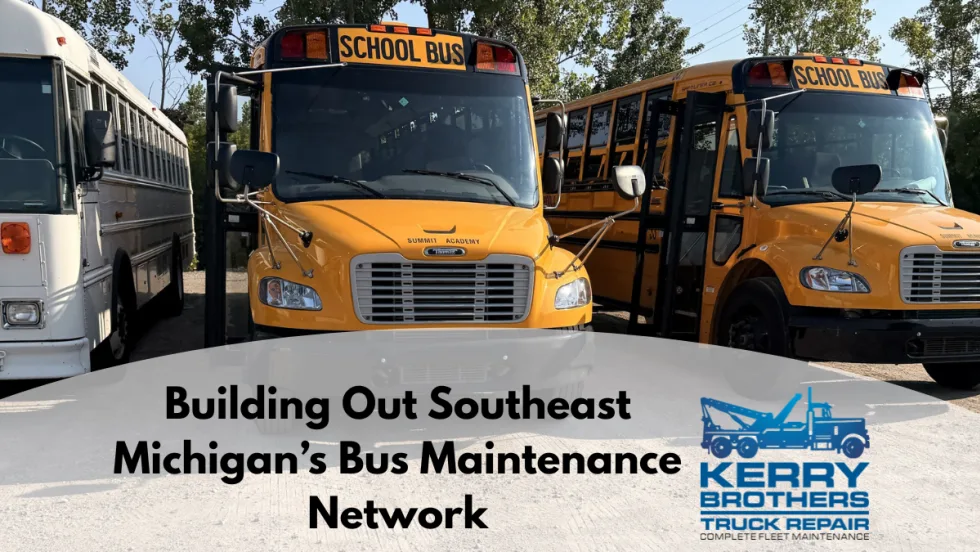
Kerry Brothers Grows Michigan School Bus Repair Network
The acquisition of Downriver Truck and Bus expands Kerry Brothers’ school bus maintenance footprint across southeast Michigan, adding repair capacity, diagnostic resources, and state inspection support.
Read More →
Noregon Introduces CAN Bus Diagnostic Tool, Expands JPRO Features
CAN Mentor and the latest JPRO update aim to simplify vehicle network diagnostics and improve repair efficiency for technicians of all experience levels.
Read More →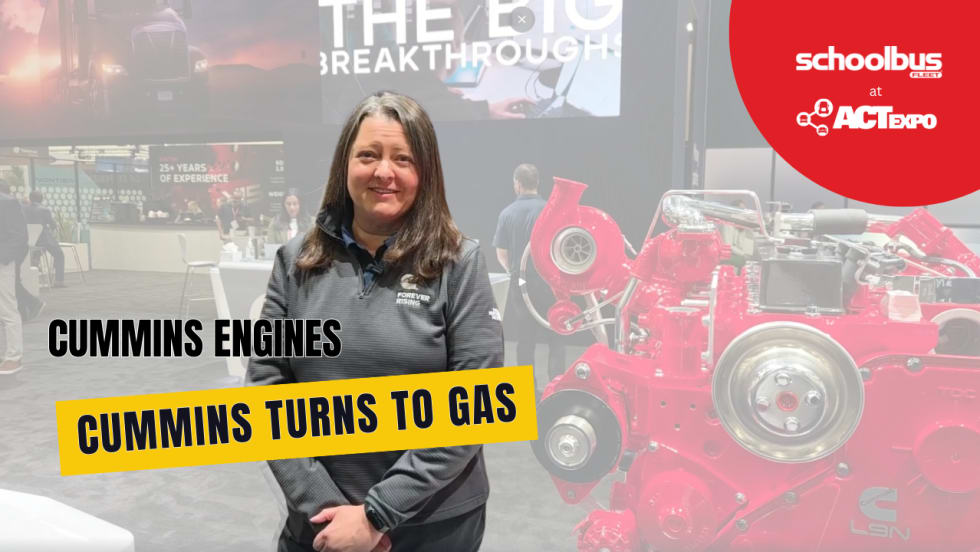
Cummins on Smarter, Simpler Engine Innovation
Cummins discusses its first-ever gasoline engine for school buses, EPA 2027, and why bus fleets still want durable, simpler internal combustion options.
Read More →
Report: 72% of Diesel School Buses Now Use Advanced Low-Emission Engines
New data shows advanced low-emission diesel technology continues expanding across school bus fleets, even as electric bus adoption gains momentum.
Read More →
Vampire Tools' CAIMAN 7.5-Inch Multi-Purpose Screw Extractor Long-Nose Pliers with Crimper
Vampire Tools introduced the VAMPLIERS Caiman 7.5-inch multi-purpose pliers, combining screw extraction, cutting, crimping, and gripping functions into a single tool designed for fleet maintenance professionals.
Read More →
How Advanced Diagnostics Helps Bus Fleets Stay Ahead of Repairs
Chat with Noregon’s Kevin Smallhorn at ACT Expo about bus diagnostic tools, telematics integration, CNG maintenance support, and strategies to help reduce downtime and improve uptime.
Read More →
How School Bus Fleets are Getting Ahead of Breakdowns
Don’t let bus downtime wear you down. Here’s how bus operators are shifting from manual processes to AI-powered, data-driven maintenance systems for improved reliability and safety.
Read More →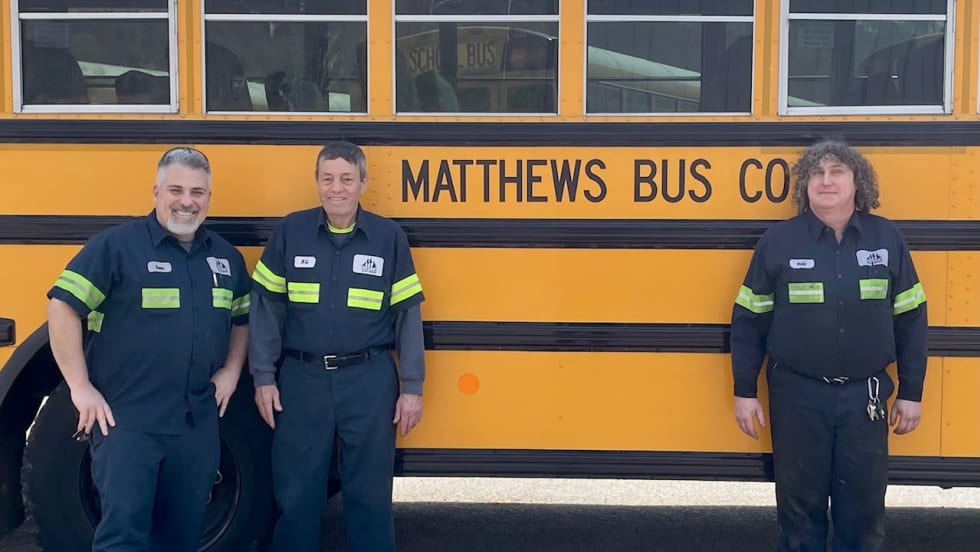
Pennsylvania School Bus Maintenance Team Praised for Dedication to Safety
Matthews Bus Company’s West Jefferson received a letter of commendation from the Pennsylvania State Police for their fleet inspections.
Read More →
From Chaos to Clarity: How School Districts Are Running Leaner Transportation Operations
Covering 38 routes on a Friday afternoon. Buses idling while routes overlap. Parents calling nonstop about late arrivals. Sound familiar? This whitepaper explores how district transportation leaders solved these exact problems — and what measurable results followed.
Read More →