




Arkansas workshop lifts maintenance standards
For the past 47 years, the Arkansas School Bus Mechanics Workshop has offered some of the best training available in school transportation.
Successful businesspeople know that one of the keys to success is hiring a well-trained staff. Joe Edison was such a businessperson. While working for the Arkansas Department of Education as state pupil transportation director, he recognized the need for well-trained school bus mechanics to keep the state's fleet of school buses safe and dependable. After consulting with school bus mechanics in the state, Edison formed the Arkansas School Bus Mechanics Association (ASBMA) in 1950. A year later, he helped to develop the Arkansas School Bus Mechanics Workshop. For the past 47 years, the workshop has offered some of the best training available in school transportation. The first workshop attracted 80 to 85 people. These days, more than 300 technicians, including more than a dozen from outside Arkansas, attend the week-long workshop. More than 50 classes are offered during the week, with schedules arranged to enable mechanics to attend desired courses.
Full schedule for participants
The following is a typical workshop schedule. Registration and breakfast begin at 6 a.m. Classes begin at 8 a.m. and continue until 5 p.m. from Monday through Thursday. On Friday, classes are held from 6 a.m. until noon. Scheduled activities are sponsored throughout the week by various vendors. All meals are provided and are catered by local restaurants. The participants are offered a wide variety of classroom and hands-on courses. Many of the classes focus on individual problems and solutions and provide significant interaction between the instructors and the students.
Class sessions range in length from 105 minutes for a presentation such as "How to Get ASE Certified" to three days for intensive training in how to overhaul an Allison transmission. The annual workshop provides more than technical knowledge. One of its benefits is the common bond that develops among the participants. They can share helpful tips about equipment, repairs or new technology. At the close of the workshop, each Arkansas school bus mechanic receives a certificate for 36 hours of training in the fields they have chosen. These clock hours are accumulated from year to year with special recognition given to mechanics who accrue 500 or 1,000 hours. The ASBMA has the privilege of conducting its workshop on the campus of Conway Public Schools, which is centrally located and easily accessible to all school districts. School district officials and the entire community make our stay a pleasant one.
DOE provides funding
The workshop is primarily funded through the Arkansas Department of Education. Registrants pay a $70 fee, which includes access to classes and all meals. The ASBMA and its workshop are 48 years old and still going strong. Their longevity is due in part to a shared belief that good training is the key to success. Since the 1987-88 school year, when records first started being kept, there have been no known mechanically related accidents in Arkansas. For information on the workshop, contact Fred Davis, President, ASBMA, P.O. Box 382, Prescott, AR 71857. The phone number is 870/887-3221.
Fred Davis is transportation supervisor at Prescott (Ark.) School District and president of the Arkansas School Bus Mechanics Association.
More Maintenance
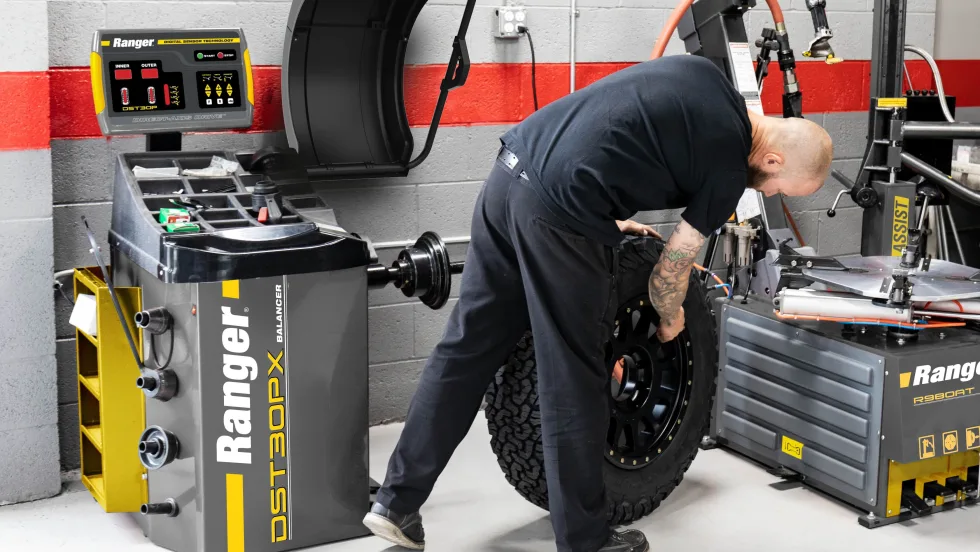
BendPak Launches Ranger DST30PX Wheel Balancer
BendPak's new wheel balancer handles tires up to 43 inches in diameter, with a reinforced design, precise weight placement, and faster service cycles.
Read More →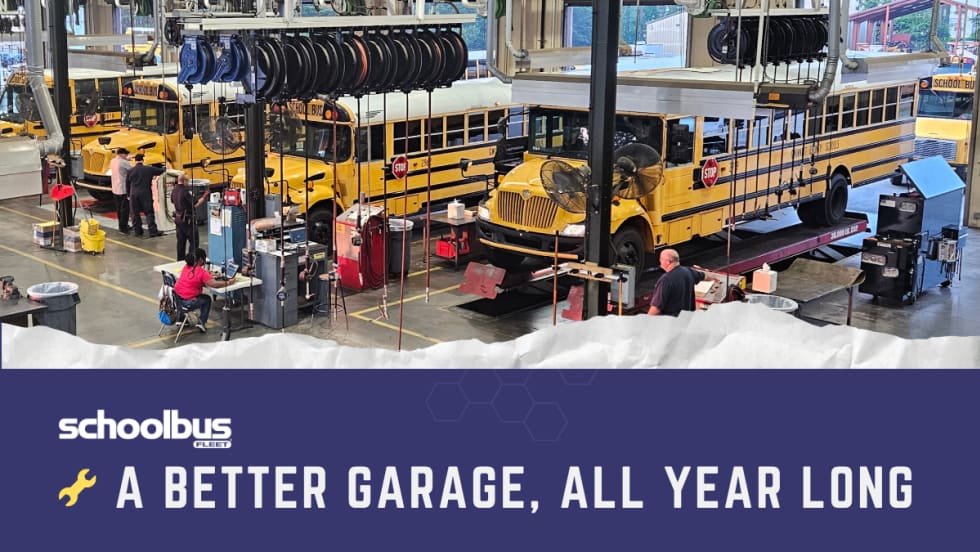
Tips for Ensuring School Bus Garages Are Safe and Warm Year-Round
Cold maintenance bays and rising heating costs? Learn how school bus garages can improve comfort with targeted heating, better airflow, and winter preparation.
Read More →
ASE Highlights School Bus Technician Certification Requirements
ASE is encouraging school bus maintenance professionals to maintain their certifications, highlighting seven specialized tests and five-year renewal requirements.
Read More →
International Adds E-Commerce Capabilities to Fleetrite.com
IC Bus customers can now browse, buy, and track shipments for more than 400,000 aftermarket parts online.
Read More →
The Most Expensive Thing You Do Before Selling a School Bus: Wait
When should you sell an aging school bus? Learn how maintenance, mileage, corrosion, specifications, and timing can affect resale value long before the auction.
Read More →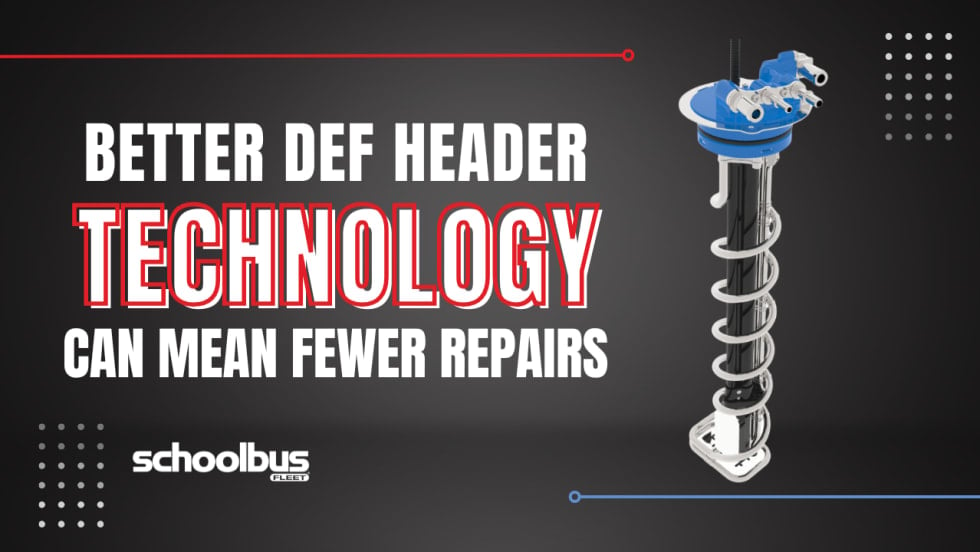
The Evolution of DEF Header Technology: What School Bus Operations Should Know at Replacement Time
See what school bus fleets should consider when replacing DEF headers to improve reliability, reduce repeat repairs, and control maintenance costs.
Read More →
The Essential Guide to School Bus Maintenance and Student Safety
Your district's buses carry students to school every day. This guide shows how predictive maintenance powered by fleet data helps keep buses reliable, drivers accountable and students safer from the first bell to the last stop.
Read More →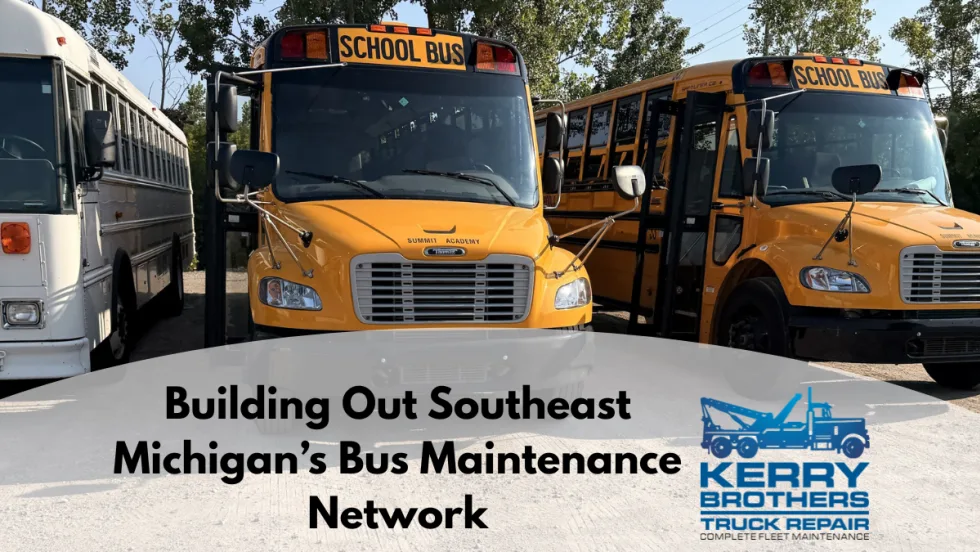
Kerry Brothers Grows Michigan School Bus Repair Network
The acquisition of Downriver Truck and Bus expands Kerry Brothers’ school bus maintenance footprint across southeast Michigan, adding repair capacity, diagnostic resources, and state inspection support.
Read More →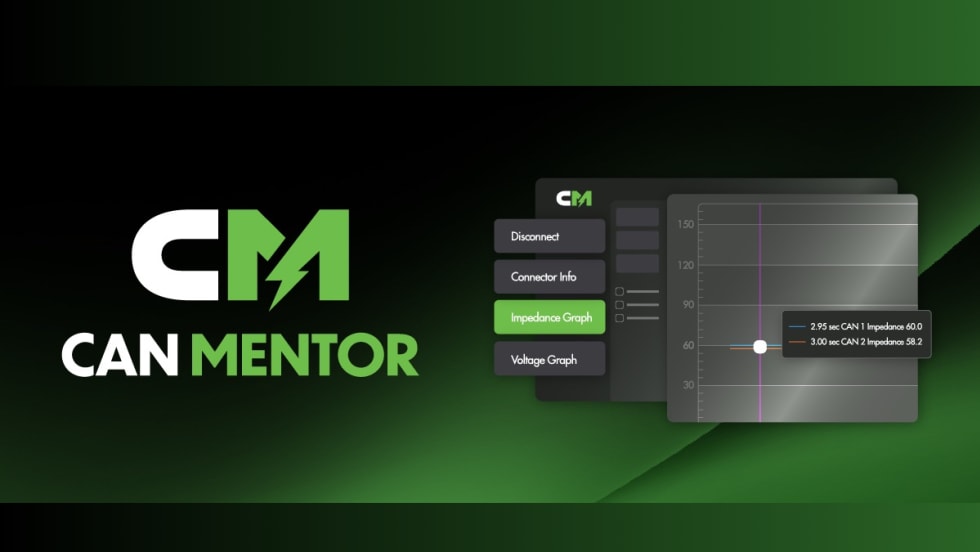
Noregon Introduces CAN Bus Diagnostic Tool, Expands JPRO Features
CAN Mentor and the latest JPRO update aim to simplify vehicle network diagnostics and improve repair efficiency for technicians of all experience levels.
Read More →
Cummins on Smarter, Simpler Engine Innovation
Cummins discusses its first-ever gasoline engine for school buses, EPA 2027, and why bus fleets still want durable, simpler internal combustion options.
Read More →