





Read More: Report: U.S. Electric School Bus Deployment Over 1,700 and Climbing
5 Questions: Brianna Walsh Wants to Lower Hurdles for Fleet Electrification
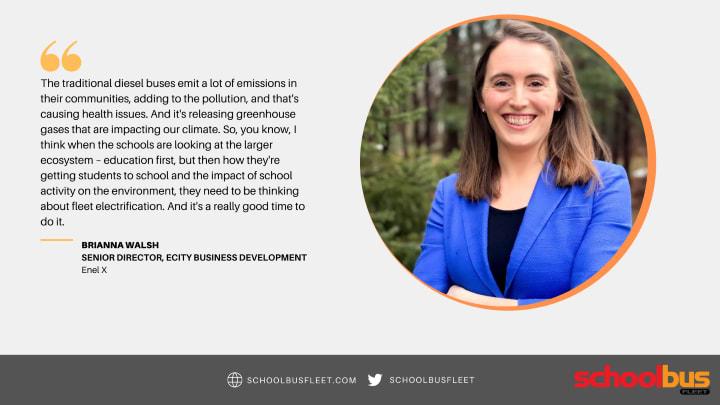
Brianna Walsh, senior director of eCity business development for Enel X, works with school districts to help them overcome obstacles to making the shift from diesel to electric school buses.
April 4, 2022
6 min to read
Brianna Walsh enjoys solving problems, so she used her mathematics degree from Colby College in Maine and her MBA from Cornell University in New York to kick off a career that now sees her working for Enel X as senior director of business development.
“Numbers always made sense to me and were fun, and best to play to strengths,” she says. “Mathematics taught me about problem solving. Learn rules of the game as it became increasingly more complex and how to apply to each goal. I was drawn to it because it allowed me to solve complex problems with logic.”
In her spare time, she gets outside with her three children, tours bakeries and cafes, plays soccer, and solves crossword puzzles.
In this interview with School Bus Fleet, excerpted from Episode 20 of The Route podcast, Walsh discusses the importance of fleet electrification and the challenges school districts must overcome to make the clean bus transition.
Why do you think fleet electrification is so important? Why is it so critical for school districts to think about this?
It's a secondary thought, at best, for school districts, right? I mean, schools, their prime objective is educating students and that will remain true. We know schools care also about sustainability objectives, and that goes really well with transportation. There are over 500,000 school buses in the U.S. and a very small percent of them are electric. I think we're just about at 1% today. And we know the benefits of electric school buses. The traditional diesel buses emit a lot of emissions in their communities, adding to the pollution, and that's causing health issues. And it's releasing greenhouse gases that are impacting our climate. So, you know, I think when the schools are looking at the larger ecosystem – education first, but then how they're getting students to school and the impact of school activity on the environment, they need to be thinking about fleet electrification. And it's a really good time to do it.
What are the primary hurdles that you see school districts facing when they're thinking about this transition to battery-electric buses?
As we're talking schools, really there are two top challenges. The first is budget and the second is change, and it's complex change. On the budget, that is always a tough issue for schools. We know across the board schools need more funding. And when it comes to transportation, they don't have the ability to spend more. Electric buses still cost three times as much as diesel buses. At Enel X, we have a turnkey offering to try to help schools not need to make an upfront purchase of an electric bus. We make that purchase, keep that capital asset on our books, and give the use of that bus and the charging infrastructure to the school for a fixed annual fee across a multiyear contract. The second part, the aspect of change, that's the toughest part. And because any change is tough, especially when you're going from something where you're used to using a certain fueling source to an electric source, there's a lot of complexity there.
Now, not too long ago, Congress passed President Biden's infrastructure act, which includes $5 billion over the next five years for zero-emission buses, including electric. What impact do you expect this new law to have on school districts that are trying fleet electrification?
We are really excited about the funding that's coming out. And the Clean Bus Program, about $5 billion, is exciting. There are other areas that we’re also really interested in. I'll share that one of our main products in the U.S. is electric vehicle chargers. We make level two, level three chargers and sold over 100,000 of them in the US and they pair really well with school buses. You can also buy one for your own home if you're, ready to have an electric vehicle. But there is going to be so much more installation of electric vehicle chargers for public use in corridors. There's already a lot in certain states across the U.S. But a lot of that funding is to really push it across all states. And to make it more accessible. I think schools should keep that in mind because there's some concern here as we have just one bus and one charger, you know, what happens? But more and more, it'll be like it'll be the same way there are gas stations in other parts of your town. There are also charging stations. And if they're not there yet, I think some of this funding is going to bring a lot more.
Different districts have different needs and they have varying capacities for handling electric school bus infrastructure. How does Enel X approach working with rural school districts, for example, as opposed to an urban or suburban district?
I think our approach when we're talking with schools is to generally start with a get-to-know-you conversation. Some of the schools that we're talking with, we've done prior activity with, but we're helping them see whether electric buses meet their needs. With rural districts, that can be something we need to look a bit more closely at with routes, if they're doing longer routes. But urban districts have challenges too. They're just a little different. We see some urban districts more constrained on land there. They don't often own the land, and so thinking about making an investment into land that is leased is not always an approachable answer.
When it comes to that procurement process, your company actually takes on the asset, right? One of the things that the school district has to do is pay an annual fee on a contract. What is the annual fee and how is that determined?
Our activity in the U.S. with schools or transit or private fleets is very similar to some of the deployments that we've done in South America. We manage and serve over 1,700 electric buses. And our activity there is similar to what we're doing here with schools where we purchase the bus, we purchase the charging infrastructure, which for mostly school buses, we can use our own chargers that we are manufacturing, and the software that goes with them, and we take on the investment of the installation. And this is always a very custom thing for each school. We factor in the maintenance over time. Generally, electric buses have lower maintenance costs than diesel buses. And we also have a team that is regularly looking at grants and rebates. We will also look at grid services. Part of our company is regularly working with commercial industrial customers in demand response programs. We'll look at that full cost of how much it's going to take upfront to get the buses and infrastructure, what is the ongoing cost, and are there any ways to kind of offset that cost through grants rebates and incentives? And we'll use that to calculate a fixed amount across a five, seven, 10-year contract for a school so that they have that certainty of what that annual cost is. And we manage making sure that we can then execute and deploy that project, keeping with our expectations.
Subscribe to Our Newsletter
More Alternative Fuels

CALSTART and Forth Combine to Form Catalyst Mobility
The new name represents a renewed vision for the nonprofit focused on advancing clean, equitable, and affordable transportation solutions that move people and goods.
Read More →
Alt-Fuel Moves: New Buses, Charging Hubs & Real-World EV Testing
Propane and electric school bus deployments continue to grow as districts add new vehicles, expand charging infrastructure, and gather more real-world operating data.
Read More →
Fewer Electric School Bus Models Reshape the U.S. Market
WRI’s latest buyer’s guide points to a consolidating electric school bus market, but fewer options may reflect a maturing industry rather than fewer meaningful choices for school bus operators.
Read More →
The Fuel Budget You Can Actually Predict: How Propane Autogas Keeps Money in the Classroom
Learn how propane autogas helps school districts manage fuel costs with predictable pricing, lower maintenance, and reduced emissions from former transportation director Joel Stutheit.
Read More →
Hendrickson, Driventic Introduce New Electric Powertrain for School Buses
ELECTRAAX, the electrified, lightweight drive axle offers integrated ePowertrain efficiency and modular flexibility for Class 6–7 school bus use.
Read More →
The Mobility House Joins PowerFlex in Fleet Electrification Deal
The acquisition combines intelligent charging software, bidirectional charging expertise, and fleet electrification services to support the growing adoption of electric school buses across North America.
Read More →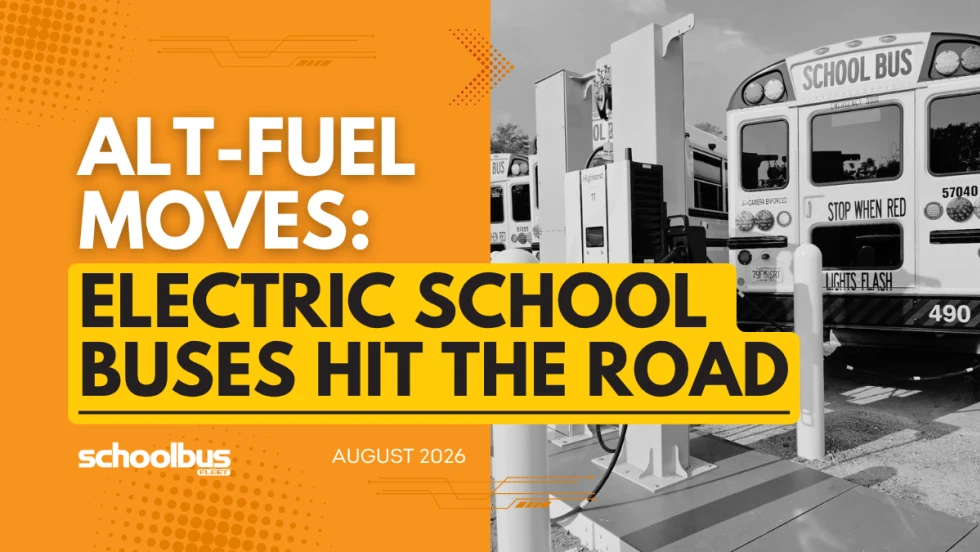
Alt-Fuel Moves: Electric School Bus Investments Hit the Road
See which districts across the U.S. are putting electric school buses into service, expanding charging infrastructure, and planning the next phase of fleet electrification.
Read More →
With Fuel Volatility Ahead, School Districts Turn to Propane
While diesel prices peaked above $5 this spring, districts with propane autogas-powered fleets paid under $2 per gallon, according to PERC.
Read More →
EPA Unveils Proposed Changes to 2027 Heavy-Duty Engine Rules
The federal agency has proposed changes to next year’s targets that would eliminate DEF derates, ease warranty requirements, and retain current NOx emissions standards.
Read More →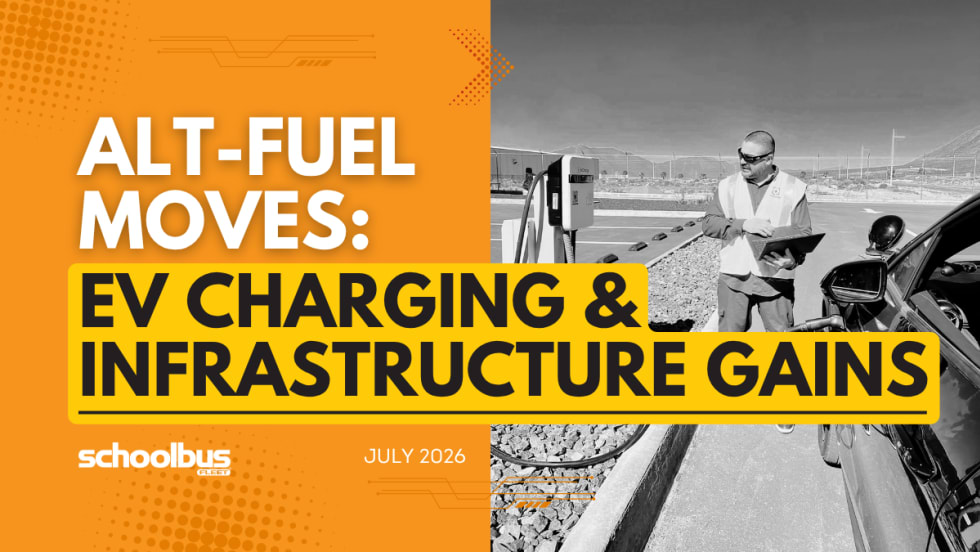
Alt-Fuel Moves: EV Charging & Infrastructure Projects Gain Momentum
The latest developments include new funding, charging infrastructure, utility investments, and fleet technologies designed to support the transition to electric school buses nationwide.
Read More →