




Related: STA Recognizes Boy With Autism for His Dedication to School Buses
5 Questions: Anthony Pollard on Special-Needs Service, Bolstering Driver Training
Pollard talks about creating a successful annual driver training event, his passion for serving special-needs students, and the “special ride” he was able to coordinate for a student with autism.

Nicole Schlosser・Former Executive Editor
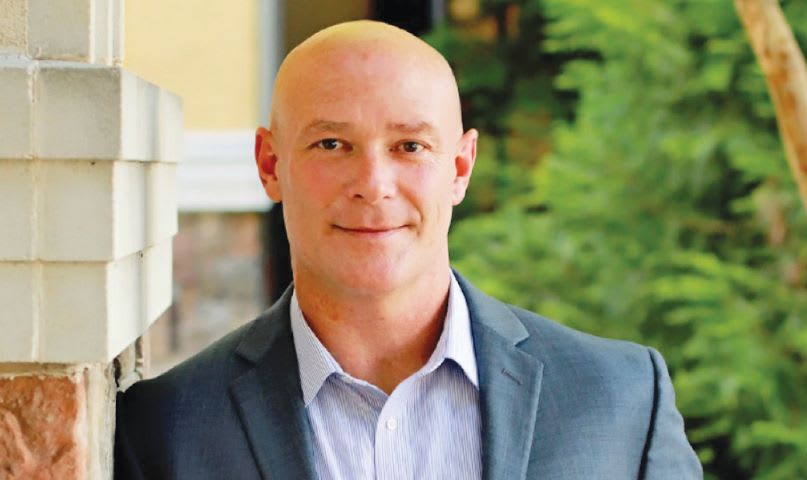
Anthony Pollard says that he worked with his district’s special-education department to “create a bond and teamwork that I believe is without equal.”
4 min to read
Anthony Pollard says that he worked with his district’s special-education department to “create a bond and teamwork that I believe is without equal.”
While serving in Operation Desert Storm, Anthony Pollard, who is now the transportation supervisor for Baldwin County (Ala.) Public Schools, developed a desire to work with children. From there, he earned two degrees in education, became a teacher and then a school administrator. He soon found himself drawn to the transportation side of serving students. Ever since, he has thrived on the logistical challenges involved and worked on strengthening training and a relationship with the special-education department.
In this interview with SBF, Pollard talks about creating a successful annual driver training event, his passion for serving special-needs students, and the “special ride” he was able to coordinate for a student with autism, fulfilling a longtime dream for the boy.
1. How did you get your start in pupil transportation? Had you worked in another field before?
I began my career in the military. I gained many valuable life experiences and a strong desire to serve children during my time serving in Operation Desert Storm. That led me to become a schoolteacher. I completed my Bachelor’s in Education and taught school for several years before completing my Master’s degree in Administration and School Management.
I have served as a school administrator at all three levels of education: elementary, middle, and high school. As an assistant principal for our district, I worked directly with the transportation department and had become attracted to the logistics side. When the transportation supervisor position opened in June 2015, I applied and was hired. Our transportation coordinator, Mike Vivar, asked me to bring in new ideas and a progressive mindset to improve our department. He took a chance on me and has allowed me to flourish in this new role.
2. You recently arranged for Wyatt, a special-needs student, to have a “special” ride on one of the district’s school buses. How did that come about?
Wyatt’s ride was an opportunity to help a young man on the autism spectrum realize his dream. The idea was kindled when the bus driver who serves Wyatt’s school talked to me about his desire to ride the bus. One of my passions is special-needs transportation; our department has a powerful working relationship with special-needs supervisors and coordinators. As a former school administrator, I saw a void and have worked directly with our special-education department to create a bond and teamwork that I believe is without equal.
This was also an opportunity to shed some positive light on a sensitive subject. Everyone, including the bus driver, para-educators (bus assistants), parents, transportation department, and the school worked as one to create this unique experience for Wyatt. (Read more about Wyatt’s ride here.)
3. Your district has held an annual School Bus Driver Symposium since 2015. What does this event entail?
Our district’s first School Bus Driver Symposium gave our department national recognition as one of a few that have done this type of training and it has grown into a yearly event.
As part of the annual symposium, we have had first responders train our drivers on how to safely remove children from an overturned bus and taught first responders about the safety specifications on our buses. We have put a bus underwater for dive teams to practice rescuing children trapped in a submerged bus. We trained our staff on using fire extinguishers and evacuating children from a smoking bus.
Each year we want the drivers to experience situations that may happen while driving a school bus so they know how to handle them with a calm demeanor.
Our symposium is not only a training exercise; it is also an end-of-the-year celebration to thank our bus drivers and para-educators for a job well done. Our vendors provide a cookout, and our route specialist and trainers voluntarily work additional hours to collect donations and gifts for our drivers.
4. What do you like most about working in pupil transportation?
The people. Working with such a caring group of bus drivers, mechanics, and staff who are devoted to providing the safest transportation service brings me joy. Pupil transportation is not as easy as one may think. The population and demographics are ever-changing, and the logistics of providing transportation in a school district with a service area of nearly 2,200 square miles and about 16,000 bus riders daily can be daunting. That is what brings me happiness, though. The constant challenges and the ability to solve problems and create programs that help our department improve at all levels is wonderful.
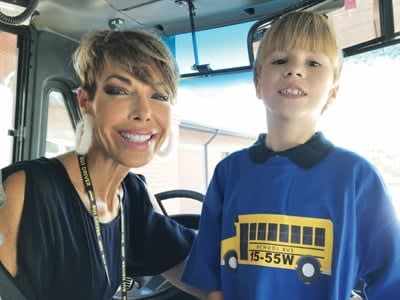
Pollard spearheaded a “special” school bus ride for Wyatt, who is shown here with bus driver Grace Tyler. Photo courtesy Baldwin County (Ala.) Public Schools
5. What was the highlight of 2019 for you?
Wyatt’s ride. We got to share a wonderful experience with a child who may deal with bullying, and probably at times feels out of place in this world. His joy, and the joy it brought to his family, classmates, and our department, was enough to make 2019 a success.
In addition, we have encouraged service to others in our department. This year, our department sponsored a family assigned by Big Brothers Big Sisters for Christmas. It was an emotional time for me as our department raised over $750 for them to have a joyful holiday.
Subscribe to Our Newsletter
More Special Needs Transportation
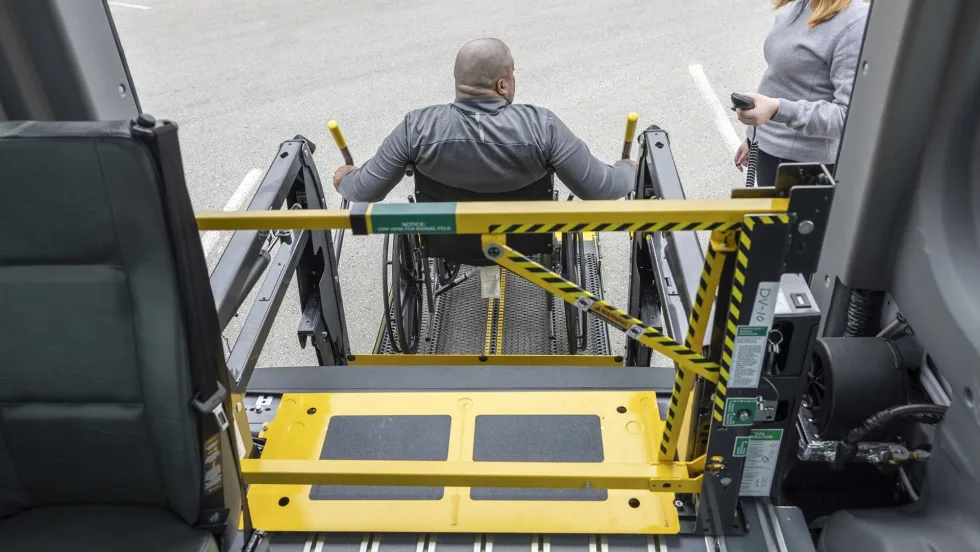
BraunAbility Introduces New Safety Barrier for Wheelchair Lifts
LiftSentinel is designed to add another layer of protection during wheelchair loading and unloading and can be retrofitted to many existing commercial lift installations.
Read More →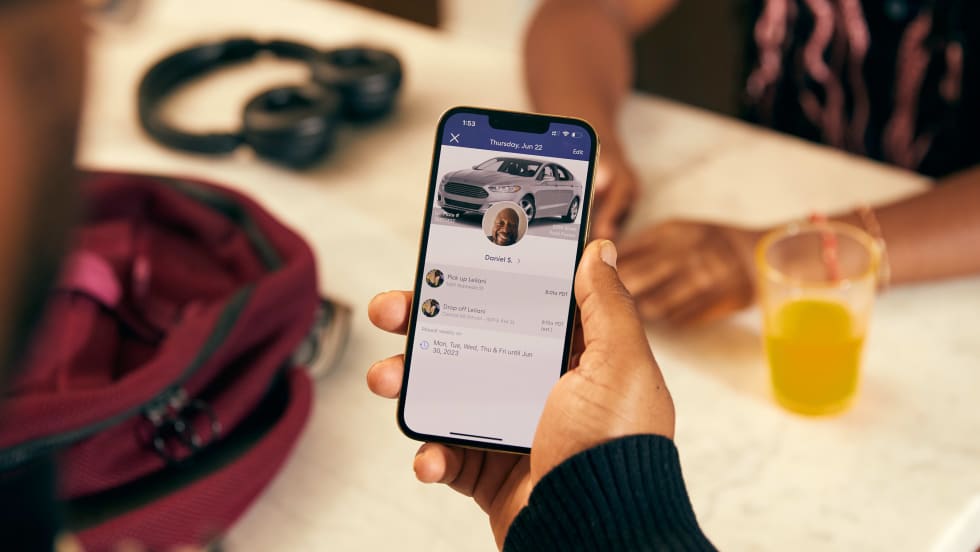
HopSkipDrive Launches New Safety, Driver Consistency Features for 2026-27 School Year
The company’s free ride recording, live ride tracking, and consistent driver assignments aim to improve safety and continuity for diverse student transportation needs.
Read More →
The Most Common Wheelchair Securement Mistakes on School Buses (and How to Fix Them)
Small missteps in wheelchair securement can have serious consequences. Here are 32 tips from experts to reduce risk and increase student safety on the bus.
Read More →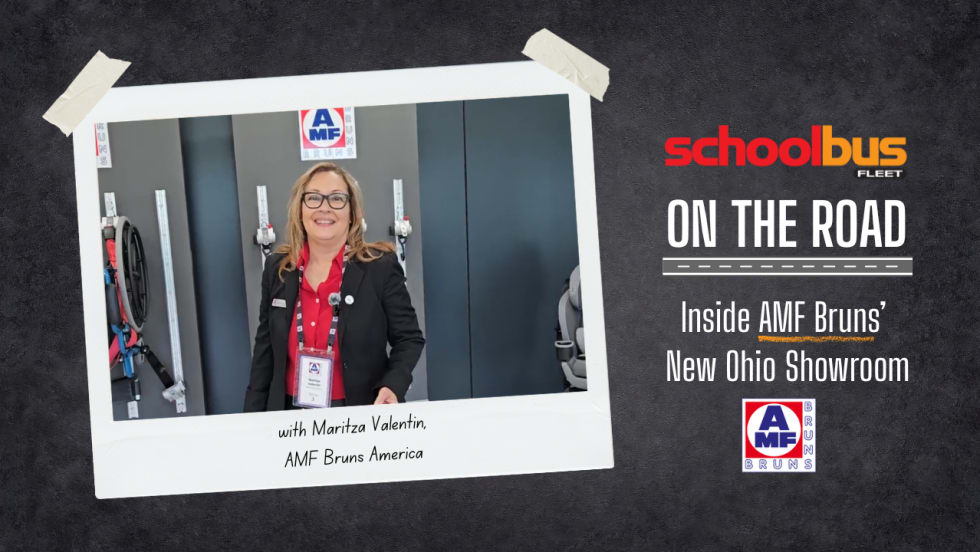
Inside AMF Bruns’ New Showroom: School Bus Securement Solutions Explained
Go inside AMF Bruns America’s new Ohio showroom with Maritza Valentin to see its FutureSafe technology, driver training tools, securement systems, and seating innovations.
Read More →
What AMF Bruns’ New Facility Means for Customers [Video]
Inside AMF Bruns’ new Stow, Ohio, operations: See how expanded space and innovation will enhance customer support and operations.
Read More →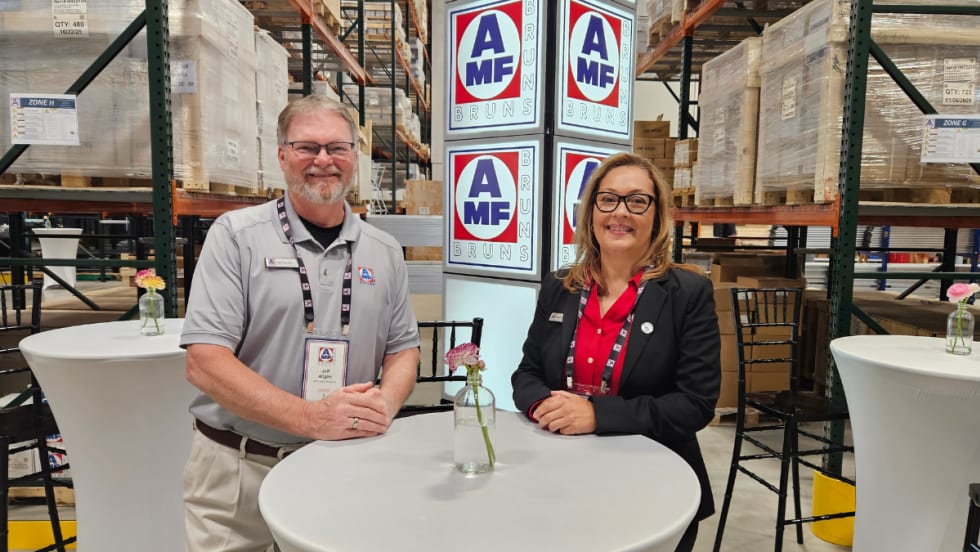
AMF Bruns Expands in Ohio, Investing in Growth and Community
With expanded production space, local investment, and a growing workforce, AMF Bruns is scaling its U.S. presence. Here’s an exclusive first look inside the new Stow, Ohio, HQ.
Read More →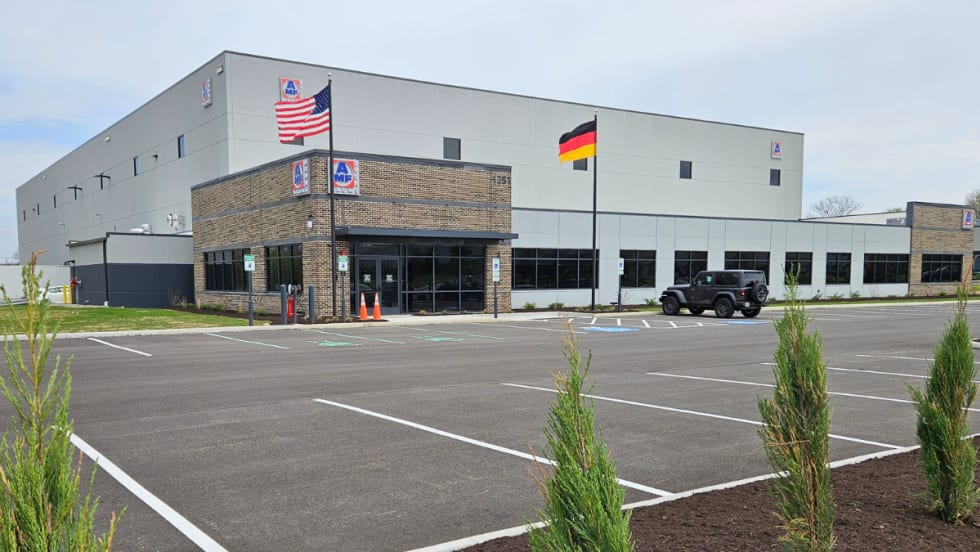
Inside AMF Bruns of America’s New Ohio Manufacturing Facility [Photos]
Take a behind-the-scenes look at AMF Bruns of America’s new 41,000-square-foot Stow, Ohio, headquarters, featuring advanced manufacturing, expanded space, and future-ready mobility solutions.
Read More →
First Student Boosts Student Support in Wichita & Texas
First Student and Wichita Public Schools are using behavioral support strategies to improve student ride experiences, while a separate initiative expands access to after-school programs through a bus donation.
Read More →
2026 Special-Needs Transportation Survey
What’s changing in special-needs transportation? This year, student transportation operators report a rising need, easing driver shortages, growing tech adoption, and evolving challenges. Sponsored by AMF Bruns of America.
Read More →
The Lived-Experience Gap in Mobility Tech: An Expert Take on Safe Student Transportation
Brianna Pauwee, a product application specialist at AMF Bruns of America and a wheelchair user, drops in to The Route to share practical securement and training insights, plus the story behind the new “Beyond Mobility” podcast. The Route is sponsored by IC Bus.
Read More →