


In the October issue of School Bus Fleet, I issued an appeal that we change our standard way of doing business because we “have not been fulfilling our obligations to prepare all students for a successful post-secondary life — at least with regard to transportation skills.” Despite the fact that we have had the opportunity to work with some of these students for up to 19 years, students with special needs regularly leave our care not nearly as ready to be successful as they could be. We can prevent this situation and, in the process, create better working relationships with other educational departments while developing more effective transportation staff.
Where our students could be
One of the primary goals of special education is to create learning environments that lead students to be as independent as possible. With regard to transportation life skills for students with special needs, transportation independence is essential for a productive post-secondary life. We could have grade-level and disability-based standards like virtually all other academic subjects. Then if a student is not meeting those standards we could increase the frequency or intensity of our teaching. Using such a method would allow students to learn to their maximum ability and would not leave the burden of teaching to parents or transition program teachers. All students can learn if we have appropriate expectations and teach them properly.
As students acquire these new skills, our drivers could reinforce them. This practice would help safety skills become safety habits instead of just fading away from lack of practice. Instead of producing sheltered, dependent students, we would be producing independent, productive students who are far more capable of functioning in society. Instead of leaving parents to wonder how they are going to teach their adult child to perform activities like riding a public transit bus, they could have adults that smoothly and easily transition to that essential life skill.
Where transportation providers could be
Transportation providers are all too frequently at a loss to understand students’ unsafe behaviors. We are always searching for strategies and experimenting in an effort to control these behaviors. We often struggle to obtain data or to be invited into strategy meetings. This disjointed system, which has some service providers working separately from others and reacting to problems, is not serving our students well.
We could be better transporters if our drivers could understand student behaviors before they occur because they have necessary data, have been included in trainings, and are consulted on service strategies. An even better future would teach students appropriate skills and behaviors to prevent unsafe activities from occurring. Transportation could be part of a seamless coordinated team serving students where all team members are ready to cooperatively do their part.
The Bus in the Classroom program: the future is now
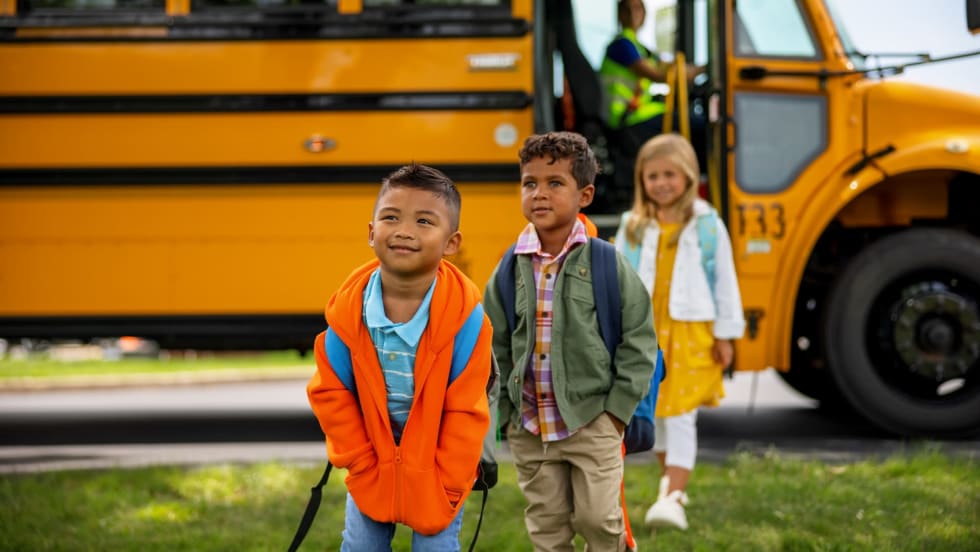
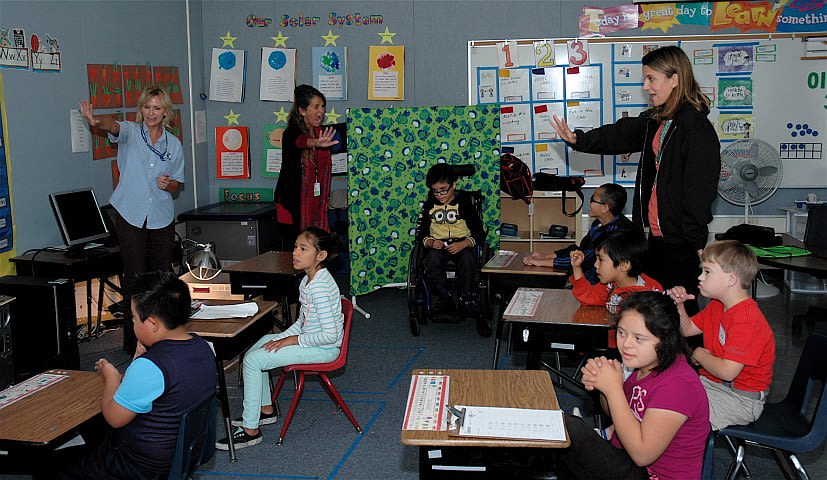
There’s never a better time to start building a better future than now. At Newport-Mesa Unified School District (USD), we believe the vision described above is achievable. We have been teaching transportation life skills to students with severe disabilities in a program called the Bus in the Classroom (BIC). The program takes teams of four transportation office staff members and drivers to school sites, where they teach one-hour sessions for four weeks. The students learn skills associated with waiting for, boarding, riding and exiting the bus. A fifth session involves community-based instruction where the bus delivers the students to their bus stops to practice essential skills, oftentimes with the assistance of parents.
Lesson plan design
The curriculum was designed with the help of special educators using the latest educational research. Recognizing that most students with disabilities learn best visually, the program makes heavy use of pictures of the students. The pictures serve to “hook” the students into the lesson and to quickly review the last lesson. Recent educational research shows that students are most ready to learn five minutes into the lesson. Therefore, immediately following the review one of the BIC team members demonstrates the lesson skills to the entire class. Then we break into small groups, with team members working closely with students on story boards, which visually guide the student through the lesson skills. BIC also has a large hands-on component. While still in their small groups, students then practice skills in progressively more independent exercises. Finally, classroom skills are connected to real world experience as we practice them on the school bus. View one of the lesson plans here.
Results
BIC has received praise from every special-ed teacher, transportation team member, parent and site administrator who has observed or participated in the program. More importantly, a thorough assessment of student learning confirmed that every student can and did learn. Even though all students learned, not every student mastered all the skills in their five-week class. Some may have to repeat the class several times before they have a complete grasp on all the life skills taught. However, even students functioning at the intellectual age of 3-year-olds have new transportation-related life skills after the first set of classes. Therefore, it was no surprise that several parents who had been reluctant to have their students ride the bus are now parents of happy and safe bus riders.
Safety
The curriculum recognizes that there is a wide range of transportation skills and students will perform at different levels. Virtually all students made progress on basic safety skills, like learning the danger zone, holding the handrail, showing their bus pass, sitting properly and asking for assistance. Most also learned skills such as how to recognize the person meeting them and how to secure themselves properly in seat restraints. Some of the higher-performing students even made progress in learning their route, landmarks and basic “stranger danger” skills. Overall, BIC students are safer and better behaved in and around the school bus even if they haven’t mastered all skills yet.
Efficiency
Although the program is designed to foster independence by teaching life and safety skills, it also provides several efficiency benefits. The bus routes serving BIC students are more efficient because students have learned to be ready and waiting to both board and exit the bus. There are fewer route delays associated with behavior problems because students have new behavior skills and drivers have better student management skills. This also contributes to a decrease in administrative time processing bus referrals both at the school site and in the transportation department. Finally, some BIC students are capable of using their new skills to move to more independent bus stops, which leads to shorter routes that save money and improve service.
Special-education benefits
Special educators praise the BIC program because it reinforces skills they teach and it teaches new skills upon which they can build. Skills like waiting in line properly are reinforced when transportation staff teaches it. New skills for some, like recognizing landmarks near a student’s bus stop, might serve as the foundation for further classroom lessons on orientation or reading a map.
Both teacher and driver interviews report that special educators involved with BIC have a greater respect for transportation’s role in supporting students. Therefore, these teachers are much more likely to work with transporters. They now frequently want to discuss next steps for student transportation independence or work with transportation staff on new reward systems for student management. To quote one special-ed teacher: “Transportation staff might not recognize the difference they’re making, but my students with severe disabilities are learning to the best of their abilities.”