SBF 70 years logo
MenuMENU
SearchSEARCH

Language should focus on abilities, not disabilities

How we speak to and about the students with disabilities who ride school buses can influence their perception of themselves and others' perceptions of them.

February 1, 1999
3 min to read


How we speak to and about the students with disabilities who ride school buses can influence their perception of themselves and others' perceptions of them. The following description of People First Language comes from the PEAK Parent Center in Colorado Springs, Colo. For more information on their programs, call (719) 531-9400 or (719) 531-9403 (TDD). Or, you can write to the organization: PEAK Parent Center Inc., 6055 Lehman Drive, #101, Colorado Springs, CO 80918. The organization also has a Website (www.peakparent.org). Language shapes and reinforces our attitudes toward others. The words many of us use to describe individuals with disabilities must improve before these citizens are viewed as equal members of our society.

The disability is secondary
Disability labels focus on what the individual cannot do rather than the person's abilities. People First Language looks at the individual before the disability. A disability is something that an individual has, not what an individual is. Here are some examples of People First Language:

Ad Loading...
  • Adam is a young boy with cerebral palsy (CP).

  • Jason is a 13-year-old with a learning disability.

  • Alex is a kindergartner and has autism.

  • A family has a son with Down syndrome.

  • Lacy uses a wheelchair.

Ad Loading...


Notice how much more positive People First Language sounds than a CP boy, a learning disabled teen, an autistic kindergartner, a Down's son or wheelchair-bound girl? As our language changes, perceptions and attitudes also change. People First Language helps in the movement toward the acceptance, respect and inclusion of individuals with disabilities. If you do not know what to say, allow the person who has the disability to help put you at ease. Just ask what term makes them feel comfortable. Respect their language. Remember, they are the experts. Consider the following introduction of a friend who does not have a disability. "This is my good friend Molly Stone. She grew up in Maine and has always loved art. Now she works as a landscape painter. She also is taking an Italian cooking class." Molly sounds like an interesting person. We are now able to talk about Maine, painting or Italian food. Molly's introduction was positive. It did not say what she cannot do, nor does it include negative information that certainly would not be the way to describe a friend. Why should the introduction of a friend who just happens to have a disability be any different? How would it sound if we described Kelly like this? "Her name is Kelly. She is retarded. She can talk though. And, she is an epileptic, too." What a show stopper. How can anyone build a conversation based on this? No one wants to be identified by something they cannot do nor control. All individuals are made up of several characteristics. An individual's disability is just one part of him or her. People First Language takes the focus off the disability and places it back on the individual. All individuals are made up of several characteristics. An individual's disability is just one part of him or her.


Subscribe to Our Newsletter

More Special Needs Transportation

School Bus Fleet “On the Road” graphic featuring Maritza Valentin of AMF Bruns America inside a mobility equipment showroom in Ohio, highlighting accessible bus solutions.

Inside AMF Bruns’ New Showroom: School Bus Securement Solutions Explained

Go inside AMF Bruns America’s new Ohio showroom with Maritza Valentin to see its FutureSafe technology, driver training tools, securement systems, and seating innovations.

Read More →
Thumbnail image of AMF Bruns grand opening video featuring Maritza Valentin speaking in a manufacturing space, with company logo and “Grand Opening Day!” text overlay

What AMF Bruns’ New Facility Means for Customers [Video]

Inside AMF Bruns’ new Stow, Ohio, operations: See how expanded space and innovation will enhance customer support and operations.

Read More →
zonar system image
SponsoredApril 20, 2026

2026 State of Student Transportation Report

Student transportation teams are being asked to do more with less, facing driver shortages, rising costs, and increasing safety expectations. This report uncovers how fleets are adapting, where technology is making the biggest impact, and why student ridership tracking is emerging as a top priority. Download the report to explore the key trends shaping 2026 and what they mean for your operation.

Read More →
Ad Loading...
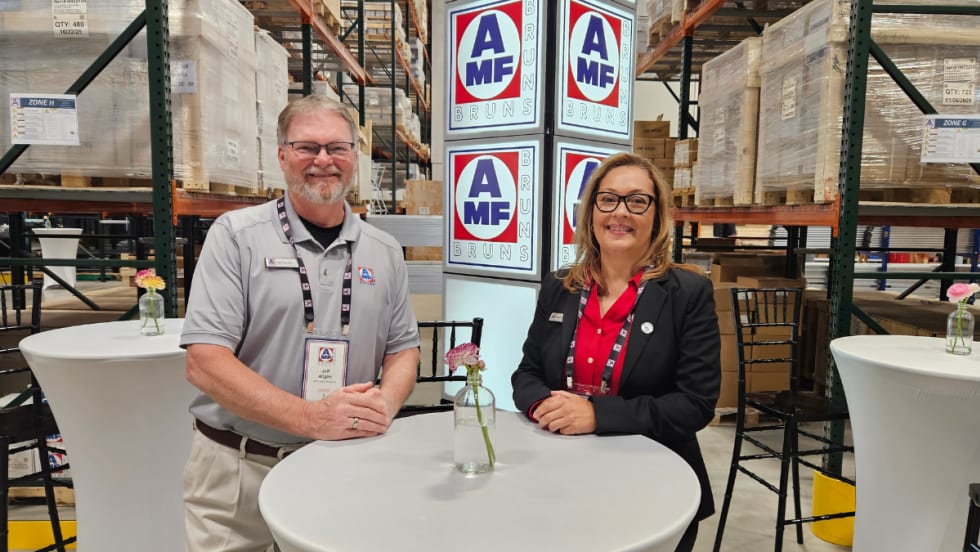
AMF Bruns national account managers Maritza Valentin and Jeff Algire at open house event

AMF Bruns Expands in Ohio, Investing in Growth and Community

With expanded production space, local investment, and a growing workforce, AMF Bruns is scaling its U.S. presence. Here’s an exclusive first look inside the new Stow, Ohio, HQ.

Read More →
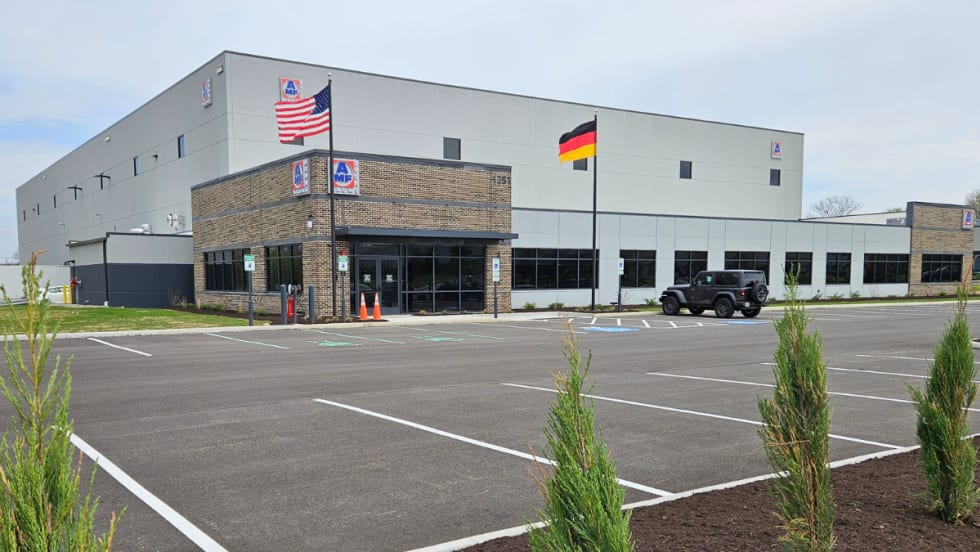
Exterior view of AMF Bruns of America’s new 41,000-square-foot facility in Stow, Ohio

Inside AMF Bruns of America’s New Ohio Manufacturing Facility [Photos]

Take a behind-the-scenes look at AMF Bruns of America’s new 41,000-square-foot Stow, Ohio, headquarters, featuring advanced manufacturing, expanded space, and future-ready mobility solutions.

Read More →
hopskipdrive whitepaper
SponsoredMarch 30, 2026

Boosting K-12 Attendance With Innovative Transportation Solutions

While the yellow school bus remains the backbone of student transit, 75% of administrators identify limited transportation access as a major driver of chronic absenteeism. This guide explores how districts are strengthening their fleets by integrating flexible, supplemental solutions to serve students with the most complex needs. Learn how a multimodal approach can bridge service gaps, restore attendance, and support your most vulnerable populations.

Read More →
Ad Loading...
Students walking away from a school bus with a driver in the background, representing efforts to improve student behavior support and safety in school transportation programs.

First Student Boosts Student Support in Wichita & Texas

First Student and Wichita Public Schools are using behavioral support strategies to improve student ride experiences, while a separate initiative expands access to after-school programs through a bus donation.

Read More →
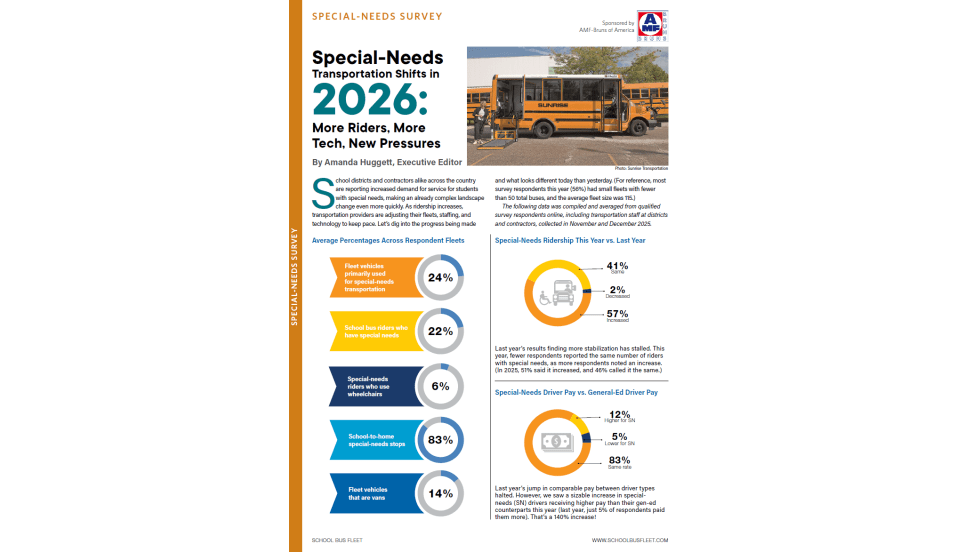
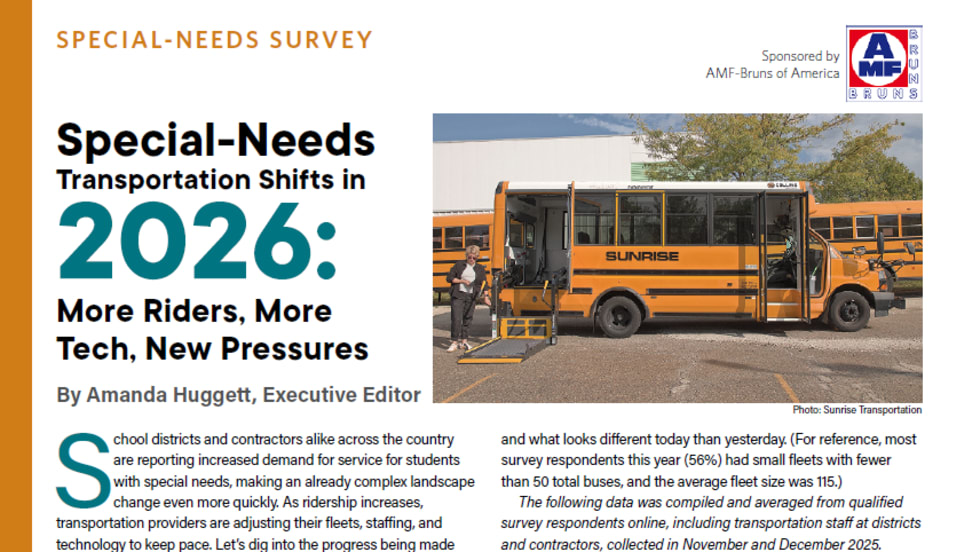
Infographic showing a yellow school bus with a wheelchair lift and charts highlighting 2026 special-needs transportation statistics, including ridership changes and driver pay comparisons.
SponsoredFebruary 27, 2026

2026 Special-Needs Transportation Survey

What’s changing in special-needs transportation? This year, student transportation operators report a rising need, easing driver shortages, growing tech adoption, and evolving challenges. Sponsored by AMF Bruns of America.

Read More →
Infographic showing a yellow school bus with a wheelchair lift and charts highlighting 2026 special-needs transportation statistics, including ridership changes and driver pay comparisons.
Special Needs TransportationFebruary 27, 2026

2026 Special-Needs Transportation Survey

What’s changing in special-needs transportation? This year, student transportation operators report a rising need, easing driver shortages, growing tech adoption, and evolving challenges. Sponsored by AMF Bruns of America.

Read More →
Ad Loading...
the route thumbnail with the SBF logo and a photo of Brianna Pauwee
Sponsoredby Amanda HuggettFebruary 13, 2026

The Lived-Experience Gap in Mobility Tech: An Expert Take on Safe Student Transportation

Brianna Pauwee, a product application specialist at AMF Bruns of America and a wheelchair user, drops in to The Route to share practical securement and training insights, plus the story behind the new “Beyond Mobility” podcast. The Route is sponsored by IC Bus.

Read More →