




Converted electric school bus debuts at California district
In a new pilot project, Gilroy Unified School District handed over an old diesel school bus and got it back as an electric school bus. In addition to the conversion, the district was supplied with a solar array to help generate electricity to power the bus.

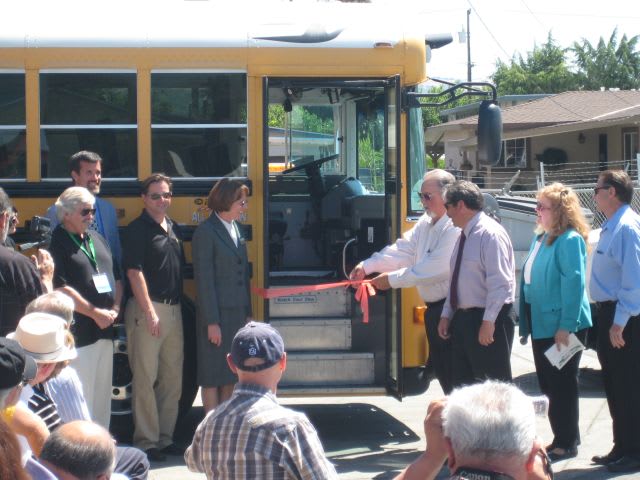
Gilroy Unified School District officials, clean-air advocates and other dignitaries gathered at the district's transportation facility to kick off a pilot project for an electric bus.
GILROY, Calif. — Gilroy Unified School District handed over an old diesel school bus and got it back as a converted electric school bus.
At a ceremony on Tuesday, district officials, clean-air advocates and other dignitaries gathered at the Gilroy district's transportation facility to kick off a pilot project for the electric bus. Gilroy Mayor Don Gage performed the ribbon cutting to launch the bus.
In addition to the conversion from diesel to electric, the district was supplied with a solar array to help generate electricity to power the bus.
Gilroy Superintendent Dr. Deborah Flores conveyed the district’s appreciation for being selected for the project.
“We are so pleased to be able to help the environment and also to help our budget,” Flores said.
The project has been spearheaded by nonprofit organization Breathe California of the Bay Area. The major funder is The Health Trust.
“I have long imagined a world where clean, zero-emission vehicles would take children to school ... and now that vision is a reality,” said Margo Sidener, president and CEO of Breathe California of the Bay Area. “The addition of solar fueling makes this a 'Zero Emissions Squared' project — zero-emission vehicle times zero-emission fuel — for cleaner air for all.”
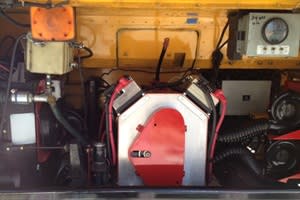
Adomani Inc. converted the 50-passenger school bus from diesel to electric. Pictured is the engine compartment after the conversion.
Edward Monfort, president of Adomani Inc., invented the bus conversion that was introduced at Gilroy.
“Our conversion of this 50-passenger full-size school bus proves that Adomani is a company that can convert vehicles into all-electric vehicles no matter what size or type of vehicle you have,” Monfort said.
The company had many more hurdles to pass in working with a school bus, including the many imposed by the California Highway Patrol that are designed to keep kids safe.
"Working with sports cars and heavy-duty trucks has its rewards, but transforming the school transportation industry through zero-emission vehicles has to be one of the most meaningful projects of my life,” Monfort added.
Green Transportation Workforce Development will provide training for school districts that participate in the Zero Emissions Squared project. The training will cover such topics as the use of the vehicles in daily service, maintenance and repair, and infrastructure.
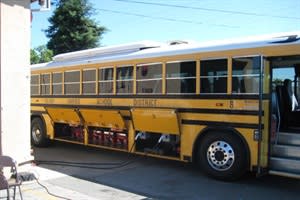
This shot shows the batteries and the charging equipment that were installed in the luggage compartments.
“The final, and perhaps most important, component of the Zero Emissions Squared project is making it affordable,” said Bob Garzee, the overall project manager. “Although most customers prefer to go green, it ultimately comes down to getting a good price, arranging financing and getting a good return on investment.”
Garzee said that in addition to Adomani's competitive cost for the conversion to electric and the cost reductions from using electricity and solar power, there are operational savings, such as lower maintenance costs. He added that there is also $200 million of financing available to school districts involved in the project.
More Alternative Fuels

CALSTART and Forth Combine to Form Catalyst Mobility
The new name represents a renewed vision for the nonprofit focused on advancing clean, equitable, and affordable transportation solutions that move people and goods.
Read More →
Alt-Fuel Moves: New Buses, Charging Hubs & Real-World EV Testing
Propane and electric school bus deployments continue to grow as districts add new vehicles, expand charging infrastructure, and gather more real-world operating data.
Read More →
Fewer Electric School Bus Models Reshape the U.S. Market
WRI’s latest buyer’s guide points to a consolidating electric school bus market, but fewer options may reflect a maturing industry rather than fewer meaningful choices for school bus operators.
Read More →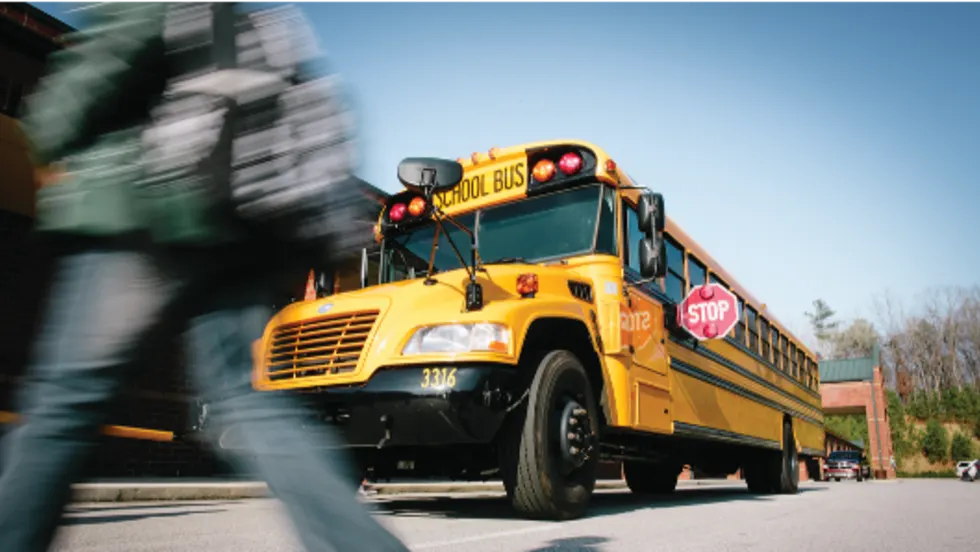
The Fuel Budget You Can Actually Predict: How Propane Autogas Keeps Money in the Classroom
Learn how propane autogas helps school districts manage fuel costs with predictable pricing, lower maintenance, and reduced emissions from former transportation director Joel Stutheit.
Read More →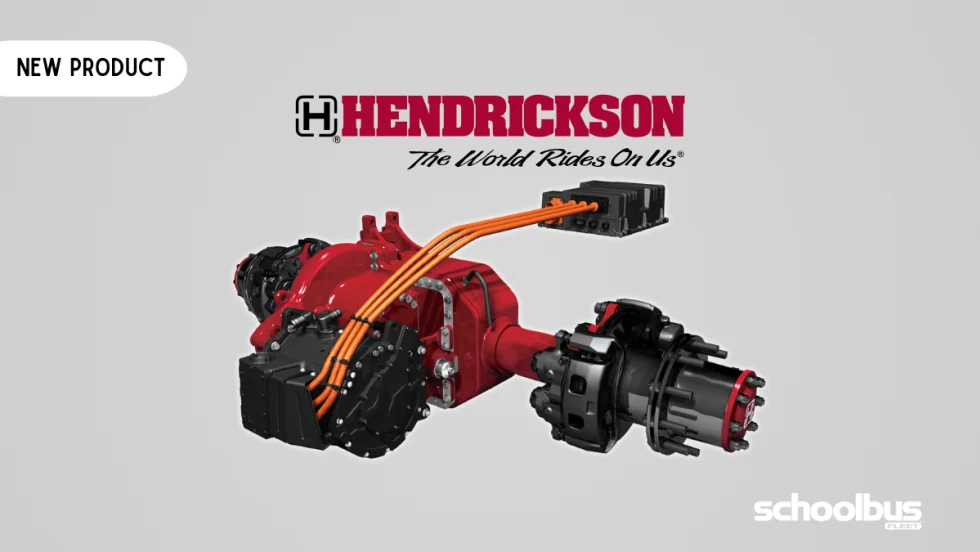
Hendrickson, Driventic Introduce New Electric Powertrain for School Buses
ELECTRAAX, the electrified, lightweight drive axle offers integrated ePowertrain efficiency and modular flexibility for Class 6–7 school bus use.
Read More →
The Mobility House Joins PowerFlex in Fleet Electrification Deal
The acquisition combines intelligent charging software, bidirectional charging expertise, and fleet electrification services to support the growing adoption of electric school buses across North America.
Read More →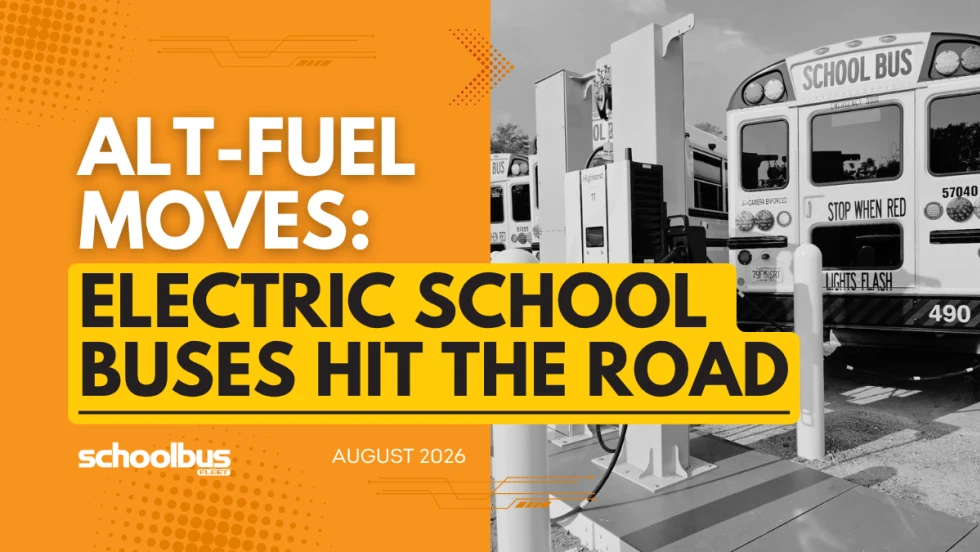
Alt-Fuel Moves: Electric School Bus Investments Hit the Road
See which districts across the U.S. are putting electric school buses into service, expanding charging infrastructure, and planning the next phase of fleet electrification.
Read More →
With Fuel Volatility Ahead, School Districts Turn to Propane
While diesel prices peaked above $5 this spring, districts with propane autogas-powered fleets paid under $2 per gallon, according to PERC.
Read More →
EPA Unveils Proposed Changes to 2027 Heavy-Duty Engine Rules
The federal agency has proposed changes to next year’s targets that would eliminate DEF derates, ease warranty requirements, and retain current NOx emissions standards.
Read More →
Alt-Fuel Moves: EV Charging & Infrastructure Projects Gain Momentum
The latest developments include new funding, charging infrastructure, utility investments, and fleet technologies designed to support the transition to electric school buses nationwide.
Read More →