




Virtual Tour: Blue Bird’s Fort Valley Facilities
Here’s an inside look at Blue Bird’s school bus assembly and parts fabrication operations in Fort Valley, Ga., which SBF visited recently.
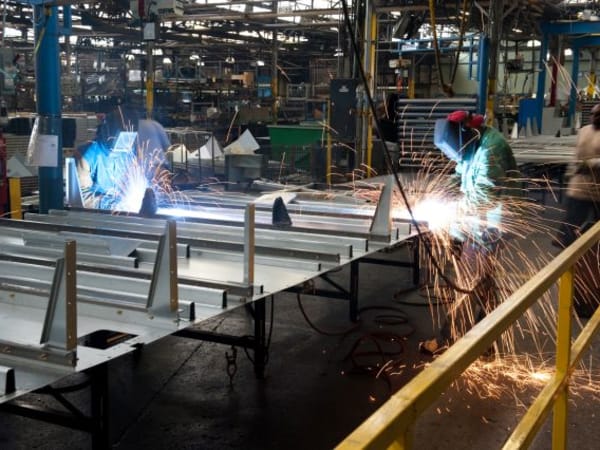
Blue Bird employees weld flooring for a school bus at the company's main facility in Fort Valley, Ga.
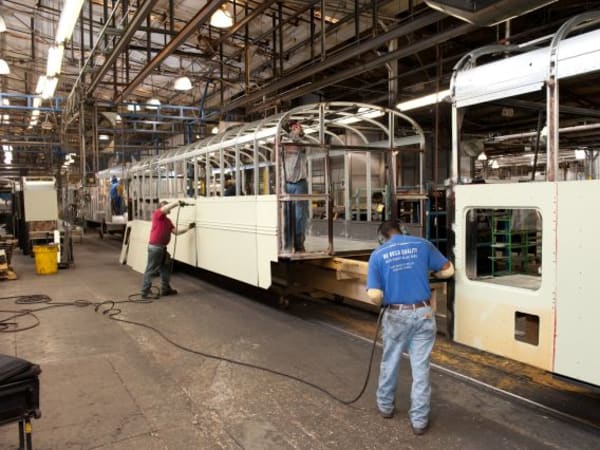
Side panels and rub rails are installed.
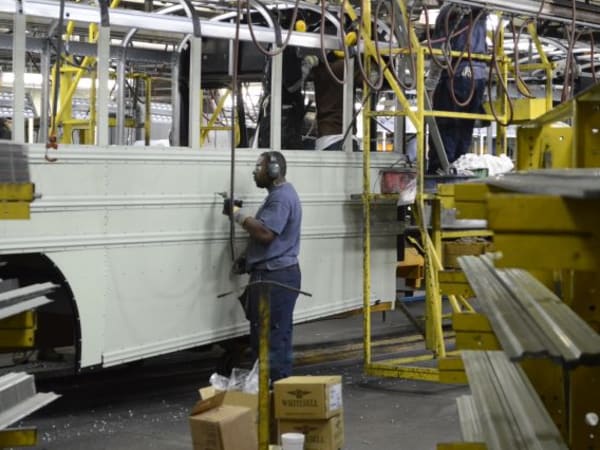
Blue Bird has a total workforce of about 1,500 people. Here, a plant employee places rivets in a side panel.
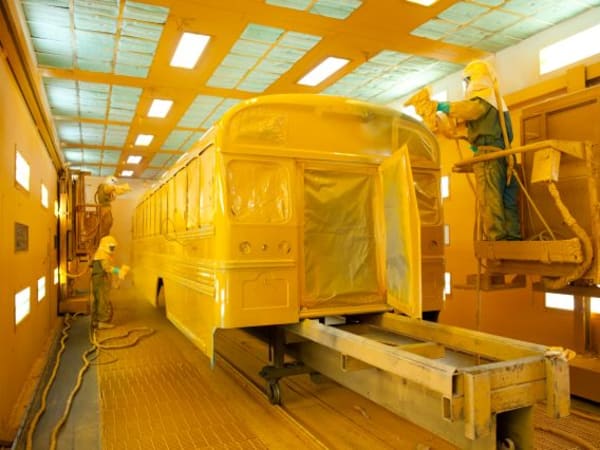
A bus gets a yellow coat inside a paint booth.
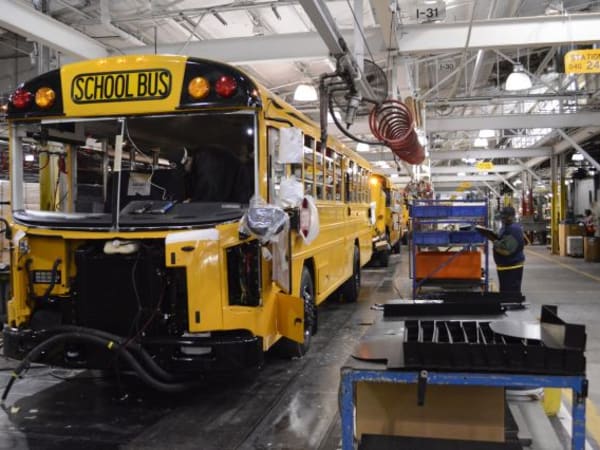
A bus body, now mounted on a chassis, moves along the assembly line. The Fort Valley facility builds both Type D (seen here) and Type C buses.
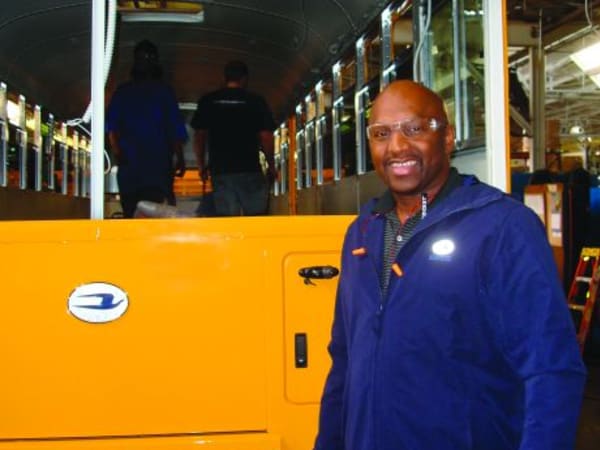
Jay Jones, Blue Bird’s corporate chaplain, provides a variety of services for staff members and their families, including voluntary chapel services, counseling and hospital visits.
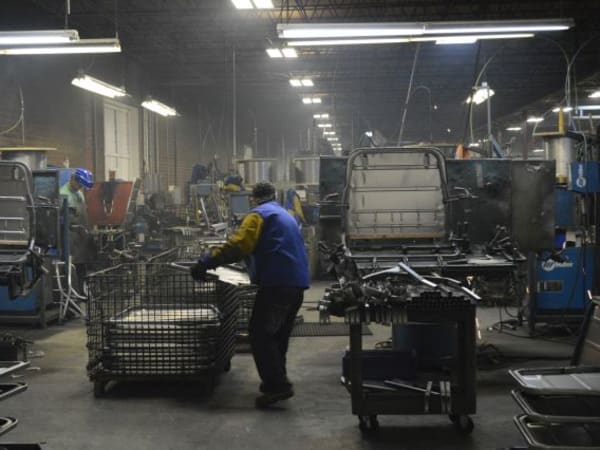
At Blue Bird South, the company fabricates the manufacturing materials for its buses: seat frames (pictured here), steps, sheet metal panels, bumpers, etc.
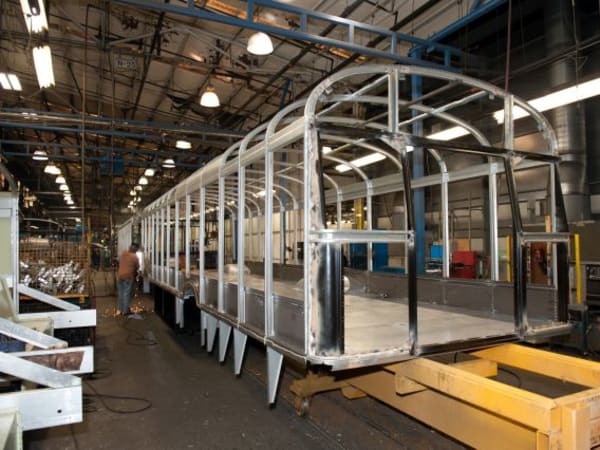
Body bows are installed on a Blue Bird bus.
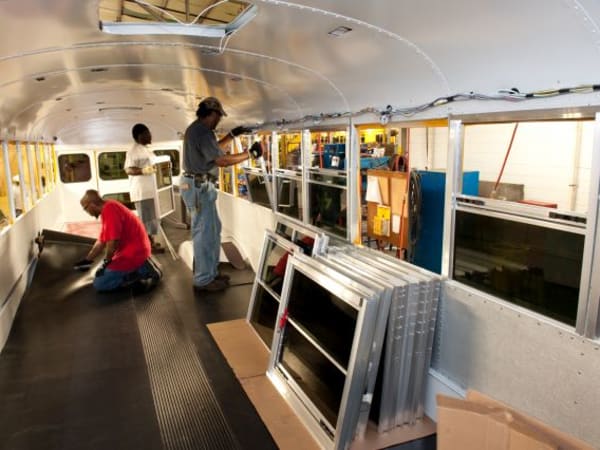
Flooring and windows are installed.
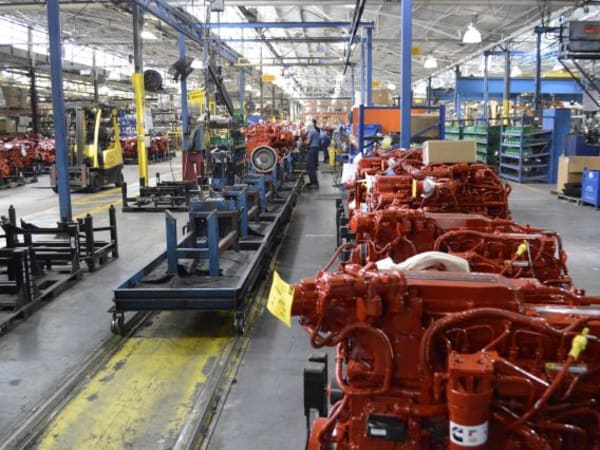
A line of Cummins engines await installation in Blue Bird buses.
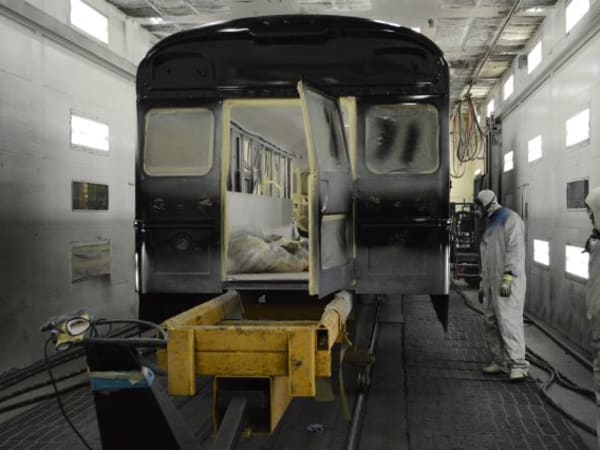
Inside a Blue Bird paint booth, a bus body gets a coat of black paint before the more prominent school bus yellow.
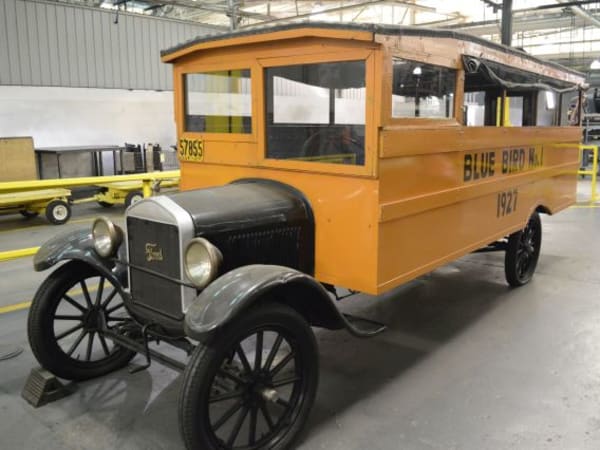
On display in the Fort Valley facility is a replica of Blue Bird No. 1, the company’s first school bus, which was built in 1927. The bus was mounted on a Ford Model T chassis, and it included a solid, one-piece roof bow design.
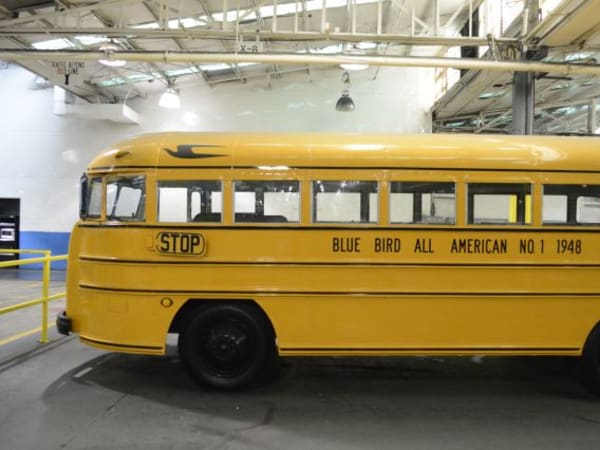
Also on display is Blue Bird’s first All American Type D school bus, which was built in 1948.
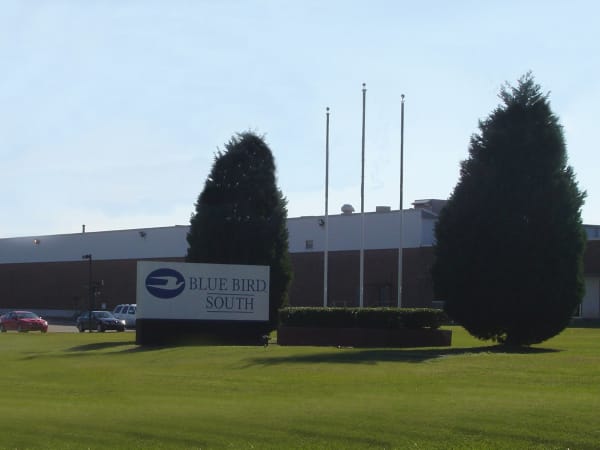
Also in Fort Valley, just a few miles down the road from Blue Bird’s main facility, is the company’s fabrication plant, Blue Bird South.
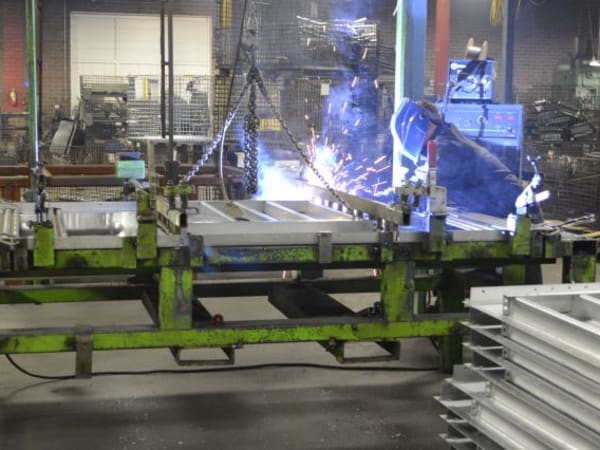
A worker welds a sidewall panel at Blue Bird South.