




Miss Last Year? PHOTOS: NASDPTS 2023 Conference in Pictures
2024 NASDPTS Annual Conference in Photos
Check out photos from the National Association of State Directors of Pupil Transportation Services (NASDPTS) Annual Conference, which gathered state directors from across the county in our nation’s capitol for a series of conversations and updates on the state of the industry. One common theme that multiple speakers touched on was the Safe System Approach to reach zero fatalities. Read up on other highlights and announcements from across the industry here!
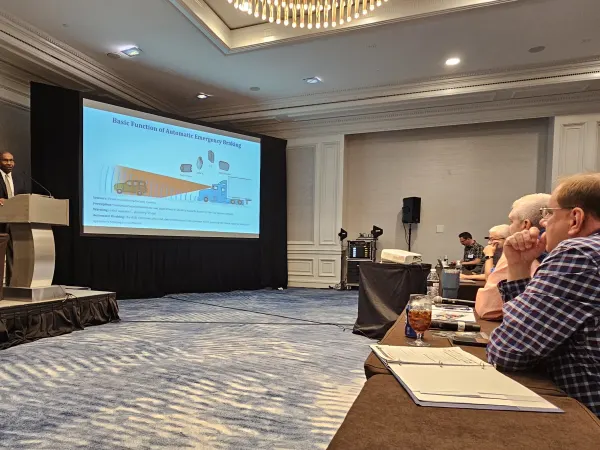
Larry Minor of the Federal Motor Carrier Safety Administration, presented on the FMCSA’s National Roadway Safety Strategy (which follows the Safe System Approach) and updates various department rules and regulations, from speed limiters to CDL holders’ reporting on drug and alcohol and traffic violations, and more. Find a summary of Minor’s updates here!
Photo: Amanda Huggett
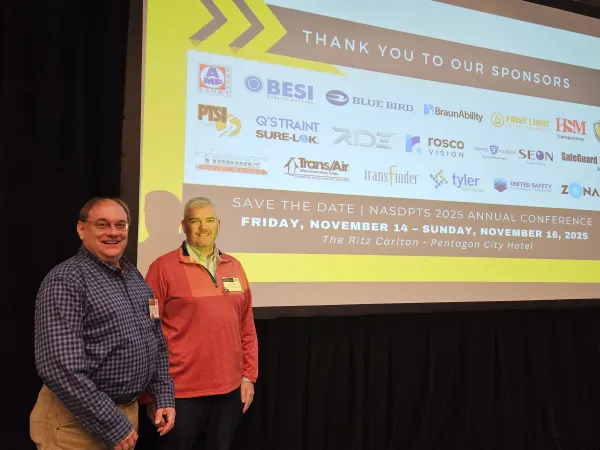
Mike Stier, current NASDPTS president, stands with Tyler Bryan, president-elect, at the start of the conference. Both served as emcees throughout the event.
Photo: Amanda Huggett
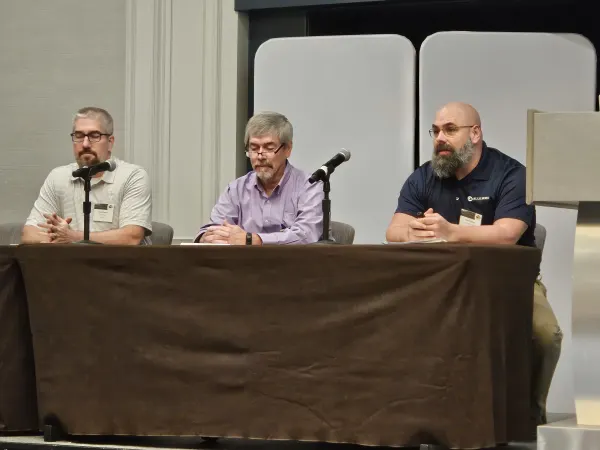
In the “Seat Belts & State Specifications” panel, Chad Duncan from IC Bus, Nick Mitchell from Blue Bird, and Ricky Stanley from Thomas Built Buses discussed the implementation of three-point seat belts on school buses. And while compartmentalization works in most cases, it fails to provide protection in side impacts and rollovers, leading organizations like the NTSB to offer their support of seat belts. However, each panelist noted that they do not recommend retrofitting buses with belts, especially older models. The group referenced a 2021 study in North Carolina that revealed that one-third of school bus crashes are side-impact collisions or rollovers, and 80% of student injuries occurred due to these types of crashes. Transport Canada also piloted a program with three-point belts on buses, and the report should be out early next year.
Photo: Amanda Huggett
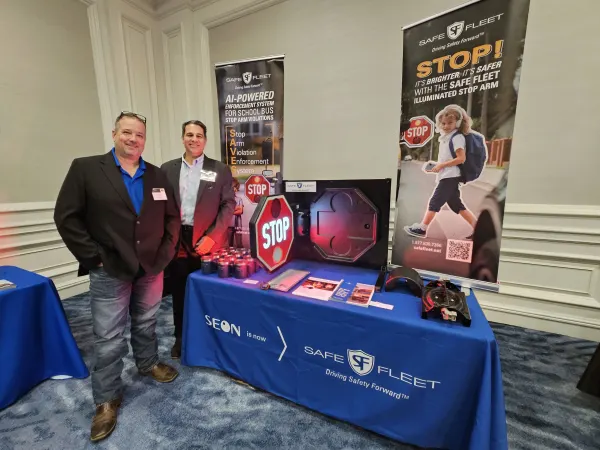
The Supplier Showcase also allowed transportation directors to visit with each supplier, viewing their tabletop display and discussing how each solution can serve school bus fleets in North America.
Photo: Amanda Huggett
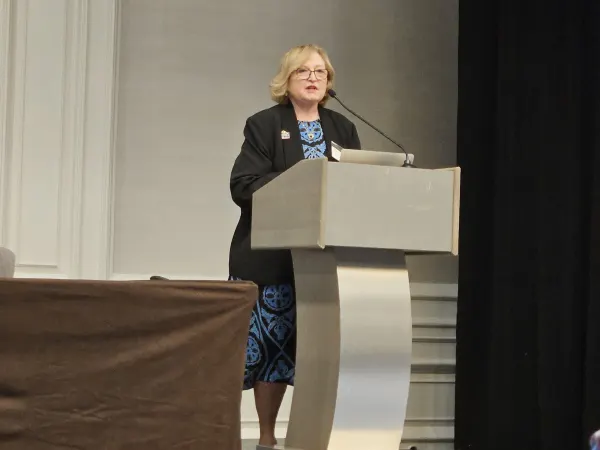
Molly McGee-Hewitt, CEO and executive director for NAPT, briefed the audience on NAPT Under Construction and what to expect from the association in the coming year. A few exciting items to watch are the new handbook on special needs transportation and NAPT’s revamped governance structure to work closer with state affiliates.
Photo: Amanda Huggett
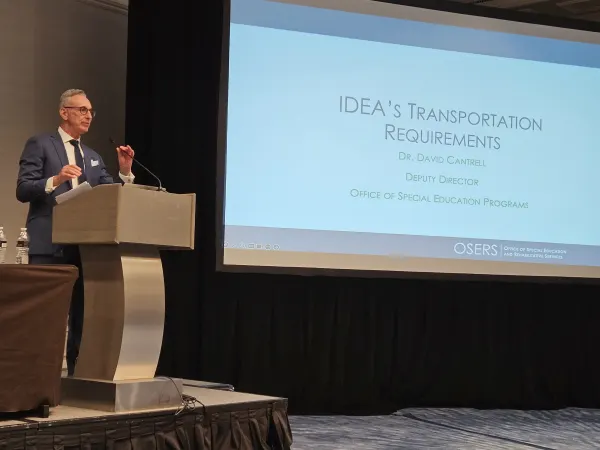
David Cantrell, deputy director of the Office of Special Education Programs (OSEP) at the Department of Education, talked about the implementation of Individuals with Disabilities Education Act (IDEA) at the national level. Cantrell emphasized three pillars to raise the bar, including the need for evidence-based strategies, assistive technology, and specialized transportation.
Comments from state directors amassed the room as many shared their frustration over the lack of communication between IEP teams and transportation departments, even when transportation-related accommodations are noted in a student’s plan. The audience also discussed the challenges of transporting students with severe disabilities (and parents who also aren’t always able to accommodate the typical “curb to curb” bus service). Cantrell promised that the agency will follow up on these issues. He also mentioned the possibility of developing a one-page summary based on the Q&A his office sees related to transportation, including recommendations and suggestions for behavior management, to share with state directors.
Photo: Amanda Huggett
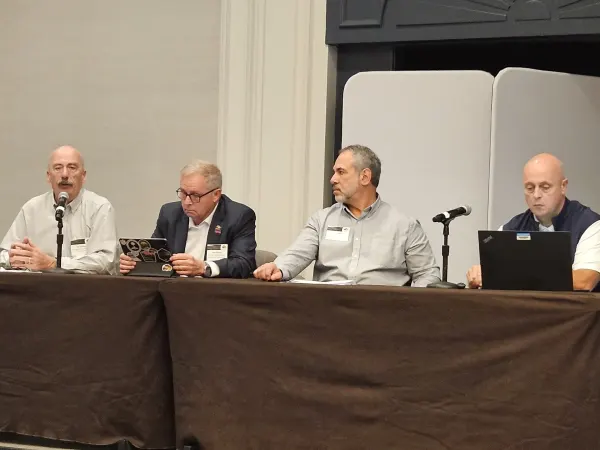
In the panel, “Lessons Learned with Alternative Fueled Vehicles,” state directors Mike Bullman (S.C.), Kerry Miller (Va.), and Mike Sanders (Ga.) who was joined by Ken Johnson, discussed their respective states’ experience with propane and electric school buses.
Virginia fleets over 15,000 school buses, with 259 electric buses in service and an expected increase to 400 by 2025. There, Dominion Power provided $20 million for electric and propane buses, with additional funding from the Volkswagen mitigation fund and Clean School Bus. Chargers have been a weak link, however, with software issues and range anxiety in cold weather that diminishes by 20%.
In South Carolina, the Department of Education owns and maintains the entire state's fleet of school buses, including 525 propane, 180 electric buses, and one LPG out of the 5,600 total. Bullman did note seeing about $9,000 operational savings a year with electric buses, and they’re considering gasoline as well.
Recommendations offered for districts with ESBs is ensure local first responders know where the off switch is, to train maintenance techs, and carefully plan infrastructure.
Photo: Amanda Huggett
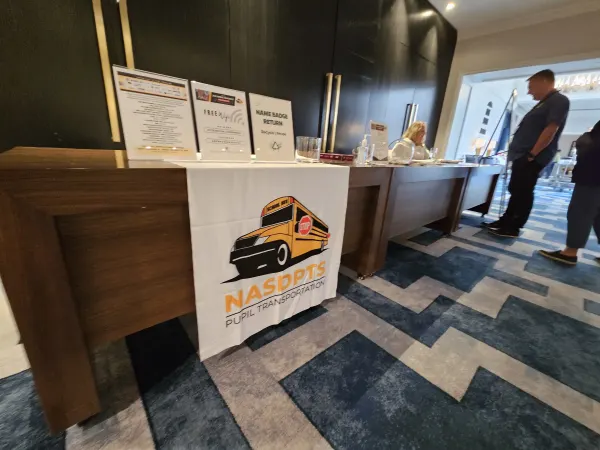
The 2025 NASDPTS conference convened at the Ritz Carlton Pentagon City in Washington, D.C. from Nov. 24-26.
Photo: Amanda Huggett
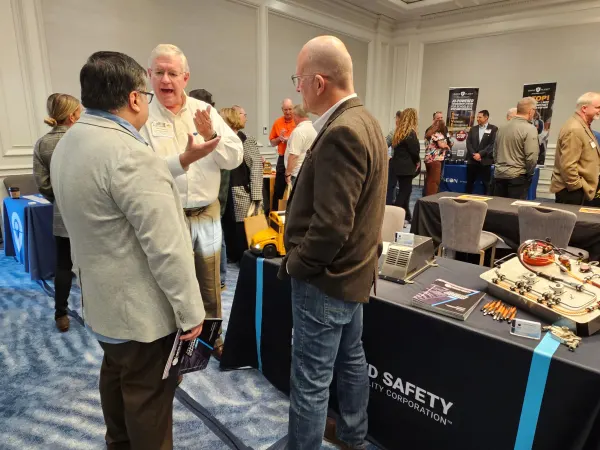
The Supplier Showcase was a great opportunity for attendees to catch up and mingle, discuss session content, and talk shop on what issues they’re facing.
Photo: Amanda Huggett
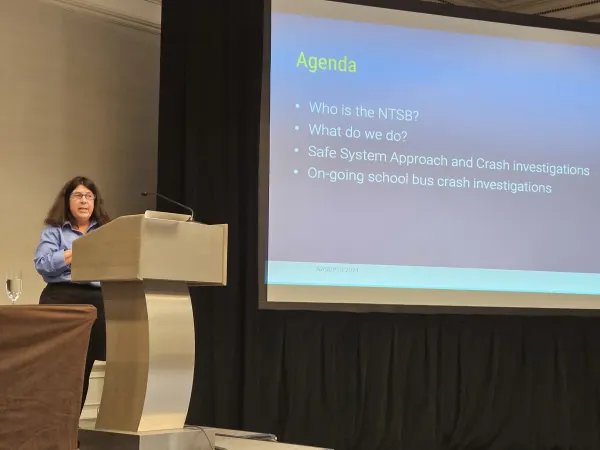
The National Transportation Safety Board (NTSB) shared sobering facts on school bus accidents from recent years. Meg Sweeney, a project manager/accident investigator, discussed the NTSB's safe system approach to investigations, emphasizing pre-crash, crash, and post-crash phases. She covered notable crash details from Rochester, Ind., where three students died; a Baltimore crash involving a 67-year-old driver with a seizure disorder; and a Chattanooga, Tenn., crash where six students died. She shared recommendations that have come out of each crash could prevent future incidents, such as improving road design, passenger loading, fire suppression systems, and driver training and oversight. As she noted, “Compartmentalization only works when the kids are seated properly.” It takes the NTSB about 12 to 24 months to from when an investigation starts to the final report.
Photo: Amanda Huggett
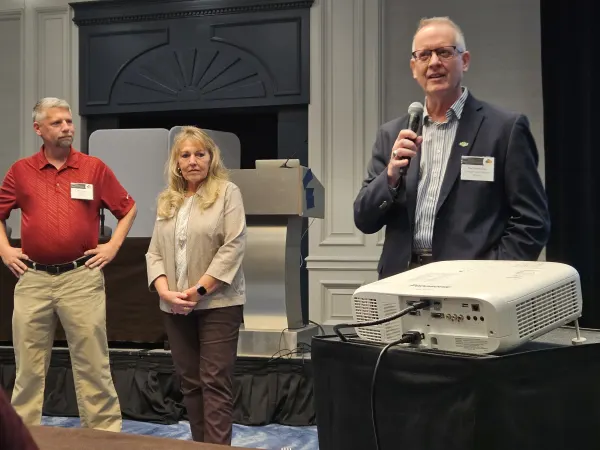
Select conference sponsors shared messages with attendees between sessions. Here, Max Christianson, senior safety advocate for First Light Safety Products, and former Iowa state director, takes the mic before lunch.
Photo: Amanda Huggett
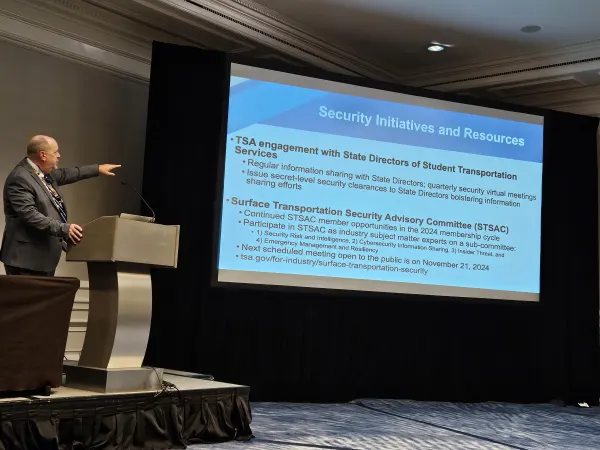
Dan McQuaid from the Transportation Security Administration (TSA) touched on the agency's cyber policy and security initiatives, including the National Terrorism Advisory System Bulletin. National cybersecurity efforts include annual threat assessments, White House strategies, and a national cybersecurity strategy implementation plan, all of which are available online to download.
But where does K-12 school transportation come in? TSA is looking to engage with state transportation directors for more regular information sharing; they can issue secret-level security clearances as needed to bolster this effort; and there are membership opportunities in their Surface Transportation Security Advisory Committee (STSAC). But they also host active shooter/school bus assailant tabletop exercise trainings available across the country to equip you to take on threats.
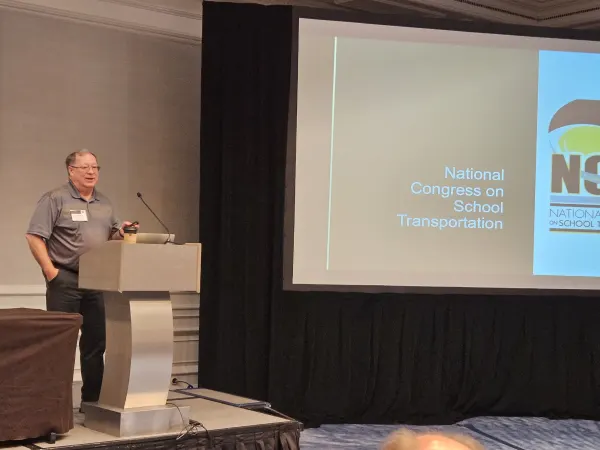
Offering an update on the 2025 National Congress on School Transportation (NCST) was Mike Larocco, state director for Indiana. This will be the first congress in 10 years because of COVID. Every five years, the NCST gathers to inform and update national guidance. In whole, each congress agrees on best practices rather than mandates. Larocco clarified that they make a point to not be onerous, as they realize some states do adopt each congress’ specs. This year’s congress will have new committees for alternative transportation and emerging technologies. Other committees include alternative fuels, pre-K, activity bus, special needs, and general operations.
Photo: Amanda Huggett
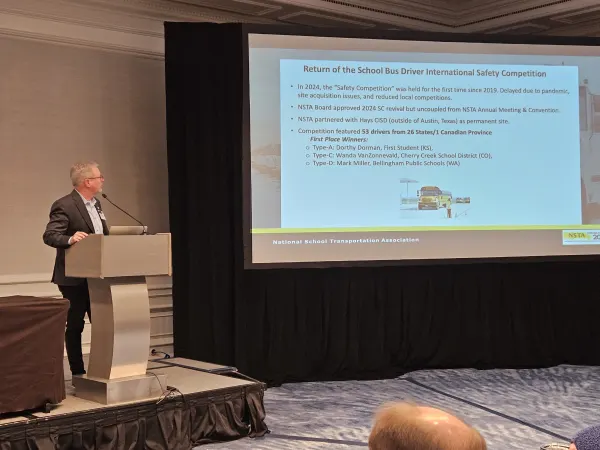
Dan Kobussen, president of NSTA, shared a look at what the association has in the works for 2025, including upcoming events like the second International Safety Competition since COVID, as well as work they’re doing to combat the rise in illegal stop-arm passings.
Photo: Amanda Huggett
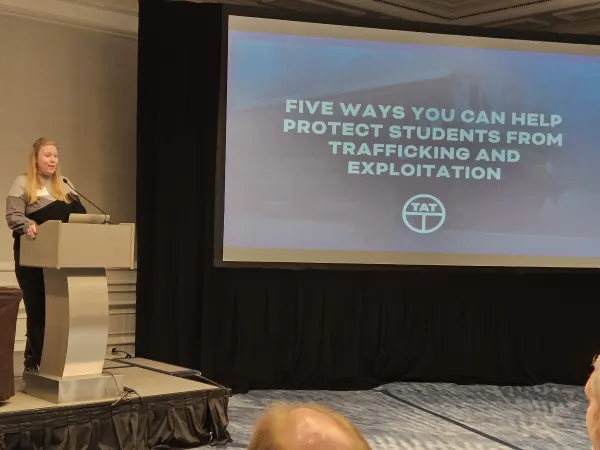
Lexi Higgins from Truckers Against Trafficking took the stage to share tips on how the school bus industry can help prevent human trafficking, because knowing the warning signs could prevent one of the worst-case scenarios. “Imagine if we could get every transportation professional in the country educated and mobilized on this issue; we could recover so many victims and stop traffickers, and that is the goal,” she said.
Photo: Amanda Huggett
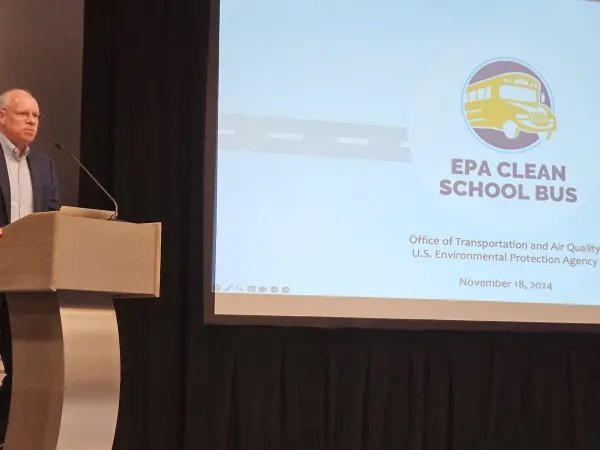
Closing out the annual conference was Karl Simon, director of the Transportation and Climate Division at the Environmental Protection Agency (EPA). He presented on the Clean School Bus Program and tackled some FAQs with the audience: most notably that no, he does not know yet what will happen to the program in the years to come.
Photo: Amanda Huggett
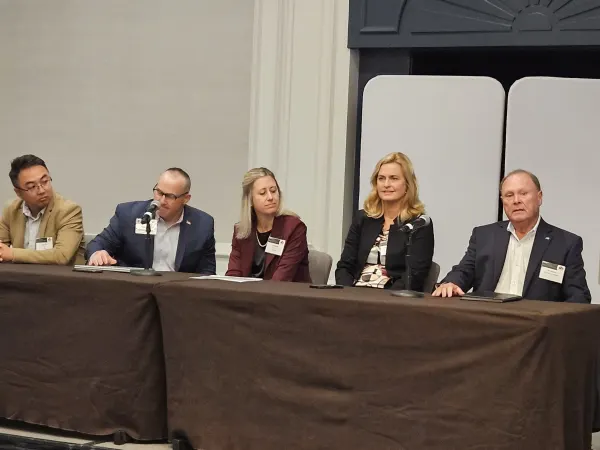
An OEM panel made up of representatives from Blue Bird, Thomas Built Buses, Collins Bus, IC Bus, and RIDE offered a look at the state of the industry from a manufacturer perspective. Each panelist presented a brief look at their company’s buses, production, news and updates, and future plans. They also addressed issues like the driver shortage, registration backlog, and chassis/supply chain challenges — all of which are easing but are not yet fully resolved.
Tim Gordon, Blue Bird Corporation, mentioned that seat belts and driver air bags will be coming in October 2025. Vance Nofziger, Thomas Built Buses, notes that Ford has stepped up its chassis game, that most of the OEMs now have union shops, and labor costs continue to rise. Katie Stok, IC Bus, said that more EVs are coming and references their latest IC Bus service contract for electric buses that provides more TCO confidence and aids in the green transition. Libby Kimmel, Collins Bus, touched on diesel requirements that don’t affect the Type A space, but that they still must meet emission requirements. She also notes the increase in customers needing flexibility post-purchase, which they aim to accommodate. Finally, Jason Yan from the newest OEM on the panel, RIDE, discussed their models and production, new facility, and LFP batteries.
Photo: Amanda Huggett