




Vehicle Lifts Must Pass Tougher Testing to Earn ALI Gold Label
According to the Automotive Lift Institute, changes to the standard include expanding testing requirements for load-holding devices and increasing the number of test cycles.

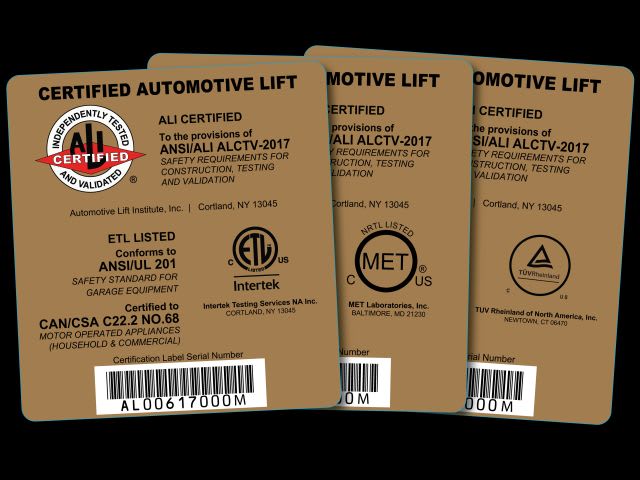
The new standard for vehicle lifts to earn the Automotive Lift Institute’s Gold Label is ANSI/ALI ALCTV: 2017. It took effect on July 24, 2018.
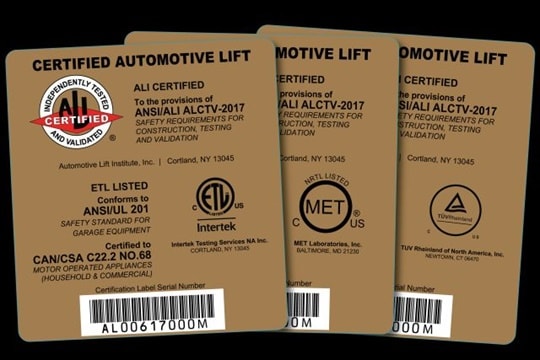
The new standard for vehicle lifts to earn the Automotive Lift Institute’s Gold Label is ANSI/ALI ALCTV: 2017. It took effect on July 24, 2018.
CORTLAND, N.Y. — It’s now a little more challenging for a vehicle lift to earn an Automotive Lift Institute (ALI) gold certification label, ALI announced on Monday.
ANSI/ALI ALCTV is the safety standard that covers vehicle lift design, construction, testing, and validation. The current edition, ANSI/ALI ALCTV: 2017, took effect on July 24, 2018, replacing its predecessor, ANSI/ALI ALCTV: 2011. ALI said that while the major design and construction requirements of the standard remain intact, significant updates were made to strengthen the testing that must be performed by a nationally recognized testing laboratory to confirm that a lift meets the requirements.
Changes include expanding the testing requirements for load-holding devices (also known as “latches” or “locks”) and increasing the number of test cycles.
The International Building Code and a number of state, provincial, and local regulations mandate that only lifts certified to meet ANSI/ALI ALCTV can be installed. These certified lifts wear the ALI Gold Label and are listed in ALI’s online directory of certified lifts. All lifts that are certified to meet the current edition of the standard are listed.
“ALI and our members take our lift safety mission very seriously,” said Dale Soos, ALI senior project engineer. “Since introducing the ALI Lift Certification Program in 1993, the committee responsible for the standard has continuously improved it to promote technician safety on the job and wherever a vehicle lift is used.”
In addition to the testing requirement changes, ANSI/ALI ALCTV: 2017 explains the difference between lift accessories and lift attachments and clarifies which aspects of the standard apply to each. The current edition also includes a new section of requirements for wireless controls.
Facilities with lifts that were certified to the prior edition of the standard do not need to take any action as a result of the update. However, ALI said that when shopping for a new lift, it should not be assumed that a previously certified model is certified to the current edition of the standard. Any lift model that was certified to the 2011 edition of the standard had to be tested to verify that it met all the new requirements in order to be recertified.
To confirm that a lift is certified to the current standard, go to ALI’s online directory of certified lifts or look for the new ALI Gold Label with ANSI/ALI ALCTV: 2017 noted near the top.
Copies of the ANSI/ALI ALCTV: 2017 “Safety Requirements for Construction, Testing, and Validation” standard can be ordered from ALI at www.autolift.org/ali-store.
In other vehicle lift news, Stertil-Koni announced that during the fifth annual National Lift Week, Oct. 8 to 13, the company will cover one-third of the purchase price of the ALI safety tips poster two-pack, applied to the first 80 orders beginning Oct. 8. The limit is one order per customer, five per company. The safety tips poster two-pack is available via the ALI store link above.
More Maintenance
The Essential Guide to School Bus Maintenance and Student Safety
Your district's buses carry students to school every day. This guide shows how predictive maintenance powered by fleet data helps keep buses reliable, drivers accountable and students safer from the first bell to the last stop.
Read More →
Kerry Brothers Grows Michigan School Bus Repair Network
The acquisition of Downriver Truck and Bus expands Kerry Brothers’ school bus maintenance footprint across southeast Michigan, adding repair capacity, diagnostic resources, and state inspection support.
Read More →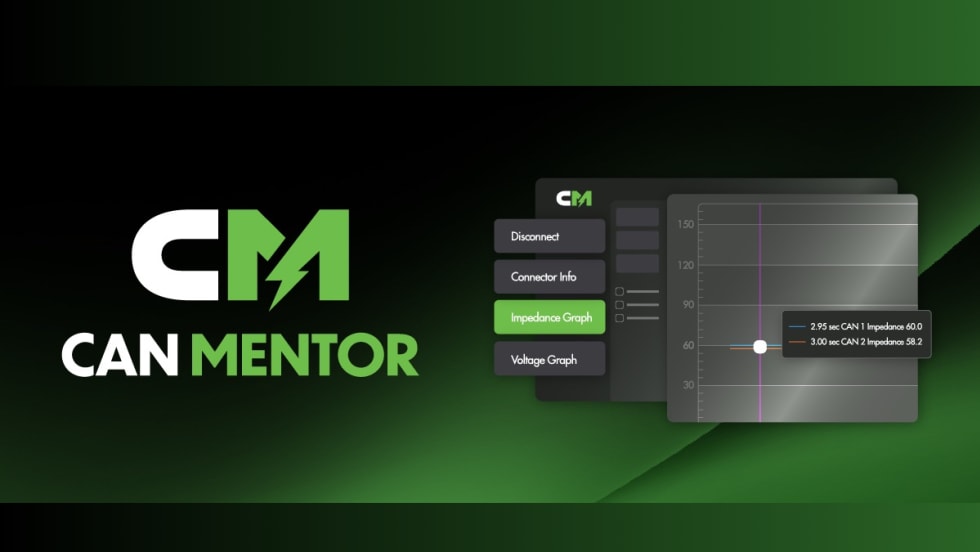
Noregon Introduces CAN Bus Diagnostic Tool, Expands JPRO Features
CAN Mentor and the latest JPRO update aim to simplify vehicle network diagnostics and improve repair efficiency for technicians of all experience levels.
Read More →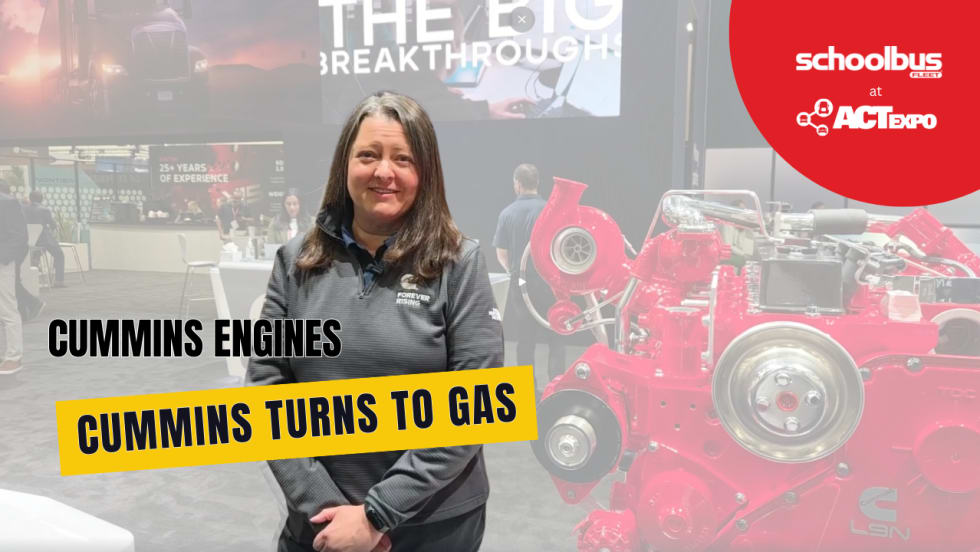
Cummins on Smarter, Simpler Engine Innovation
Cummins discusses its first-ever gasoline engine for school buses, EPA 2027, and why bus fleets still want durable, simpler internal combustion options.
Read More →
Report: 72% of Diesel School Buses Now Use Advanced Low-Emission Engines
New data shows advanced low-emission diesel technology continues expanding across school bus fleets, even as electric bus adoption gains momentum.
Read More →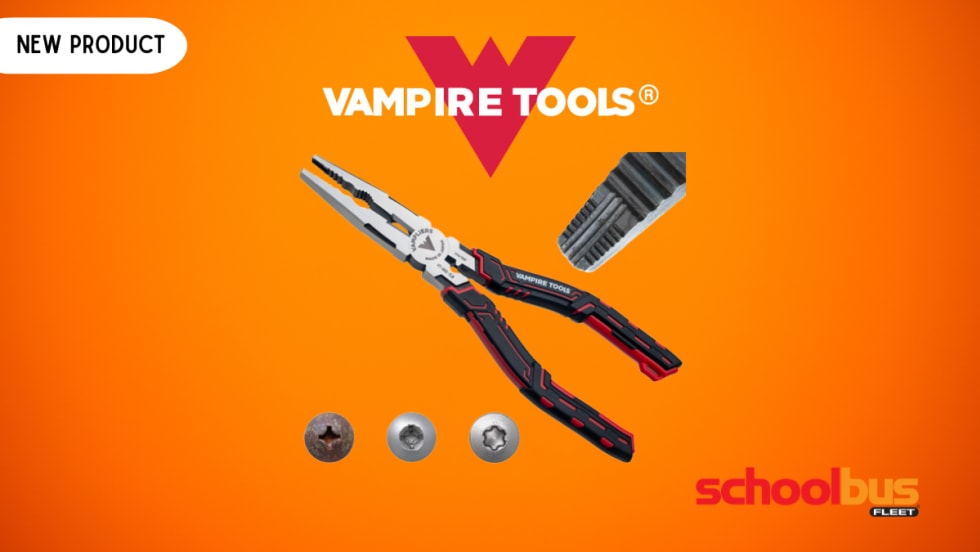
Vampire Tools' CAIMAN 7.5-Inch Multi-Purpose Screw Extractor Long-Nose Pliers with Crimper
Vampire Tools introduced the VAMPLIERS Caiman 7.5-inch multi-purpose pliers, combining screw extraction, cutting, crimping, and gripping functions into a single tool designed for fleet maintenance professionals.
Read More →
How Advanced Diagnostics Helps Bus Fleets Stay Ahead of Repairs
Chat with Noregon’s Kevin Smallhorn at ACT Expo about bus diagnostic tools, telematics integration, CNG maintenance support, and strategies to help reduce downtime and improve uptime.
Read More →
How School Bus Fleets are Getting Ahead of Breakdowns
Don’t let bus downtime wear you down. Here’s how bus operators are shifting from manual processes to AI-powered, data-driven maintenance systems for improved reliability and safety.
Read More →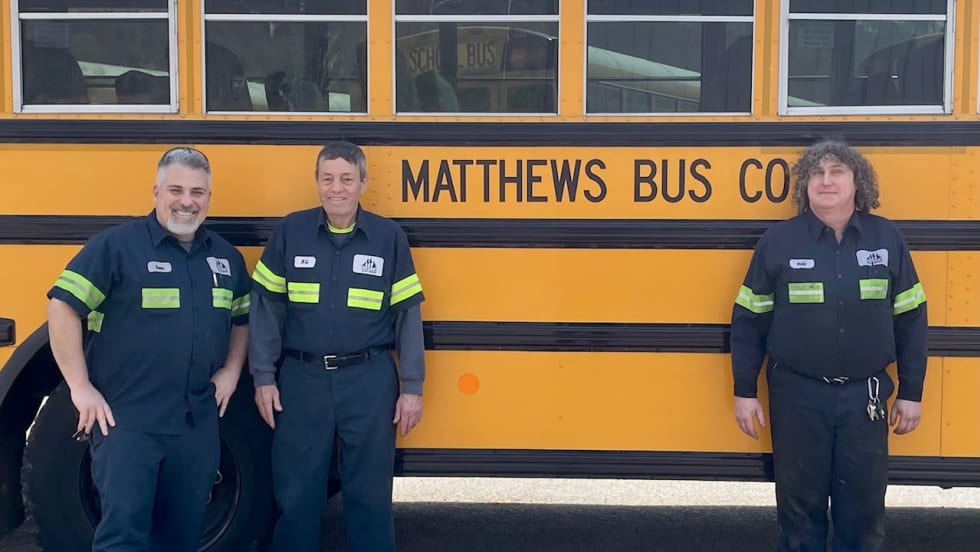
Pennsylvania School Bus Maintenance Team Praised for Dedication to Safety
Matthews Bus Company’s West Jefferson received a letter of commendation from the Pennsylvania State Police for their fleet inspections.
Read More →
From Chaos to Clarity: How School Districts Are Running Leaner Transportation Operations
Covering 38 routes on a Friday afternoon. Buses idling while routes overlap. Parents calling nonstop about late arrivals. Sound familiar? This whitepaper explores how district transportation leaders solved these exact problems — and what measurable results followed.
Read More →