




New vehicle lift from Rotary designed to fight rust
With the introduction of the MOD35 modular heavy-duty in-ground lift series, Rotary Lift adds several weapons to its corrosion-fighting arsenal: nitriding, electrocoating and zinc/aluminum coating. Company officials say that the result is a lift that is more durable than its predecessor, the MOD30.


Rotary Lift’s MOD35 modular heavy-duty in-ground lift series uses such corrosion-fighting tools as nitriding, electrocoating and zinc/aluminum coating.
MADISON, Ind. — With the introduction of the MOD35 modular heavy-duty in-ground lift series, Rotary Lift has added several weapons to its corrosion-fighting arsenal: nitriding, electrocoating and zinc/aluminum coating.
Company officials said that the result is a lift that is more durable than its predecessor, the MOD30 environmentally friendly heavy-duty in-ground lift.
“Durability is crucial with a product like the MOD35, where useful life can be measured in decades,” said Doug Spiller, Rotary Lift’s heavy-duty product manager. “The lift has to stand up to daily use in a harsh shop environment. … We have continued to refine and improve the durability recipe. As a result, not only does the MOD35 offer unique product features, it also is manufactured using techniques and protective processes unlike any other lift.”
Processes used in the production of the MOD35 lift series include:
• Nitriding: Nitriding is a heat treatment process in which nitrogen is diffused into steel to create a hardened surface. Because nitriding is a metallurgical process that changes the surface of the metal rather than applying a coating like paint or galvanization, it results in a surface that is hard to scratch, so rust can’t get underneath it, according to Rotary Lift. The automatic heavy-duty shutter plate trench covers on all MOD35 series in-ground lifts are nitrided instead of painted or galvanized, providing long-term protection against daily wear and tear.
• Electrocoating: All Rotary Lift MOD35 frames are electrocoated using the same process that automotive manufacturers employ to paint new cars and truck frames. In the electrocoating (or e-coating) process, the MOD35 frame is submerged in an acid bath for a thorough cleaning, and then it is moved into a booth where paint is electrically bonded into every nook and cranny for a long-lasting, premium finish, company officials said. Rotary Lift’s patented universal saddle and adapters are also e-coated.
• Zinc/aluminum: All fasteners used below grade in the MOD35 environmentally friendly in-ground lifts are treated with Magni 565, a duplex coating system that combines a zinc-rich basecoat with an aluminum-rich topcoat to prevent rust and seized bolts. According to Rotary Lift, the Magni 565-coated fasteners are superior in this application to painted fasteners that can rust and to stainless steel fasteners that are subject to galvanic corrosion.
To protect the environment and the lift, the MOD35 is totally contained in a 6-foot-deep steel enclosure that has been sealed inside and out with Rotary Lift’s EnviroGuard coating. The enclosure is warranted against corrosion and electrolysis for 10 years.
The MOD35 in-ground lift series is available with two (MOD235) or three (MOD335) multi-stage hydraulic cylinders to provide lifting capacity of 70,000 to 105,000 lbs. The lift is operated by pendant-only controls that can be used at ground level and attached to an optional cord reel.
More Maintenance
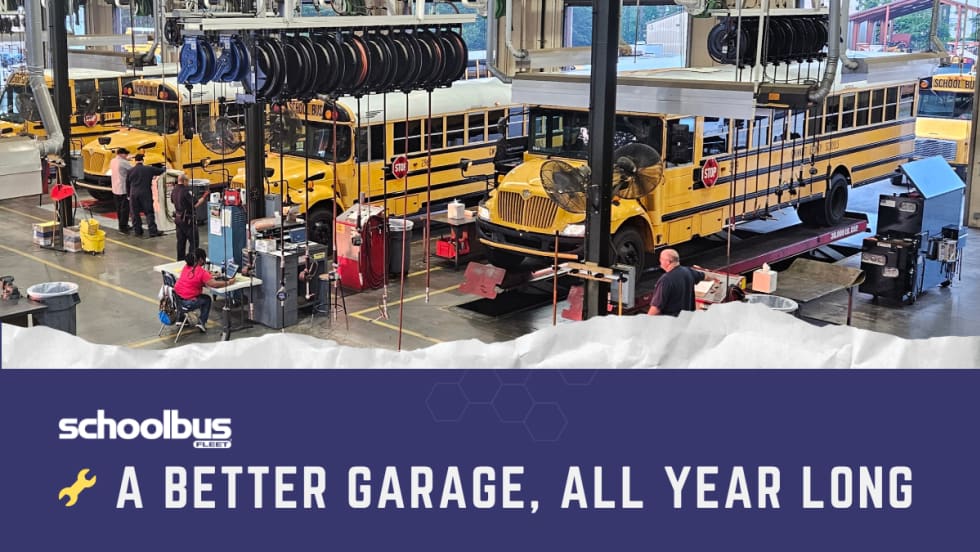
Tips for Ensuring School Bus Garages Are Safe and Warm Year-Round
Cold maintenance bays and rising heating costs? Learn how school bus garages can improve comfort with targeted heating, better airflow, and winter preparation.
Read More →
ASE Highlights School Bus Technician Certification Requirements
ASE is encouraging school bus maintenance professionals to maintain their certifications, highlighting seven specialized tests and five-year renewal requirements.
Read More →
International Adds E-Commerce Capabilities to Fleetrite.com
IC Bus customers can now browse, buy, and track shipments for more than 400,000 aftermarket parts online.
Read More →
The Most Expensive Thing You Do Before Selling a School Bus: Wait
When should you sell an aging school bus? Learn how maintenance, mileage, corrosion, specifications, and timing can affect resale value long before the auction.
Read More →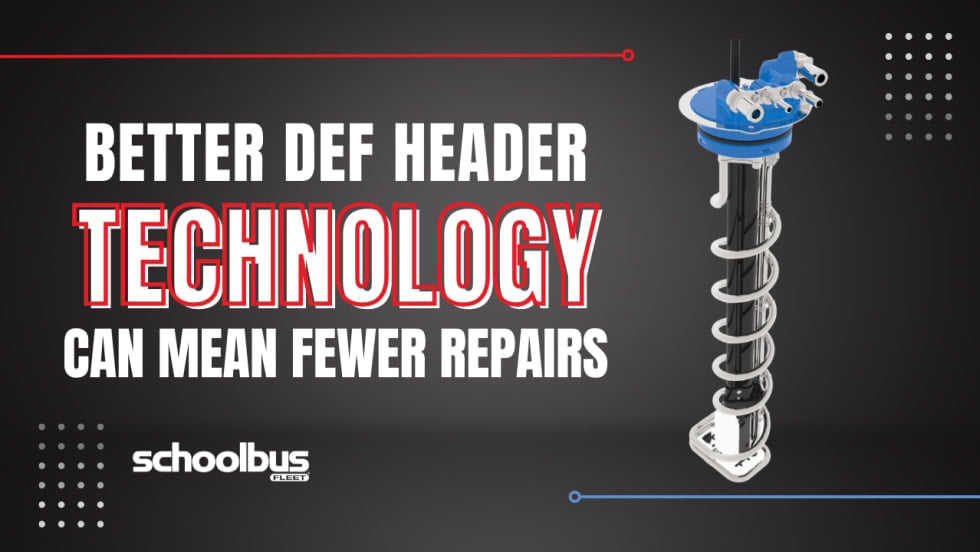
The Evolution of DEF Header Technology: What School Bus Operations Should Know at Replacement Time
See what school bus fleets should consider when replacing DEF headers to improve reliability, reduce repeat repairs, and control maintenance costs.
Read More →
The Essential Guide to School Bus Maintenance and Student Safety
Your district's buses carry students to school every day. This guide shows how predictive maintenance powered by fleet data helps keep buses reliable, drivers accountable and students safer from the first bell to the last stop.
Read More →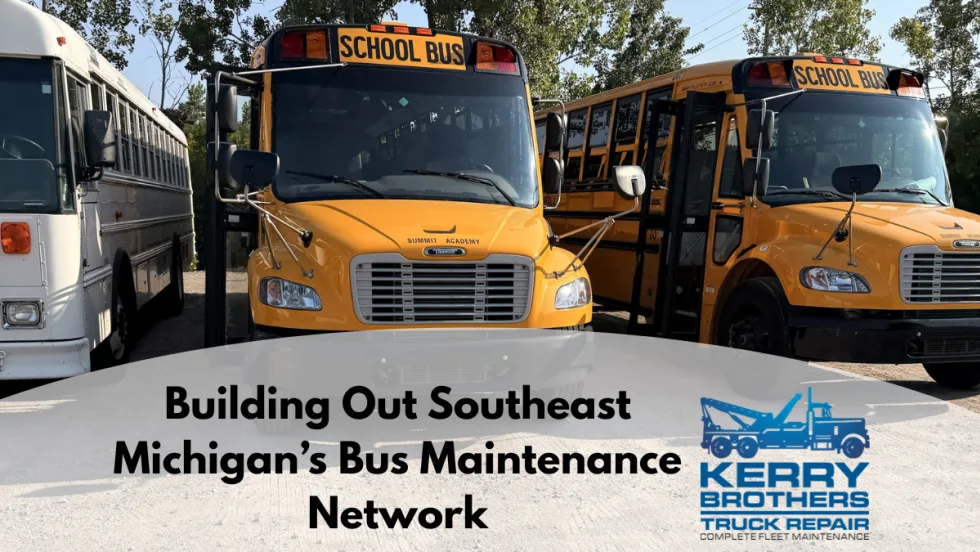
Kerry Brothers Grows Michigan School Bus Repair Network
The acquisition of Downriver Truck and Bus expands Kerry Brothers’ school bus maintenance footprint across southeast Michigan, adding repair capacity, diagnostic resources, and state inspection support.
Read More →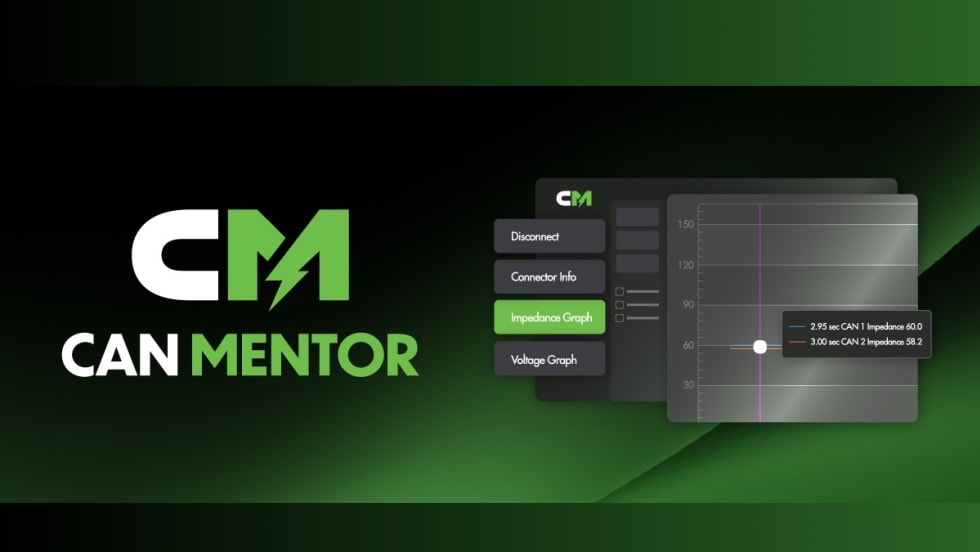
Noregon Introduces CAN Bus Diagnostic Tool, Expands JPRO Features
CAN Mentor and the latest JPRO update aim to simplify vehicle network diagnostics and improve repair efficiency for technicians of all experience levels.
Read More →
Cummins on Smarter, Simpler Engine Innovation
Cummins discusses its first-ever gasoline engine for school buses, EPA 2027, and why bus fleets still want durable, simpler internal combustion options.
Read More →
Report: 72% of Diesel School Buses Now Use Advanced Low-Emission Engines
New data shows advanced low-emission diesel technology continues expanding across school bus fleets, even as electric bus adoption gains momentum.
Read More →