




Laser cutters boost quality, efficiency at Thomas Built
The new equipment allows the school bus manufacturer to eliminate five other machines, reorganize work flow and reduce the average time it takes to fabricate parts by about 25 percent.

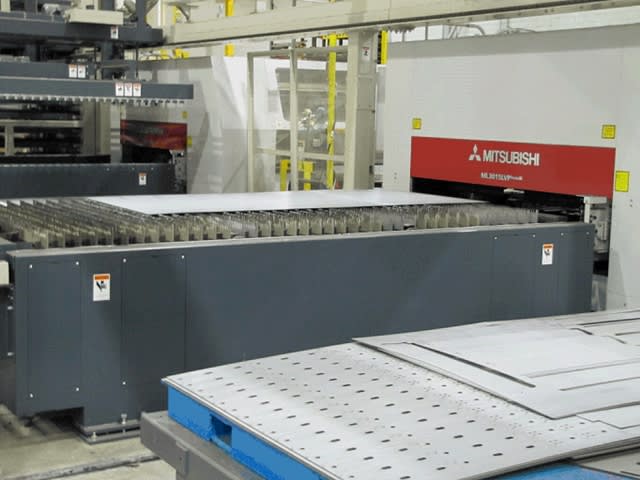
New machines have allowed Thomas Built Buses to reduce the average time it takes to fabricate parts by about 25 percent.
HIGH POINT, N.C. — Thomas Built Buses’ purchase of two Mitsubishi 4000 watt laser cutters and a 20-foot-tall stacker have served as the catalyst for a dramatic change in the company’s fabrication process, officials said.
The new machines, acquired in late 2010 and early 2011, have allowed the company to eliminate five other machines, reorganize work flow and reduce the average time it takes to fabricate parts by about 25 percent.
The new equipment is one of the most recent components of the company’s implementation of lean management, which began in Thomas Built’s Saf-T-Liner C2 bus plant. Assembly lines for Type A and D buses in Plant One were updated and redesigned for more efficient production in 2007 and 2008.
Company officials said that at Thomas Built, lean management is a philosophy of improving quality while driving waste out of the organization at every level, and empowering all employees as waste eliminators and problem solvers to achieve optimum efficiency.
For many years, Thomas Built has fabricated parts for all of its new buses as well as some replacement parts for buses in the field.
With the new laser cutters, the company was able to bring production of more than 100 additional parts in-house. And, with lasers that operate nearly 24 hours a day, seven days a week, every week more parts are being manufactured in-house, reducing costs and speeding up delivery of parts to the bus manufacturing line.
“Thomas Built Buses is vertically integrated,” said Jeff Allen, vice president of operations. “The majority of parts on our buses are fabricated from steel that we buy as coils of raw material direct from the mill.”
With approximately 11,000 active parts in inventory, Thomas Built purchases about 60 million pounds of steel a year.
“These new lasers provide greater precision, so we get the optimal number of parts from a sheet, reducing waste, and we can produce higher quality parts," Allen said. "Because we make most parts in-house, we can get parts to our customers faster and maintain better quality control."
Allen reported that nearly a year after installation, the lasers are on track to pay for themselves in just two years, and they are contributing significantly to Thomas Built’s Zero-Waste-to-Landfill commitment.
“The best way to be Zero-Waste-to-Landfill is to avoid creating waste in the first place,” he said.
The addition of the lasers has reduced fabrication waste and saved on material costs and recycling fees.
More Maintenance
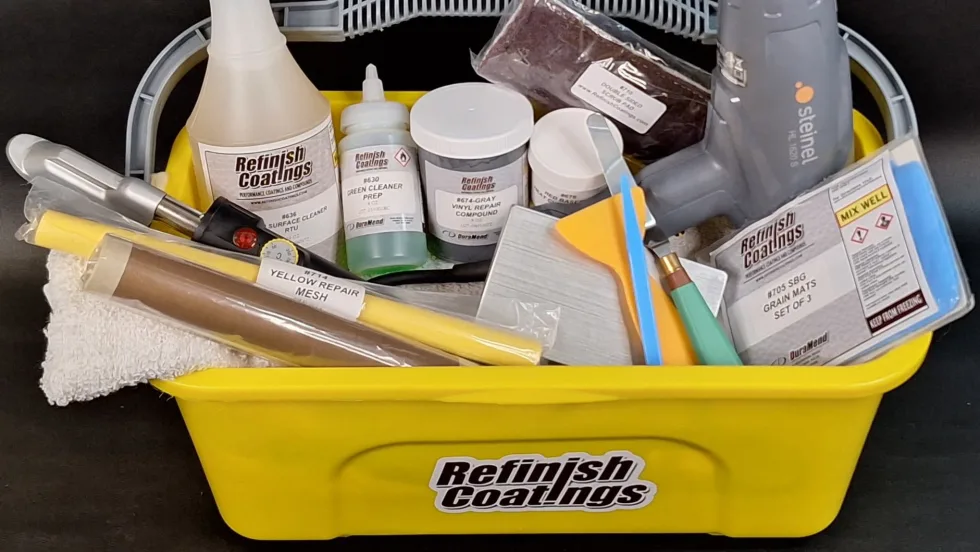
Refinish Coatings Launches School Bus Seat Repair Kit
A new all-in-one vinyl seat repair kit comes with color-matched compounds, tools, and supplies to fix tears, holes, and punctures that kids won't be able to pick.
Read More →
Easy Ways to Reduce School Bus Emissions: Q&A with John Gonzales
Learn how preventive maintenance, driver training, reduced idling, smarter routing, and the right fuel choices can help districts reduce emissions — without investing in new buses.
Read More →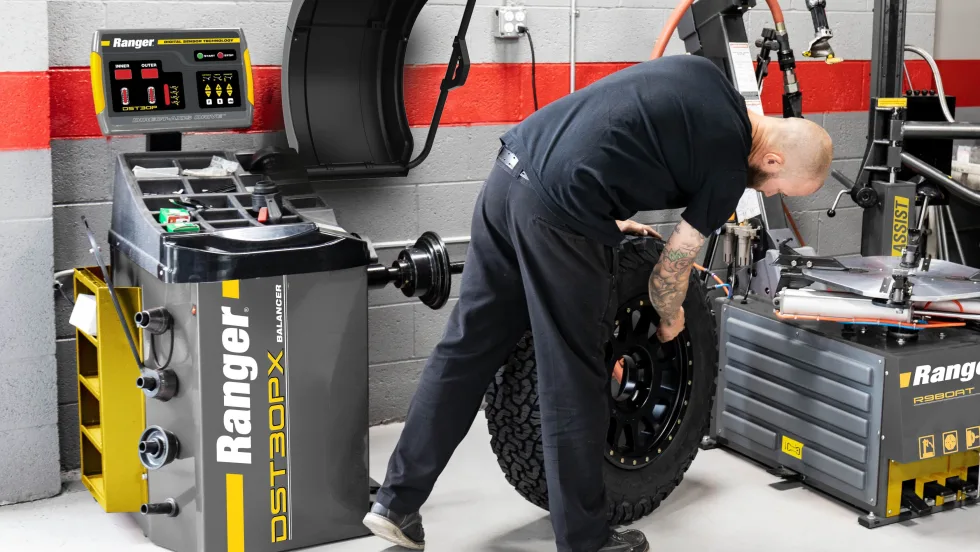
BendPak Launches Ranger DST30PX Wheel Balancer
BendPak's new wheel balancer handles tires up to 43 inches in diameter, with a reinforced design, precise weight placement, and faster service cycles.
Read More →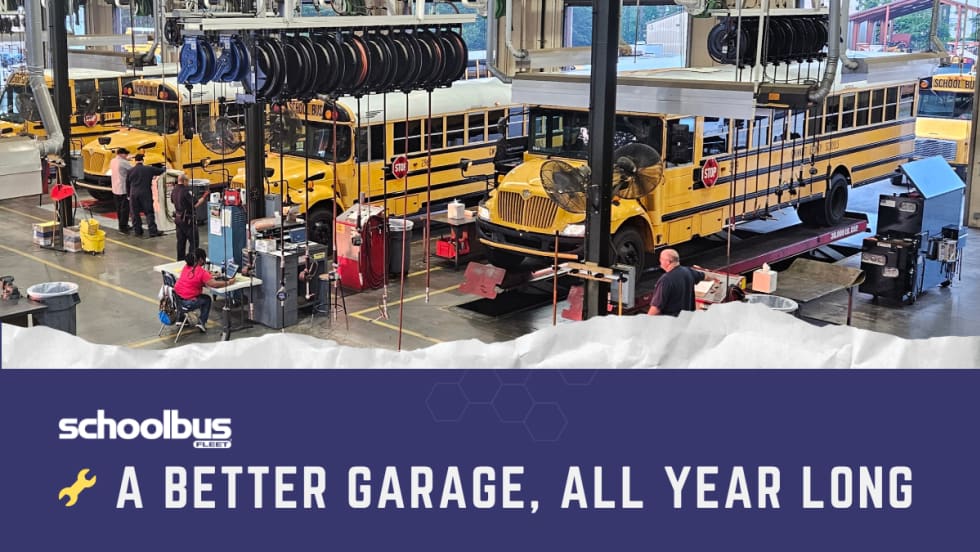
Tips for Ensuring School Bus Garages Are Safe and Warm Year-Round
Cold maintenance bays and rising heating costs? Learn how school bus garages can improve comfort with targeted heating, better airflow, and winter preparation.
Read More →
ASE Highlights School Bus Technician Certification Requirements
ASE is encouraging school bus maintenance professionals to maintain their certifications, highlighting seven specialized tests and five-year renewal requirements.
Read More →
International Adds E-Commerce Capabilities to Fleetrite.com
IC Bus customers can now browse, buy, and track shipments for more than 400,000 aftermarket parts online.
Read More →
The Most Expensive Thing You Do Before Selling a School Bus: Wait
When should you sell an aging school bus? Learn how maintenance, mileage, corrosion, specifications, and timing can affect resale value long before the auction.
Read More →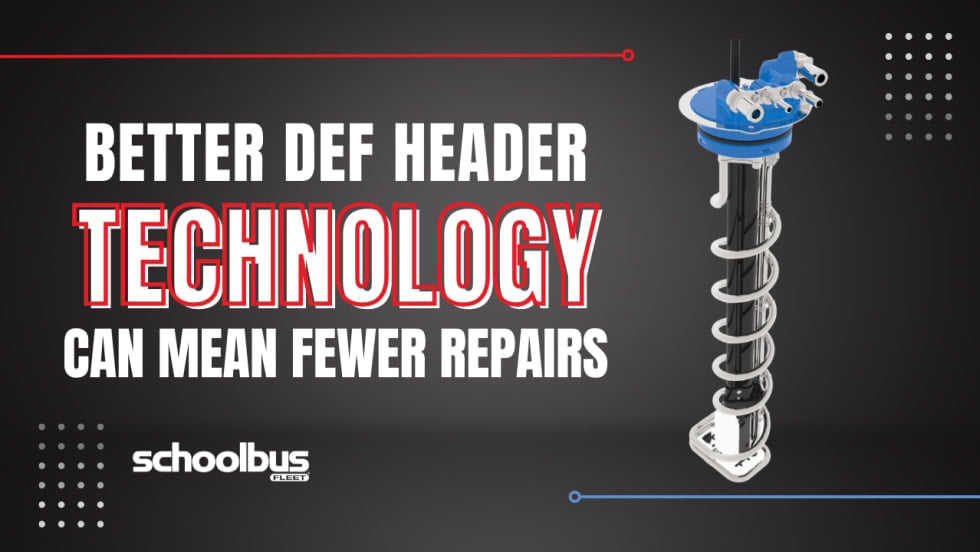
The Evolution of DEF Header Technology: What School Bus Operations Should Know at Replacement Time
See what school bus fleets should consider when replacing DEF headers to improve reliability, reduce repeat repairs, and control maintenance costs.
Read More →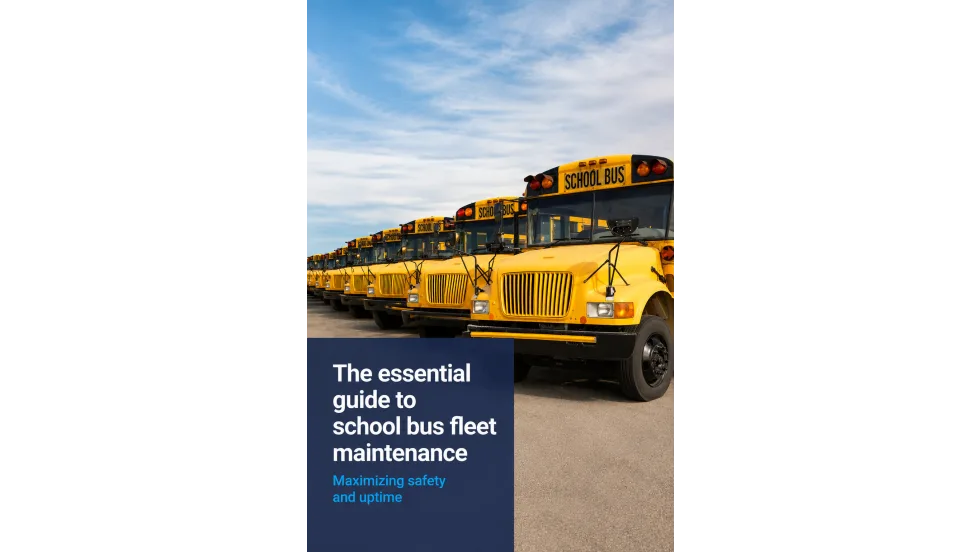
The Essential Guide to School Bus Maintenance and Student Safety
Your district's buses carry students to school every day. This guide shows how predictive maintenance powered by fleet data helps keep buses reliable, drivers accountable and students safer from the first bell to the last stop.
Read More →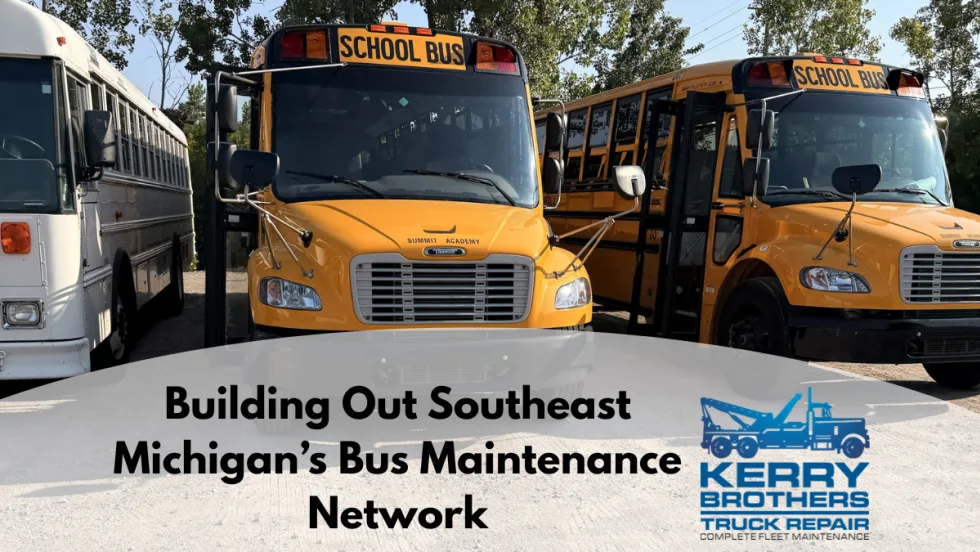
Kerry Brothers Grows Michigan School Bus Repair Network
The acquisition of Downriver Truck and Bus expands Kerry Brothers’ school bus maintenance footprint across southeast Michigan, adding repair capacity, diagnostic resources, and state inspection support.
Read More →