




Indiana district sees maintenance savings with propane buses
Tippecanoe School Corp. uses 32 quarts of oil per oil change with its diesel buses versus seven quarts for its propane buses. Tippecanoe's Alan Fidler, who has twice won the title of America's Best School Bus Technician, discusses savings and other maintenance-related advantages of the district's five propane buses.

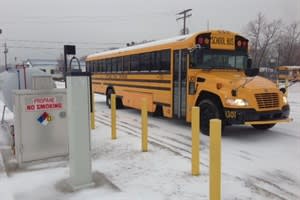
Tippecanoe School Corp. has a fleet of 160 school buses, five of which are powered by propane autogas.
LAFAYETTE, Ind. — A school district here is finding that its propane school buses are providing significant savings, including in the cost of maintenance.
Tippecanoe School Corp. (TSC) has a fleet of 160 school buses, five of which are powered by propane autogas. The district purchased the five 78-passenger propane Blue Bird Vision Type C school buses in spring 2012. They are equipped with ROUSH CleanTech propane autogas fuel systems and Ford 6.8-liter engines.
TSC's Alan Fidler — who won the title of America's Best School Bus Technician in 2011 and 2012 — discussed the propane buses with the Propane Education & Research Council.
“Overall, it’s been very simple and we’ve only had to perform routine maintenance on the propane autogas-powered buses,” Fidler said. “It’s been much easier than working with diesel because of all the emission controls on new diesel engines, which seem to have a lot of problems.”
TSC has seen savings with propane on routine maintenance. Fidler reports using 32 quarts of oil per oil change with the district's diesel buses versus seven quarts for the propane buses. Also, the diesel engines call for two fuel filters that cost $40 each, while the propane units use a single filter that costs substantially less.
“In sum, the school district could change the oil in a propane bus almost five times before matching the price of what it costs to change the oil once in the diesel bus,” Fidler said. “When you tally the cost of oil and what we spend on fuel filters, the savings really add up with propane autogas.”
During winter months, TSC has to contend with the cost of fuel additives for diesel, while propane requires no additives.
“You have to either blend your diesel fuel with kerosene to avoid gelling, which can add up to $3,000 to $5,000, or you have to use an anti-gel,” Fidler said. “The kerosene has a tendency to dry up the diesel, but if you don’t blend, the anti-gel is even more expensive and can put the bus out for a longer time period. We don’t have these issues with propane.”
All of TSC’s technicians went through training before working on the propane buses. They learned how the ROUSH CleanTech fuel injection systems work and how to drain the tank in order to change the fuel pump. However, Fidler noted that the training was very simple, and he said he liked that the district did not have to make any adjustments to garaging or maintenance facilities to accommodate the alternative fuel.
“We service both our propane and diesel buses in the same area,” Fidler said. “We didn’t have to add any special equipment or make any adjustments to the maintenance shop for the new propane autogas buses. It was a very turnkey process.”
More Maintenance
The Essential Guide to School Bus Maintenance and Student Safety
Your district's buses carry students to school every day. This guide shows how predictive maintenance powered by fleet data helps keep buses reliable, drivers accountable and students safer from the first bell to the last stop.
Read More →
Kerry Brothers Grows Michigan School Bus Repair Network
The acquisition of Downriver Truck and Bus expands Kerry Brothers’ school bus maintenance footprint across southeast Michigan, adding repair capacity, diagnostic resources, and state inspection support.
Read More →
Noregon Introduces CAN Bus Diagnostic Tool, Expands JPRO Features
CAN Mentor and the latest JPRO update aim to simplify vehicle network diagnostics and improve repair efficiency for technicians of all experience levels.
Read More →
Cummins on Smarter, Simpler Engine Innovation
Cummins discusses its first-ever gasoline engine for school buses, EPA 2027, and why bus fleets still want durable, simpler internal combustion options.
Read More →
Report: 72% of Diesel School Buses Now Use Advanced Low-Emission Engines
New data shows advanced low-emission diesel technology continues expanding across school bus fleets, even as electric bus adoption gains momentum.
Read More →
Vampire Tools' CAIMAN 7.5-Inch Multi-Purpose Screw Extractor Long-Nose Pliers with Crimper
Vampire Tools introduced the VAMPLIERS Caiman 7.5-inch multi-purpose pliers, combining screw extraction, cutting, crimping, and gripping functions into a single tool designed for fleet maintenance professionals.
Read More →
How Advanced Diagnostics Helps Bus Fleets Stay Ahead of Repairs
Chat with Noregon’s Kevin Smallhorn at ACT Expo about bus diagnostic tools, telematics integration, CNG maintenance support, and strategies to help reduce downtime and improve uptime.
Read More →
How School Bus Fleets are Getting Ahead of Breakdowns
Don’t let bus downtime wear you down. Here’s how bus operators are shifting from manual processes to AI-powered, data-driven maintenance systems for improved reliability and safety.
Read More →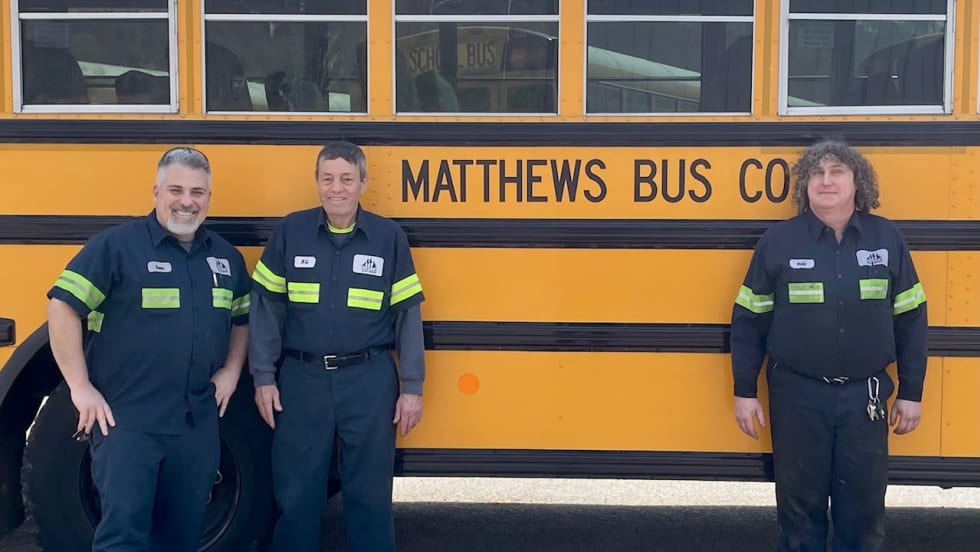
Pennsylvania School Bus Maintenance Team Praised for Dedication to Safety
Matthews Bus Company’s West Jefferson received a letter of commendation from the Pennsylvania State Police for their fleet inspections.
Read More →
From Chaos to Clarity: How School Districts Are Running Leaner Transportation Operations
Covering 38 routes on a Friday afternoon. Buses idling while routes overlap. Parents calling nonstop about late arrivals. Sound familiar? This whitepaper explores how district transportation leaders solved these exact problems — and what measurable results followed.
Read More →