




High-Lift Wheel Dolly Designed to Boost Vehicle Maintenance Safety
Stertil-Koni's WDA-500 is used for installing and removing the wheels on raised school buses and other heavy-duty vehicles.

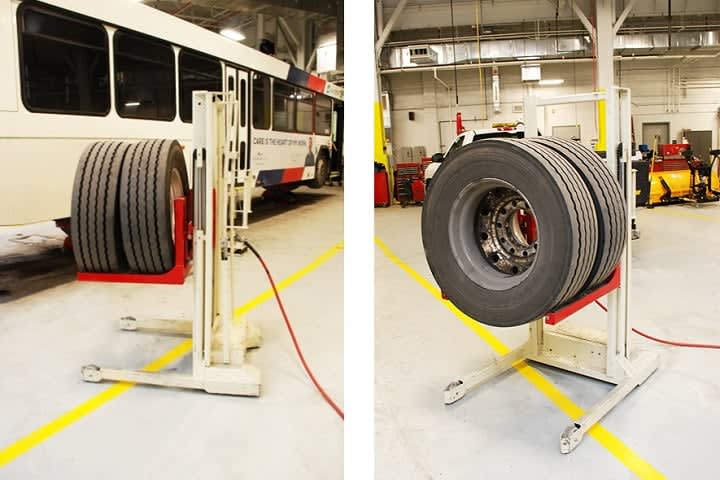
Stertil-Koni's WDA-500 is designed for installing and removing the wheels on raised school buses and other heavy-duty vehicles.
Stertil-Koni's WDA-500 is designed for installing and removing the wheels on raised school buses and other heavy-duty vehicles.
STEVENSVILLE, Md. — Stertil-Koni has introduced the WDA-500 high-lift wheel dolly to enhance safety and performance in heavy-duty vehicle maintenance facilities.
With a lifting height of 28.23 inches, the wheel dolly offers efficiency and stable ergonomics when lifting disc brakes, brake drums, fuel tanks, tool boxes, calipers, and many other heavy-duty parts.
“First and foremost, wheel dollies are used for removal and installation of single and dual wheels on raised buses and trucks,” said Peter Bowers, technical sales support manager at Stertil-Koni.
Bowers added that the WDA-500 includes a telescopic crane arm option that turns the model into a universal lifting tool.
The WDA-500 model has a capacity of 1,100 pounds, allowing technicians to remove large wheels that often weigh up to 500 pounds each, according to Stertil-Koni. The crane arm, fitted with a 360-degree pivoting hook, swivels aside to allow wheel removal operations to be completed without straining the technician, according to the company.
“As with all Stertil-Koni high-lift wheel dolly models, it dramatically lowers the occurrence of back injuries and abdominal strain because work can be completed at an altitude which is higher than floor level and in line with a technician working in a full standing position,” Bowers said.
The WDA-500 can accommodate wheel sizes from 10.63 to 51.18 inches. The dolly stands 47.17 inches high with a width of 45.28 inches and length of 33.30 inches. The high-lift wheel dolly can also be used with mobile column lifts, platform, and in-ground lifts.
More Maintenance
The Essential Guide to School Bus Maintenance and Student Safety
Your district's buses carry students to school every day. This guide shows how predictive maintenance powered by fleet data helps keep buses reliable, drivers accountable and students safer from the first bell to the last stop.
Read More →
Kerry Brothers Grows Michigan School Bus Repair Network
The acquisition of Downriver Truck and Bus expands Kerry Brothers’ school bus maintenance footprint across southeast Michigan, adding repair capacity, diagnostic resources, and state inspection support.
Read More →
Noregon Introduces CAN Bus Diagnostic Tool, Expands JPRO Features
CAN Mentor and the latest JPRO update aim to simplify vehicle network diagnostics and improve repair efficiency for technicians of all experience levels.
Read More →
Cummins on Smarter, Simpler Engine Innovation
Cummins discusses its first-ever gasoline engine for school buses, EPA 2027, and why bus fleets still want durable, simpler internal combustion options.
Read More →
Report: 72% of Diesel School Buses Now Use Advanced Low-Emission Engines
New data shows advanced low-emission diesel technology continues expanding across school bus fleets, even as electric bus adoption gains momentum.
Read More →
Vampire Tools' CAIMAN 7.5-Inch Multi-Purpose Screw Extractor Long-Nose Pliers with Crimper
Vampire Tools introduced the VAMPLIERS Caiman 7.5-inch multi-purpose pliers, combining screw extraction, cutting, crimping, and gripping functions into a single tool designed for fleet maintenance professionals.
Read More →
How Advanced Diagnostics Helps Bus Fleets Stay Ahead of Repairs
Chat with Noregon’s Kevin Smallhorn at ACT Expo about bus diagnostic tools, telematics integration, CNG maintenance support, and strategies to help reduce downtime and improve uptime.
Read More →
How School Bus Fleets are Getting Ahead of Breakdowns
Don’t let bus downtime wear you down. Here’s how bus operators are shifting from manual processes to AI-powered, data-driven maintenance systems for improved reliability and safety.
Read More →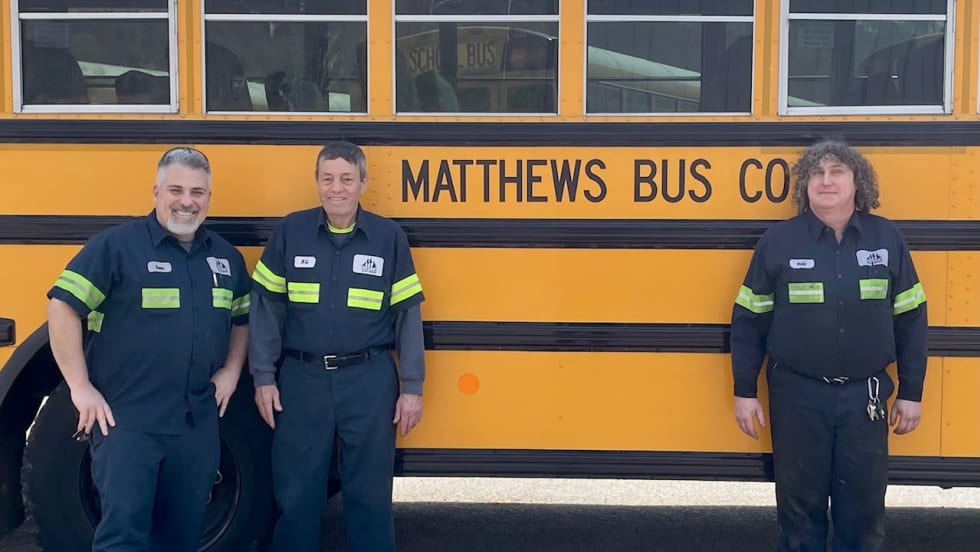
Pennsylvania School Bus Maintenance Team Praised for Dedication to Safety
Matthews Bus Company’s West Jefferson received a letter of commendation from the Pennsylvania State Police for their fleet inspections.
Read More →
From Chaos to Clarity: How School Districts Are Running Leaner Transportation Operations
Covering 38 routes on a Friday afternoon. Buses idling while routes overlap. Parents calling nonstop about late arrivals. Sound familiar? This whitepaper explores how district transportation leaders solved these exact problems — and what measurable results followed.
Read More →