




ALI: Building Code Reinforces Importance of Installing Certified Vehicle Lifts
New commentary in the latest edition of the building code in use or adopted by all 50 U.S. states clarifies that all installed vehicle lifts must conform to ANSI/ALI ALCTV.

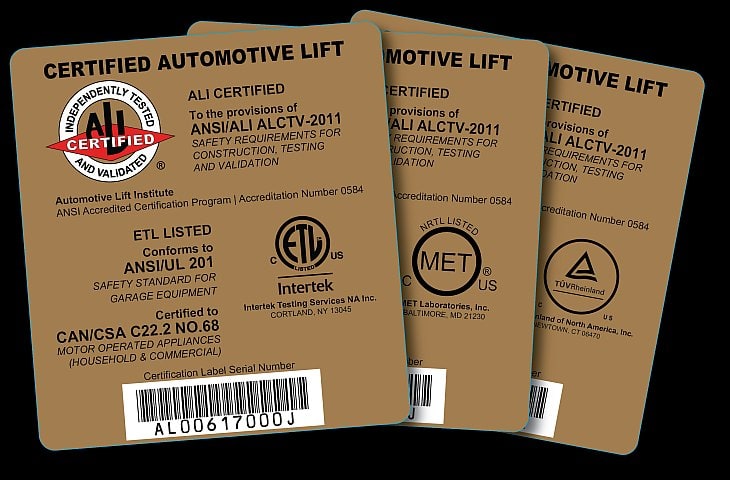
All lifts installed in the U.S. and other areas that use the International Building Code must conform with the safety standard ANSI/ALI ALCTV. Only lifts that have been certified to comply with this standard can wear an ALI Gold Label, shown here.
All lifts installed in the U.S. and other areas that use the International Building Code must conform with the safety standard ANSI/ALI ALCTV. Only lifts that have been certified to comply with this standard can wear an ALI Gold Label, shown here.
CORTLAND, N.Y. — New commentary in the latest edition of the building code in use or adopted by all 50 U.S. states clarifies that all installed vehicle lifts must conform with the American National Safety Standard ANSI/ALI ALCTV (current edition) “Safety Requirements for the Construction, Testing and Validation of Automotive Lifts.”
The International Building Code (IBC) is also in use or adopted by the District of Columbia, Guam, Northern Marianas Islands, New York City, the U.S. Virgin Islands, and Puerto Rico.
“To put it as simply as possible: If you’re installing a vehicle lift in an area covered by the International Building Code, you must choose a lift that meets ANSI/ALI ALCTV. In other words, choose an Automotive Lift Institute certified lift, or you’re violating the IBC,” explained R.W. “Bob” O’Gorman, Automotive Lift Institute (ALI) president. “Lift customers and code enforcement officials can easily identify certified lifts by the gold ALI certification label that is applied to every lift that passes third-party testing and achieves certification. A complete list of certified lifts is available at www.autolift.org/ali-directory-of-certified-lifts.”
Although the IBC has long covered automotive lifts by reference, there was still some confusion in the marketplace, O’Gorman added. “We’ve been contacted by many lift customers who had been incorrectly told that the IBC only applies to elevators, not vehicle lifts. The new language in the supporting commentary of the 2015 IBC makes it very clear that building inspectors can enforce the ANSI/ALI standard regarding lifts.”
From the 2015 IBC, Chapter 30, Section 3001.2 Referenced Standards, Commentary: “The enforceability of a standard is established in this section, and applies wherever the provisions of this chapter do not otherwise indicate a requirement. Therefore, even if a standard is not referenced anywhere else within this chapter it will be applicable to such systems and equipment. For example, automotive lifts are addressed by the reference to ANSI/ALI ALCTV, but no further requirements are found in Chapter 30. This standard is fully applicable to such automotive lifts.”
ANSI/ALI ALCTV is a nationally recognized safety and performance standard covering the construction, testing and validation of vehicle lifts that are used to perform service on cars, trucks, vans, and other vehicles, according to the ALI. To fully comply with the ALI certification program supporting the standard, all lift models must be tested by one of three approved, third-party, Occupational Safety and Health Administration (OSHA) accredited Nationally Recognized Testing Laboratories.
The testing includes listing of the electrical system and validation of the structural integrity of all the lift’s systems and components, proper function of its controls and load-holding devices, proper lowering speeds, and mechanical overload protection. Part of the testing process involves loading the lift to 150% of its rated load capacity and ensuring that no visual deformation of the lift’s structural elements or components occurs. Instructional materials and the lift manufacturer’s production facility must also meet requirements outlined in the standard.
Lifts that are tested by one of the approved laboratories and found to meet all of the requirements outlined in the ANSI/ALI ALCTV standard receive a gold ALI Certified label. ALI’s gold label is the only industry-recognized documentation that the specific lift model has been tested and certified to meet the industry’s performance and safety standards, according to the ALI. Not all lifts for sale in today’s market are certified, regardless of country of origin.Therefore, the burden of purchasing and installing lifts that meet ANSI/ALI ALCTV and comply with the IBC rests on the lift buyer.
More Maintenance
ASE Highlights School Bus Technician Certification Requirements
ASE is encouraging school bus maintenance professionals to maintain their certifications, highlighting seven specialized tests and five-year renewal requirements.
Read More →
International Adds E-Commerce Capabilities to Fleetrite.com
IC Bus customers can now browse, buy, and track shipments for more than 400,000 aftermarket parts online.
Read More →
The Most Expensive Thing You Do Before Selling a School Bus: Wait
When should you sell an aging school bus? Learn how maintenance, mileage, corrosion, specifications, and timing can affect resale value long before the auction.
Read More →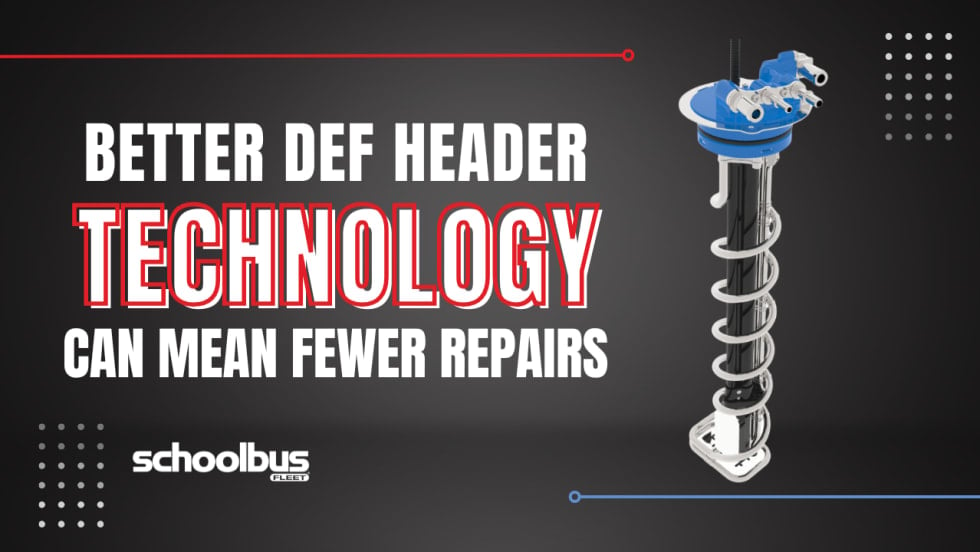
The Evolution of DEF Header Technology: What School Bus Operations Should Know at Replacement Time
See what school bus fleets should consider when replacing DEF headers to improve reliability, reduce repeat repairs, and control maintenance costs.
Read More →
The Essential Guide to School Bus Maintenance and Student Safety
Your district's buses carry students to school every day. This guide shows how predictive maintenance powered by fleet data helps keep buses reliable, drivers accountable and students safer from the first bell to the last stop.
Read More →
Kerry Brothers Grows Michigan School Bus Repair Network
The acquisition of Downriver Truck and Bus expands Kerry Brothers’ school bus maintenance footprint across southeast Michigan, adding repair capacity, diagnostic resources, and state inspection support.
Read More →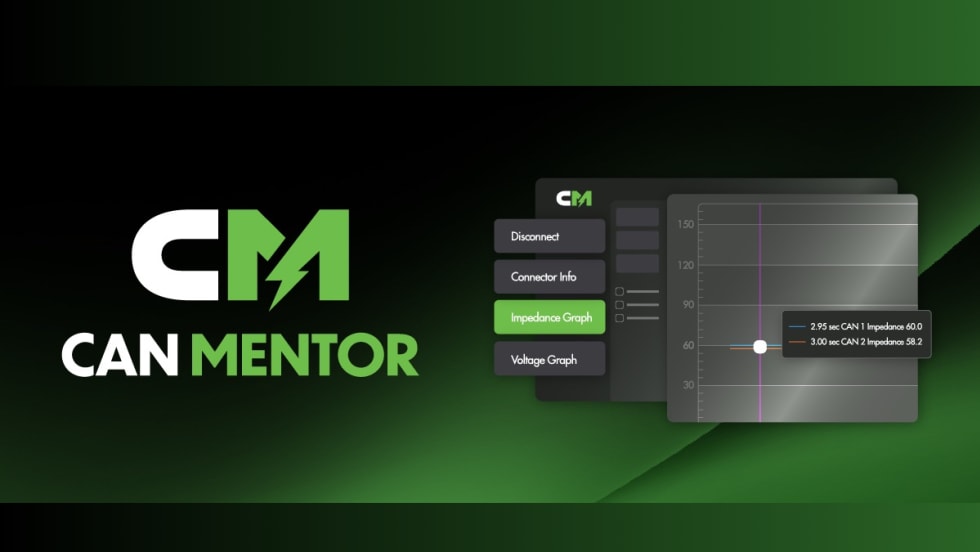
Noregon Introduces CAN Bus Diagnostic Tool, Expands JPRO Features
CAN Mentor and the latest JPRO update aim to simplify vehicle network diagnostics and improve repair efficiency for technicians of all experience levels.
Read More →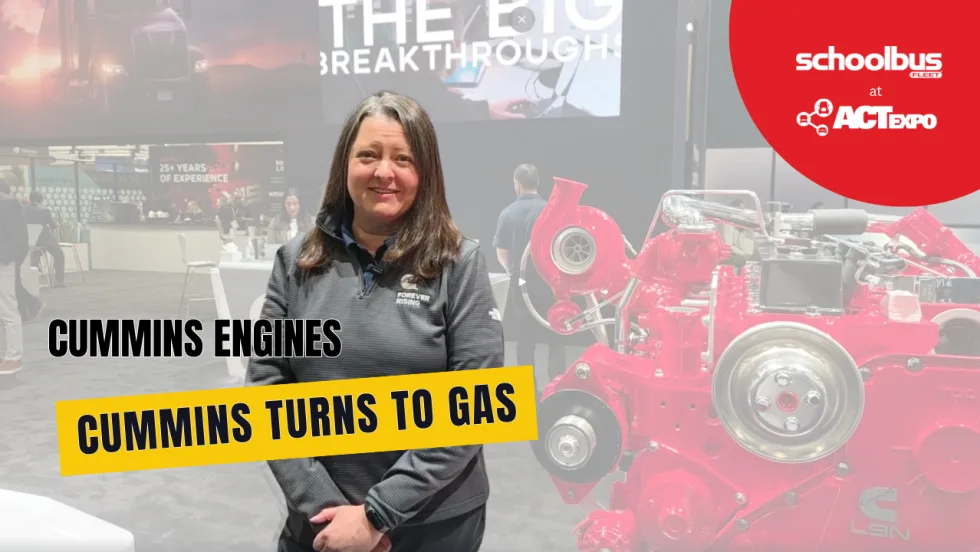
Cummins on Smarter, Simpler Engine Innovation
Cummins discusses its first-ever gasoline engine for school buses, EPA 2027, and why bus fleets still want durable, simpler internal combustion options.
Read More →
Report: 72% of Diesel School Buses Now Use Advanced Low-Emission Engines
New data shows advanced low-emission diesel technology continues expanding across school bus fleets, even as electric bus adoption gains momentum.
Read More →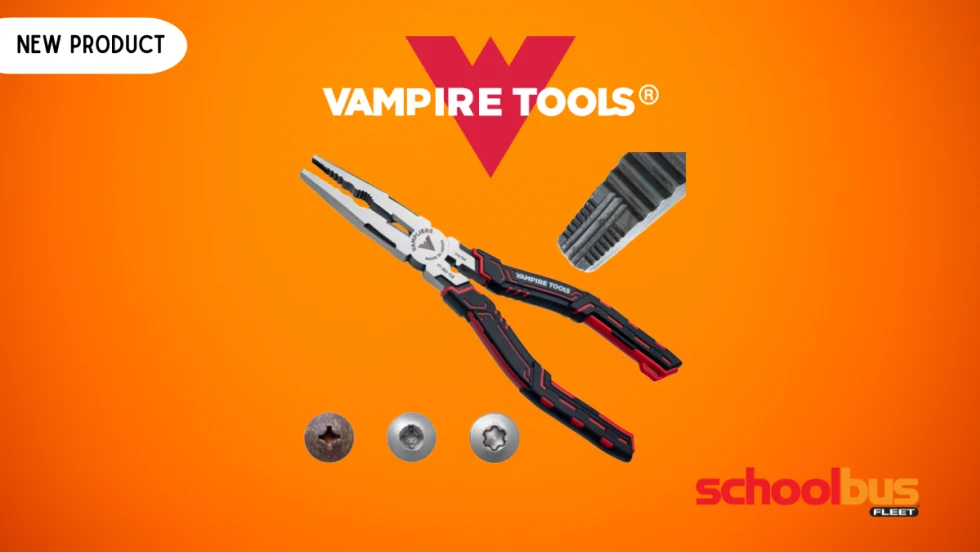
Vampire Tools' CAIMAN 7.5-Inch Multi-Purpose Screw Extractor Long-Nose Pliers with Crimper
Vampire Tools introduced the VAMPLIERS Caiman 7.5-inch multi-purpose pliers, combining screw extraction, cutting, crimping, and gripping functions into a single tool designed for fleet maintenance professionals.
Read More →