




Advances in Transmission Jacks Lift Productivity
According to Stertil-Koni, new technologies that have been incorporated into transmission jacks have increased lifting capacities and improved stability.


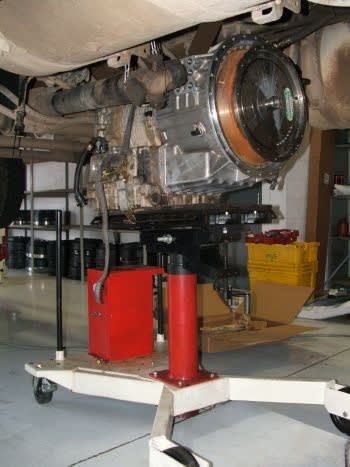
According to Stertil-Koni, new technologies that have been incorporated into transmission jacks have increased lifting capacities and improved stability.
As buses and trucks grow larger and more complex, busy maintenance shops — including those serving school districts — are demanding new technologies that make the work environment safer and more productive, according to heavy-duty vehicle lift supplier Stertil-Koni.
One of the most pressing needs is how to efficiently service bus and truck transmissions, which typically weigh 1,500 to 3,000 pounds.
“They are extremely heavy pieces of machinery that, when service is required, have to be manually removed from the undercarriage of the vehicle,” said Peter Bowers, technical sales support manager at Stertil-Koni.
Accordingly, new technologies have been incorporated into transmission jacks, which are designed for the removal and installation of transmissions, differentials, and other components on heavy vehicles. The latest advances for transmission jacks include:
• Increased lifting capacities
• Newer “X”-shaped base frames that improve stability and access
• Base frames that have been broadened for further steadiness
• Fine-tuning adjustments to place the transmission jack in the optimal position
• Hydraulics for one-touch lifting and lowering
Bowers said that Stertil-Koni’s transmission jacks offer high capacity. The fully hydraulic telescopic system can support 3,500 pounds at a speed of 30 inches per minute with a lifting range of 37 to 74 inches. Also, Bowers said, full-swivel dolly wheels ensure a tight turning radius, with mechanical locks for safety.
Stertil-Koni transmission jacks are constructed with heavy steel framing and are available in two formats: battery-operated and pneumatic. The battery-operated jack can be charged overnight and used without cables. The pneumatic jack has an attached air hose to keep it working.
Adaptable transmission jacks can be used for a variety of service jobs in fleet maintenance facilities, including the servicing of transmissions, diesel particulate filters, gas tanks, rear and front differentials, and secondary auxiliary tasks that require lifting heavy loads in tight spaces.
Transmission jacks, Bowers added, “have become an absolutely essential piece of equipment for today’s modern heavy-duty vehicle maintenance facilities. They enhance safety, improve ergonomics, and boost productivity — every time.”
For more information on Stertil-Koni's transmission jacks, go here.
More Maintenance

Easy Ways to Reduce School Bus Emissions: Q&A with John Gonzales
Learn how preventive maintenance, driver training, reduced idling, smarter routing, and the right fuel choices can help districts reduce emissions — without investing in new buses.
Read More →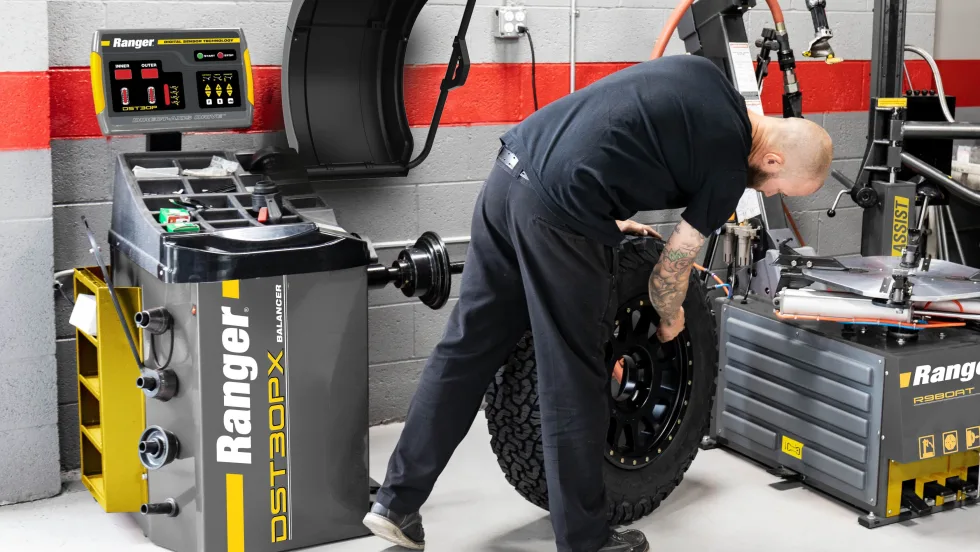
BendPak Launches Ranger DST30PX Wheel Balancer
BendPak's new wheel balancer handles tires up to 43 inches in diameter, with a reinforced design, precise weight placement, and faster service cycles.
Read More →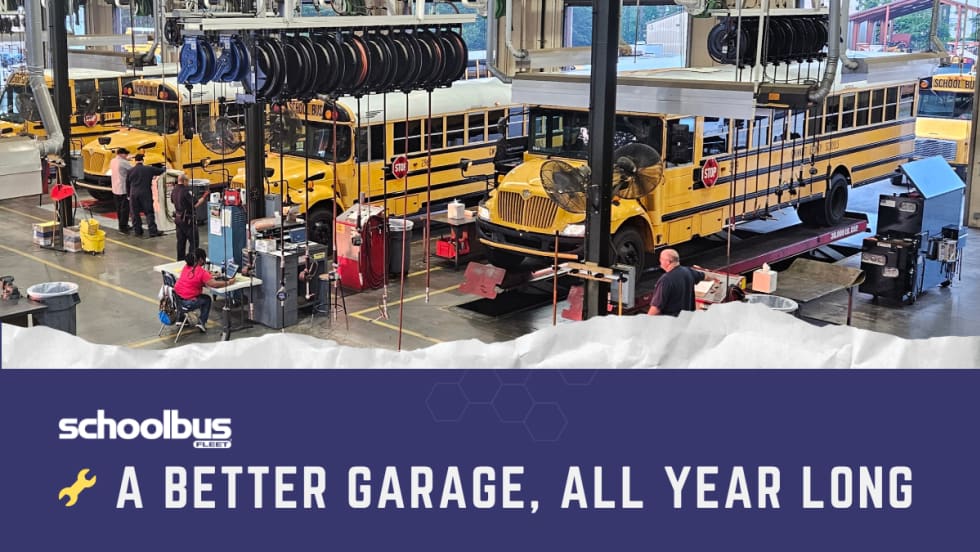
Tips for Ensuring School Bus Garages Are Safe and Warm Year-Round
Cold maintenance bays and rising heating costs? Learn how school bus garages can improve comfort with targeted heating, better airflow, and winter preparation.
Read More →
ASE Highlights School Bus Technician Certification Requirements
ASE is encouraging school bus maintenance professionals to maintain their certifications, highlighting seven specialized tests and five-year renewal requirements.
Read More →
International Adds E-Commerce Capabilities to Fleetrite.com
IC Bus customers can now browse, buy, and track shipments for more than 400,000 aftermarket parts online.
Read More →
The Most Expensive Thing You Do Before Selling a School Bus: Wait
When should you sell an aging school bus? Learn how maintenance, mileage, corrosion, specifications, and timing can affect resale value long before the auction.
Read More →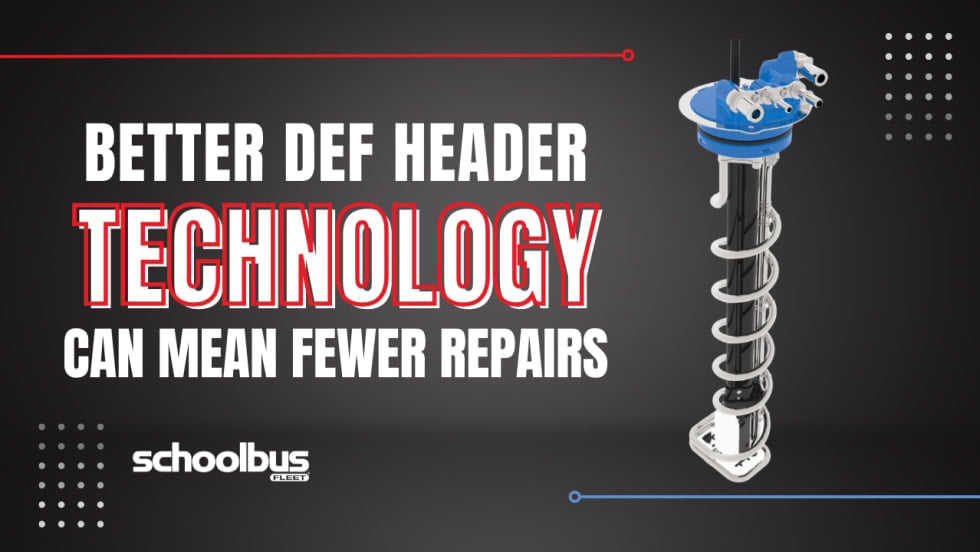
The Evolution of DEF Header Technology: What School Bus Operations Should Know at Replacement Time
See what school bus fleets should consider when replacing DEF headers to improve reliability, reduce repeat repairs, and control maintenance costs.
Read More →
The Essential Guide to School Bus Maintenance and Student Safety
Your district's buses carry students to school every day. This guide shows how predictive maintenance powered by fleet data helps keep buses reliable, drivers accountable and students safer from the first bell to the last stop.
Read More →
Kerry Brothers Grows Michigan School Bus Repair Network
The acquisition of Downriver Truck and Bus expands Kerry Brothers’ school bus maintenance footprint across southeast Michigan, adding repair capacity, diagnostic resources, and state inspection support.
Read More →
Noregon Introduces CAN Bus Diagnostic Tool, Expands JPRO Features
CAN Mentor and the latest JPRO update aim to simplify vehicle network diagnostics and improve repair efficiency for technicians of all experience levels.
Read More →