




Will Nitrogen Fill Cost-Saving Expectations?
Texas school district anticipates big savings in fuel consumption and tire maintenance in switching its tires from air to nitrogen.
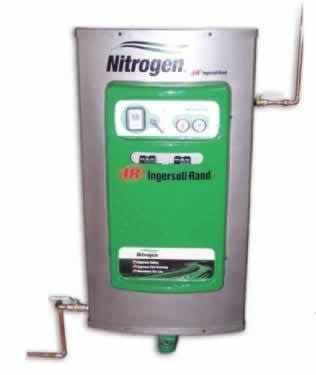
Edwin Garner is pioneering a new method in decreasing expenses in school transportation — filling school bus tires with nitrogen instead of regular air.
As the director of transportation for the Waller (Texas) Independent School District, Garner recently installed a nitrogen generator and accompanying compressor to fill the tires of the district’s 82 buses with nitrogen by the beginning of summer.
The move is rare among school bus operators. Though nitrogen is commonly used in auto racing and is even required for commercial aircrafts by the Federal Aviation Administration, it has yet to catch on in the busing industry. To Garner, however, it was just a matter of thoroughly researching the topic and then quantifying the savings for his supervisor’s authorization.
Garner got the idea to use nitrogen four years ago, and he has researched the topic heavily. He has read everything he could find on nitrogen and talked to people who were using it, and in June of last year he approached his supervisor with his research.
“My immediate supervisor is our business manager for our school district,” Garner says, “and he’s a CPA [certified public accountant], so it’s strictly bottom line for him. If you can’t show that it’s going to actually improve the operation and save money, then don’t even bother bringing it to him.”
Garner showed that by using nitrogen, the district would be able to save money on fuel costs and tire maintenance. Within 16 months, he said, they should be able to fully recoup their investments of installing the generator and compressor, figured at about $13,818. A wealth of information is readily available on using nitrogen in tires. There are many Websites that cover nitrogen’s benefits over air, and some feature nitrogen calculators, which show how much money can be saved by making the switch.
Why is nitrogen better?
Nitrogen is a very common gas, making up 78 percent of the air we breathe every day (with 21 percent being oxygen and the other 1 percent being water vapor and other gases), and in inflating tires, the gas has significant benefits over regular compressed air.
One benefit is due to nitrogen being a larger molecule than oxygen. A tire filled with regular air will lose pressure sooner than a tire filled with just nitrogen, because the oxygen molecules in the air will slip through the rubber more quickly.
David Connaughton, a product sales manager at Parker Hannifin, which produces nitrogen generators, says that the difference is vast.
{+PAGEBREAK+} “An air-inflated tire will lose about 2 psi a month, and a nitrogen-inflated tire will lose 2 psi in six months,” Connaughton says. “That translates into better tire wear, longer tire life and better fuel economy.”
Another benefit of nitrogen is that it is less corrosive than oxygen. “Tire fatigue,” as it is commonly referred to, is actually a deterioration of rubber as a result of chemical oxidation. The oxygen chemically reacts with the rubber, causing it to lose the key qualities that characterize it as rubber: elasticity and strength. As a result, the rubber becomes more like non-rigid plastics, and the tire is no longer usable.
With nitrogen, however, tire life is extended and corrosion is reduced because the nitrogen molecule does not have the same corrosive effect as an oxygen molecule.
“Nitrogen is commonly used in industry to preserve things and keep them fresh,” Connaughton says. “Take, for example, potato chips: All of Frito-Lay’s potato chips are packaged in nitrogen to give them a longer shelf life.”
Generating the gas
In order to put nitrogen into tires, the gas must first be collected by a generator. The process entails taking compressed air and pushing it through permeable membranes that allow smaller oxygen molecules to leak out while the larger nitrogen molecules are collected in a holding tank.
All that is needed is a compressor to push the air, a generator to filter the nitrogen and then a holding tank to collect the nitrogen. School bus operators can use their own compressors if they have them, but most manufacturers that make generators sell compressors as well. Ingersoll-Rand manufactures generators and compressors as well as other accessories, and Nitrogen Direct is a vendor that sells Ingersoll-Rand’s products. The president of Nitrogen Direct, Carol Krieger, says that assembly of a generator is quite simple.
“All it requires is cutting the compressor line, putting a black malleable ‘T’ in there, threading a hose into it, putting a hose on the other side and then opening it to the floor,” Krieger says.
Purity is a key consideration for generators. Krieger says that the industry standard is 95 percent, but for commercial-size vehicles such as buses and trucks, a purity of 98 percent is more appropriate.
When changing a tire from air to nitrogen, it is important to purge the tire twice. After filling a deflated tire with nitrogen, purge it again to ensure that all of the air escapes, and then fill it with nitrogen again. This is the only way to ensure that a tire contains a sufficient purity level.
Maintenance of the generators is reported to be low, with a regular changing of primary filters being recommended at once a year and costing about $100. Connaughton of Parker Hannifin says that the switching of these filters is easy: “A screwdriver and a wrench, and they’re off and running.”
A matter of economics
For Garner at Waller Independent School District, the choice to switch to nitrogen came down to simple economics, and his calculations consistently projected savings.
“I was a real pessimist working through those numbers,” he says. “I put in the lowest credits going through, but I kept plugging it in and the numbers kept showing that it would actually pay for itself.”
Once the district’s business manager saw this and did his own research, he told Garner that it was an investment worth making. “He just said that this is something we need to be doing because it can save money for our school district, which takes it out of transportation and puts it back in the classroom,” Garner says.
The district purchased a generator and compressor made by Ingersoll-Rand and installed the system in early February. Though it is too early to see results, the district is hopeful. So far, they have inflated the tires of eight of their buses with nitrogen. Garner reports that the generator is working well and that the new compressor is much quieter than their old one.
“It’s working better than sliced bread,” he says. “It’s so quiet now in the shop that we can actually hold meetings out there beside it while it’s running.”
For more information about using nitrogen in tires, visit the Get Nitrogen Institute at www.getnitrogen.org; Nitrogen Direct at www.nitrogendirect.com; and Parker Hannifin at www.parkertiresaver.com.
More Maintenance
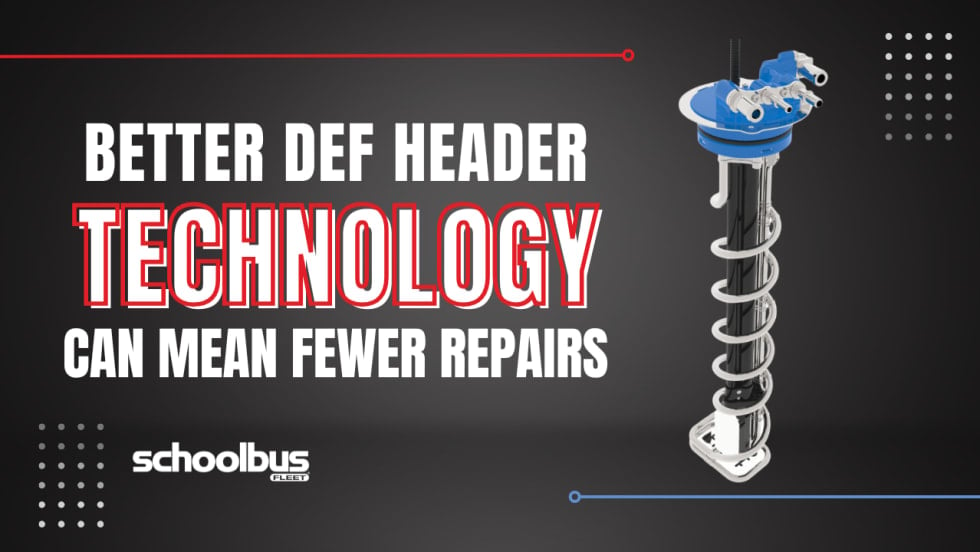
The Evolution of DEF Header Technology: What School Bus Operations Should Know at Replacement Time
See what school bus fleets should consider when replacing DEF headers to improve reliability, reduce repeat repairs, and control maintenance costs.
Read More →
The Essential Guide to School Bus Maintenance and Student Safety
Your district's buses carry students to school every day. This guide shows how predictive maintenance powered by fleet data helps keep buses reliable, drivers accountable and students safer from the first bell to the last stop.
Read More →
Kerry Brothers Grows Michigan School Bus Repair Network
The acquisition of Downriver Truck and Bus expands Kerry Brothers’ school bus maintenance footprint across southeast Michigan, adding repair capacity, diagnostic resources, and state inspection support.
Read More →
Noregon Introduces CAN Bus Diagnostic Tool, Expands JPRO Features
CAN Mentor and the latest JPRO update aim to simplify vehicle network diagnostics and improve repair efficiency for technicians of all experience levels.
Read More →
Cummins on Smarter, Simpler Engine Innovation
Cummins discusses its first-ever gasoline engine for school buses, EPA 2027, and why bus fleets still want durable, simpler internal combustion options.
Read More →
Report: 72% of Diesel School Buses Now Use Advanced Low-Emission Engines
New data shows advanced low-emission diesel technology continues expanding across school bus fleets, even as electric bus adoption gains momentum.
Read More →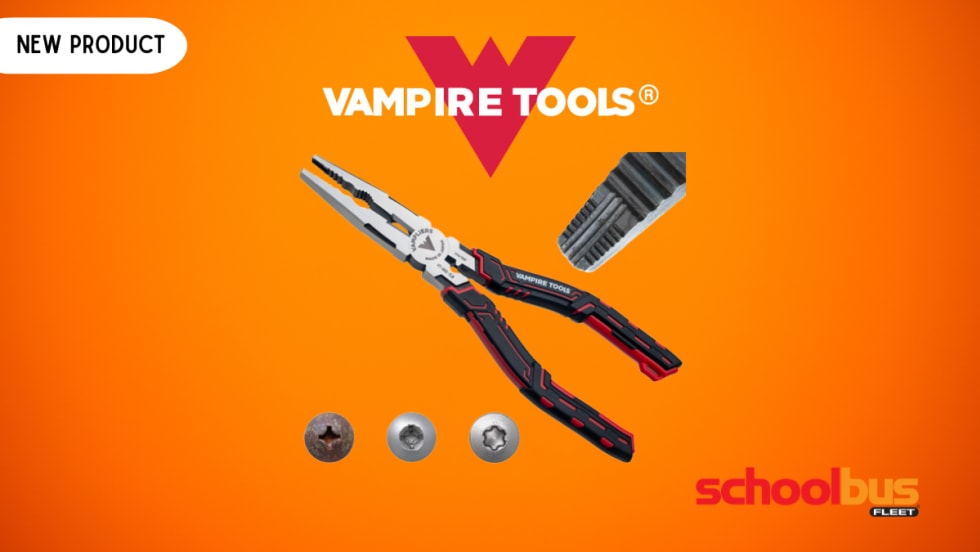
Vampire Tools' CAIMAN 7.5-Inch Multi-Purpose Screw Extractor Long-Nose Pliers with Crimper
Vampire Tools introduced the VAMPLIERS Caiman 7.5-inch multi-purpose pliers, combining screw extraction, cutting, crimping, and gripping functions into a single tool designed for fleet maintenance professionals.
Read More →
How Advanced Diagnostics Helps Bus Fleets Stay Ahead of Repairs
Chat with Noregon’s Kevin Smallhorn at ACT Expo about bus diagnostic tools, telematics integration, CNG maintenance support, and strategies to help reduce downtime and improve uptime.
Read More →
How School Bus Fleets are Getting Ahead of Breakdowns
Don’t let bus downtime wear you down. Here’s how bus operators are shifting from manual processes to AI-powered, data-driven maintenance systems for improved reliability and safety.
Read More →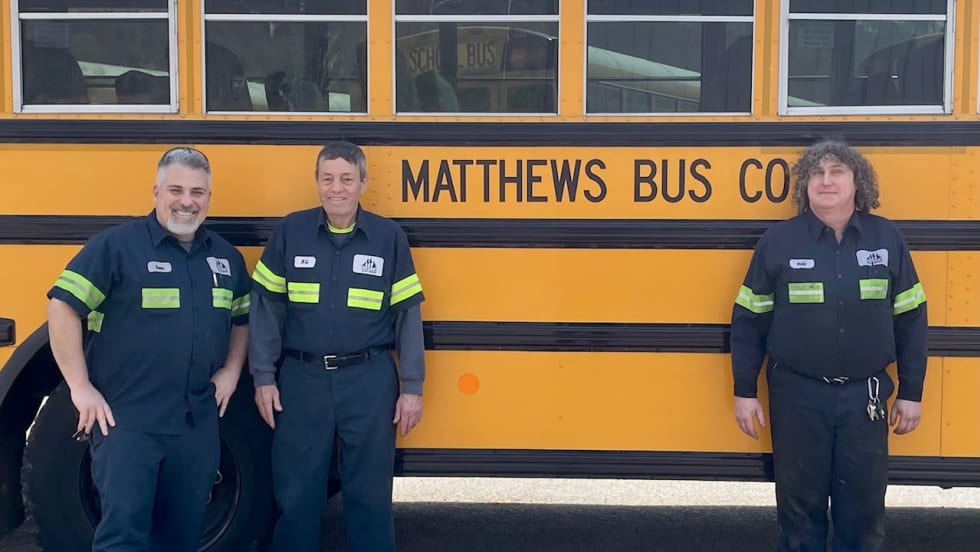
Pennsylvania School Bus Maintenance Team Praised for Dedication to Safety
Matthews Bus Company’s West Jefferson received a letter of commendation from the Pennsylvania State Police for their fleet inspections.
Read More →