




Why the industry should retire Dayton-style wheels
Although the vast majority of today's school buses are spec'd for Budd-style disc wheels, some fleets still prefer the Dayton-style spoke wheel.
Although the vast majority of today's school buses are spec'd for Budd-style disc wheels, some fleets still prefer the Dayton-style spoke wheel. And, yes, chassis are still being manufactured with the cast spoke wheel. They continue to come down the line at some of the country's largest school bus manufacturers. This is puzzling. Although spoke wheels used to be much less expensive than disc wheels, the pricing is very similar these days. And, by all accounts, the Dayton-type wheel is inferior to the Budd-style wheel in many ways, particularly in regard to safety. Spoke wheels go by many different names, such as "military wheels," "West Coast wheels," "widow makers" and "spider wheels." They are split rims with one or two lock rings.
Potential hazard for mechanics
I'm sure you have all heard horror stories about mechanics who failed to properly seat the lock rings, resulting in the loss of a hand or the rings getting stuck in the shop roof. You don't have that potential endangerment with the disc wheel because assembly error doesn't come into play. Dayton wheels with multipiece rims also have the potential to blow apart as the vehicle is traveling down the highway. Needless to say, this could create hazardous situations for the bus driver, his passengers and other motorists. Serviceability is another prime consideration when comparing the Dayton wheel with the Budd wheel. It takes more time and skill to remove and install a spoke wheel. If you don't remove them properly, you may end up with a rim clamp hitting you between the eyes when the wheel releases. In addition, it's much more time consuming to reline brakes with Dayton wheels because you have to pull the axles and hubs, which can damage increasingly expensive seals and gaskets. With the Budd wheel, you only have to pull the wheel assemblies and brake drum to reline the brakes. The Budd wheel brake procedure reduces labor costs as well as parts costs. Another point to consider is wheel alignment. Unless the Dayton wheel's lugs are evenly tightened, the unit may not run "true," meaning that the front or rear wheels could wobble. This wobble not only reduces the performance of the vehicle, it may also lead other motorists to believe that the wheels are loose. This misunderstanding harms the image of the school district or contractor operating the bus and is an inconvenience for conscientious motorists who take the time and effort to report the wobble to the bus operator.
Better tire options with disc
A final consideration is the availability of tires for the Dayton-style wheel. It's getting more and more difficult to locate tube tires for the spoke-style split rims and the cost of tube types is increasing substantially. The industry has solidly embraced tubeless radial tires because they are less expensive, have longer tread life and provide better handling than their tube counterparts. So why would fleet managers continue to spec Dayton-style wheels on their school buses? It may be that the existing fleet has spoke wheels and standardization is a priority. Or it may be that cost pressures are so intense that any area for savings is embraced. It's only a matter of time, however, before the entire industry will embrace the disc wheel. Based on what I've heard and seen, the sooner, the better.
Paul Cochran is fleet maintenance supervisor at Kyrene School District in Tempe, Ariz.
More Maintenance
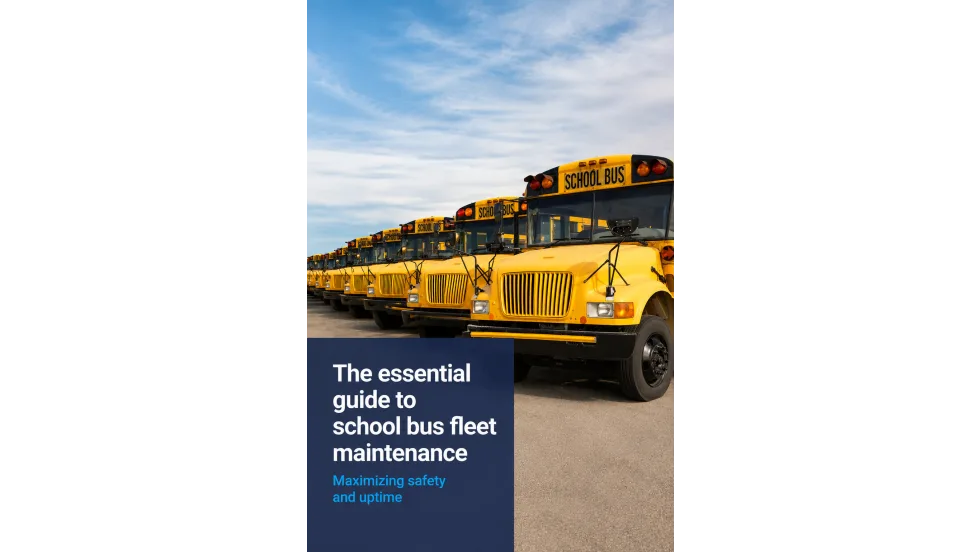
The Essential Guide to School Bus Maintenance and Student Safety
Your district's buses carry students to school every day. This guide shows how predictive maintenance powered by fleet data helps keep buses reliable, drivers accountable and students safer from the first bell to the last stop.
Read More →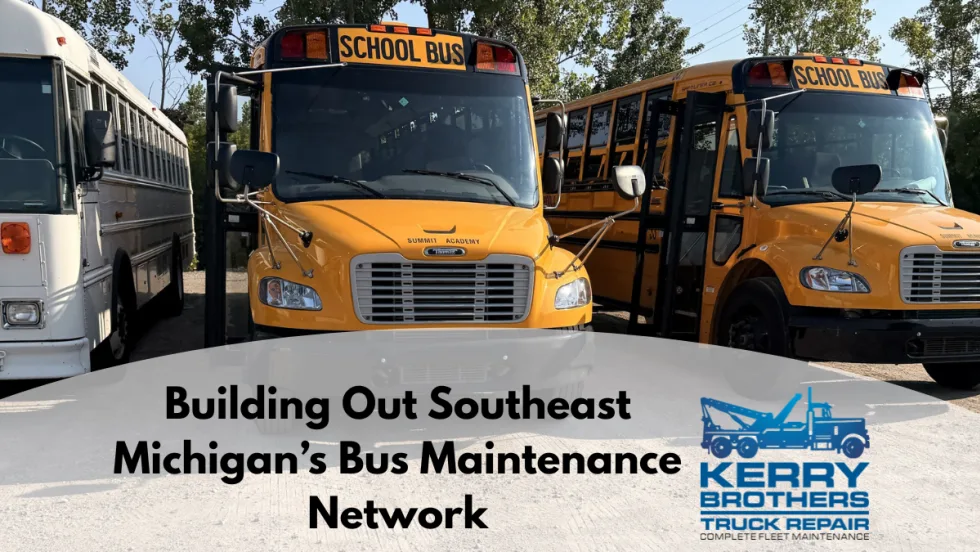
Kerry Brothers Grows Michigan School Bus Repair Network
The acquisition of Downriver Truck and Bus expands Kerry Brothers’ school bus maintenance footprint across southeast Michigan, adding repair capacity, diagnostic resources, and state inspection support.
Read More →
Noregon Introduces CAN Bus Diagnostic Tool, Expands JPRO Features
CAN Mentor and the latest JPRO update aim to simplify vehicle network diagnostics and improve repair efficiency for technicians of all experience levels.
Read More →
Cummins on Smarter, Simpler Engine Innovation
Cummins discusses its first-ever gasoline engine for school buses, EPA 2027, and why bus fleets still want durable, simpler internal combustion options.
Read More →
Report: 72% of Diesel School Buses Now Use Advanced Low-Emission Engines
New data shows advanced low-emission diesel technology continues expanding across school bus fleets, even as electric bus adoption gains momentum.
Read More →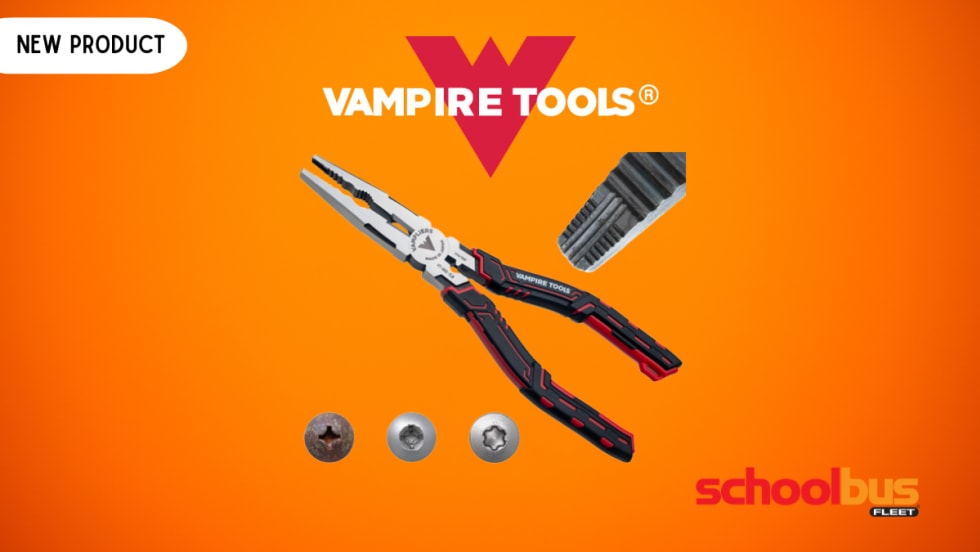
Vampire Tools' CAIMAN 7.5-Inch Multi-Purpose Screw Extractor Long-Nose Pliers with Crimper
Vampire Tools introduced the VAMPLIERS Caiman 7.5-inch multi-purpose pliers, combining screw extraction, cutting, crimping, and gripping functions into a single tool designed for fleet maintenance professionals.
Read More →
How Advanced Diagnostics Helps Bus Fleets Stay Ahead of Repairs
Chat with Noregon’s Kevin Smallhorn at ACT Expo about bus diagnostic tools, telematics integration, CNG maintenance support, and strategies to help reduce downtime and improve uptime.
Read More →
How School Bus Fleets are Getting Ahead of Breakdowns
Don’t let bus downtime wear you down. Here’s how bus operators are shifting from manual processes to AI-powered, data-driven maintenance systems for improved reliability and safety.
Read More →
Pennsylvania School Bus Maintenance Team Praised for Dedication to Safety
Matthews Bus Company’s West Jefferson received a letter of commendation from the Pennsylvania State Police for their fleet inspections.
Read More →
From Chaos to Clarity: How School Districts Are Running Leaner Transportation Operations
Covering 38 routes on a Friday afternoon. Buses idling while routes overlap. Parents calling nonstop about late arrivals. Sound familiar? This whitepaper explores how district transportation leaders solved these exact problems — and what measurable results followed.
Read More →