




Teaching Bus Mechanics to Drivers
School bus drivers need a basic understanding of their vehicles' mechanical workings. But bus-operation officials must wrestle with exactly how much i...
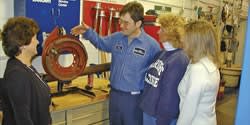
School bus drivers need a basic understanding of their vehicles’ mechanical workings. But bus-operation officials must wrestle with exactly how much information they should convey to their drivers before it becomes a burden.
Here’s a look at how three districts in Washington, New York and Texas take different approaches to the challenge.
In-depth training
The Edmonds School District in Lynnwood, Wash., takes a hands-on approach. Keith Moreland, Edmonds’ bus training supervisor, says that before new drivers get their commercial driver license permits, they go through 40 hours of classroom training at the bus operation.
The training includes an “underground tour,” in which he takes drivers underneath a bus to show them, among other things, the drive shaft, the suspension system and how the air brakes actually work. All of the terminology is put in layman’s terms so the least-mechanically inclined person can understand it.
“Ninety percent of our drivers had never driven a large vehicle before,” says Moreland. “We want them to have confidence, not just from rote memorization [of the information], but from them feeling like they actually know what they’re talking about when it comes to the workings of the bus.”
He adds, “We have a good time with the underground tour. The drivers come to understand the process. And they get the feeling that this equipment is well-cared for and they can have confidence in the bus.”
The goal of such in-depth training — even before drivers hit the road — is to make them feel so comfortable and confident in the vehicle that its operation fades into the background when they’re driving. Then they can focus most of their attention on bringing the students to and from school safely.
“We also stress the training because we want to attract good people,” Moreland says. “We know that giving them the right information is going to make them good drivers. So we give them the very best shot right out of the gate.”
Another strategy that the Edmonds School District employs is to assign drivers and their buses to specific mechanics. This allows the drivers to start a relationship with a particular mechanic and feel comfortable in asking questions.
Moreland says that helps the drivers feel an overall ownership toward their buses, resulting in successful inspections and high standards for the bus operation.
Strong relationships
The Fairport (N.Y.) Central School District also assigns mechanics to certain buses and bus drivers. Some longstanding drivers have had relationships with the same mechanics for years.
The outcome is a mutual respect for one another’s job and an overall closeness within the operation. It also reduces anxiety and fear drivers might have in dealing with mechanics, because they know them and have worked with them for a length of time. So the setup provides an informal environment that lets drivers learn about the mechanical workings of the bus without an official training session.
Still, teaching drivers about the mechanics of buses is not disregarded in Fairport.
Peter Lawrence, the district’s transportation director, says when he was a trainer, he would occasionally bring drivers into the garage to take a look at the air brakes if they weren’t quite grasping the concept on paper. It’s not a regular part of the program, but if he felt a driver needed that extra push to conceptualize the idea, he would do so.
Lawrence also shows drivers an air brake that has been taken out of a bus, allowing the drivers to hold it and study its operation.
Additionally, he passes around containers of common bus fluids during a 40-hour beginning-drivers course, quizzing the drivers on what they’re smelling and seeing. He also makes it a point to explain the reasons behind such activities as pumping down the air brakes or holding them down to see whether the pressure is maintained.
“This is not just an exercise in futility,” he says, pointing out that the action allows the driver to determine that his or her brake safety warning system operates: the warning light comes on, the buzzer sounds, the wig wag falls and the parking brake eventually pops out before the PSI reaches 20.
He wants drivers to understand the motives for the steps, which he believes will mean a better understanding of the bus for the driver.
“If there’s a breakdown in a remote area — like at a ski resort — we want the driver to be able to identify [possible] problems,” Lawrence says. “For example, what fluid is leaking under the bus? Is it antifreeze, oil or diesel fuel? So when the driver calls in, he or she can help the mechanics better determine what the problem might be and what parts the mechanics should bring to fix it.”
But Lawrence realizes there can be extremes, and he can understand where other districts are coming from in trying to alleviate some of the mechanical inspections that drivers might do underneath the hood.
“Sometimes you realize that you might be giving [drivers] more information than they need to know, and it’s going above and beyond their job scope,” he says. “That’s when you need to say, ‘Hey, just the facts.’”
Leave fixing to technicians
For Joe Glover, the director of school services for the Mansfield (Texas) Independent School District since 1981, his drivers’ knowledge of mechanics was a hindrance for the first few years of his tenure as bus operations chief.
“We were largely a farming community back then, and we had a whole lot of farmers driving who were also used to fixing their own tractors. So we had too many guys trying to fix their buses,” he says. “I do not want a driver trying to fix a problem that later becomes a bigger problem [due to not having] been told of the driver’s ‘fix’ [in the first place].”
So he decided in the mid-1980s that he no longer wanted his bus drivers to venture under the hood and check their buses. Today, that policy remains in effect, even with the contingent of farmers now mostly gone, and the Mansfield district has transformed from a largely rural to a more suburban locale.
Glover says he believes it’s safer to leave the under-the-hood daily inspections to a dedicated mechanic. He doesn’t want any drivers thinking they might be able to fix the problems themselves.
“Since implementing the program, we haven’t lost an engine or had a failure due to somebody not [following] the routine maintenance program,” says Glover. “This is just an excellent way of maintaining our buses without involving drivers.”
That doesn’t mean, however, that Mansfield drivers can afford to be ignorant of the buses’ mechanical workings. Glover points out that drivers are trained to watch for and report any gauge or sound irregularities that might indicate trouble. That checklist is regularly reviewed with drivers during two annual in-service days and ongoing bus safety meetings throughout the year.
“We tell the drivers that they are our No. 1 source of information,” says Glover. “They can’t tell us something too simple or too unimportant. Just tell us about what’s going on and let [the mechanics] make the decision. That has been a pretty effective approach for us.”
Mike Doser is a freelance writer and school bus driver at Fairport (N.Y.) Central School District.
More Maintenance
The essential guide to school bus maintenance and student safety
Reactive maintenance puts students at risk of breakdowns, delays and roadside emergencies. This guide gives transportation directors a data-driven framework to predict failures, extend bus lifespans and improve fleet reliability across every route.
Read More →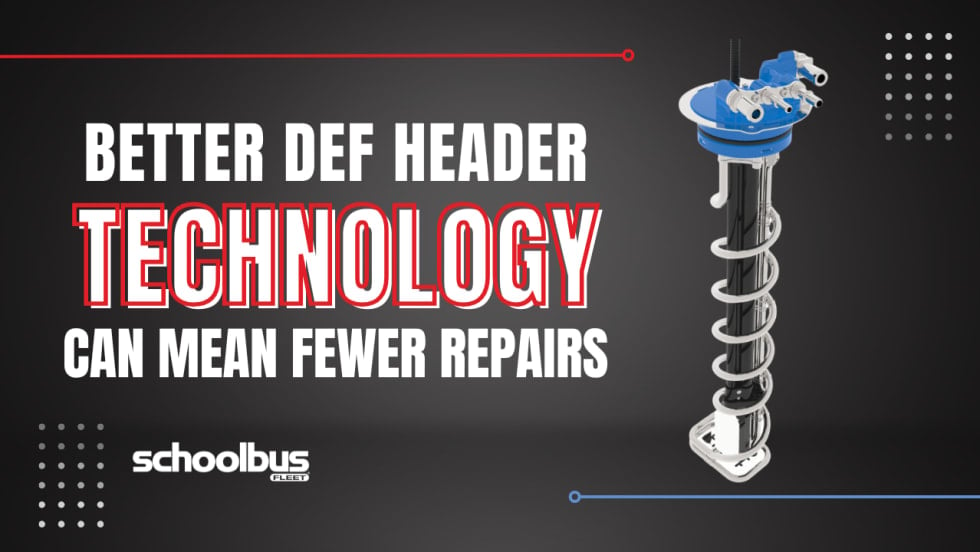
The Evolution of DEF Header Technology: What School Bus Operations Should Know at Replacement Time
See what school bus fleets should consider when replacing DEF headers to improve reliability, reduce repeat repairs, and control maintenance costs.
Read More →
Kerry Brothers Grows Michigan School Bus Repair Network
The acquisition of Downriver Truck and Bus expands Kerry Brothers’ school bus maintenance footprint across southeast Michigan, adding repair capacity, diagnostic resources, and state inspection support.
Read More →
Noregon Introduces CAN Bus Diagnostic Tool, Expands JPRO Features
CAN Mentor and the latest JPRO update aim to simplify vehicle network diagnostics and improve repair efficiency for technicians of all experience levels.
Read More →
Cummins on Smarter, Simpler Engine Innovation
Cummins discusses its first-ever gasoline engine for school buses, EPA 2027, and why bus fleets still want durable, simpler internal combustion options.
Read More →
Report: 72% of Diesel School Buses Now Use Advanced Low-Emission Engines
New data shows advanced low-emission diesel technology continues expanding across school bus fleets, even as electric bus adoption gains momentum.
Read More →
Vampire Tools' CAIMAN 7.5-Inch Multi-Purpose Screw Extractor Long-Nose Pliers with Crimper
Vampire Tools introduced the VAMPLIERS Caiman 7.5-inch multi-purpose pliers, combining screw extraction, cutting, crimping, and gripping functions into a single tool designed for fleet maintenance professionals.
Read More →
How Advanced Diagnostics Helps Bus Fleets Stay Ahead of Repairs
Chat with Noregon’s Kevin Smallhorn at ACT Expo about bus diagnostic tools, telematics integration, CNG maintenance support, and strategies to help reduce downtime and improve uptime.
Read More →
How School Bus Fleets are Getting Ahead of Breakdowns
Don’t let bus downtime wear you down. Here’s how bus operators are shifting from manual processes to AI-powered, data-driven maintenance systems for improved reliability and safety.
Read More →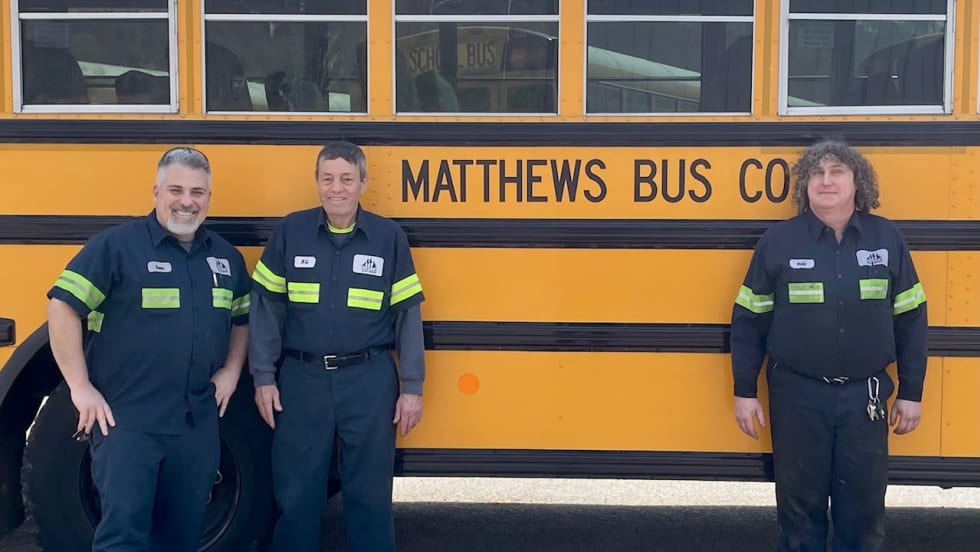
Pennsylvania School Bus Maintenance Team Praised for Dedication to Safety
Matthews Bus Company’s West Jefferson received a letter of commendation from the Pennsylvania State Police for their fleet inspections.
Read More →