




Similar: Guidelines for Designing a School Bus Maintenance Facility
Design elements for a perfect bus garage
Planning a school bus maintenance garage? Explore key design considerations for repair bays, flooring, lighting, vehicle lifts, parts storage, and shop safety.
by Christopher Ferrone
September 1, 19988 min to read
One garage is not perfect for all. There are differences between garages for school buses and transit buses. But the hypothetical garage described below will have parts from which all garages can find some pieces.
Metal-pole structures are the best. They are simple and relatively inexpensive to construct. They also are easy to repair should the building become damaged. Finally, they are also well adapted for expansion.
Concrete for the structure is broken down into two groups: walls and floors. Walls should be about 12 inches thick with reinforcement bars. The concrete wall should be approximately five feet high.
Above that, metal corrugated siding can be used. That will be more cost effective and will assist in future expansion projects, should they require the movement or elimination of walls.
Floor requires reinforcement
Unlike the typical concrete slab, the poured floor has some special considerations. The general areas should be eight to 10 inches thick, with steel reinforcement bars and grid mesh. The floor in the repair and tire-change area should have a thicker concrete to accommodate jacks and stands, which concentrate a high force over a small area. That will prevent punch-through or any localized cracking.
The concrete floor must also have other components built into it: longitudinal floor drains, preferably down the middle of all expected wet areas, and a toilet dump drain with a mesh screen.
The electrical supply throughout the building should be laid out to assist the mechanics as much as possible. Waterproof wall outlets (110 volts) should be placed along the walls at 12- to 15-foot intervals. They are best at 45 inches above the poured floor. That will prevent accidental contact with water. Additionally, each wall should have at least two 220-volt outlets.
Your monthly electric bill aside, you can never have too much lighting. Fluorescent tube lights are ideal. Place them 12 to 15 feet from the poured floor. They may be spaced in a 12-by-20-foot grid pattern. Wire the lights so they can be controlled in a mixed circuit arrangement. That will prevent a total blackout in any one area if a circuit breaker is tripped.
Plan for hoist installations
If portable electric hoists are used, two additional concrete slab concerns need to be addressed. For every hoist used, a footing needs to be poured where it will be used. Obviously, planning is required to locate the dedicated hoist locations. Once the slab is poured, the hoist footings are covered by the slab and marked with permanent concrete paint to assist the mechanic in locating the positions for the hoist. If the cost of this extra effort seems prohibitive, remember that the extra cost is negligible compared to the cost of repairing broken concrete years later.
Of course, the garage should have space for maintenance procedures. Specifically, heavy and light maintenance areas are ideal in that these dedicated spaces will not interfere with other areas in the building. Heavy maintenance areas should be specified at about 900 square feet per 30 fleet vehicles. A "dead man" located at the rear of this floor space provides mechanics with the ability to pull on the vehicle’s structure or specific component, such as power module, for removal. The dead man is simply an anchor point in the concrete with the ability to resist force. It is helpful when straightening body structures. Additional air hose connections and electrical outlets should be added to this area.
Don't forget lighting and benches
Light maintenance areas should be specified at about 750 square feet per 30 vehicles. This area should have the same slab thickness as the remaining floor space. No special provisions need to be addressed for this space. However, space for light maintenance must be reserved so as not to interfere with the flow of traffic within the building.
In our hypothetical garage, clean-room areas are vital for engine, transmission and component building and repair. These areas will need extra lighting, electrical outlets and air hose connections.
In addition, work benches need to be set up along the perimeter of the space. Each bench should have a drain to collect fluids from the part being repaired. A flammable liquids cabinet should be included to store solvents. Compressed gas storage areas are usually required by local fire codes.
A dedicated area, preferably along a wall, is desirable to store refrigerant and welding gases. Each cylinder of gas should be chained to the wall so it doesn’t fall and get damaged.
A centralized parts-cleaning area with parts washer is always handy. Along with the parts-cleaning machine should be a draining area to allow fluids to run off the part. Of course, the fluid should be continually collected and either reused or disposed of properly. Eye-wash stations should be located within every maintenance area. Demarcation of this area is advisable to guide the mechanic or a rescuer in a crisis.
Leave your junk outside
Parts salvage and junk can accumulate quickly in any garage. Dedicating space, usually outside, will eliminate the need to use valuable interior space. Putting the salvage outdoors also assists in building security when outsiders come to remove the waste. With this plan, it’s easier to restrict access to the building. Body shop space should meet all current EPA standards. Roof-mounted suction fans should be in place to remove airborne paint spray. A flammable liquids cabinet is needed to store paint supplies. Check your local fire code for specifications. A water hose outlet should be located along the wall of the body shop. That will aid in shop cleanup, but, more importantly, it will allow the body shop mechanics to wash the vehicle and remove paint stripper or other substances. Make sure there is adequate lighting on the ceiling and along the walls. The critical point here is to create shadowless lighting.
Where to raise the roof
If you use wheel hoists, you must raise the roof in that area to accommodate the elevated vehicle. If you plan properly, you may only need to extend the roof in a dedicated location, instead of raising the entire roof. If you build an in-ground pit, proper drainage should be in place. Next, an oil drainage capture system should be plumbed directly to the used-oil storage tank. That will aid in the direct disposal of used oil. Install covered fluorescent tube lights, preferably recessed into the wall, in an evenly dispersed pattern providing light to the entire length of the pit. Stairs with handrails at each end of the pit are helpful to mechanics. They allow them to enter the pit without jumping, keeping them safer and less fatigued. Finally, install waterproof electrical outlets along the pit wall and air hose outlets. Local building codes may require a removable cover during dormant periods. Also, a small platform to cover either end of the pit is handy to assist mechanics in repairs that require the vehicle to be over a pit but also allowing a mechanic to be at floor level in front of or behind the vehicle. An important but indirect pit item is mirrors. Mount mirrors from the wall or ceiling at the back of the pit area to assist a single mechanic in checking the function of brake lights while in the driver’s seat.
Parts room can vary in size
The parts room has become a difficult area to specify. As a result of the acceptance of just-in-time delivery, parts rooms no longer need to be as expansive as they once were. However, they must be large enough to accommodate an inventory adequate for your operation. Parts rooms are best served by having a pedestrian door along with a parts window. That will control the traffic flow while assisting with parts and material accounting and security. Tool storage is another area that needs to be controlled. Floor-mounted, cage-like walls can be installed and attached directly to the concrete floor. Again, one door should be used to control traffic and tool movement. Mechanics can also store their tool boxes here. A tire storage area is required when storing more than a dozen tires. This needs to be a dry area with good lighting to allow for selection and inventory. Wheels should also be stored in this area. Wheel racks can be custom made or purchased to facilitate wheel integrity.
Reserve space for clerical tasks
Office space should be set aside in two groups: one for mechanics and one for drivers. Mechanics need clerical space to review manuals and process paperwork. Computer terminals may also be put here to assist with record-keeping and parts inventory/distribution. This space should be at garage temperature to prevent mechanics from body temperature swings. However, on extremely hot days, air conditioning may be provided.
A public-address system can be wired throughout the facility to page and make announcements. A base station radio can be installed in the mechanics’ office along with a few external speakers. That will not only help with communications but allow mechanics to monitor vehicle progress in the event of a vehicle failure.
As with any building project, the general contractor and architect should comply with relevant building codes before any work begins.
As a final note, instruct the architect to provide enough space for the boss’ car. Believe me, this will become the most important addition to your new facility.
About the Author: Christopher Ferrone is vice president of fleet logistics and engineering at American Sightseeing in Chicago and president of Americoach Systems, a transportation consultant.
Subscribe to Our Newsletter
More Maintenance
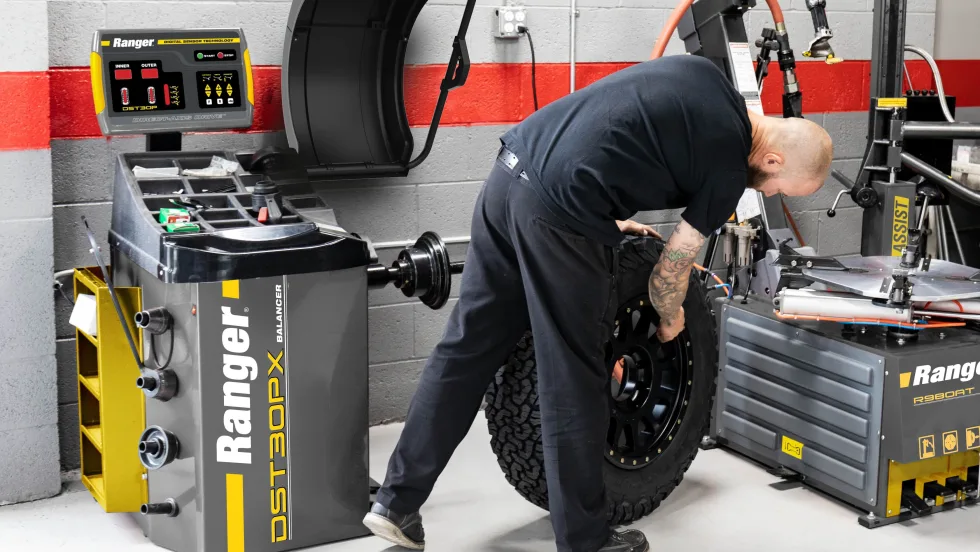
BendPak Launches Ranger DST30PX Wheel Balancer
BendPak's new wheel balancer handles tires up to 43 inches in diameter, with a reinforced design, precise weight placement, and faster service cycles.
Read More →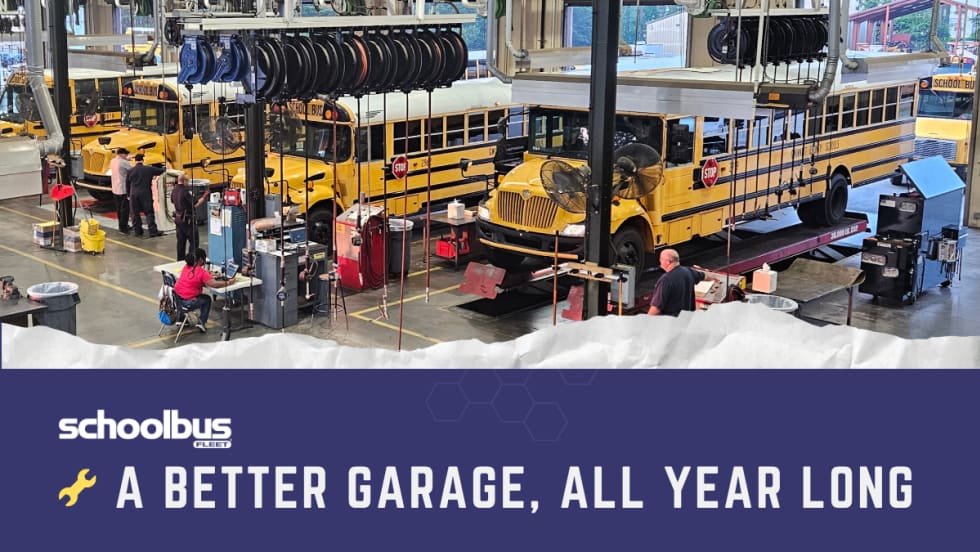
Tips for Ensuring School Bus Garages Are Safe and Warm Year-Round
Cold maintenance bays and rising heating costs? Learn how school bus garages can improve comfort with targeted heating, better airflow, and winter preparation.
Read More →
ASE Highlights School Bus Technician Certification Requirements
ASE is encouraging school bus maintenance professionals to maintain their certifications, highlighting seven specialized tests and five-year renewal requirements.
Read More →
International Adds E-Commerce Capabilities to Fleetrite.com
IC Bus customers can now browse, buy, and track shipments for more than 400,000 aftermarket parts online.
Read More →
The Most Expensive Thing You Do Before Selling a School Bus: Wait
When should you sell an aging school bus? Learn how maintenance, mileage, corrosion, specifications, and timing can affect resale value long before the auction.
Read More →
The Evolution of DEF Header Technology: What School Bus Operations Should Know at Replacement Time
See what school bus fleets should consider when replacing DEF headers to improve reliability, reduce repeat repairs, and control maintenance costs.
Read More →
Sponsored•September 8, 2026
The Essential Guide to School Bus Maintenance and Student Safety
Your district's buses carry students to school every day. This guide shows how predictive maintenance powered by fleet data helps keep buses reliable, drivers accountable and students safer from the first bell to the last stop.
Read More →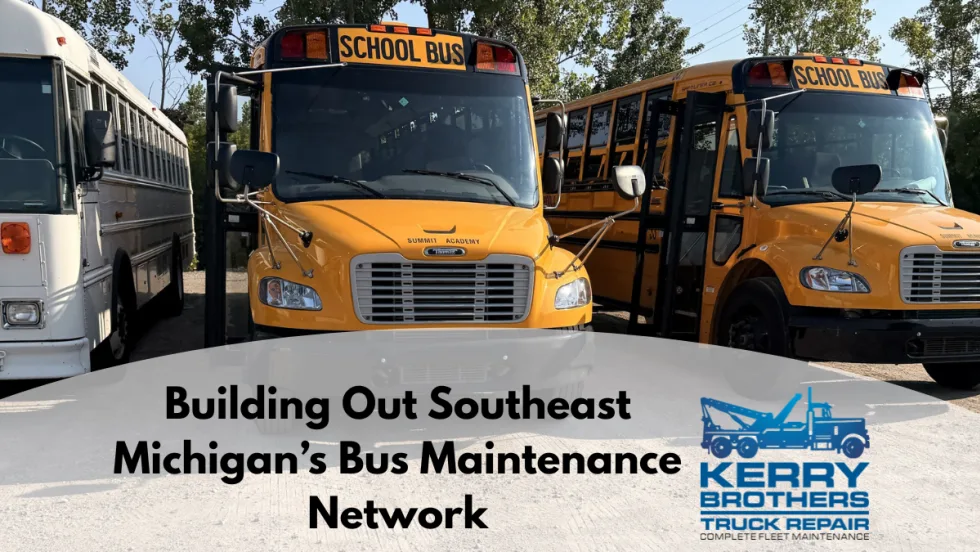
Kerry Brothers Grows Michigan School Bus Repair Network
The acquisition of Downriver Truck and Bus expands Kerry Brothers’ school bus maintenance footprint across southeast Michigan, adding repair capacity, diagnostic resources, and state inspection support.
Read More →
Noregon Introduces CAN Bus Diagnostic Tool, Expands JPRO Features
CAN Mentor and the latest JPRO update aim to simplify vehicle network diagnostics and improve repair efficiency for technicians of all experience levels.
Read More →
Cummins on Smarter, Simpler Engine Innovation
Cummins discusses its first-ever gasoline engine for school buses, EPA 2027, and why bus fleets still want durable, simpler internal combustion options.
Read More →