




Cooperative helps districts save money, time
Walla Walla (Wash.) School District won matching funds from the state to obtain funds for a facility to support a cooperative that serves three school district transportation departments, and it hasn't cost taxpayers additional tax dollars. The Southeast Washington Transportation Cooperative provides vehicle maintenance at a fraction of the cost of local shops as well as a driver training program that saves districts staff and time.

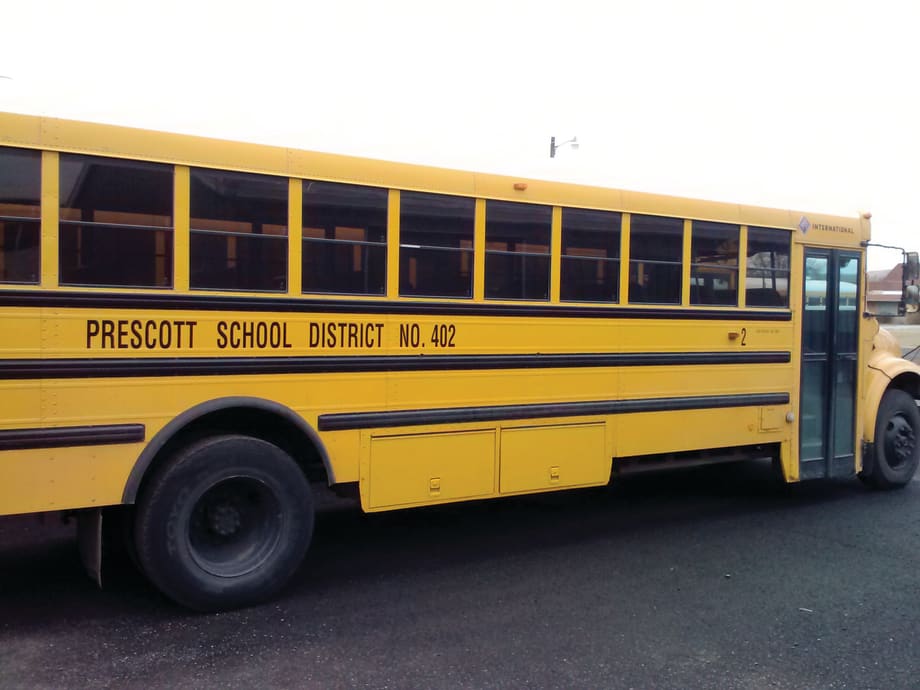
In addition to paying a significantly lower shop rate, Prescott School District gets same-day service when taking buses in for repairs. As a result, membership in the cooperative has kept the district from having to employ a full-time mechanic.
Photo: Prescott School District
In August, 2009, Walla Walla (Wash.) Public Schools broke ground on a project that has lowered operational costs for local school districts: the Southeast Washington Transportation Cooperative facility. The cooperative provides discount school bus maintenance and repair service as well as school bus inspection support, a bus driver training program, preventive maintenance and recordkeeping services.
The cooperative provides these services for its three member districts: Walla Walla Public Schools, the host district, Prescott (Wash.) School District and Dixie (Wash.) School District. Each member district has equal say in decision-making. The cooperative works with TW Clark construction, the general contractor, and more than 10 other local construction firms that are employed as subcontractors.
The facility is 15,000 square feet and includes five 20-foot by 60-foot stalls; a shop office; parts and tool storage areas; and a meeting room. The shop, which is the largest portion of the building, can accommodate five buses, with 50 in the lot, and a fueling island.
The cooperative typically maintains a total of 55 buses for the three districts, and 37 service vehicles and all of the grounds equipment for Walla Walla annually.
Creating the cooperative
Walla Walla needed one other member district to form the cooperative and get the matching dollars from Washington state to build the facility; the Dixie and Prescott school districts stepped up. The districts began discussing the project in 2008, and started the process to get it approved in 2009.
Stemming from the need to save area districts money without asking for more local tax dollars, Walla Walla created a funding plan for the $8 million project. In response to a request from the community to limit bond measures, the school district used $3.4 million in state matching funds from a local construction project to fund the cooperative and a new support services facility, and generated a 90% state match, or, another $4 million, to the district from the Transportation Cooperative project.
“As far as running a bond for new support services facilities, it’s almost impossible to pass; the general public will vote for school buildings but not for support services,” Steve Olson, transportation director, Walla Walla Public Schools, says. “And most transportation facilities in Washington state are old and decrepit. So, it’s nice that the state has been supportive in matching dollars. [That] makes it easier for districts to build new facilities.”
Additionally, taxpayers are benefiting from the cooperative saving school districts money on transportation costs. Member districts are then able to put those funds back into the schools, thwarting the need for future tax increases.
Saving districts maintenance dollars, time
The matching funds that Walla Walla, as the host district, procured to support the cooperative have helped it keep service prices low; it only charges $45 an hour for labor, compared with the hourly rates for labor charges in a large vehicle repair shop in the area, which can range from $90 to $115. It keeps its parts upcharge to 15% plus the sales tax. Member districts are also saving at least 40% on parts, Olson says. For example, the cooperative can buy an air filter for $115, while that same part off the shelf would cost about $400.
Brett Cox, superintendent, Prescott School District (SD), says that in addition to paying a significantly lower shop rate when taking buses in for repairs, the district gets same-day service. These benefits have kept the district from having to employ a full-time bus mechanic.
Cox adds that Prescott SD, which serves two schools, takes advantage of services such as oil changes, brake work, and transmission and engine repairs for the six buses it runs on daily routes. Prescott’s membership lets it keep a smaller inventory of parts.
The cooperative also delivers significant eco-friendly benefits to districts, such as not having to worry about its waste stream. “I do not have to inventory a lot of consumables such as motor oil, and transmission fluid and antifreeze,” Cox says.
The membership was convenient for Dixie SD, Superintendent Mark Wegner says, because it already had to take all of its buses to the city of Walla Walla for maintenance, for which it was spending up to $10,000 annually. Cutting that down to one-third of the cost made a significant difference.
“We did not have a certified mechanic working here, so that helped,” he explains. “Our fleet fit right into their rotation. Maintenance has improved.”
Another benefit is that the employees who run Dixie SD’s bus garage now have extra support. The cooperative has added seats in the buses, and even taken care of smaller tasks, such as providing fire extinguishers and changing windshield wipers.
The substantial savings has enabled the district to add educators in the classrooms, creating smaller group sizes and one-on-one instruction, Wegner says, and has minimized the extra dollars Dixie SD had to spend out of its general fund for transportation.
Membership in the cooperative helps relieve time pressure because of the expediency of repairs and parts availability, Wegner says. “We coordinate our purchases with what they need for their buses so the parts are interchangeable.”
He adds that Olson keeps up to date on all the latest information and compliance issues, which, being a small district, Dixie SD doesn’t have time to do. “He makes sure we [can meet] the safety needs of the students and the buses.”
Providing affordable training
Another savings opportunity the cooperative offers is a state training program to become a school bus driver, training approximately six to 10 drivers each year. The program includes a 20-hour classroom for class B and CDL licenses, behind-the-wheel training, and driving simulated routes. At $35 an hour and a small mileage charge, the price is far lower than the local community college CDL program, which costs $3,000. For example, recent training for two bus drivers cost $1,250.
Wegner says that his district has four drivers taking advantage of the cooperative’s training program annually and that it helps out with staffing costs. Instead of having to hire a trainer in-house or have one come in from time to time, the district is able to save money and manpower, which is especially helpful, since they have a small staff.
More Maintenance
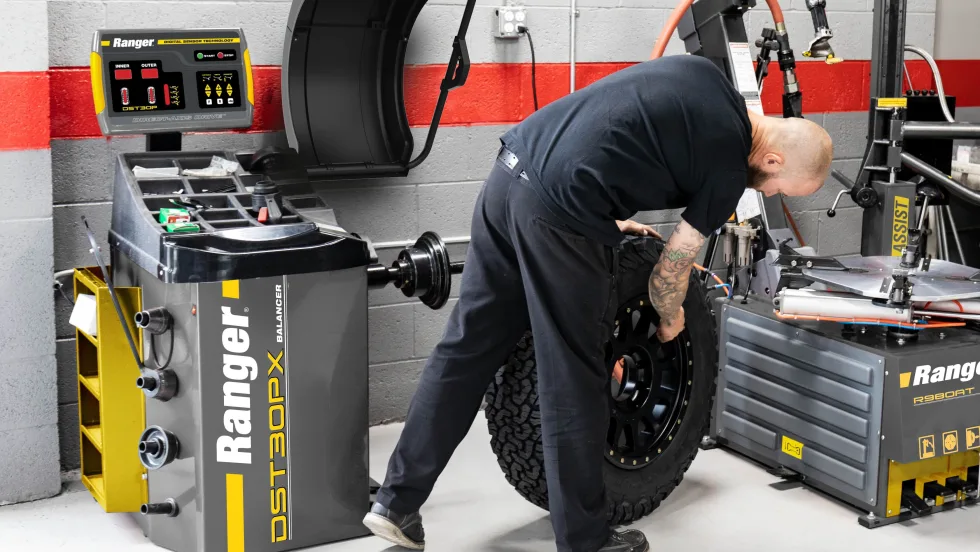
BendPak Launches Ranger DST30PX Wheel Balancer
BendPak's new wheel balancer handles tires up to 43 inches in diameter, with a reinforced design, precise weight placement, and faster service cycles.
Read More →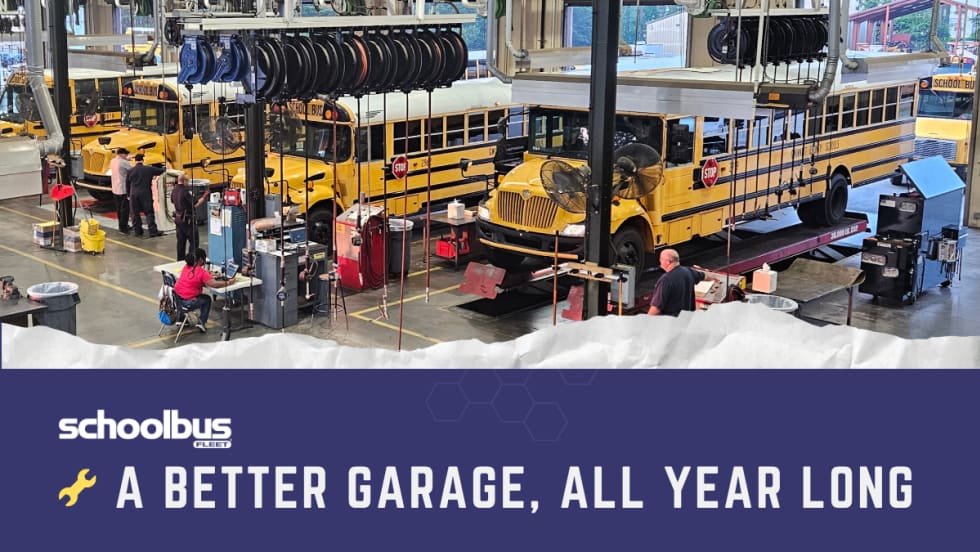
Tips for Ensuring School Bus Garages Are Safe and Warm Year-Round
Cold maintenance bays and rising heating costs? Learn how school bus garages can improve comfort with targeted heating, better airflow, and winter preparation.
Read More →
ASE Highlights School Bus Technician Certification Requirements
ASE is encouraging school bus maintenance professionals to maintain their certifications, highlighting seven specialized tests and five-year renewal requirements.
Read More →
International Adds E-Commerce Capabilities to Fleetrite.com
IC Bus customers can now browse, buy, and track shipments for more than 400,000 aftermarket parts online.
Read More →
The Most Expensive Thing You Do Before Selling a School Bus: Wait
When should you sell an aging school bus? Learn how maintenance, mileage, corrosion, specifications, and timing can affect resale value long before the auction.
Read More →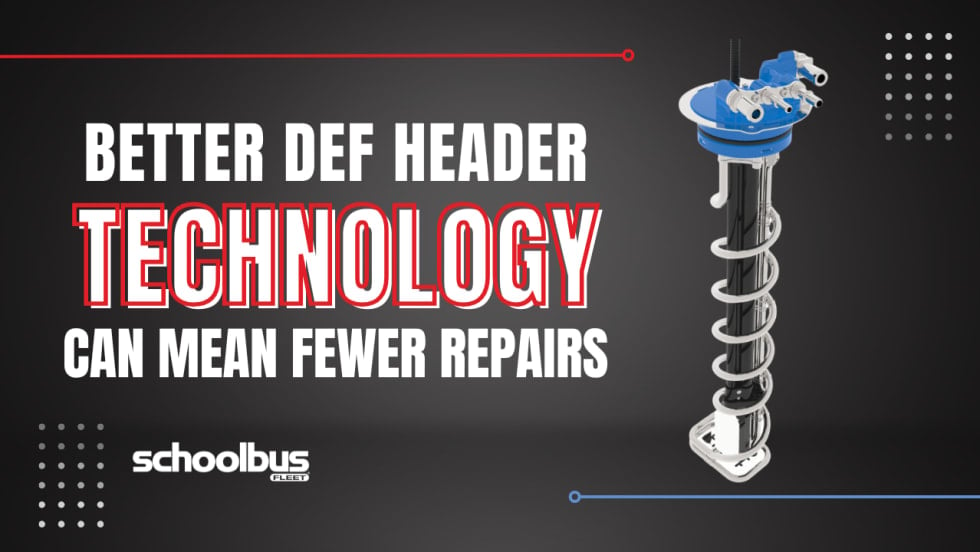
The Evolution of DEF Header Technology: What School Bus Operations Should Know at Replacement Time
See what school bus fleets should consider when replacing DEF headers to improve reliability, reduce repeat repairs, and control maintenance costs.
Read More →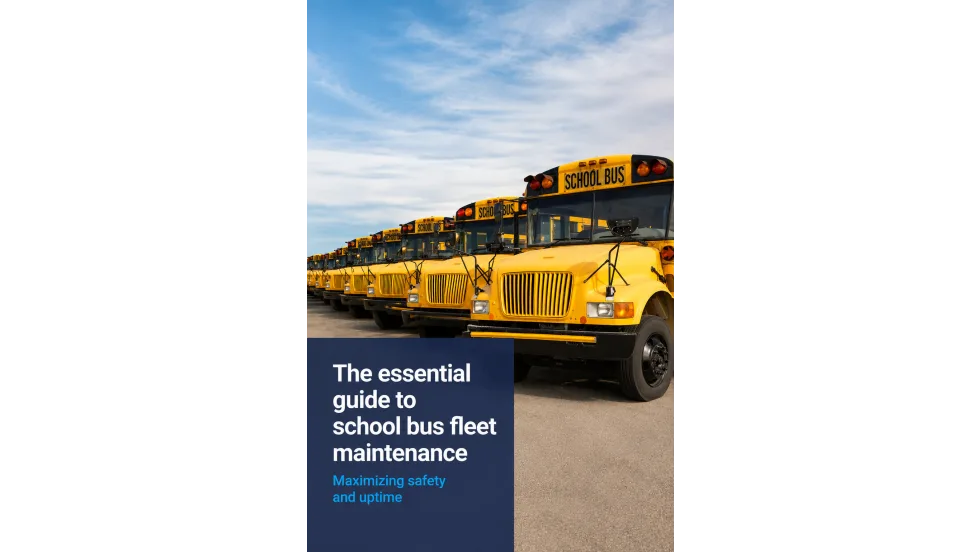
The Essential Guide to School Bus Maintenance and Student Safety
Your district's buses carry students to school every day. This guide shows how predictive maintenance powered by fleet data helps keep buses reliable, drivers accountable and students safer from the first bell to the last stop.
Read More →
Kerry Brothers Grows Michigan School Bus Repair Network
The acquisition of Downriver Truck and Bus expands Kerry Brothers’ school bus maintenance footprint across southeast Michigan, adding repair capacity, diagnostic resources, and state inspection support.
Read More →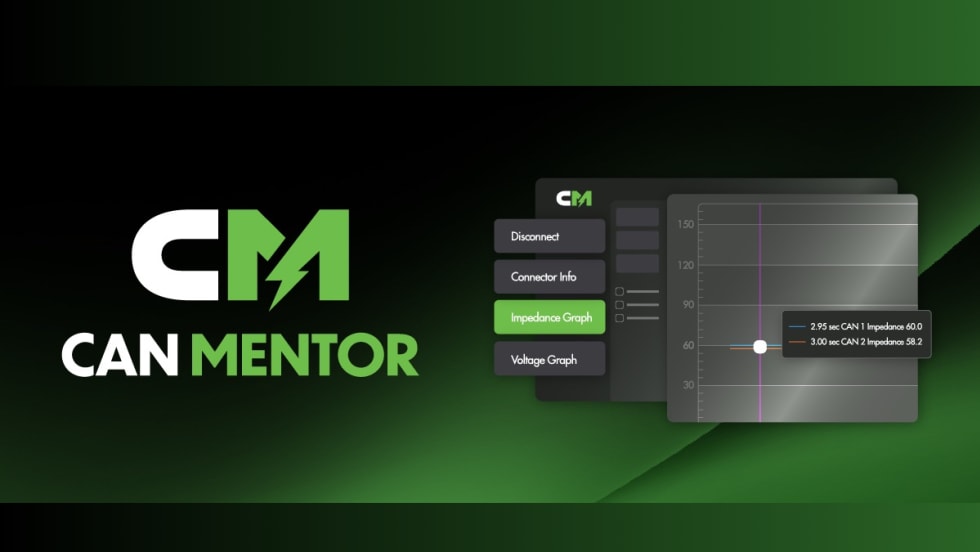
Noregon Introduces CAN Bus Diagnostic Tool, Expands JPRO Features
CAN Mentor and the latest JPRO update aim to simplify vehicle network diagnostics and improve repair efficiency for technicians of all experience levels.
Read More →
Cummins on Smarter, Simpler Engine Innovation
Cummins discusses its first-ever gasoline engine for school buses, EPA 2027, and why bus fleets still want durable, simpler internal combustion options.
Read More →