




3 keys to maintaining automatic transmissions
Premature failure of your automatic transmissions can be minimized through proper spec'ing, preventive maintenance and technician training. By includi...
Premature failure of your automatic transmissions can be minimized through proper spec'ing, preventive maintenance and technician training. By including these items in your maintenance program, it will help to ensure that you realize the maximum potential of the transmission. First step is right spec
For any piece of equipment to perform as it was designed, planning is required. The automatic transmission is no exception to this rule. The first step to prevent premature failure is to ensure that the right transmission is included in the purchase specifications. I will further clarify this statement with the following statement: Cheapest is not always best. By including in your specs a transmission that is not continually taxed to its limit, you can avoid premature failure. This will result in reduced cost over the life of the vehicle. Pay attention to intervals
The transmission oil level should be checked at the intervals specified in the vehicle operator's manual. Most transmission manufacturers recommend that the oil and oil filter be changed every 25,000 miles or 12 months, whichever occurs first. The transmission governor filter should be changed at the same time. Most auxiliary filters should be changed after the first 5,000 miles and thereafter at normal oil change intervals. Transmission oil may require change sooner than recommended depending on operating conditions. Oil must be changed whenever there is evidence of dirt or a high temperature condition indicated by discoloration, strong odor or oil analysis. Local conditions, severity of operation or duty cycle may dictate more or less frequent service intervals. At each oil change, examine the oil that is drained for evidence of dirt or water. A normal amount of condensation will emulsify in the oil during operation. However, if there is evidence of water, check the cooler (heat exchanger) for leakage between the water and oil areas. Oil in the water side of the cooler is another sign of leakage. If engine coolant leaks into the transmission oil system, immediate action must be taken to prevent malfunction and serious damage. The transmission must be completely disassembled, inspected and cleaned. All traces of the coolant and varnish deposits resulting from coolant contamination must be removed. Inspect the fluids closely
Metal particles in the oil or on the magnetic drain plug (except for the minute particles normally trapped in the oil filter) indicate transmission damage. When these particles are found in the sump, the transmission must be disassembled and closely inspected to find the source. Metal contamination will require complete disassembly of the transmission and cleaning of all internal and external circuits, cooler and all other areas where the particles could lodge. The transmission breather is located at the top of the transmission housing and serves to prevent pressure buildup within the transmission. The breather must be kept clean and the passage open. The presence of dust and dirt will determine the frequency at which the breather requires cleaning. Training is worthy investment
One area that is often overlooked in the industry is providing adequate training for technicians, who must stay abreast of new transmission technology. Most automatic transmission suppliers offer excellent training, and some will even provide on-site instruction. Training your technicians is certainly money well spent. It will teach your employees to properly diagnose a problem instead of guessing or changing parts until the problem is fixed. David M. Sluder is a transportation consultant for the North Carolina Department of Public Instruction.
More Maintenance
The Essential Guide to School Bus Maintenance and Student Safety
Your district's buses carry students to school every day. This guide shows how predictive maintenance powered by fleet data helps keep buses reliable, drivers accountable and students safer from the first bell to the last stop.
Read More →
Kerry Brothers Grows Michigan School Bus Repair Network
The acquisition of Downriver Truck and Bus expands Kerry Brothers’ school bus maintenance footprint across southeast Michigan, adding repair capacity, diagnostic resources, and state inspection support.
Read More →
Noregon Introduces CAN Bus Diagnostic Tool, Expands JPRO Features
CAN Mentor and the latest JPRO update aim to simplify vehicle network diagnostics and improve repair efficiency for technicians of all experience levels.
Read More →
Cummins on Smarter, Simpler Engine Innovation
Cummins discusses its first-ever gasoline engine for school buses, EPA 2027, and why bus fleets still want durable, simpler internal combustion options.
Read More →
Report: 72% of Diesel School Buses Now Use Advanced Low-Emission Engines
New data shows advanced low-emission diesel technology continues expanding across school bus fleets, even as electric bus adoption gains momentum.
Read More →
Vampire Tools' CAIMAN 7.5-Inch Multi-Purpose Screw Extractor Long-Nose Pliers with Crimper
Vampire Tools introduced the VAMPLIERS Caiman 7.5-inch multi-purpose pliers, combining screw extraction, cutting, crimping, and gripping functions into a single tool designed for fleet maintenance professionals.
Read More →
How Advanced Diagnostics Helps Bus Fleets Stay Ahead of Repairs
Chat with Noregon’s Kevin Smallhorn at ACT Expo about bus diagnostic tools, telematics integration, CNG maintenance support, and strategies to help reduce downtime and improve uptime.
Read More →
How School Bus Fleets are Getting Ahead of Breakdowns
Don’t let bus downtime wear you down. Here’s how bus operators are shifting from manual processes to AI-powered, data-driven maintenance systems for improved reliability and safety.
Read More →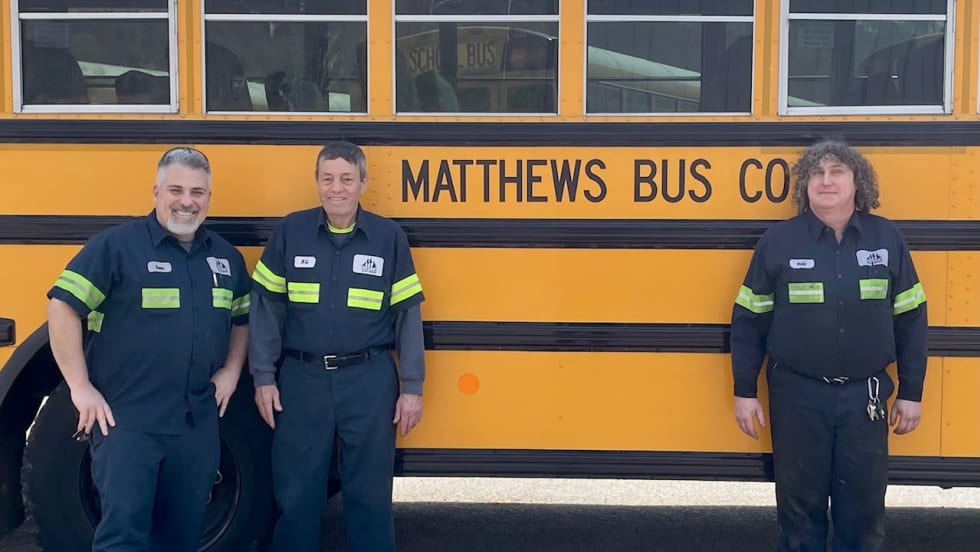
Pennsylvania School Bus Maintenance Team Praised for Dedication to Safety
Matthews Bus Company’s West Jefferson received a letter of commendation from the Pennsylvania State Police for their fleet inspections.
Read More →
From Chaos to Clarity: How School Districts Are Running Leaner Transportation Operations
Covering 38 routes on a Friday afternoon. Buses idling while routes overlap. Parents calling nonstop about late arrivals. Sound familiar? This whitepaper explores how district transportation leaders solved these exact problems — and what measurable results followed.
Read More →