




Seat Belts on the School Bus: Should Federal Law Require Them?
The Roots and Results of School Bus Lawsuits
Litigation can have far-reaching effects throughout the pupil transportation industry; from school districts to contractors to manufacturers. Here, we examine issues that can lead to lawsuits, how legal costs impact bus prices and how to reduce the risk of ending up in court.
by Thomas McMahon
October 21, 2010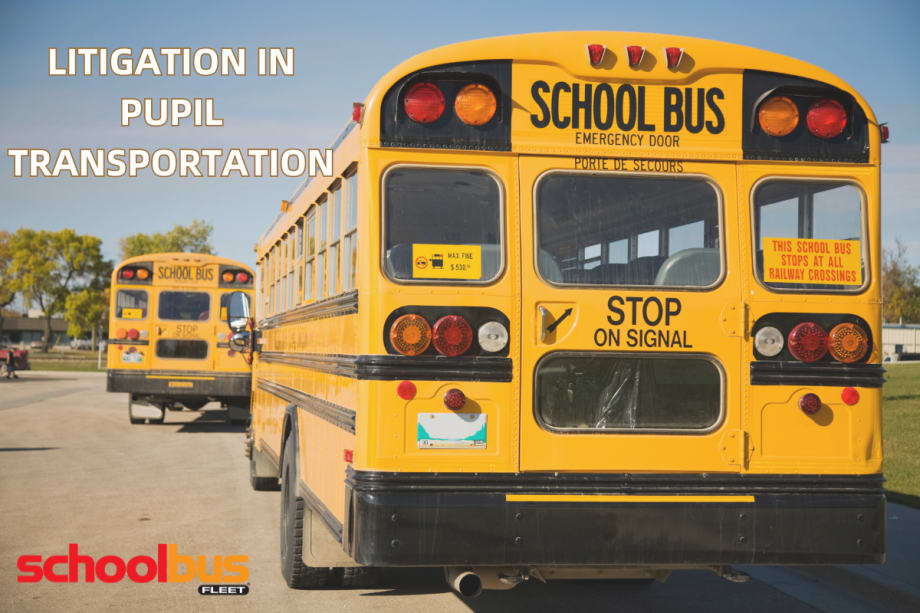
Lawsuits against school bus manufacturers can have a far-reaching impact in that they ultimately affect bus prices — not just in the area where the incident occurred, but across the nation.
Photo: Canva/School Bus Fleet
11 min to read
America is often described as a "litigious society" or with other words to that effect.
The notion is reinforced by stories of frivolous lawsuits as well as by the ubiquity of absurd warning labels ("Do not use while sleeping," the packaging of a hair dryer reportedly cautioned).
In a speech to the Chicago business community in 2003, Lord Peter Levene, chairman of Loyd's of London, gave a foreigner's perspective on the issue:
"The U.S. system of civil litigation has spawned an American pastime, something that ranks alongside catching a game of baseball or basketball: going to court to sue other people, or companies, or organizations, or the government," Levene said. "And as more and more people have gone to court, not only has the cost of doing so risen, but so too has the cost of insuring oneself or one's company against litigation."
The pupil transportation industry is by no means sheltered from the threat of litigation. To transport a busload of other people's children is to undertake an enormous responsibility. Risks can be mitigated but not eliminated altogether.
Regardless of whether they are frivolous or justified, lawsuits have a significant impact throughout the school bus industry — from school districts to contractor companies to manufacturers.
For all involved in the industry, it is important to understand the types of issues that can lead to litigation, how plaintiffs' attorneys attempt to support their claims, and what can be done to ward off lawsuits.
Roots of Pupil Transportation Litigation
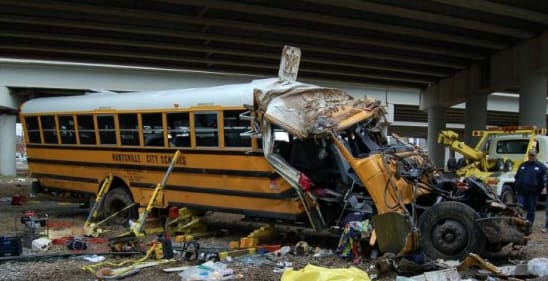
A common cause of litigation in the school bus industry is crashes with serious injuries or fatalities. Pictured is the aftermath of the 2006 crash in Huntsville (Ala.), in which four students were killed and more than 30 others were injured.
Photo: NTSB
A common cause of litigation in the school bus industry is crashes in which there are serious injuries or fatalities — whether to occupants of the bus, occupants of other vehicles, or pedestrians.
Plaintiffs may seek damages from the operator of the bus — whether it is a school district or a private contractor, the manufacturer of the bus, or both.
A typical claim is that the bus chassis or body failed in some way or was not sufficiently crashworthy in protecting passengers in the accident. Plaintiffs' attorneys may try to show that there was some component or design factor of the bus that caused or contributed to the injury or fatality.
"The specific nature of the alleged defect can vary dramatically from case to case," said Josh Palmer, associate general counsel for Thomas Built Buses parent company Daimler Trucks North America.
One example is a lack of lap or lap-shoulder belts in the school bus — even if the state doesn't require them, as most don't.
Other lawsuits have alleged defects with such components as exterior mirrors, the front service door, the location of driver controls, crossing control arms, bumpers, handrails, seat padding and window retention. The list goes on.
"From time to time, just about everything on a school bus has been the subject of a claim," said Paul Marcela, vice president, general counsel and secretary of Blue Bird. "Even a claim — which the plaintiff did not follow up with a lawsuit — that a school bus' seat cover was too slick, causing the passenger to slip off."
Most fatalities and some serious injuries to students occur outside of the school bus, so these pedestrian incidents are the subjects of much litigation.
“There is often a twist, like a child running to catch a bus they have missed or are afraid they will miss,” said Ted Finlayson-Schueler, president of Safety Rules!, who serves as a school bus safety consultant and expert witness. “Preparing drivers for these unexpected situations is vital.”
Other common topics taken on in school bus-related lawsuits are complaints about the transportation of students with disabilities, employee pay issues, and discrimination claims, and bullying and harassment of bus passengers.
In the latter type of case, plaintiffs may allege “violations of students’ constitutional rights because a school district did not respond appropriately,” said Peggy Burns, an attorney, consultant and owner of Education Compliance Group Inc.
“The communication links between drivers, managers — either contractor or district — and school administrators often breaks down,” Finlayson-Schueler adds. “If the driver doesn’t report the activity, it doesn’t even get started.”
Startling Sums for Transportation Providers
In pupil transportation lawsuits, the amount of money sought by plaintiffs can run into the millions, and defending against the claims in itself can be a very expensive endeavor.
“Plaintiffs typically are looking for a ‘deep pocket,’” Marcela said.
In addition to the operator and the manufacturer of the school bus, that may include the driver of a vehicle that ran into the bus.
Palmer explained that if the incident resulted in a serious injury or death, “the plaintiff virtually always seeks recovery well in excess of $1 million, and in some cases into the tens of millions of dollars.”
For a bus manufacturer, fees for attorneys and expert witnesses and other defense-related costs can add up to hundreds of thousands of dollars in some cases, Palmer said. Whether these costs are covered by insurance varies by company, depending on the degree of self insurance.
In cases involving an alleged violation of a student’s constitutional rights, plaintiffs sometimes seek six-figure amounts.
“They are often covered by insurance to some extent, but even settlement amounts can be very great, and insurance premiums can reflect this,” said Burns, who co-authored the new book Defensible Decisions about Transporting Students with Special Needs: Lessons Learned from Legal Disputes.
Even in cases in which smaller amounts are sought — a common example being a complaint of a school district not providing appropriate transportation for a student with disabilities — attorney fees can still be significant, Burns noted.
Also, the district may have to pay the parents’ attorney costs if the parents prevail.
On the other hand, complaints brought in state court that allege failure to provide appropriate supervision or negligence are often dismissed due to state governmental immunity statutes, and insurance typically covers these cases, Burns said.
Driving Up School Bus Prices
Lawsuits against school bus manufacturers have a far-reaching impact in that they ultimately affect bus prices — not just in the area where the incident occurred, but across the nation.
“The cost of defending against litigation is significant and is thus no different than other operational costs — all of which must be considered in establishing the price of a product,” Palmer said.
Marcela said there is “no doubt that lawsuits against school bus manufacturers affect prices.” He said that although the manufacturers win most cases, “they pay good law firms to win those cases, and the costs of defense can be high.”
This effect of litigation costs on bus prices is especially significant at a time when many school districts are struggling with budget shortfalls. SBF’s 2010 School District Survey found that 19% of respondents bought fewer new school buses this year than last year, while 36% bought no new buses at all.
Separate SBF research shows that North American school bus sales were down 8% in 2009 compared to 2008, or 25% below the peak in 2006.
Moreover, school bus prices have increased by several thousand dollars this year because of additional engine emissions technology to meet the EPA’s stringent 2010 standards.
Documents Go to Court
What may come as a surprise to some in the pupil transportation community is that documents and statements from industry organizations are often used by attorneys in litigation proceedings, according to sources with experience in such cases.
While the manufacturers may employ this type of information from industry groups — both state and national associations — in defending themselves against lawsuits, the plaintiffs’ lawyers also make use of it in trying to support their claims.
Examples of documents that have been utilized by both defense and plaintiff attorneys include associations’ position papers, the National School Transportation Specifications and Procedures manual, and rulemaking docket submittals from industry organizations and individuals.
“Unfortunately, there are times when something someone writes or says can be turned around and used in a negative manner,” said Charlie Gauthier, former executive director of the National Association of State Directors of Pupil Transportation Services.
“It is common for plaintiffs’ attorneys to try to establish ‘industry standards’ or high standards for what amounts to ‘reasonable’ conduct on the part of a school district,” Burns said of the use of industry documents. “School districts and contractors would then be in a position where they’d have to explain either how they meet those standards, or why those standards do not apply in the situation at hand, or why the district or company deviated from them in this case.”
Finlayson-Schueler noted that these documents that outline best practices for the industry create benchmarks that school bus operations are judged against.
“Either a transportation manager can make it a part of their job to become familiar with those benchmarks and develop an operation that is in line with those recommendations, or it can happen after an accident has occurred that demonstrates that they are out of sync with best practice,” Finlayson-Schueler said. “I have used those standards both to defend districts and to make the case for plaintiffs.”
Keep it Factual
It may not be feasible for pupil transportation groups to prevent their position papers and documents from being appropriated by attorneys, but being aware of that potential use and sticking to the facts in such public statements are essential, experts say.
Gauthier said that while industry organizations should by no means be discouraged from expressing their perspectives, they must base their views on current and accurate data.
“If we do not take the time to understand the issues and the data and science involved and we simply express opinions based on emotions or partial information, we run the risk of hurting ourselves and the pupil transportation community as a whole,” said Gauthier, who has served as an expert witness for auto and school bus manufacturers in numerous cases since he retired from the National Highway Traffic Safety Administration in 1994.
Palmer recommends following the “New York Times Rule”: Don’t make statements that you wouldn’t want to see on the front page of a major newspaper.
“My experience is that people will sometimes embellish or exaggerate facts or state opinions as ‘facts’ in order to make a point or when they are emotionally involved in an issue,” Palmer said. “These ‘facts’ are sometimes contorted by plaintiffs’ lawyers into support for a position or proposition that was never intended by the author. Sticking to hard facts — and those supported by data — usually helps people avoid this trap.”
Of course, the best practices in such venerable industry manuals as National School Transportation Specifications and Proceduresare developed to bolster safety, and staying up to par with them will not only work in school bus operations’ favor in case of lawsuits — it can reduce their chances of having incidents that could lead to lawsuits in the first place.
“There is no need to prevent our documents from being used in court if our documents demonstrate that our operation is being run properly,” Finlayson-Schueler said. “Protecting ourselves by not having documents that tell us how our profession is supposed to operate is like having a surgeon who doesn’t have any documents on how to perform a given surgery.”
Furthermore, many documents from within the pupil transportation community are used to help defend school bus manufacturers and to help them enhance school bus safety.
Marcela notes that “in the context of investigating accidents and building better school buses, Blue Bird thinks the pupil transportation community should provide all the truthful, helpful information it has.”
Litigation Concerns Spur Name Change
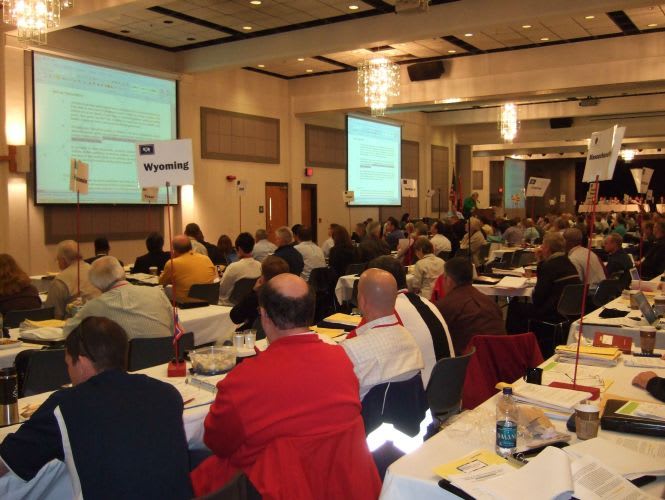
The title of the industry’s key document was changed at the 2000 school transportation congress, reflecting legal concerns as well as how its role had evolved. Pictured is the 2010 congress.
Photo: School Bus Fleet
At the school transportation congress in 2000, delegates from across the country adopted a new title for the industry’s key document.
What was previously called National Standards for School Transportation became National School Transportation Specifications and Procedures.
At the congress, which is held every five years in Warrensburg (Mo.), the proposed title change generated mixed feelings among the 300-plus delegates.
Some believed that the word “standards” strengthened and validated the document — a collection of equipment and operational guidelines for school transportation.
Others believed that the continued use of “standards” left school bus operators and manufacturers exposed in the event of a liability lawsuit. The concern was that attorneys could use the document to, for example, try to discredit an operation for not having some piece of safety equipment that is recommended in the document.
“Plaintiffs’ lawyers were definitely citing the document as industry-accepted standards,” said former Indiana state pupil transportation director Pete Baxter, a veteran of the congress who chaired the steering committee for the 2010 edition.
Some delegates at the 2000 congress favored use of the word “guidelines” or “recommendations.” The “specifications and procedures” title that was ultimately adopted was seen as a compromise, with language that is authoritative but not too restrictive.
Baxter said that in addition to the litigation concerns, the document’s name change reflected how its role had changed.
The document was initially developed as school bus equipment and construction standards. But as the federal government later took over school bus standards and the document began including operational issues, “then it became more of a best-practice guideline,” Baxter said.
Preventive Practices
In terms of protecting themselves against possible litigation, there are numerous strategies that school districts and contractors can employ.
Burns stresses training and documentation.
“Identification of responsibilities and careful allocation of such responsibilities to qualified, well-trained individuals is very important,” she said. “Taking assertive action on behalf of the safety of students and employees is essential.”
Dr. Ray Turner, president of White Buffalo Press and a veteran pupil transportation administrator, recommends a number of “Golden Rules” for school bus operations. They include:
Transport others as you would have your own child transported and with utmost safety, care and concern.
Remember the school bus experience you had as a child, and make sure it is a better experience that your student passengers are now receiving.
Leave no bus interior space uninspected for sleeping children after each route service.
Finlayson-Schueler emphasizes hiring the right people and training them properly with both pre-service and in-service programs. Other key practices are:
Don’t overlook little mistakes.
Do not tolerate bullying or harassment on your buses.
Have a documented on-the-road observation/evaluation system in place, conducted at least annually.
Give staff members the information they need to transport special-needs students.
Plan safe routes and stops.
“Educate students and parents about transportation policies and safe bus stop and riding practices,” Finlayson-Schueler adds, “and operate a well-maintained fleet with currently recommended safety equipment.”
Subscribe to Our Newsletter
More Management

How to Build a Better Driver Training Program
Ready to boost up your school bus instructor training? Here’s how to pick the right talent and improve recruitment, retention, and safety.
Read More →
CALSTART and Forth Combine to Form Catalyst Mobility
The new name represents a renewed vision for the nonprofit focused on advancing clean, equitable, and affordable transportation solutions that move people and goods.
Read More →
What Makes a Great School Bus Driver Trainer?
Choosing the right school bus driver trainer takes more than experience. Learn six keys to selecting and developing trainers and evaluating program effectiveness.
Read More →

School Bus Contractors Expand Through New Deals, Acquisitions & Partnerships
STA's Canadian division acquires Ontario-based G&L Stevenson Transport; Durham School Services adds a new district in California; First Student expands in New Jersey; and Minnesota Coaches rebrands and acquires Halo Transportation.
Read More →
Logan Bus Company Rolls Out AI Phone System for NYC School Bus Families
A summer pilot found that AI agents could handle most routine calls, freeing up time for customer service staff to focus on emergencies and complex family concerns.
Read More →
From Intent to Impact: What I Learned About Leadership from TAPT
A Texas transportation supervisor shares lessons on self-awareness, accountability, managing stress and building trust — and why investing in leadership development matters at every stage of your career.
Read More →
NAPT Names 2026 Award Recipients, Hall of Fame Inductee
Who earned national recognition for their work in student transportation? This year, NAPT named five recipients of its 2026 awards for service, safety, and leadership, plus its newest Hall of Famer.
Read More →
Sponsored•September 2, 2026
2026 State of Student Transportation Report
Driver shortages. Rising costs. Growing safety expectations. More data, but not enough time to act on it. The 2026 State of Student Transportation Report reveals what transportation leaders say is putting the most pressure on their operations—and where they’re investing next. See how your priorities compare.
Read More →
How to De-Escalate an Angry Person: 5 Steps for Handling Workplace Conflict
What makes emotions run high, and how should you handle an angry colleague or parent? Follow these steps for staying calm, listening, showing empathy, and resolving conflict.
Read More →
Sponsored•September 1, 2026
What Readiness Looks Like This School Year
Learn about the challenges shaping the 2026–2027 school year, from persistent driver shortages and budget pressure to technology and readiness gaps. See how school districts are responding and adapting in Zonar’s 2026 Back-to-School Readiness Report.
Read More →