




Blue Bird Sells Its 2,500th Gasoline Type C School Bus
The OEM cites lower upfront costs and maintenance savings as key factors in the growing sales of its Vision Gasoline bus.

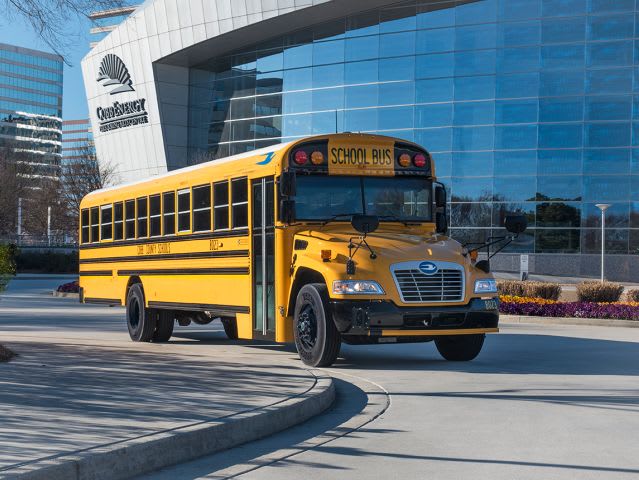
Blue Bird cites lower upfront costs and maintenance savings as key factors in the growing sales of its Vision Gasoline school bus.
Blue Bird cites lower upfront costs and maintenance savings as key factors in the growing sales of its Vision Gasoline school bus.
MACON, Ga. — Blue Bird recently hit a milestone with its gasoline-powered Type C school bus: 2,500 units sold.
Blue Bird’s Vision Gasoline school bus, which runs on a Ford 6.8L V10 engine, became available in 2016. The OEM said that sales have grown substantially over the past two years due to lower upfront costs, maintenance savings, cold weather startup and heating capabilities, and public fueling accessibility.
Frederick County (Va.) Public Schools received the 2,500th Blue Bird Vision Gasoline school bus. John Grubbs, director of transportation for the district, said that the purchase was part of his department’s efforts to assess its operations and identify ways to improve incrementally.
“The decision to purchase gasoline buses was based on the cost savings they offer, the fact that they can be more easily maintained than diesel buses, and the opportunity to be more environmentally friendly,” Grubbs said. “Thus far, we've been very pleased with their performance.”
While gasoline has long been a common fuel for Type A small school buses, before 2016 there had not been a gasoline-powered large school bus offered by major OEMs in many years.
“After 30 years, gasoline school buses are making a comeback, thanks to the Blue Bird Vision Gasoline,” said Mark Terry, chief commercial officer of Blue Bird. “With a gasoline bus, there are no additional emission filters and exhaust fluid or other complex after-treatment devices needed. Combine that with a lower acquisition price, and customers experience immediate savings and low total ownership costs.”
More than 800 school districts across North America have purchased the Blue Bird Vision Gasoline school bus. The OEM said that in addition to cost benefits, districts have cited the buses’ power, reduced noise, and reduction of parts due to the lack of special technology needed to meet emissions standards.
Some school districts have also reported that it’s easier to recruit and retain technicians to work on gasoline buses.
“Our mechanics love the Blue Bird Vision Gasoline buses,” said Brian Gibson, director of transportation for New Braunfels (Texas) Independent School District. “We have not encountered any issues, and it’s a cost savings for our preventive maintenance compared with our diesel buses. EGRs, DEF, and DPF are just some of the expenses that we can now eliminate.”
The Blue Bird Vision Gasoline school bus is certified to the federal standard of 0.20 g/bhp-hr for nitrogen oxide emissions.
More Maintenance
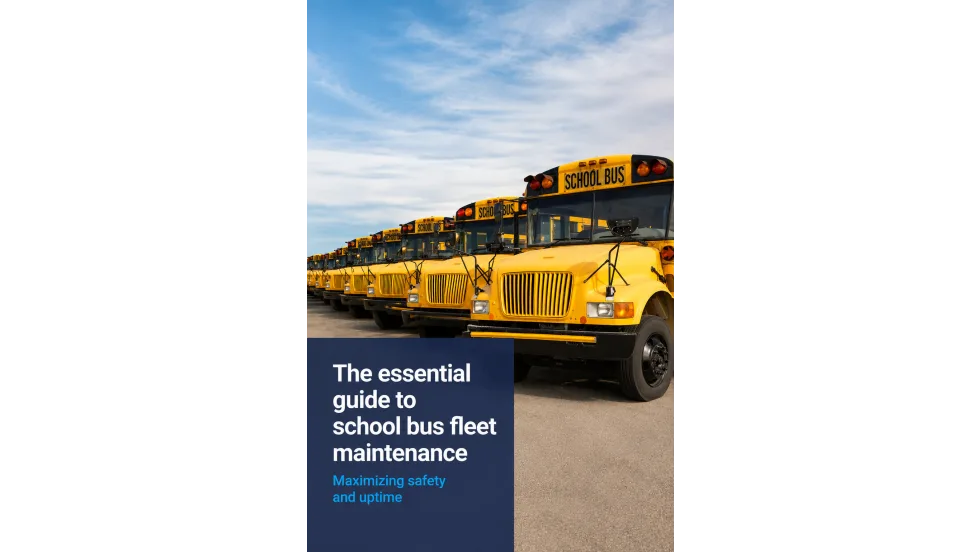
The Essential Guide to School Bus Maintenance and Student Safety
Your district's buses carry students to school every day. This guide shows how predictive maintenance powered by fleet data helps keep buses reliable, drivers accountable and students safer from the first bell to the last stop.
Read More →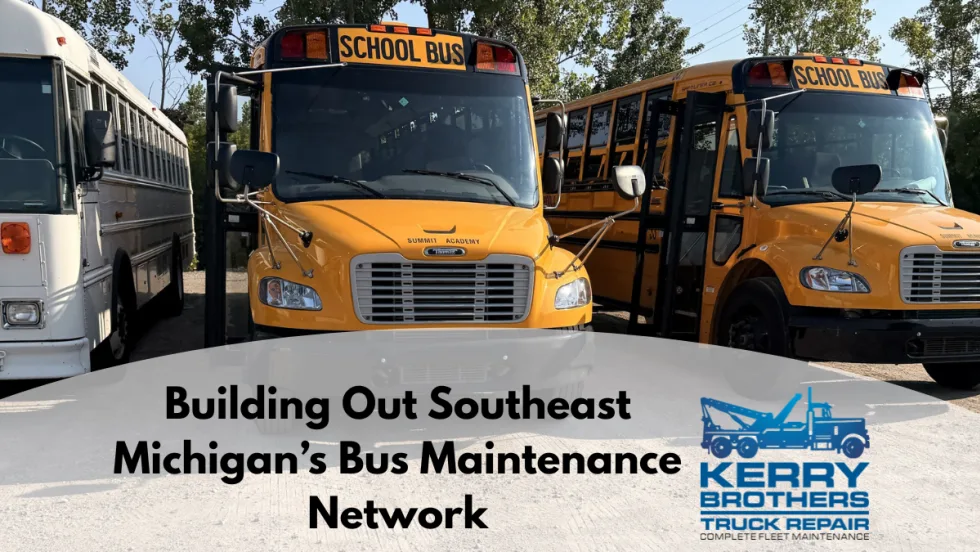
Kerry Brothers Grows Michigan School Bus Repair Network
The acquisition of Downriver Truck and Bus expands Kerry Brothers’ school bus maintenance footprint across southeast Michigan, adding repair capacity, diagnostic resources, and state inspection support.
Read More →
Noregon Introduces CAN Bus Diagnostic Tool, Expands JPRO Features
CAN Mentor and the latest JPRO update aim to simplify vehicle network diagnostics and improve repair efficiency for technicians of all experience levels.
Read More →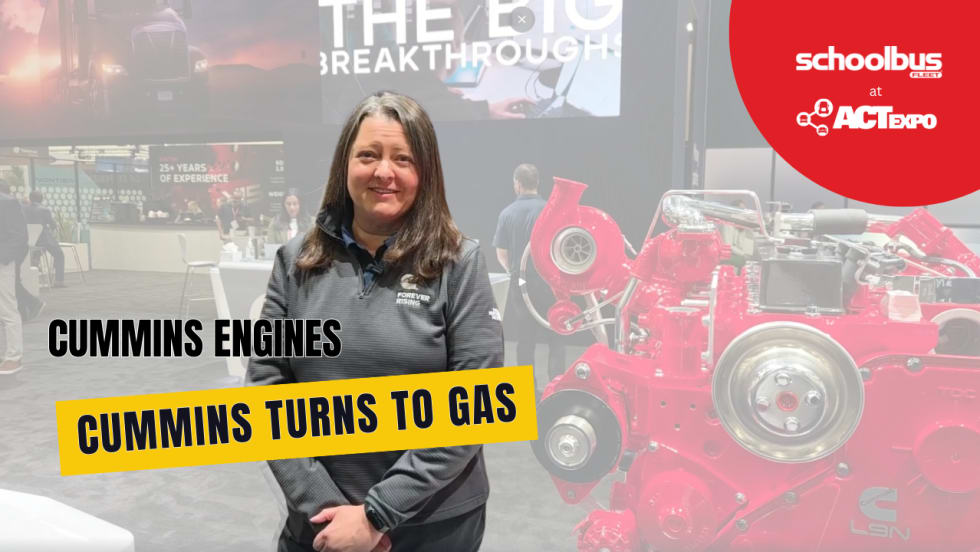
Cummins on Smarter, Simpler Engine Innovation
Cummins discusses its first-ever gasoline engine for school buses, EPA 2027, and why bus fleets still want durable, simpler internal combustion options.
Read More →
Report: 72% of Diesel School Buses Now Use Advanced Low-Emission Engines
New data shows advanced low-emission diesel technology continues expanding across school bus fleets, even as electric bus adoption gains momentum.
Read More →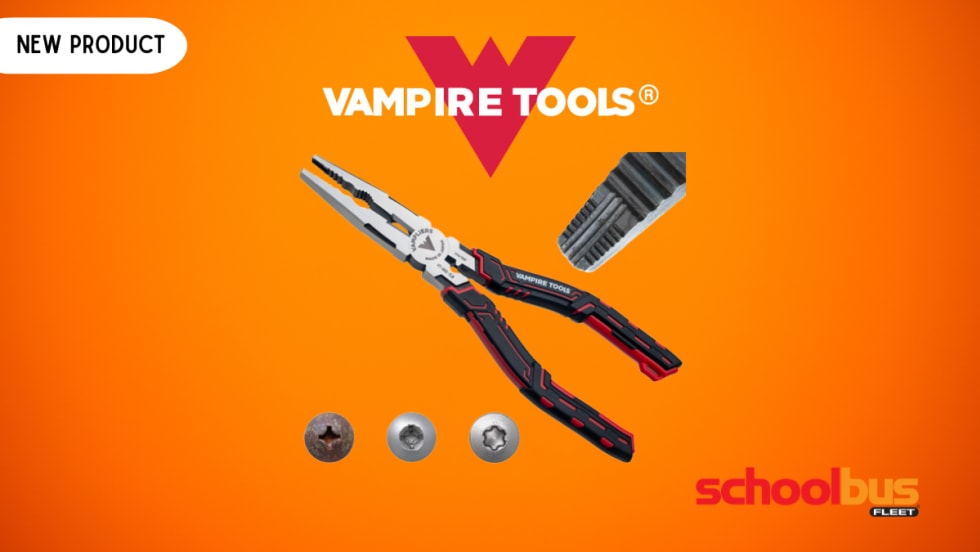
Vampire Tools' CAIMAN 7.5-Inch Multi-Purpose Screw Extractor Long-Nose Pliers with Crimper
Vampire Tools introduced the VAMPLIERS Caiman 7.5-inch multi-purpose pliers, combining screw extraction, cutting, crimping, and gripping functions into a single tool designed for fleet maintenance professionals.
Read More →
How Advanced Diagnostics Helps Bus Fleets Stay Ahead of Repairs
Chat with Noregon’s Kevin Smallhorn at ACT Expo about bus diagnostic tools, telematics integration, CNG maintenance support, and strategies to help reduce downtime and improve uptime.
Read More →
How School Bus Fleets are Getting Ahead of Breakdowns
Don’t let bus downtime wear you down. Here’s how bus operators are shifting from manual processes to AI-powered, data-driven maintenance systems for improved reliability and safety.
Read More →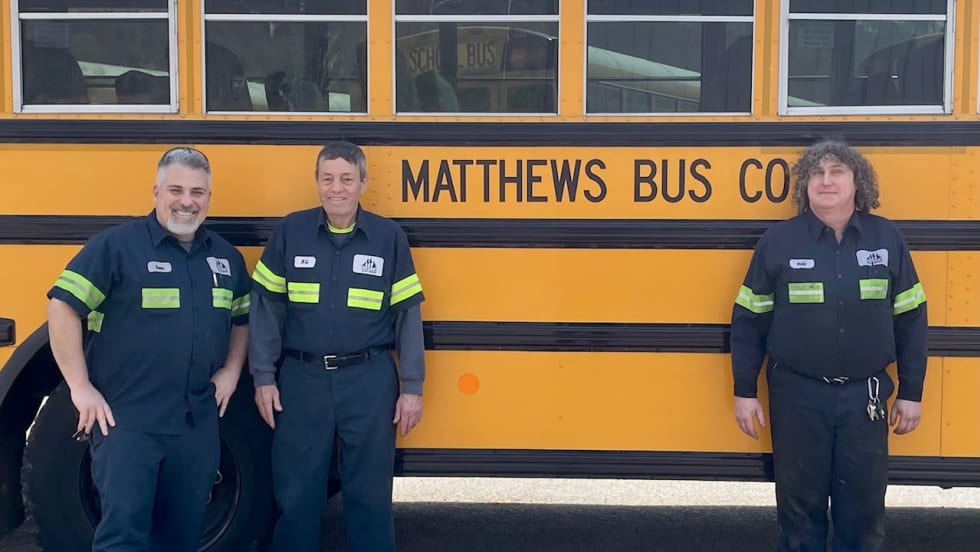
Pennsylvania School Bus Maintenance Team Praised for Dedication to Safety
Matthews Bus Company’s West Jefferson received a letter of commendation from the Pennsylvania State Police for their fleet inspections.
Read More →
From Chaos to Clarity: How School Districts Are Running Leaner Transportation Operations
Covering 38 routes on a Friday afternoon. Buses idling while routes overlap. Parents calling nonstop about late arrivals. Sound familiar? This whitepaper explores how district transportation leaders solved these exact problems — and what measurable results followed.
Read More →